



Which art books, prints and posters are available by and about this artist? Here is a sample of items of interest to a typical collector:
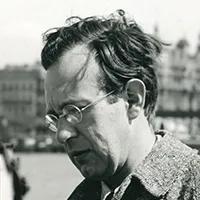
Alfred Franz Adolf Ehrhardt (March 5, 1901 – May 29, 1984) was a German artist whose career spanned music, teaching, painting, photography, and documentary filmmaking. Educated initially as an organist and choirmaster, he taught music and art at progressive schools before transitioning into art education and painting. A key turning point came in the winter semester of 1928–29 at the Bauhaus in Dessau, where he studied under Josef Albers, Wassily Kandinsky, Paul Klee, and Oskar Schlemmer, an experience that deeply shaped his creative philosophy.
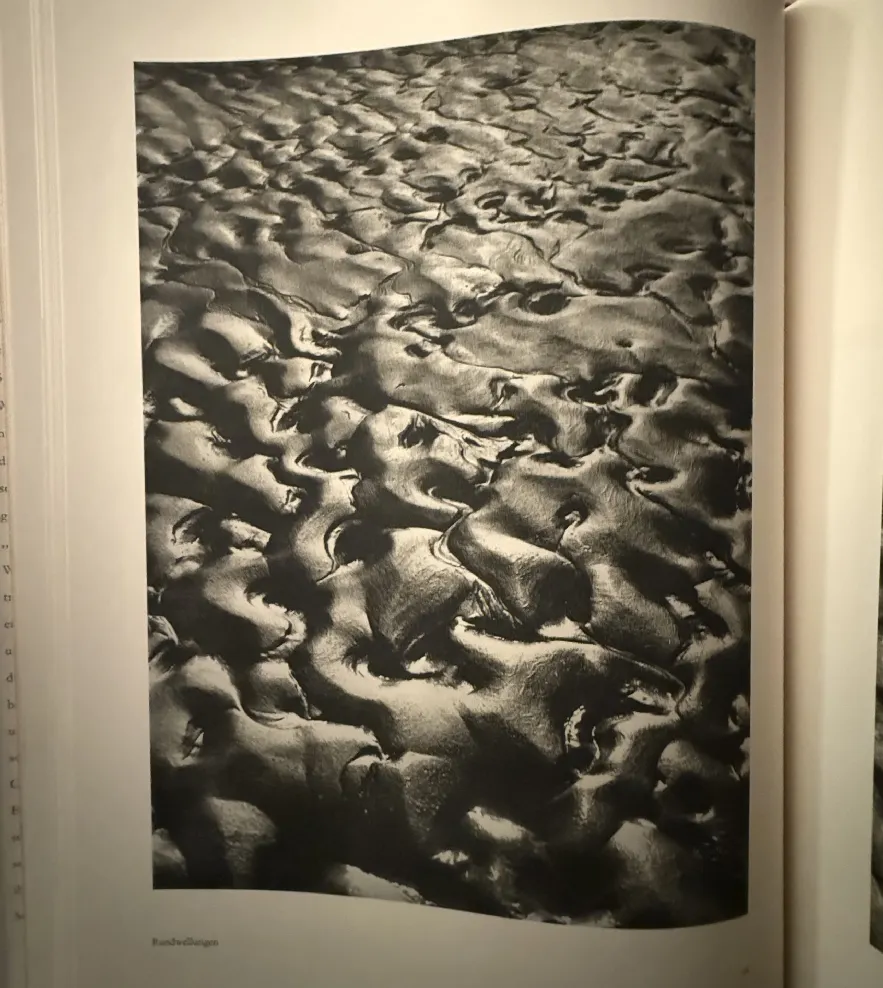
After being dismissed from his teaching post by the Nazis in 1933 due to his modernist beliefs, Ehrhardt turned his attention to photography. He taught himself the medium and began crafting abstract, avant-garde images of natural settings, most notably the tidal flats (Das Watt), dunes of the Curonian Spit, shells, crystals, and microstructures. His approach reflected New Objectivity and New Vision styles, featuring tight cropping, intense lighting, and a heightened focus on surface structure and materiality.
In 1936, Ehrhardt exhibited around 100 of these photographs in Hamburg, and his first photobook Das Watt followed in 1937, cementing his reputation as a leading figure among Bauhaus-associated photographers.
Following World War II, Ehrhardt founded his own film production company in Hamburg (1948), earning recognition as "the most important German post-war cultural film creator." He produced nearly 60 documentary films some award-winning and screened internationally, including works on Ernst Barlach (which premiered at the Venice Biennale), and experimental pieces like Spiel der Spiralen and Portugal – unbekanntes Land am Meer, all honored with multiple Bundesfilmpreise.
Today, Ehrhardt is remembered as a "natural philosopher with a camera" who transformed intimate details of nature into powerful abstractions. His thoughtful compositions and rhythmic visual structures reflect both his artistic and pedagogical roots. His legacy is preserved and promoted by the Alfred Ehrhardt Foundation established by his son in 2002 to safeguard his estate and promote his work through exhibitions and publications
