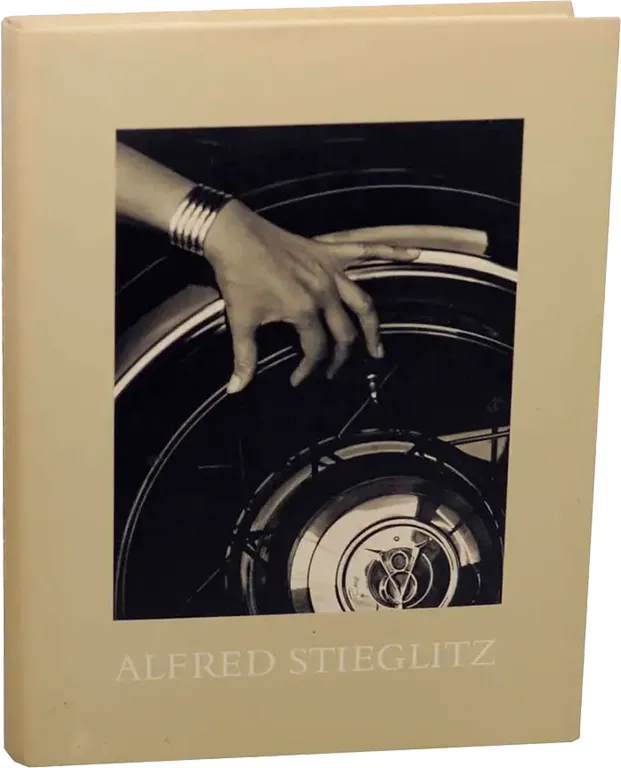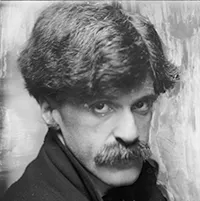

Alfred Stieglitz

Alfred Stieglitz
To artist biography

Alfred Stieglitz

Which art books, prints and posters are available by and about this artist? Here is a sample of items of interest to a typical collector:
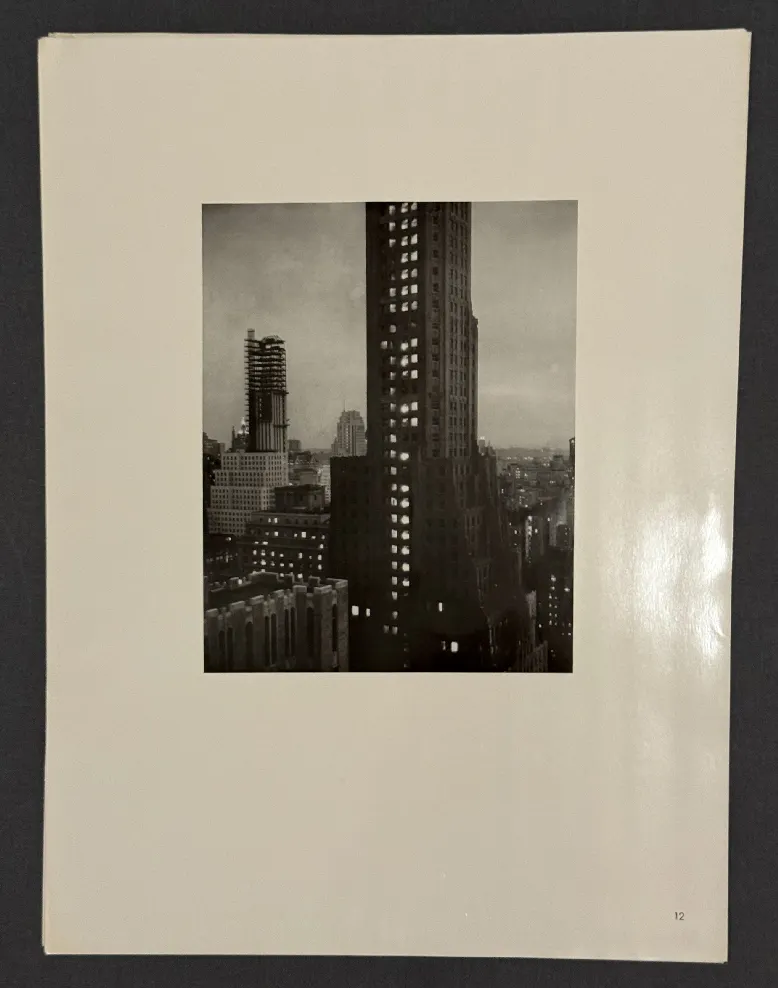
Book images

Twice a Year Press

1947
with:
Edition:
1st
Edition size:
1500
Out of Print
Other edition(s):
18 plates with oversized softcover book in a folio. Each plate is 408 x 305 mm.
ISBN:
Condition: Very good condition
1947

Twice a Year Press

Out of Print
Signed
Edition:
1st
Prior edition(s):
18 plates with oversized softcover book in a folio. Each plate is 408 x 305 mm.
Condition: Very good condition

Published a year after Stieglitz's death, with contributions from Frank Lloyd Wright, Edward Steichen, Ansel Adams and Henri Cartier Bresson.

Edition:
Year of work:
Image size:
Print size:
203 x 158 mm
Printed in
1910
Framed size:
Provenance:
Camera Work XXXVI
Original photogravure printed in 1910 under Stieglitz supervision for the Camera Work issue XXXVI.
Condition:
Very Good

Beginning when he was a young man newly returned from studying in Germany and continuing until the last years of his life, Alfred Stieglitz photographed the city of New York. These images document the city’s transformation from a roughshod port to a sleek metropolis. As he wrote, “My New York is the New York of transition—The Old gradually passing into the New. . . . The Spirit of that something that endears New York to one who really loves it—not for its outer attractions—but for its deepest worth—& significance. —The universal thing in it.”

Stieglitz’s early photographs capture everyday life on the sidewalks of the rapidly modernizing city. Instead of manipulating the prints or negatives, he let snow and rain—and often the steam and smoke of industry—create the soft, atmospheric effects valued by Pictorialists. In his 1897 photogravure portfolio, Picturesque Bits of New York and Other Studies, Stieglitz juxtaposed scenes from the city alongside those from Venice and Paris, placing New York in the pantheon of the world’s great scenic cities.

The same photogravure presented here is in the MOMA and Art Institute Chicago Collections.

Literature and Collections:

The Key Set, Abrams, 2002, Vol 1, Plate 344.

No items found.
No items found.

Alfred Stieglitz, American (1864–1946)

Stieglitz was a groundbreaking American photographer, editor, and gallerist who played a central role in establishing photography as a fine art and introducing modern European artists to American audiences.

Initially known for his Pictorialist photographs—soft-focus, expressive images aligned with painting—Stieglitz later embraced a more modernist, sharp-edged approach. His iconic works include "The Steerage" and the "Equivalents" series, considered among the first abstract photographic works.

He founded the Photo-Secession movement and the influential journal Camera Work (1903–1917), which published original photogravures and essays that helped legitimize photography as an art form. Through his legendary New York gallery 291, Stieglitz was the first to exhibit artists like Picasso, Matisse, and Duchamp in the U.S., alongside American talents like Georgia O’Keeffe, whom he also photographed extensively and later married.

Stieglitz’s legacy lies not only in his powerful images but in his tireless efforts to shape the infrastructure of American modernism, blending photography with the avant-garde art of his time.