

Which art books, prints and posters are available by and about this artist? Here is a sample of items of interest to a typical collector:


Arwed Messmer, Germany, b. 1964
Mis a prominent German photographer and contemporary artist who explores the intersections of history, memory, and the political power of the image through what he describes as an "artistic-archaeological" practice. Born in West Germany in 1964 and based in Berlin since 1991, Messmer spent the first phase of his career working as a traditional documentary photographer capturing the rapid urban transformations of post-unification Berlin. Around 2006, his practice shifted dramatically toward public and institutional archives, where he unearths utilitarian, vernacular, and state-commissioned images—such as early Berlin Wall surveillance imagery, Stasi files, and police reconnaissance negatives—that have outlived their original evidentiary purposes.
By restoring, recontextualizing, and transforming these forgotten historical records into expansive visual narratives and complex multi-image typologies, Messmer uncovers overlooked layers of meaning and critiques photography's problematic role as a neutral historical witness. He frequently collaborates with author and researcher Annett Gröschner on landmark projects like Taking Stock of Power: An Other View of the Berlin Wall, and has received critical acclaim for major solo investigations such as RAF – No Evidence, which earned him a nomination for the prestigious Deutsche Börse Photography Foundation Prize in 2018. His conceptually rigorous work is widely exhibited and held in major public collections, securing his status as a key figure in modern European documentary and archival art.


see book page for more details
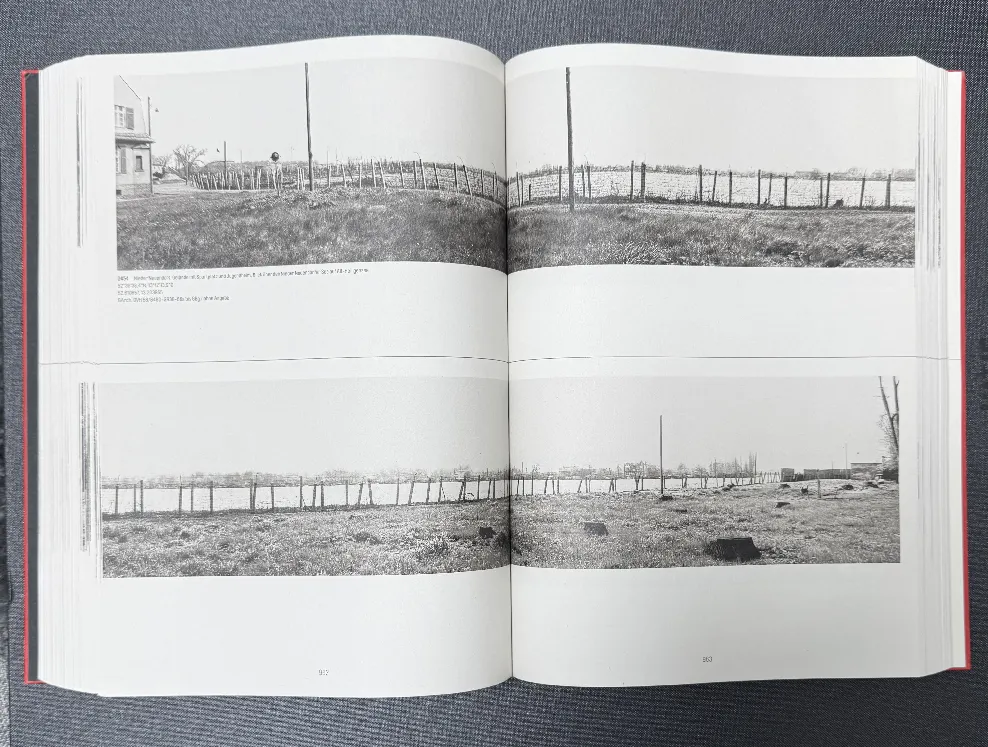
In our collective memory, the Berlin Wall is a monolithic concrete barrier, but back in 1966 it was a motley ensemble of the walls of buildings, concrete and cement slabs, and barbed-wire mesh. Photographer Arwed Messmer and author Annett Gröschner have embarked on a long-term project on this "early Berlin Wall," based on thousands of historical photographs taken by East German border troops. Their first award-winning book presented the inner-city border strip. In 2012 they came across another extensive collection of hitherto unknown photographs. In this two-volume edition with around seven hundred panoramas compiled from three thousand single images, Messmer and Gröschner now present the entire circumference of the Wall around West Berlin. The panoramas are supplemented by additional material from the German Federal Archives. This completes a project of "documentary empathy" (Florian Ebner), which photo critic Gerry Badger saw as "transforming the interpretation of historical facts into a work of art in a creative act."