
Luigi Ghirri

Luigi Ghirri
To artist biography

Luigi Ghirri

Which art books, prints and posters are available by and about this artist? Here is a sample of items of interest to a typical collector:

This is not the 2018 reprint.

1978 edition in Parr/Badger Vol1

This is not the second April 2022 printing.

2018
with:
Edition:
1st
Edition size:
Out of Print
Other edition(s):
Reprinted in softcover format in 2019.
Hardcover without dust jacket, as issued
ISBN:
9781912339082
Condition: Near Fine
2018
Out of Print
Signed
Edition:
1st
Prior edition(s):
Reprinted in softcover format in 2019.
Hardcover without dust jacket, as issued
Condition: Near Fine

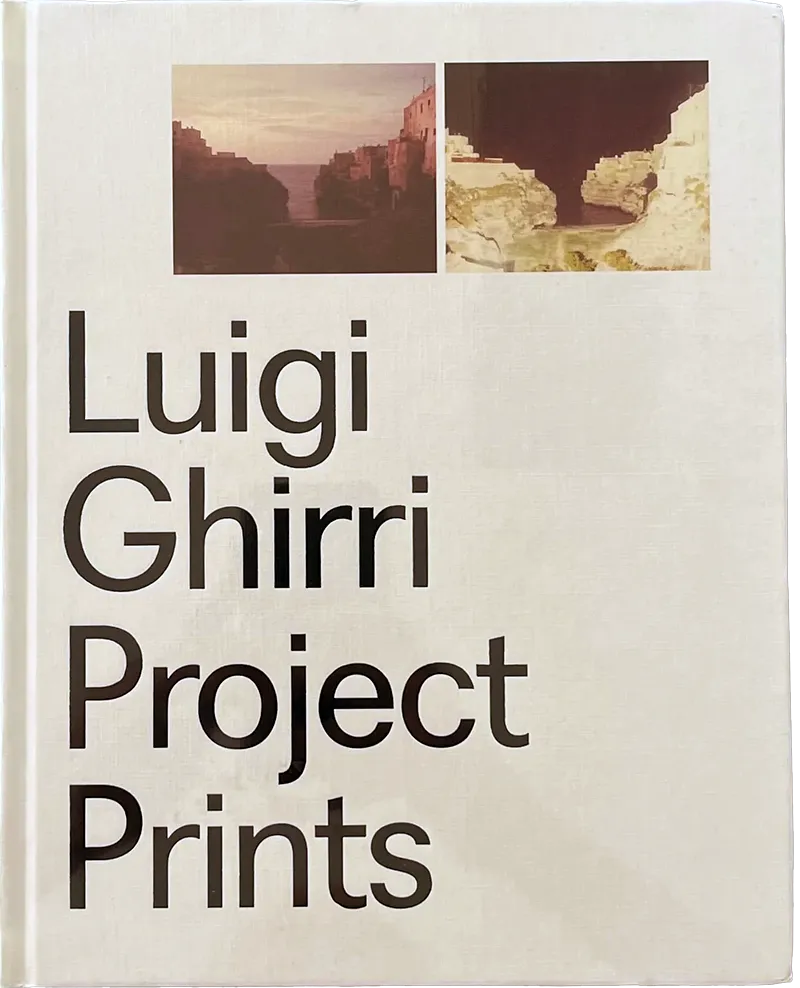
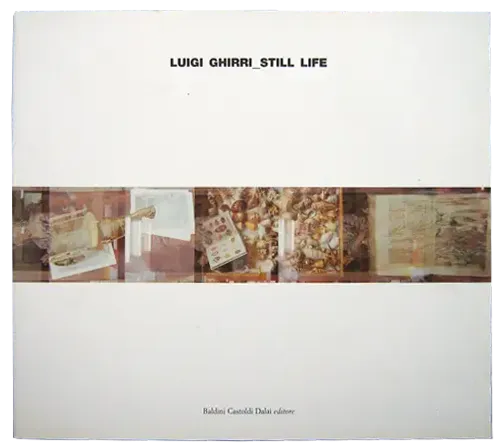
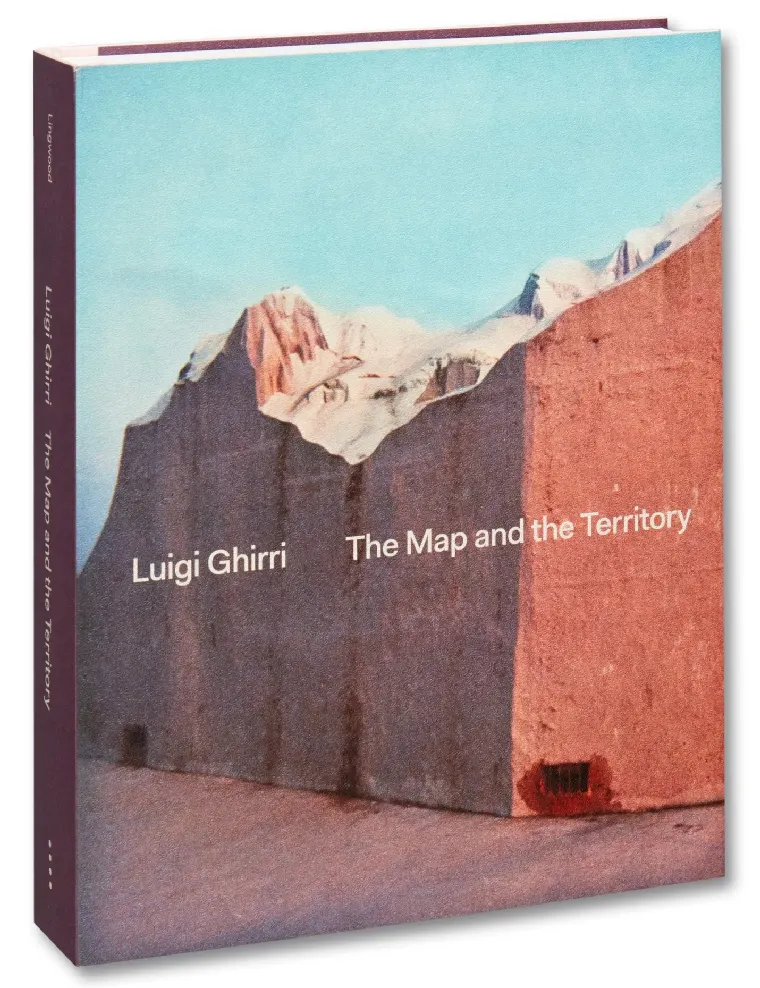
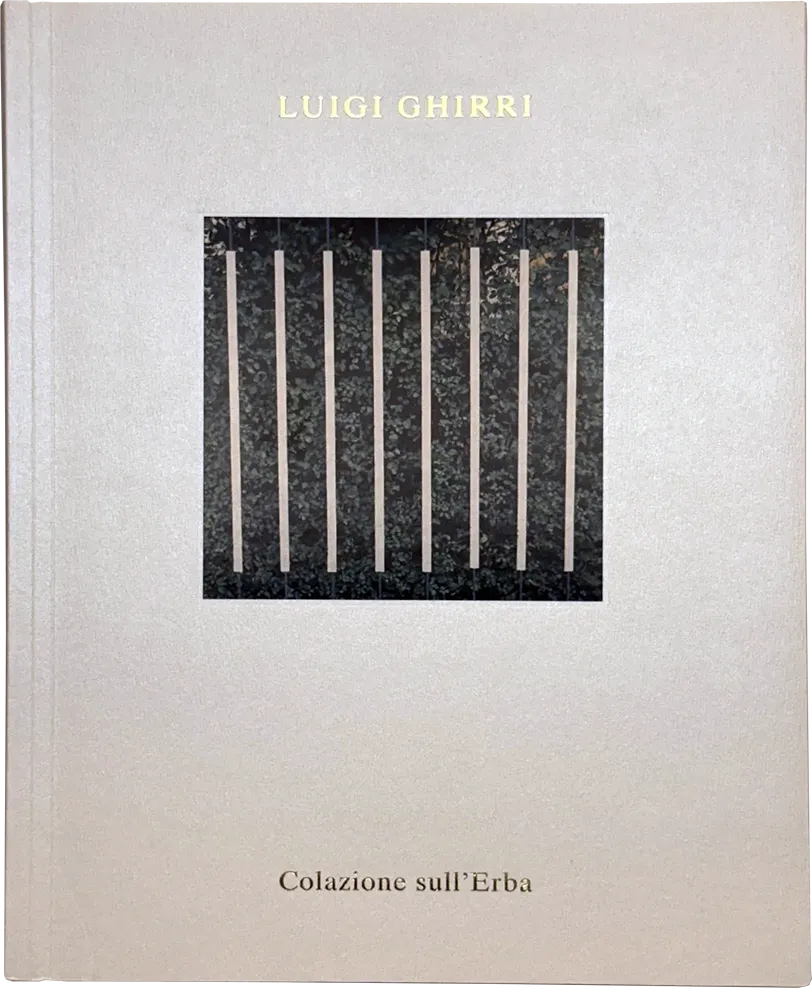
Through the course of the 1970s and 1980s, Luigi Ghirri pursued his extraordinary project, open-ended and mercurial, marked by empathy for the changing everyday spaces of his time. Over the course of his short career, Ghirri would produce a vast body of photographs without parallel in the Europe of his time and numerous writings which would have an indelible impact on the history of photography. This extensive book compiled by the renowned British curator James Lingwood accompanies a touring exhibition to three major museum venues across Europe and focuses on the first decade of Ghirri’s work, defined by his 1979 exhibition in Parma. Vera Fotografia was grouped into fourteen different narrative sequences, each of which is represented in this volume: Fotografie del periodo iniziale (1970), Kodachrome (1970-78), Colazione sull’erba (1972-74), Catalogo (1970-79), Km 0.250 (1973), Diaframma 11, 1/125, luce naturale (1970-79), Atlante, (1973), Italia Ailati (1971-79), l paese del balocchi(1972-79), Vedute (1970-79), Infinito (1974), In Scala (1976-79), Still Life (1975-79).

The focus of the project is on Ghirri’s quietly compelling project to create a new kind of geography, located in his fascination with representations of the world, in the form of reproductions, pictures, posters, models and maps. The mediation of experience through images in an Italy poised between the old and the new was, for Ghirri, an inexhaustible terrain to survey – “a great adventure into the world of thinking and looking, a wonderful magic toy that miraculously manages to combine our adult awareness and the fairy tale world of children…a never-ending journey through great and small, through variations and the realm of illusions and appearances, a labyrinthine specular place of multitudes and simulation."

Published in collaboration with Jeu de Paume, Museum Folkwang and Museo Reina Sofia.

Edition:
20/25
Sold Out
Year of work:
1973
Image size:
23.5 x 16 cm
Print size:
24.4 x 30.3 cm
Printed in
2009
Framed size:
Provenance:
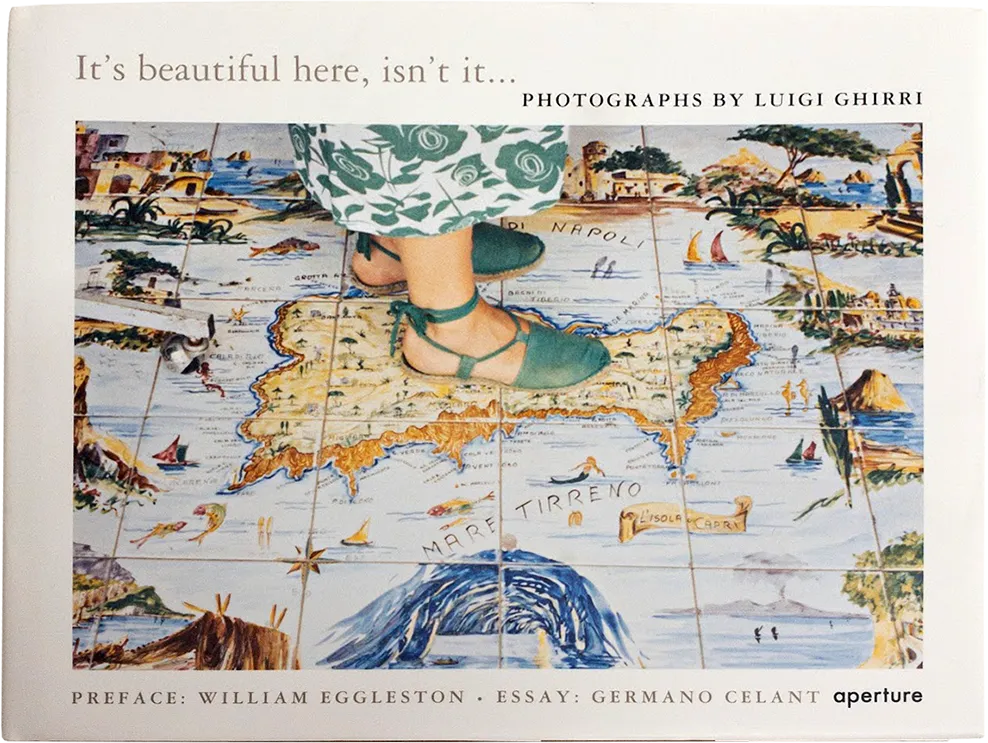
Aperture
C Print
Condition:
Pristine

Print is signed by Paola Ghirri with stamp of the estate

Literature and Collections:
No items found.
Book images
by
Luigi Ghirri

Luigi Ghirri

Quodlibet

2024
with:
Guido Guidi, Gabriele Basilico, Olivo Barbieri
Edition:
2nd
Edition size:
Out of Print
Prior edition(s):
1984
Softcover with DJ
ISBN:
978 8822922816
Condition: Fine

Viaggio in Italia, 2nd Edition

2024

Quodlibet

Out of Print
Signed
Edition:
2nd
Prior edition(s):
1984
Softcover with DJ
Condition:
Condition: Fine

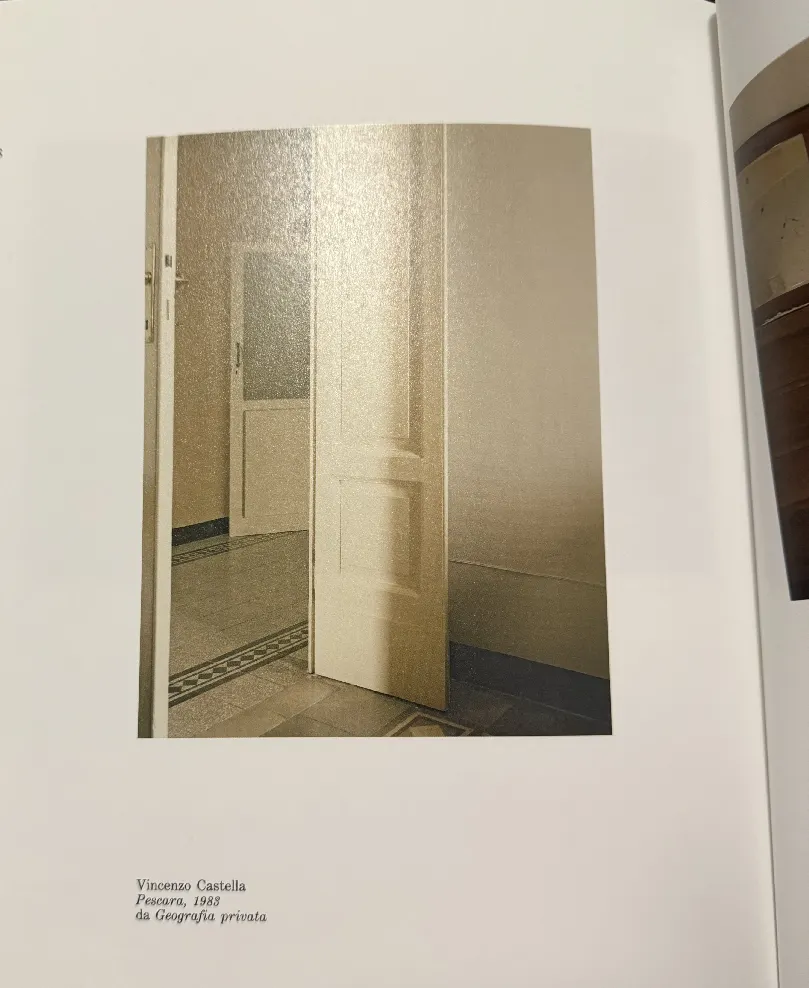
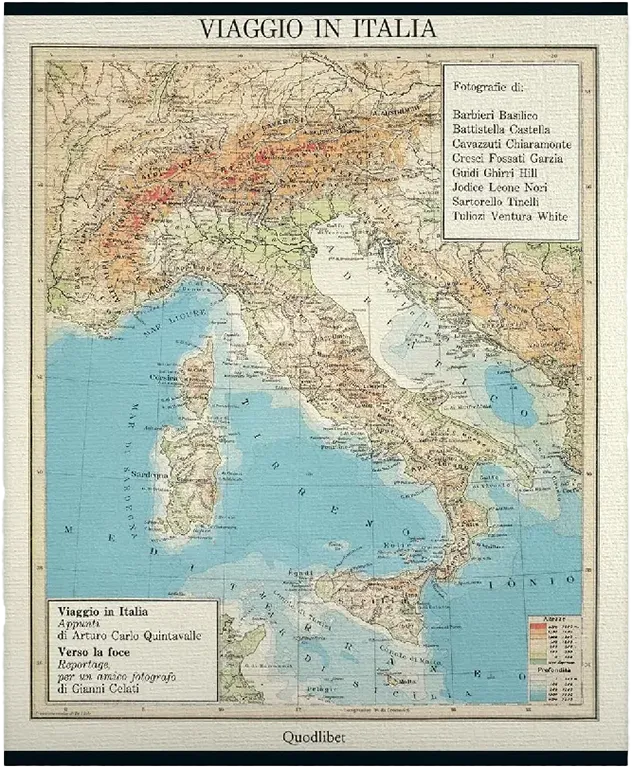
On the occasion of the fortieth anniversary of its first edition, Quodlibet republishes Viaggio in Italia. Conceived by Luigi Ghirri, published for the first and only time in 1984, it is a cornerstone of the history of contemporary photography. The ideas that guided it are the manifesto of the Italian School of Landscape.

In the early 1980s, Luigi Ghirri gathered around himself a group of twenty photographers who, since the end of the previous decade, had been experimenting with unconventional ways of representing reality and the social changes taking place almost everywhere in the country. The comparison would give rise to the collective exhibition Viaggio in Italia, inaugurated on January 15, 1984 at the Pinacoteca Provinciale in Bari and repeated in Genoa, Ancona, Rome, Naples and Reggio Emilia. The exhibition was accompanied by the volume of the same name, designed by Ghirri and Paola Borgonzoni, with an essay by Arturo Carlo Quintavalle and a text by Gianni Celati. In the indeterminacy that surrounds the memory of the event, it will be the book itself that will consolidate its international critical success and transmit the concept of territory understood as a system of unsuspected, everyday resources, far from the sensationalism of the news as from the sweetened panorama of the postcard. As Quintavalle observes: «All postcards are equally unrealistic, they are mythical representations of ideal cities where the reality of living, of managing, of everyday space, the reality of what today we call urban space, the furniture, or the architecture of the interiors is completely mystified, indeed cancelled, removed. We experience the falseness of our world in postcards, a double that is absurd because it does not exist, it does not represent anything. In short, by sending postcards, we make symbolic journeys and Ghirri, in his time, made our consciences travel in the history of these fictitious universes». No one has sent postcards for years, but the tendency to represent the landscape in a holographic and virtual way in the worst sense of the term has not disappeared, therefore the invitation to travel by deviating from the only path promoted by the maps is still current.

The new edition is the facsimile reproduction of the first, published by Il Quadrante di Alessandria in 1984. All the details of the original book have been faithfully preserved, adopting the design, the layout of the text and the sequence of the original images, the material properties and the dimensions of the pages. To obtain a more adequate rendering of the images, the reproduction of the photographs was made starting from the re-digitalization of the negatives or original prints. The volume is accompanied by a 48-page issue with an essay on the genesis and critical success of Viaggio in Italia edited by Matteo Balduzzi, Fabio De Chirico, Gabriella Guerci, Matteo Piccioni, a note by Adele Ghirri and the French and English translations of the original texts by Arturo Carlo Quintavalle and Gianni Celati (published in Italian in the book). Twenty photographers participated in the Viaggio: Olivo Barbieri, Gabriele Basilico, Gianantonio Battistella, Vincenzo Castella, Andrea Cavazzuti, Giovanni Chiaramonte, Mario Cresci, Vittore Fossati, Carlo Garzia, Luigi Ghirri, Guido Guidi, Shelley Hill, Mimmo Jodice, Gianni Leone, Claude Nori, Umberto Sartorello, Mario Tinelli, Ernesto Tuliozi, Fulvio Ventura, Cuchi White.

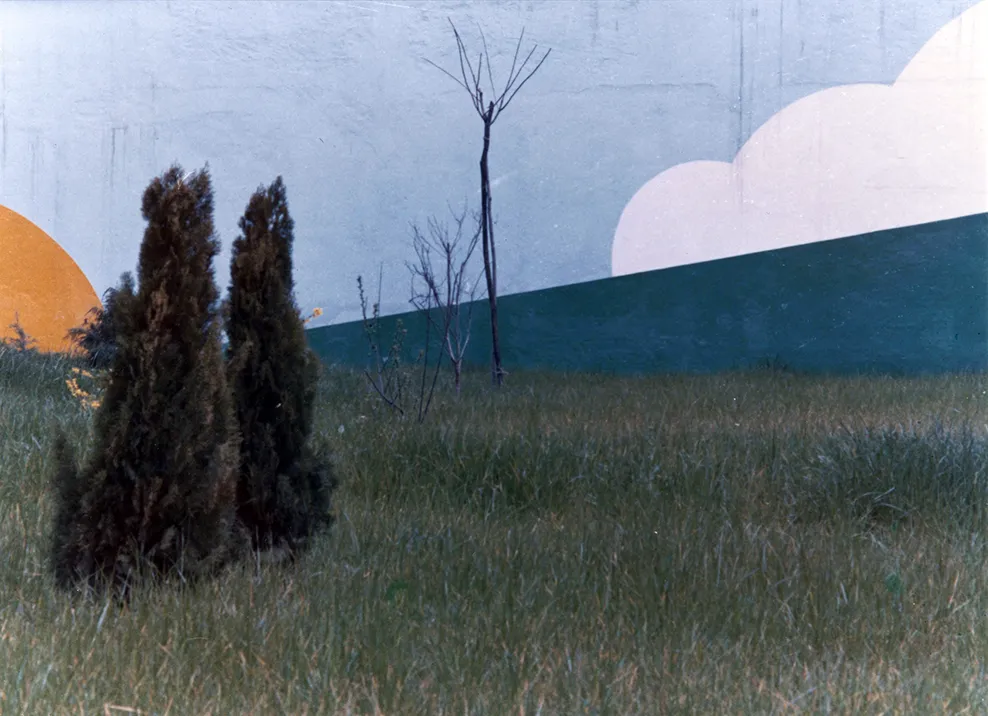
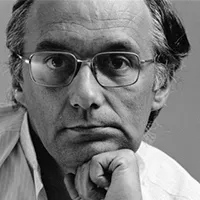
Luigi Ghirri (1943–1992) was a seminal Italian photographer whose work transformed the landscape of contemporary photography. Born in Scandiano, in the Emilia-Romagna region of Italy, Ghirri originally trained as a surveyor. This professional background deeply influenced his artistic perspective, manifesting in a lifelong preoccupation with how we map, measure, and perceive the world around us.

Throughout the 1970s and 1980s, Ghirri moved away from the dramatic, high-contrast style of traditional photojournalism. Instead, he pioneered a style characterized by a soft, pastel color palette and a quiet, deadpan observation of the everyday. His subjects were often mundane—suburban houses, amusement parks, posters, and tourist maps—which he used to explore the complex relationship between reality and its representation. He was fascinated by how images and media mediate our experience of the physical world, famously describing photography as a "never-ending journey through the realm of illusions and appearances."

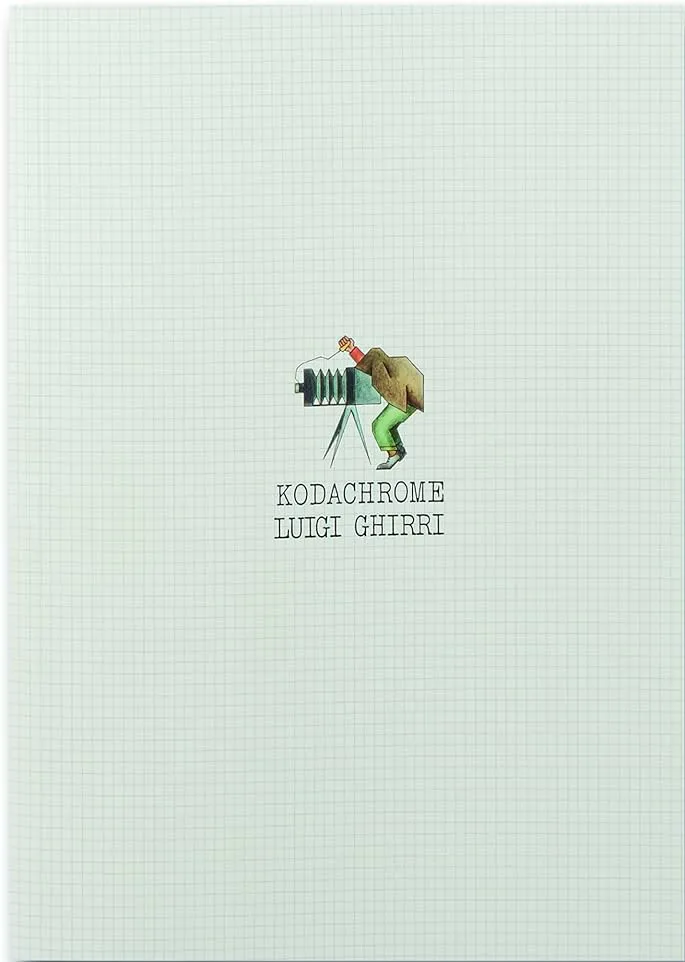
His first major publication, Kodachrome (1978), is considered a masterpiece of color photography, showcasing his ability to find surreal and poetic moments within the ordinary Italian landscape. Beyond his own image-making, Ghirri was a prolific writer and curator. He founded the publishing house Punto e Virgola and organized the influential 1984 exhibition Viaggio in Italia, which brought together a new generation of photographers dedicated to a contemporary, unsentimental vision of the Italian territory.

Ghirri’s career was cut short by his sudden death at the age of 49, but his influence has only grown in the decades since. His work is now recognized globally for its intellectual depth and its unique ability to combine "adult awareness" with a "fairy tale" sense of wonder. His legacy is frequently celebrated in major retrospectives, such as The Map and the Territory, which toured prestigious institutions like the Jeu de Paume in Paris and the Museo Reina Sofia in Madrid.