


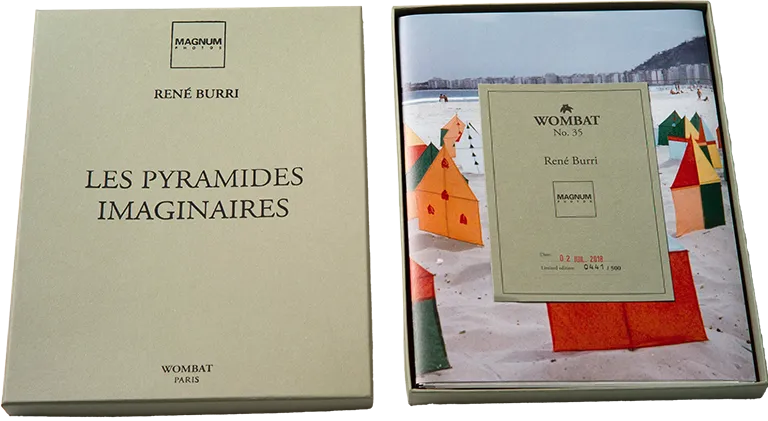
Which art books, prints and posters are available by and about this artist? Here is a sample of items of interest to a typical collector:

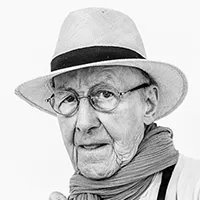
René Burri, Swiss (1933–2014)
Burri was a prolific Swiss photojournalist and a cornerstone of the Magnum Photos agency. Born in Zurich, his career began at the remarkably young age of 13 when he photographed Winston Churchill during a state visit. He later honed his craft at the Zurich School of Applied Arts, where he developed the sharp eye for composition and architectural lines that would define his professional work.
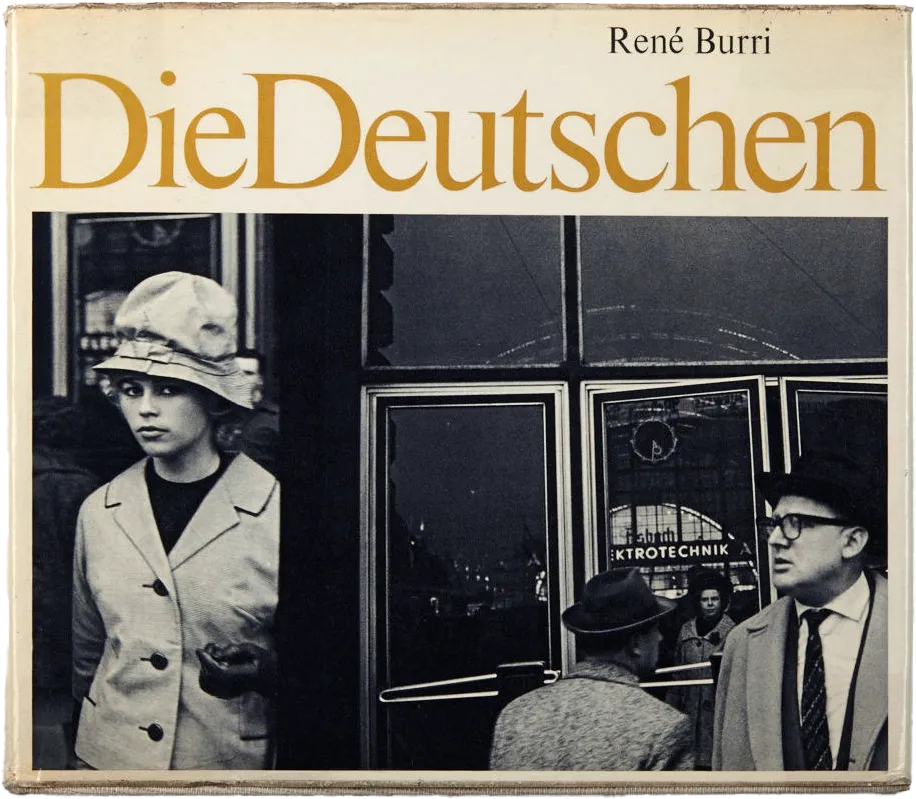
Following his entry into Magnum in 1955, Burri served as a frontline observer of the 20th century’s defining shifts. He achieved worldwide renown for his 1963 portrait of Che Guevara and his broader documentation of the Cuban Revolution, while simultaneously turning his lens toward the complexities of post-war Germany. This intensive study of a divided nation, which spanned the entire lifespan of the Berlin Wall, was eventually immortalized in his landmark publication Die Deutschen.
Burri’s Swiss background provided a unique "outsider-insider" perspective that allowed him to move with relative ease through both East and West Germany. While many photographers of the era took sides, his neutrality enabled him to approach the German people with a curiosity that was investigative rather than accusatory. This detachment allowed him to document the mundane realities of life on both sides of the Iron Curtain, focusing on the shared human experience of a divided nation rather than just the political friction.
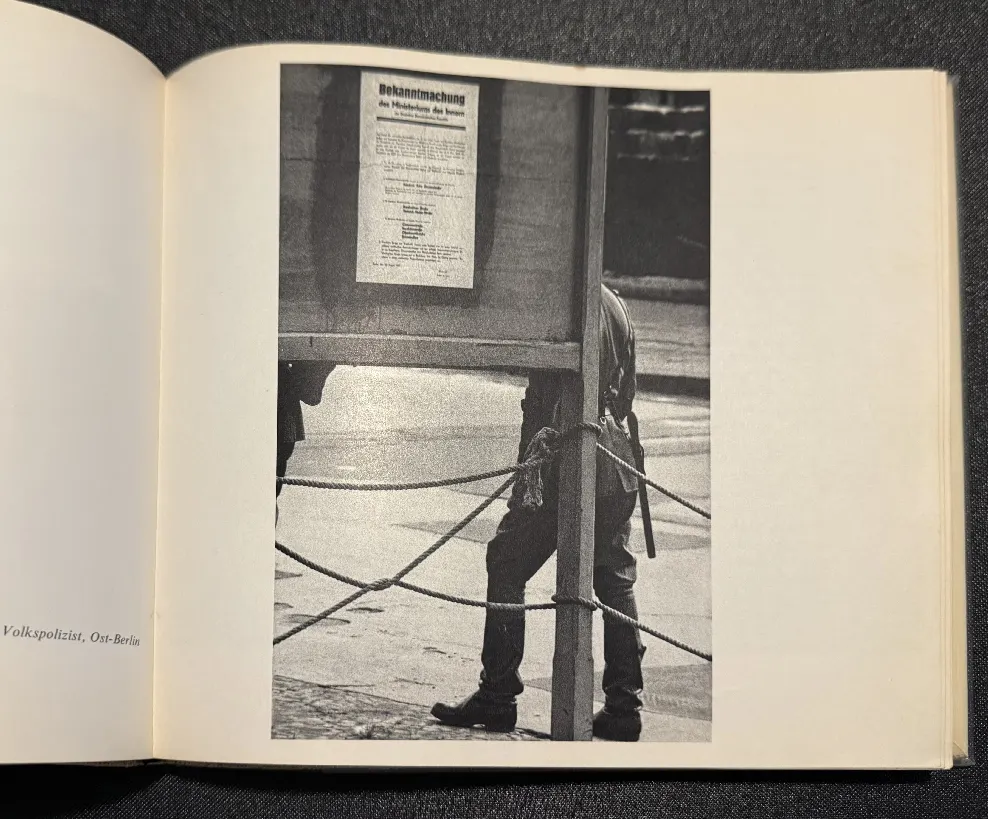
Visually, his work on this series moved away from the standard "decisive moment" of photojournalism toward a more cinematic and layered style. He frequently utilized high-contrast black-and-white film to emphasize the physical and psychological walls within the country. By using wide-angle lenses and unconventional framing—such as shooting through windows or across crowded streets—he captured the sense of isolation and surveillance that defined the era. These techniques turned simple street scenes into complex, multi-layered narratives that mirrored the fractured identity of Germany itself.
Burri was uniquely celebrated for his ability to blend formal artistry with deep human empathy. He maintained long-term creative friendships with icons like Pablo Picasso and Le Corbusier, documenting their lives and work with an intimacy rarely seen in journalism. Unlike many of his peers who strictly adhered to black-and-white film, Burri was a pioneer in using color to tell complex stories.
He continued to work and publish until his death in 2014, leaving behind a legacy that bridges the gap between historical reportage and fine art.

This is the true first edition of Burri's exemplary photobook, preceding the French issue by Delpire by one year, featuring 80 finely screened, "sharp and incisive"photogravure plates (Parr & Badger). A centerpiece of publisher Robert Delpire's renowned series Encyclopédie essentielle, which also featured Robert Frank's Les Américains, René Burri's Die Deutschen is widely acclaimed as "one of the best photobooks of the 1960s " Die Deutschen exactly mirrors Les Américains in conception " Burri's pictures are sharp and incisive, occupying an interesting middle ground between the controlled framing of the classic photojournalistic mode and the casual looseness of Frank " [Primarily] Burri is a documentary photographer, a photojournalist, in a way that Frank is not "He is both a responsible journalist and an extremely talented photographer"whose chronicle of postwar Germany makes Die Deutschen a striking model of the "classic genre of European photojournalism"(Parr & Badger I:218, 190).
The French edition published in 1963 by Delpire was titled Les Allemands.