


Which art books, prints and posters are available by and about this artist? Here is a sample of items of interest to a typical collector:

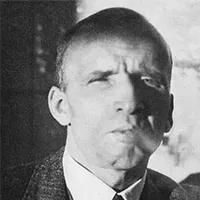
Albert Renger-Patzsch, German (1897-1966)
Renger-Patzsch was celebrated for his role in the Neue Sachlichkeit (New Objectivity) movement. He became renowned for crafting images that focus on the clear, unembellished essence of objects, whether natural forms or industrial subjects with a realism that was both scientific and aesthetic.
Born in Würzburg, Renger-Patzsch was fascinated by photography, from an early age his father introduced him to the medium, and by around age 12, he was already skilled in both capturing and developing images. After serving in World War I, he briefly pursued chemistry in Dresden before turning fully toward photography. In the early 1920s, he became director of the image archive at the Folkwang publishing house, a role that bridged him into a freelance photography career by 1925.
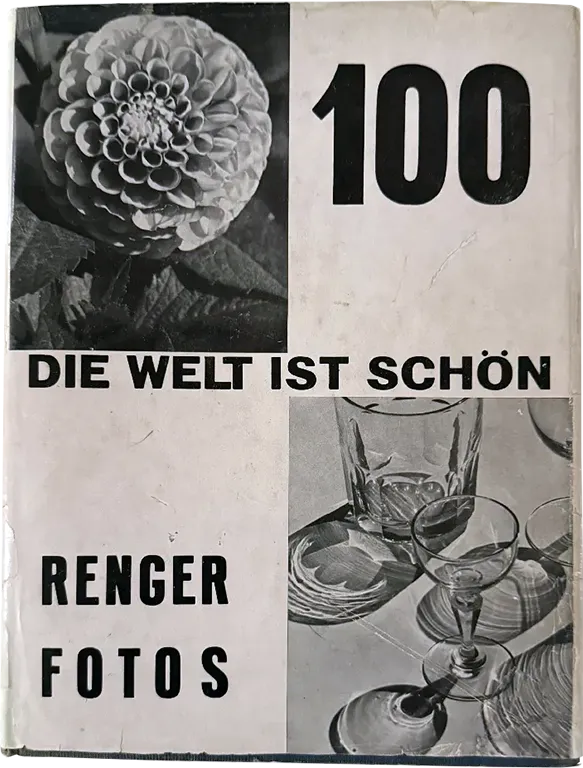
His landmark photobook Die Welt ist schön (“The World Is Beautiful,” 1928) compiled 100 images ranging from plants and machinery to architectural details, each captured with a detached clarity meant to let the object speak for itself. Despite the poetic title, Renger-Patzsch preferred calling the collection Die Dinge (“The Things”).
He firmly rejected artistic manipulation, pictorialism, montage, or staged effects and instead championed the photograph’s intrinsic capacity to render reality faithfully. He famously asserted: “The secret of a good photograph [...] is its realism [...] let us [...] create photographs which will last because of their photographic qualities”
In the 1930s onward, Renger-Patzsch worked extensively in industrial and advertising photography, capturing precise images for clients and publishing houses. Though much of his early archive was destroyed during World War II bombings, he continued after the war with nature-focused projects creating notable bodies of work such as Bäume (Trees, 1962) and his final project Gestein (Rock, 1966), exploring geological forms with both poetic and scientific depth.
Renger-Patzsch's legacy lies in his ability to reveal the inherent beauty of everyday objects and natural forms through striking, unadorned detail. His work continues to influence both documentary and fine-art photography, celebrated for its clarity, structure, and unwavering realism.

This is an actual first edition book (1928) in the second edition dust jacket (1931)