
Sophie Calle

Sophie Calle
To artist biography

Sophie Calle

Which art books, prints and posters are available by and about this artist? Here is a sample of items of interest to a typical collector:

2019
with:
Edition:
1st
Edition size:
Signed on the second page.
Out of Print
Other edition(s):
Book was reprinted in 2024.
Boards with Japanese binding and loose photographs slipped inside in each page.
ISBN:
9782365112352
Condition: Near Fine
2019
Out of Print
Signed
Edition:
1st
Prior edition(s):
Book was reprinted in 2024.
Boards with Japanese binding and loose photographs slipped inside in each page.
Condition: Near Fine

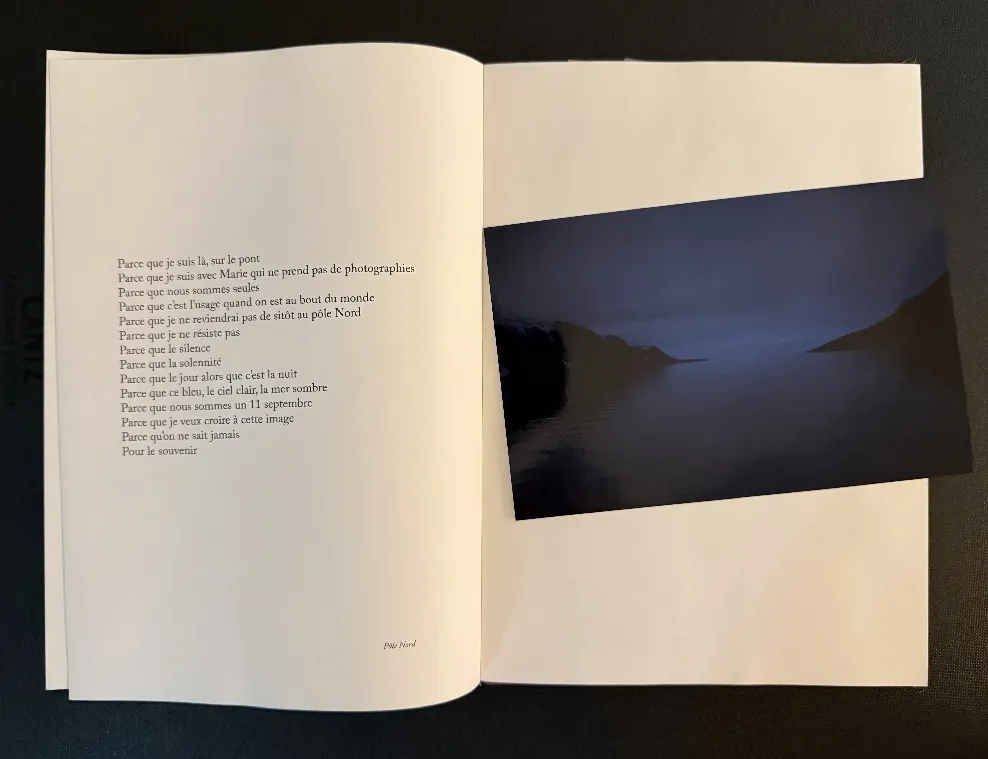
This work is part of Calle’s ongoing exploration of the relationship between narrative, memory, and photography, and mixes humor and melancholy with her particular eye for irony. In each piece, a felt curtain embroidered with Calle’s writing conceals a hidden photograph behind it. In presenting viewers with the text before the picture, Calle upends the usual order in which images are read.

English edition of the French edition Parce Que.

Book comes as an imaginary erratum to the actual Drouot catalog for the sale of her possessions. Signature is on book's first page, not the catalog.

2019
Out of Print
Signed
Edition:
1st
Prior edition(s):
Reprinted in 2024.
Boards with Japanese binding and loose photographs slipped inside in each page.
Condition: Near Fine

This work is part of Calle’s ongoing exploration of the relationship between narrative, memory, and photography, and mixes humor and melancholy with her particular eye for irony. In each piece, a felt curtain embroidered with Calle’s writing conceals a hidden photograph behind it. In presenting viewers with the text before the picture, Calle upends the usual order in which images are read.

2014
with:
Stephane Couturier, Julien Magre, Antoine d'Agata, Alian Bublex
Edition:
1st
Edition size:
Numbered 184/500
Signed by Sophie Calle, Alain Bublex, Julien Magre & Stéphane Couturier.
Out of Print
Other edition(s):
Slipcased hardcover with hand-tipped photos inside
ISBN:
9782365110600
Condition: Near Fine

Edition of 500 out of which only half were for sale.

Previously published by three publishers from 1983 to 1999.This is the 2nd printing by Siglio. Light marks to cover.

2021
with:
Edition:
1st English
Edition size:
Out of Print
Other edition(s):
First published in France in 1984.
Hardcover without dust jacket, as issued
ISBN:
9781938221293
Condition: Near Fine
2021
Out of Print
Signed
Edition:
1st English
Prior edition(s):
First published in France in 1984.
Hardcover without dust jacket, as issued
Condition: Near Fine

The first edition of Sophie Calle’s L'Hôtel was published in Paris in 1984 by Editions de l'Étoile. This conceptual art book documented her 1981 project where she worked as a chambermaid in a Venetian hotel, meticulously photographing and recording the private belongings of the guests.

Book images
2026
with:
Edition:
1st
Edition size:
Out of Print
Other edition(s):
Softcover in organizer-type folder.
ISBN:
9782330206918
Condition: Fine

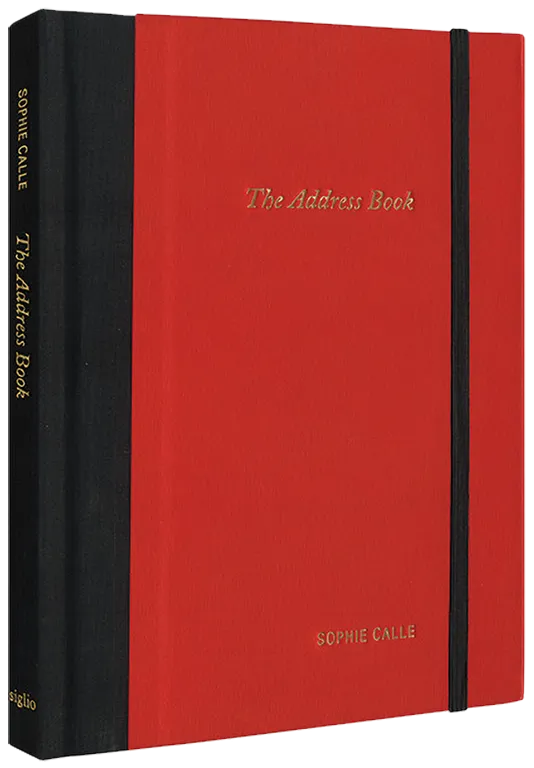
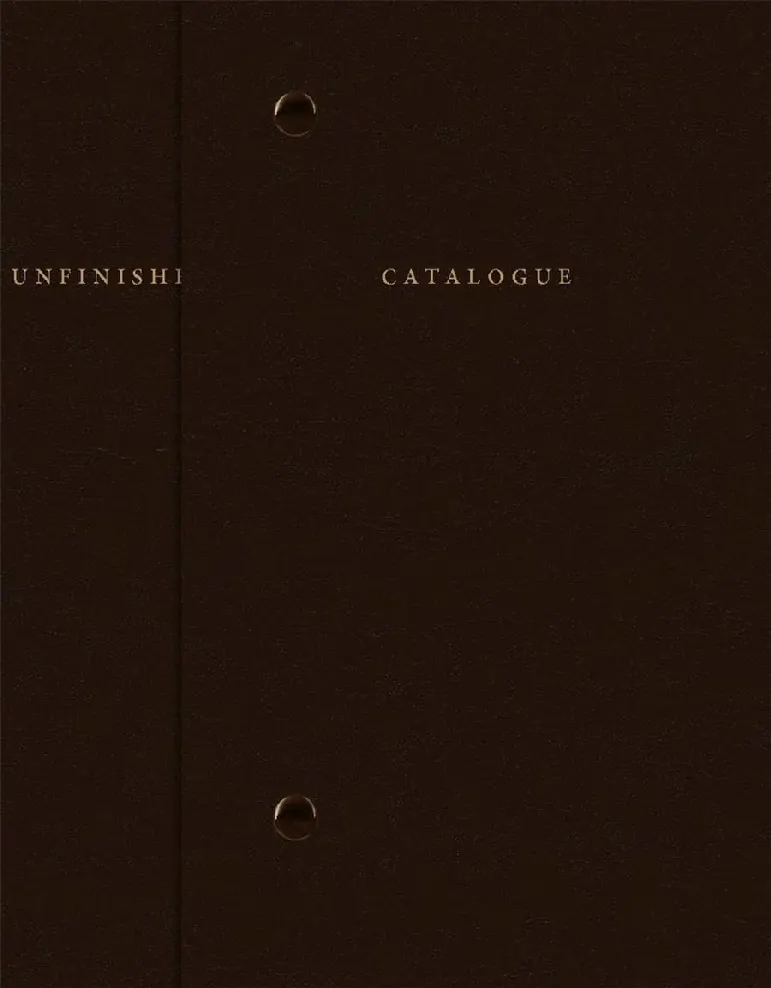
"I have a horror of the finished. Death is final. The gunshot is final. The almost finished is life," said Pablo Picasso. "But," replies Sophie Calle, "when everything stops, what will become of the ideas that stagnate, that wait their time in boxes, in coffins? Before disappearing, it's necessary to make an inventory of sketches, attempts and abandonments, and bring intentions to life. A way of ending things."
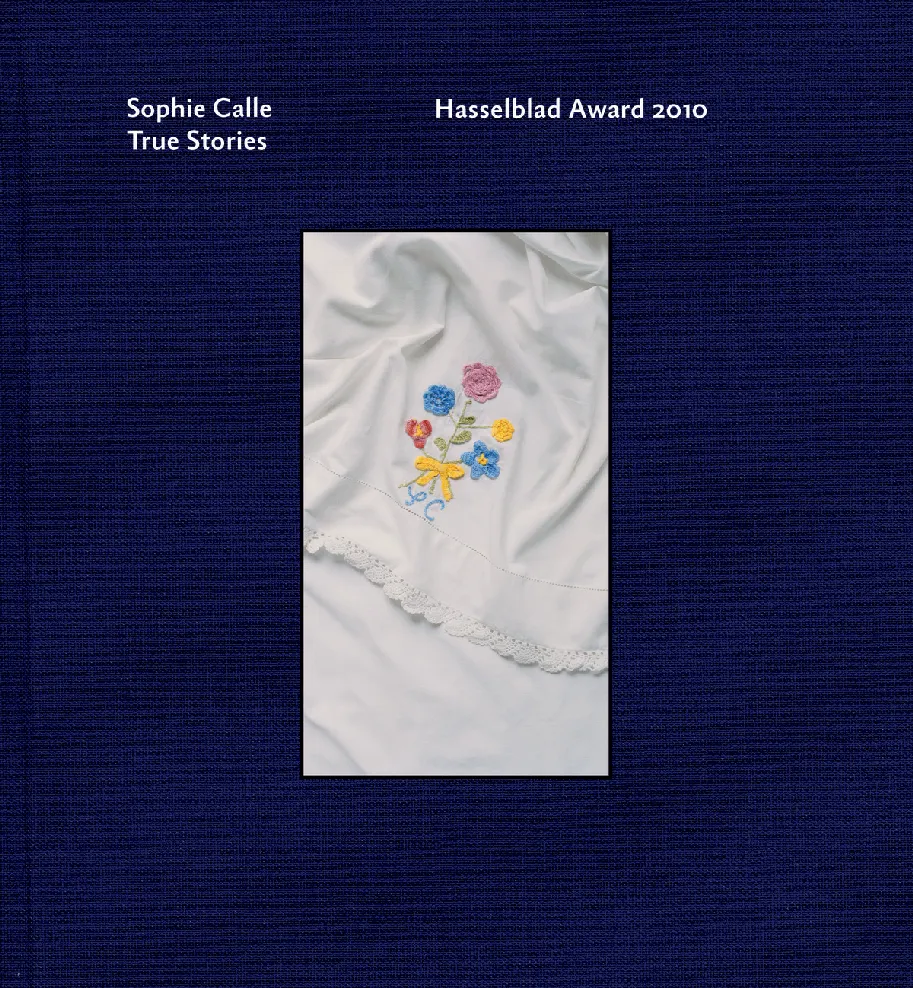
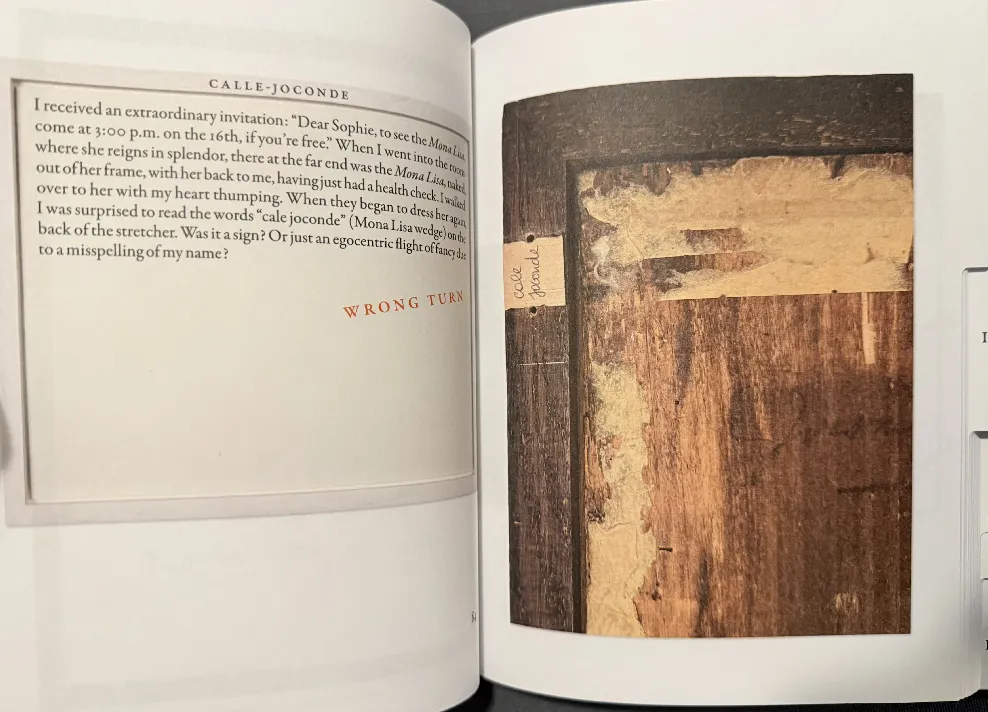
This volume follows the artist's 2024 exhibition À toi de faire, ma mignonne at the Musée Picasso in Paris, marking the first time that French artist Sophie Calle has showcased a selection of her unfinished or abandoned projects, which she also understands as her failures. These stories, stamped with a verdict in red indicating the reason for their incompleteness, offer a mirror to her True Stories, a book regularly reissued since 1994. In this eventful collection, which reveals all the submerged aspects of a body of work spanning several decades, we find the main motifs of her work, such as chance, chance encounters and, above all, her key idea of incompletion as a result, trial and failure as corollaries of artistic action, an echo of Picasso's philosophy from decades ago. In this book, Calle takes stock of a lifetime of artistic creation, and hints at future challenges.

Edition:
42/150
Signature label in labels envelope
Year of work:
Image size:
37 x 47 cm (e x cluding te x t)
Print size:
50 x 70 cm
Printed in
2013
Framed size:
Provenance:
Galerie Perrotin
Digital print on Fine art 100% cotton paper
Condition:
Pristine

This print comes from the French edition of 150. It has also been released in another edition of 150 in English.

Literature and Collections:
No items found.
No items found.

Sophie Calle, b. 1953, Paris

Calle is the daughter of oncologist and collector Robert Calle and book critic and press attaché Monique Findler. After graduating from secondary school at age 17, Calle eschewed further schooling and instead spent seven years traveling through China, the United States, and Mexico. She never attended art school and often brushes off the label of artist, describing many of her projects as a “private game.” She insists, “I did not think about becoming an artist when I began. I did not consider what I was doing as art.”¹ In her practice, Calle works in photography and installation, combining photos, texts, and videos to weave narratives of private experience, her own and that of others.

Calle’s “private games” began on her return to Paris in the late 1970s, when she decided to follow strangers through the streets while aiming to reacquaint herself with the city. She also pursued photography, which she had picked up while living in California, and was inspired by the text-captioned work of American photographer Duane Michals (which her father collected). Voyeurism and surveillance became Calle’s primary artistic tactics. For her first major project, The Sleepers (1979), she invited strangers into her home to spend eight hours in her bed, while she documented their stay with notes and photographs. At the 1980 Bienal des Jeunes in Paris, she presented the photographs and notes in an installation that contrasted the intimacy of the photographs with the banality of textual descriptions written with cool anthropological detachment. The combination of portraiture, conceptual art, and the public exposure of private experiences became hallmarks of Calle’s subsequent work.

In other early works, Calle reprised the role of the private detective. She followed one of her Parisian subjects on his trip to Venice, spending 13 days recording his activities. The result, Suite Vénitienne (1980), was published in a book with an afterword by the French media theorist Jean Baudrillard, in which he notes in particular the violence and seduction of Calle’s act. The latent aggression of surveillance is also revealed by Calle’s physical trespasses for The Hotel (1981, first published in 1984), a project in which she rifled through and photographed the belongings of unsuspecting guests while temporarily working as a chambermaid in a Venetian hotel. Baudrillard’s text also highlights the loneliness inherent to Calle’s work: “These are not souvenir snapshots of a presence, but rather shots of an absence, the absence of the followed, that of the follower, and that of their reciprocal absence.”²

Calle’s work has also focused on questions of absence and desire in her personal relationships. In 1992, she collaborated with then-boyfriend Greg Shepherd to produce her first work in video, Double Blind (1992–94), created during a road trip the couple took from New York to San Francisco. They both carried camcorders and captured their widely different views of the physical landscape and their relationship as well as their shifting senses of attraction and aversion. Calle and Shepherd married in a drive-through chapel in Las Vegas during the trip, but the relationship dissolved soon afterward. A more recent exploration of her personal life, Couldn’t Capture Death, a video of her mother’s last moments before passing away in 2006, was presented in the French Pavilion of the 2007 Venice Biennale. By offering her own emotional and psychological life as a subject of art, Calle invites viewers to meditate on grief, loss, and remembrance.

Calle has shown her work extensively in Europe since the early 1980s, and in the United States since her first one-person exhibition at Fred Hoffman Gallery, Los Angeles, in 1989. Major solo exhibitions include the retrospective M’as-tu vue? (Did you see me?, 2003–04) at the Centre Pompidou, Paris, a 2009 retrospective at Whitechapel Gallery, London and the Musée Picasso, Paris in 2024 (A Toi de Faire ma Mignonne). Calle lives and works in Paris.