

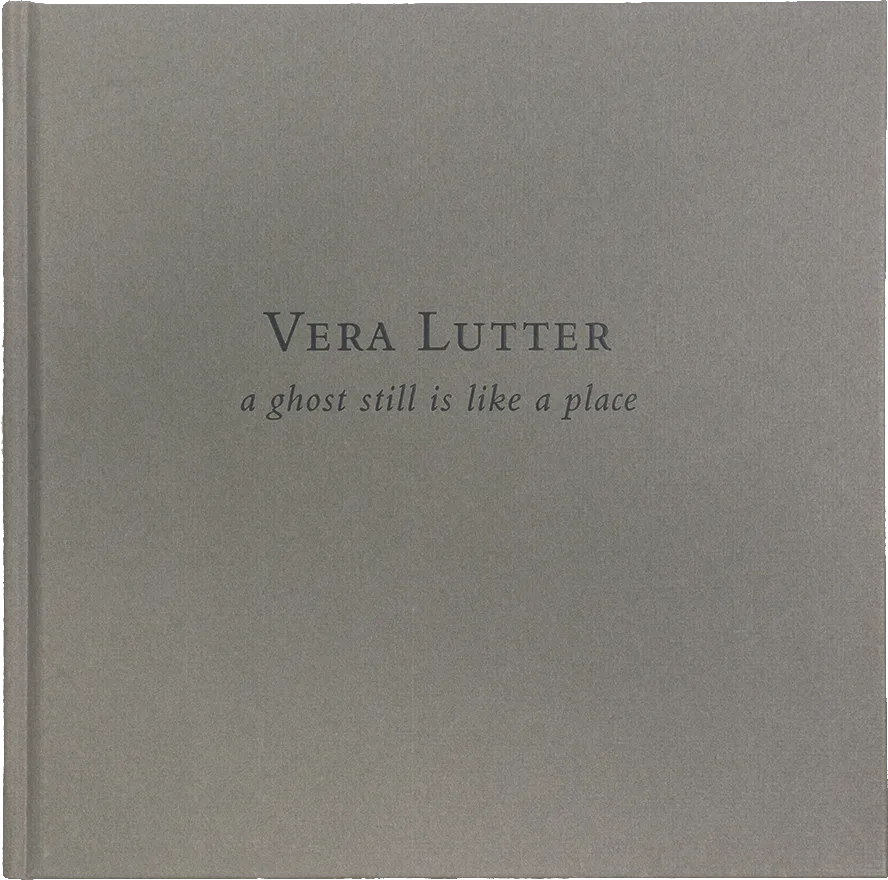


Which art books, prints and posters are available by and about this artist? Here is a sample of items of interest to a typical collector:

%20Resized.webp)
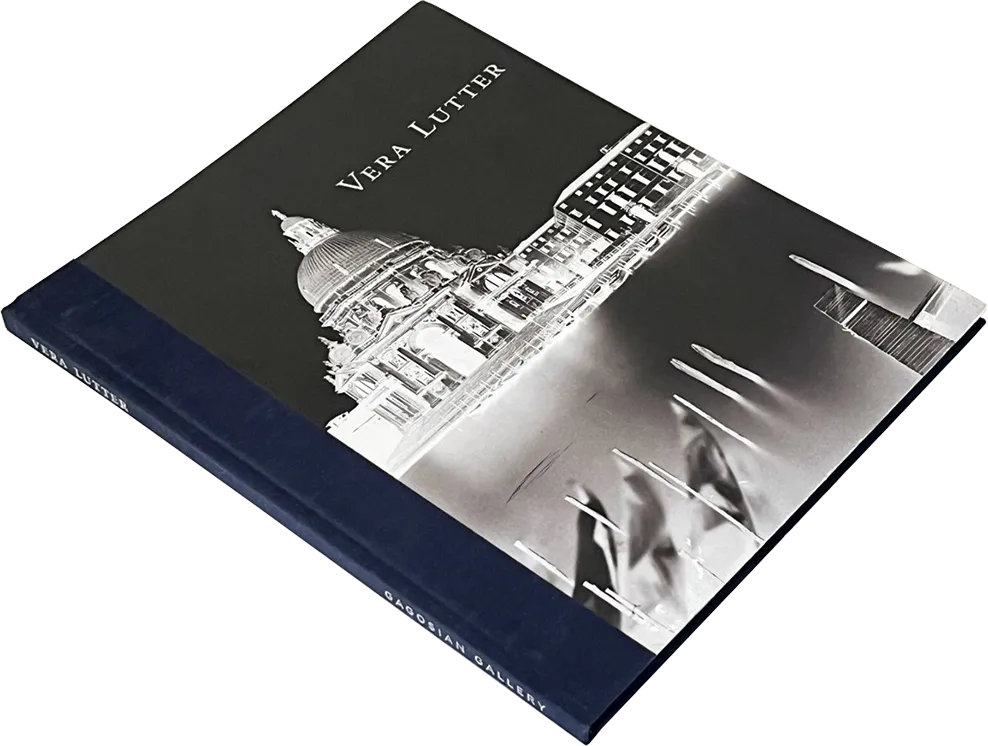
Vera Lutter (born 1960 in Kaiserslautern, Germany) is an internationally acclaimed contemporary artist based in New York City, celebrated for her monumental, ethereal photographs created using one of the oldest and most fundamental photographic techniques: the camera obscura. Her practice is deeply rooted in a rigorous formalist discipline, transforming entire architectural spaces into pinhole cameras to explore time, scale, light, and the physical mechanics of the medium itself.
Lutter initially trained in sculpture, earning her degree from the Academy of Fine Arts, Munich, in 1991. Hoping to capture the overwhelming scale, architecture, and kinetic energy of the city, she moved to New York to attend the School of Visual Arts, where she received an MFA in Photography and Related Media in 1995. It was during this transition from sculpture to image-making that she began experimenting with the camera obscura, a method that seamlessly bridges spatial, sculptural three-dimensionality and the flat surface of the photographic print.
Her creative process is defined by an uncompromising, site-specific protocol. Lutter constructs her camera obscura by completely darkening a room—whether a New York loft, a shipping container, or a custom-built enclosure—and cutting a single, small aperture into one wall. Instead of utilizing film or a traditional camera body, she projects the outside image directly onto massive sheets of light-sensitive, silver gelatin photographic paper mounted on the opposite wall. Because she does not use a film negative to create a positive print, each resulting image is a unique, irreplaceable, large-scale object—a direct, physical manifestation of the light that entered the room.
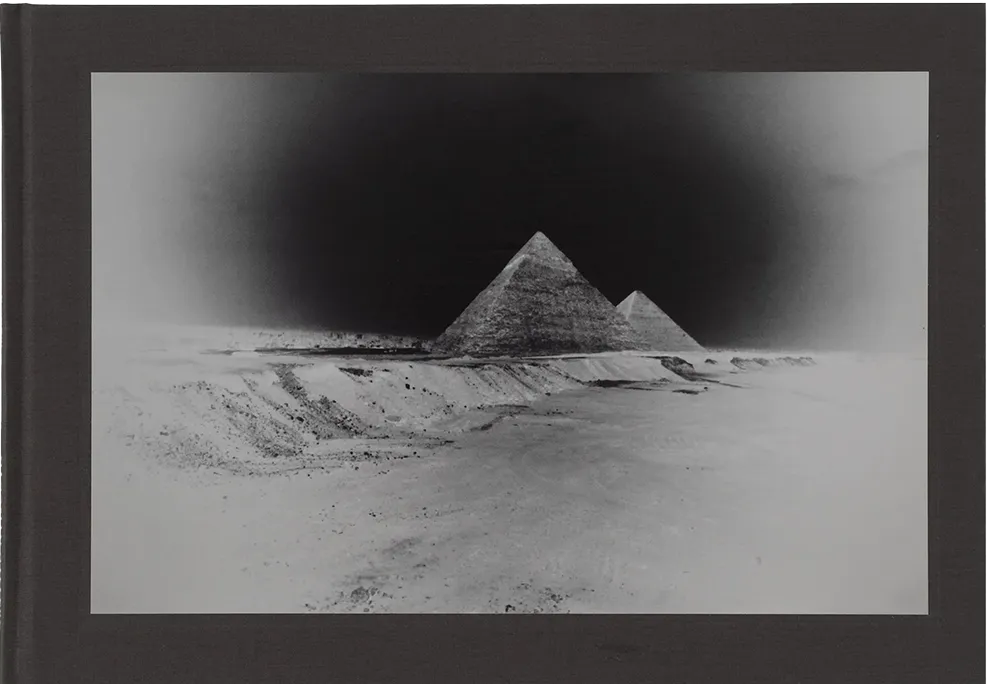
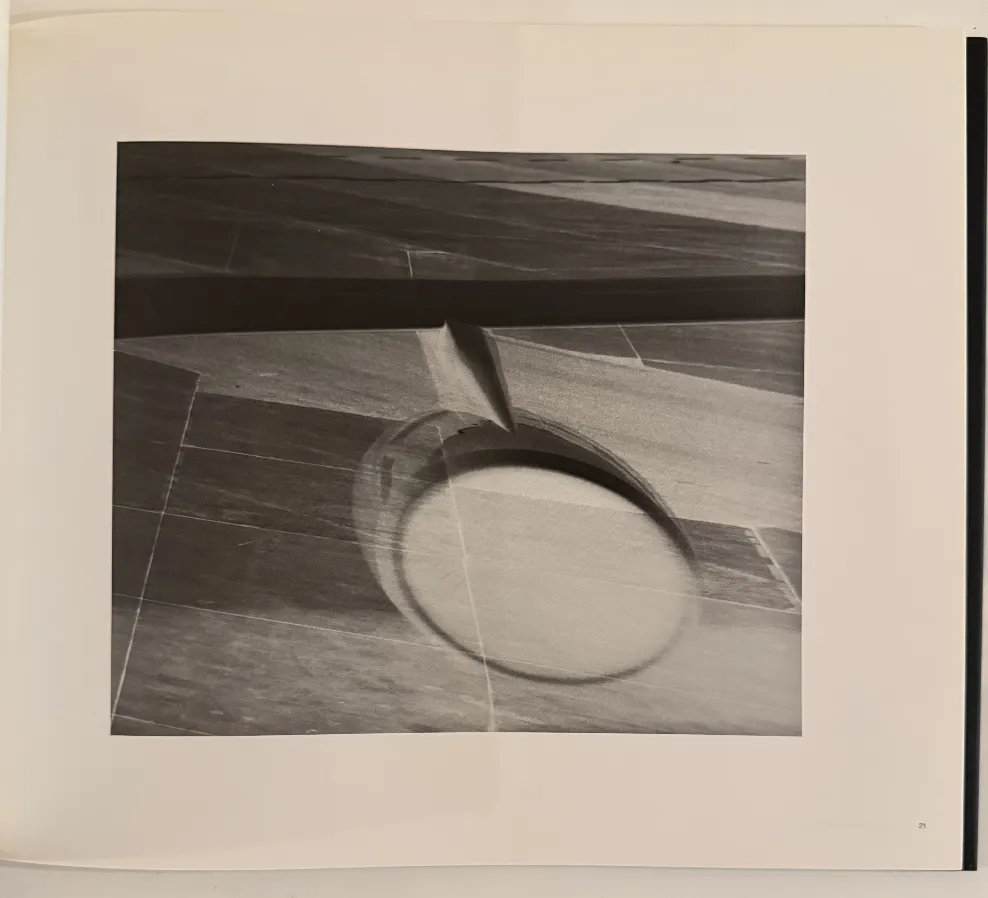
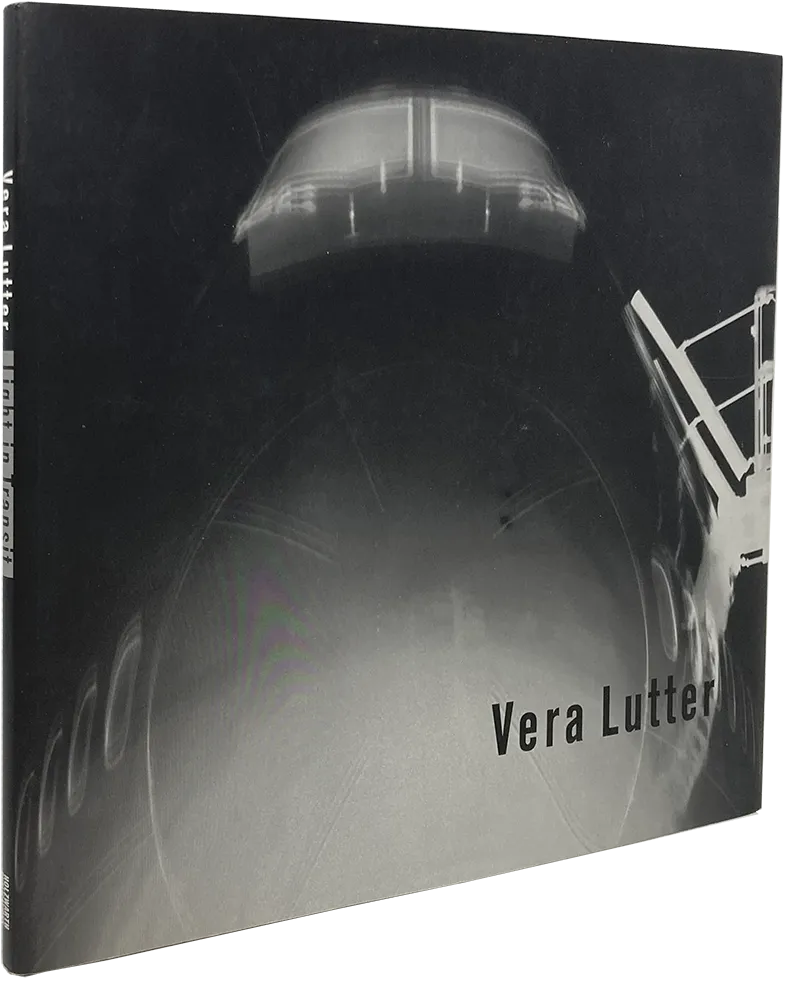
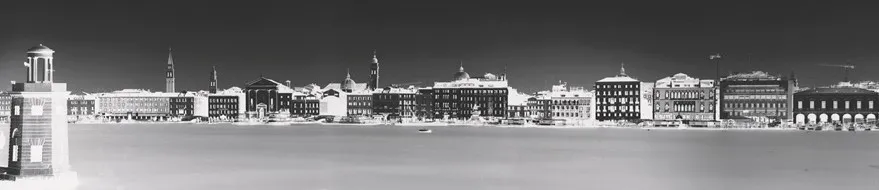
By bypassing the traditional negative-to-positive reproduction process, Lutter’s final works remain as monochromatic negatives. In these images, skies turn a deep, ink-like black, while solid architecture and bright surfaces gleam in ghostly, luminous whites. Because her exposure times require days, weeks, or even months, any rapid movement within the frame—such as pedestrian traffic, flowing water, or passing cars—leaves no trace on the paper, or appears only as a faint, spectral blur. Only the static, structural elements of the landscape remain, rendering familiar industrial and urban sites entirely otherworldly.
Her early, defining body of work captured the rapidly changing urban landscape of New York City, including the iconic, industrial architecture of the Pepsi-Cola sign in Long Island City and the sweeping transit hubs of Manhattan. Her practice has since expanded globally, taking her to the industrial architecture of Essen, Germany, the historic canals and plazas of Venice, and the ancient temples of Paestum, Italy. In 2017, the Los Angeles County Museum of Art (LACMA) commissioned Lutter for a major residency, during which she turned her camera obscura on the museum's own campus, permanent collections, and galleries, capturing the structural essence of the institution itself.
Lutter's work has been honored with numerous prestigious accolades, including a Pollock-Krasner Foundation Grant (2002) and a John Simon Guggenheim Memorial Foundation Fellowship (2001). Her unique, large-format silver gelatin prints are held in the permanent collections of foremost global institutions, including the Metropolitan Museum of Art, the Museum of Modern Art (MoMA), the Whitney Museum of American Art, the Solomon R. Guggenheim Museum, the San Francisco Museum of Modern Art (SFMoMA), the Museum of Fine Arts, Houston, and the Centre Pompidou in Paris. She is represented internationally by Gagosian Gallery.

