
Boards
ISBN:


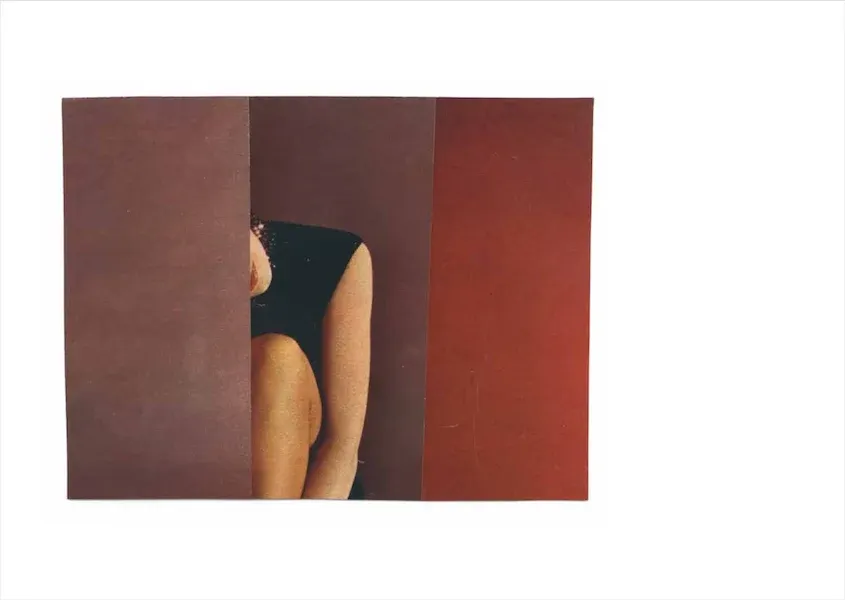
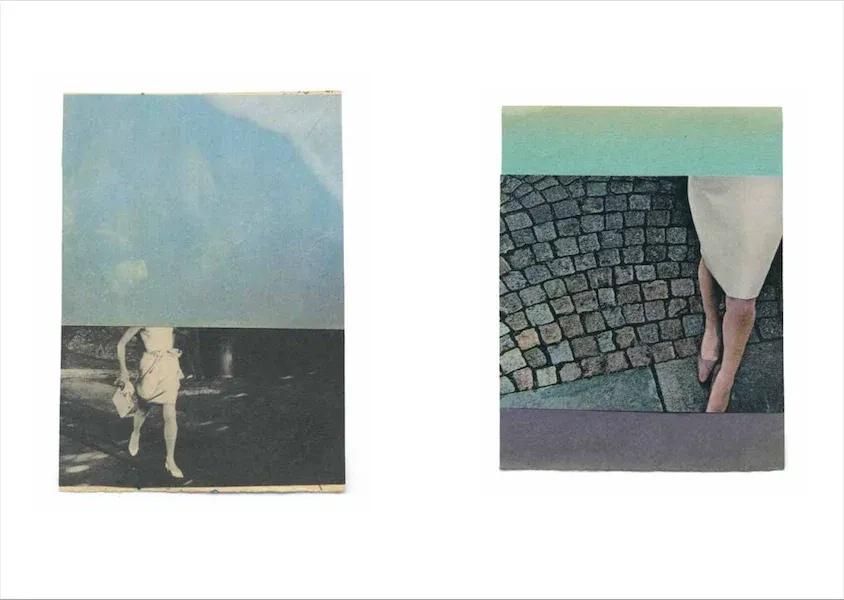

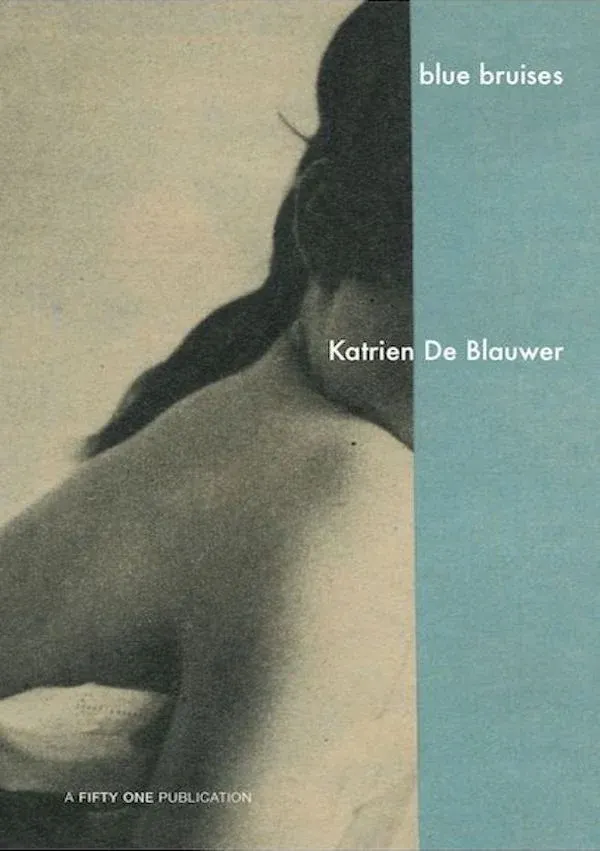
Katrien De Blauwer’s Blue Bruises functions as an excavation of memory, psychological trauma, and female identity, constructed entirely through the act of collecting and cutting. Often referring to herself as a "photographer without a camera," the Belgian artist harvests images from mid-century vintage magazines, slicing away identifying features to leave only fragmented gestures, postures, and atmospheres. In this specific body of work, De Blauwer explores the invisible scars of emotional experience, utilizing the color blue and the concept of bruising as metaphors for melancholy, endurance, and domestic silence. Rather than offering straightforward narratives, the book operates as a suggestive, intimate diary where the off-screen void becomes the central subject.
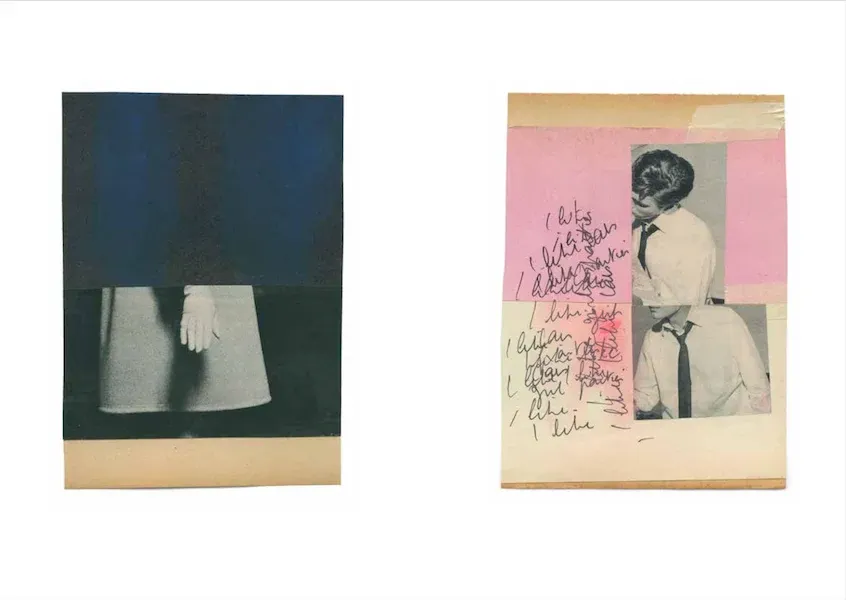
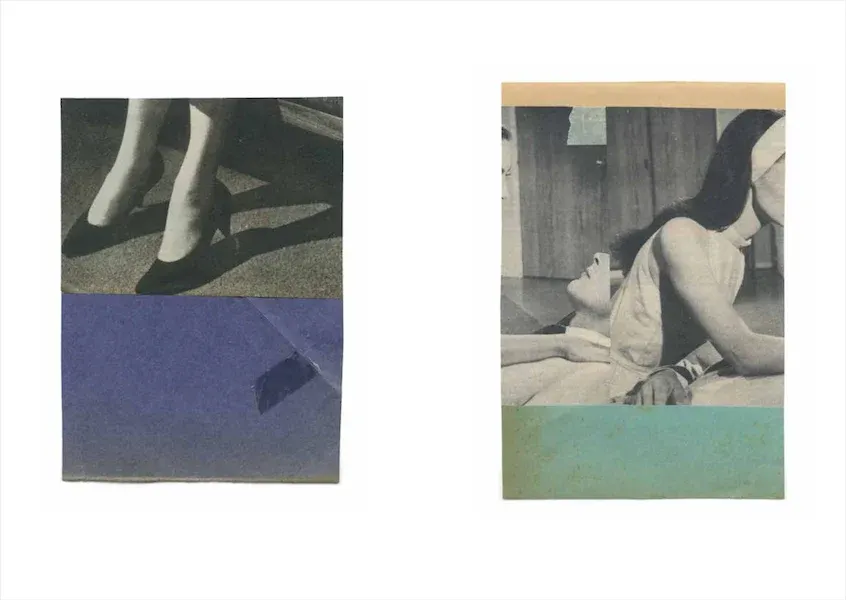
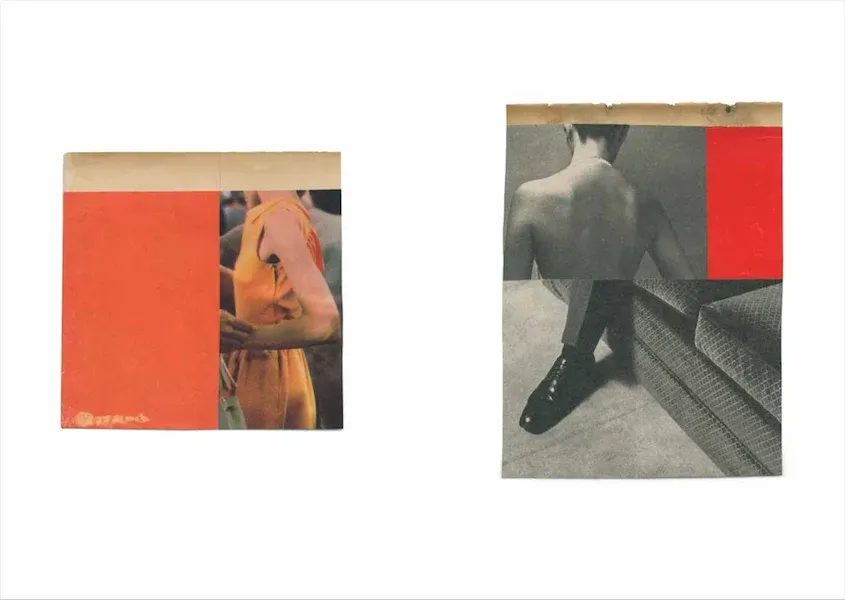
The visual language of the monograph is defined by its tactile, minimalist approach to collage. By isolating disparate limbs, anonymous silhouettes, and blocks of stark pastel color, particularly bruised, saturated blues, De Blauwer physically intervenes in the found photographic object. The act of severing and reassembling the paper creates a distinct structural friction, emphasizing the physical edge of the cut as a boundary between presence and erasure. Her deliberate obscuring of faces forces the viewer to engage with the universal language of body mechanics and quiet, involuntary gestures. The resulting compositions are modest in scale but carry an immense emotional weight, turning the physical manipulation of mass media into a deeply private, almost therapeutic aesthetic practice.

Katrien De Blauwer’s Blue Bruises functions as an excavation of memory, psychological trauma, and female identity, constructed entirely through the act of collecting and cutting. Often referring to herself as a "photographer without a camera," the Belgian artist harvests images from mid-century vintage magazines, slicing away identifying features to leave only fragmented gestures, postures, and atmospheres. In this specific body of work, De Blauwer explores the invisible scars of emotional experience, utilizing the color blue and the concept of bruising as metaphors for melancholy, endurance, and domestic silence. Rather than offering straightforward narratives, the book operates as a suggestive, intimate diary where the off-screen void becomes the central subject.
The visual language of the monograph is defined by its tactile, minimalist approach to collage. By isolating disparate limbs, anonymous silhouettes, and blocks of stark pastel color, particularly bruised, saturated blues, De Blauwer physically intervenes in the found photographic object. The act of severing and reassembling the paper creates a distinct structural friction, emphasizing the physical edge of the cut as a boundary between presence and erasure. Her deliberate obscuring of faces forces the viewer to engage with the universal language of body mechanics and quiet, involuntary gestures. The resulting compositions are modest in scale but carry an immense emotional weight, turning the physical manipulation of mass media into a deeply private, almost therapeutic aesthetic practice.