
Hardcover with DJ
ISBN:
9781935004202


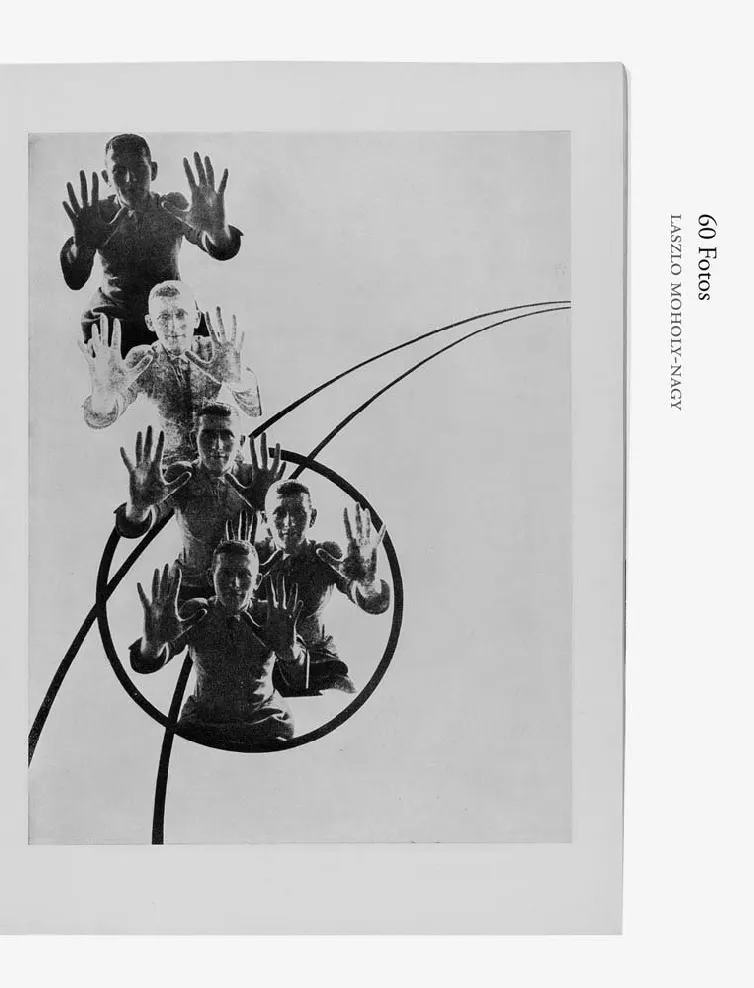
Laszlo Moholy-Nagy's 60 Fotos (originally published in 1930) is a foundational manifesto of the New Vision movement, utilizing dynamic camera angles, radical close-ups, and dramatic light contrasts to redefine photographic seeing as an extension of modern industrial perception.
While the original 1930 edition is in the Bushwick sur Seine collection, the Errata Edition of the book (Books on Books series) is uniquely relevant to the collection due to its fascinating concept of reproducing a book within a book. Rather than a standard facsimile or replica format, these editions present the original work with its own physical pages and margins visibly documented. While this approach was likely conceived to navigate copyright complexities surrounding long out-of-print titles, the resulting act of reprinting, recontextualizing, and reappropriation aligns perfectly with the core themes of this archive.
Laszlo Moholy-Nagy's 60 Fotos (originally published in 1930) is a foundational manifesto of the New Vision movement, utilizing dynamic camera angles, radical close-ups, and dramatic light contrasts to redefine photographic seeing as an extension of modern industrial perception.
While the original 1930 edition is in the Bushwick sur Seine collection, the Errata Edition of the book (Books on Books series) is uniquely relevant to the collection due to its fascinating concept of reproducing a book within a book. Rather than a standard facsimile or replica format, these editions present the original work with its own physical pages and margins visibly documented. While this approach was likely conceived to navigate copyright complexities surrounding long out-of-print titles, the resulting act of reprinting, recontextualizing, and reappropriation aligns perfectly with the core themes of this archive.

Laszlo Moholy-Nagy's 60 Fotos (originally published in 1930) is a foundational manifesto of the New Vision movement, utilizing dynamic camera angles, radical close-ups, and dramatic light contrasts to redefine photographic seeing as an extension of modern industrial perception.
While the original 1930 edition is in the Bushwick sur Seine collection, the Errata Edition of the book (Books on Books series) is uniquely relevant to the collection due to its fascinating concept of reproducing a book within a book. Rather than a standard facsimile or replica format, these editions present the original work with its own physical pages and margins visibly documented. While this approach was likely conceived to navigate copyright complexities surrounding long out-of-print titles, the resulting act of reprinting, recontextualizing, and reappropriation aligns perfectly with the core themes of this archive.