
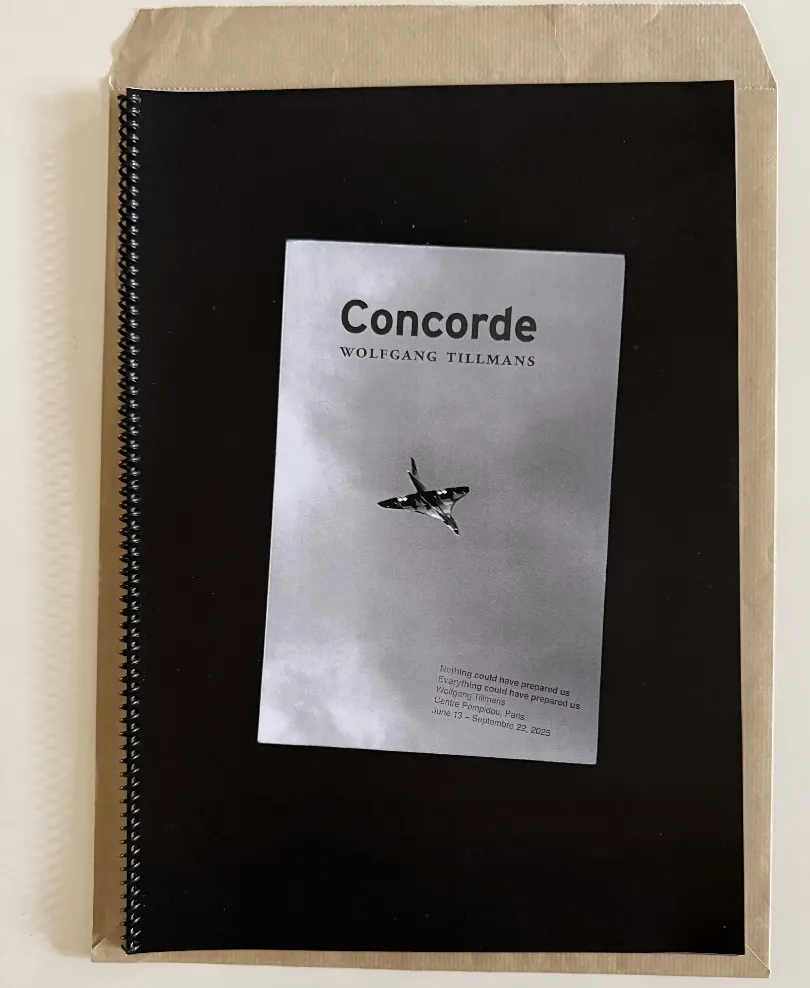
Oversized softcover in Pompidou envelope.
ISBN:
No ISBN


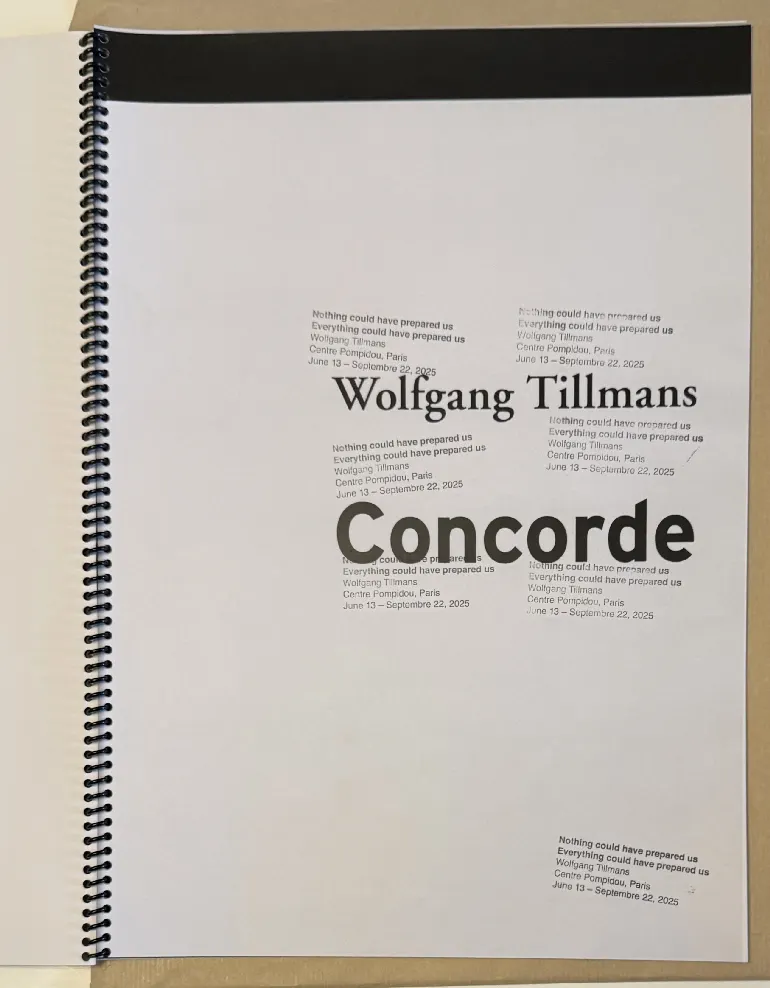
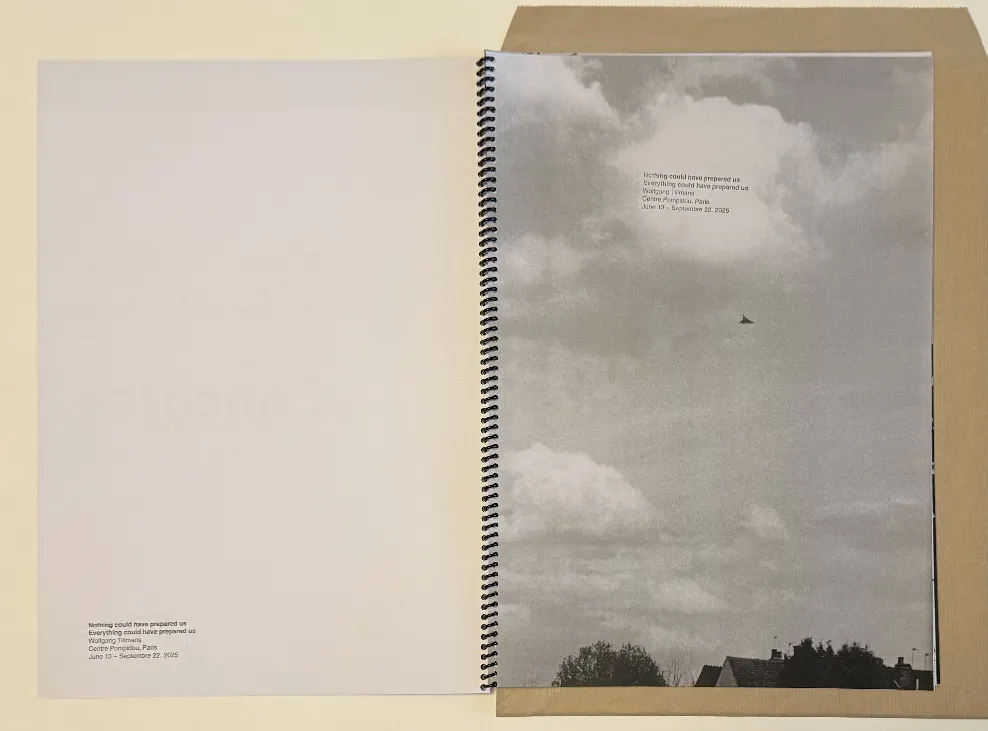
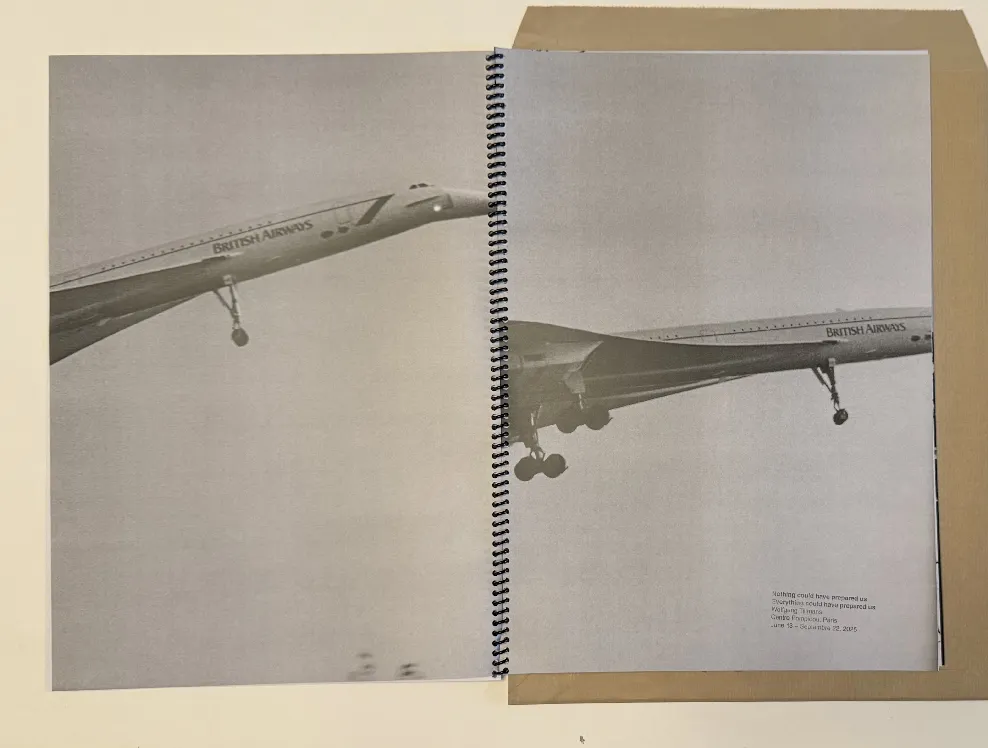
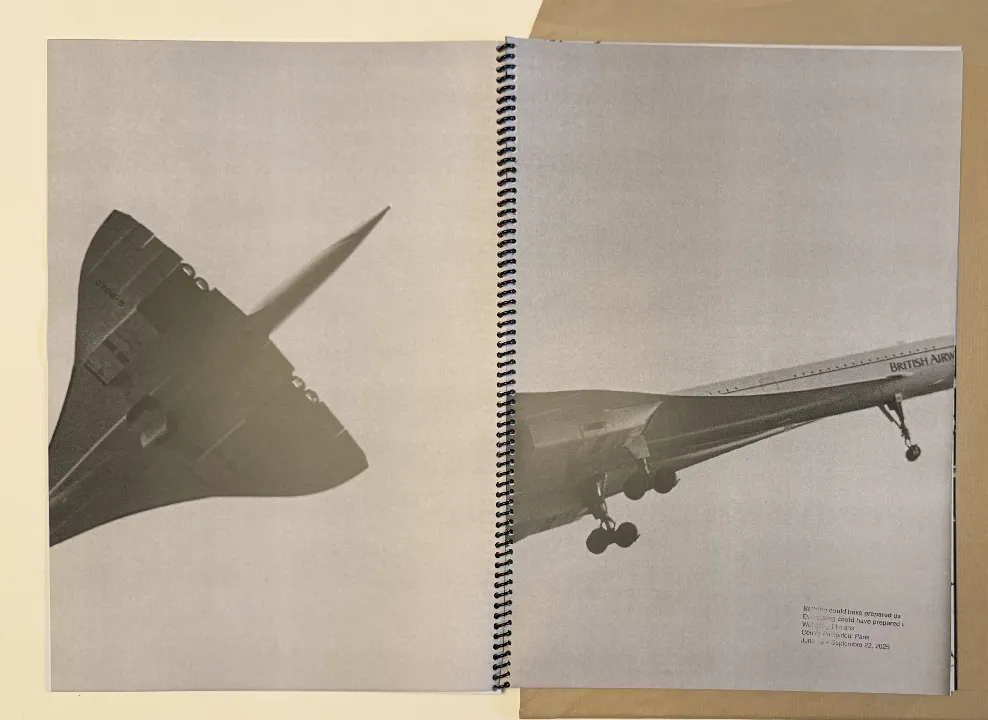
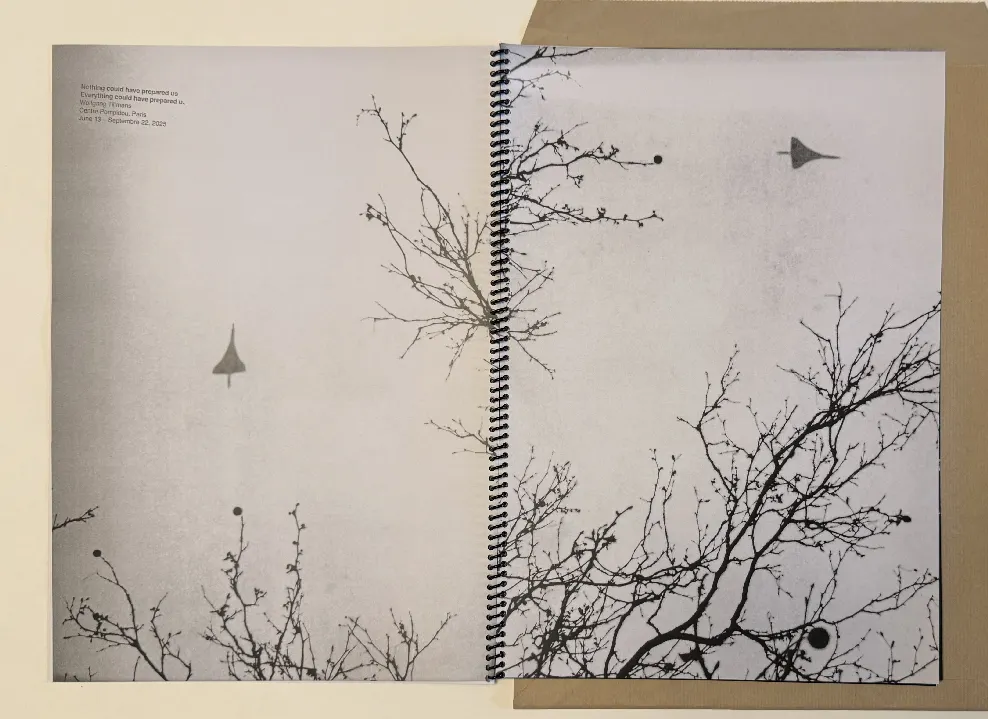
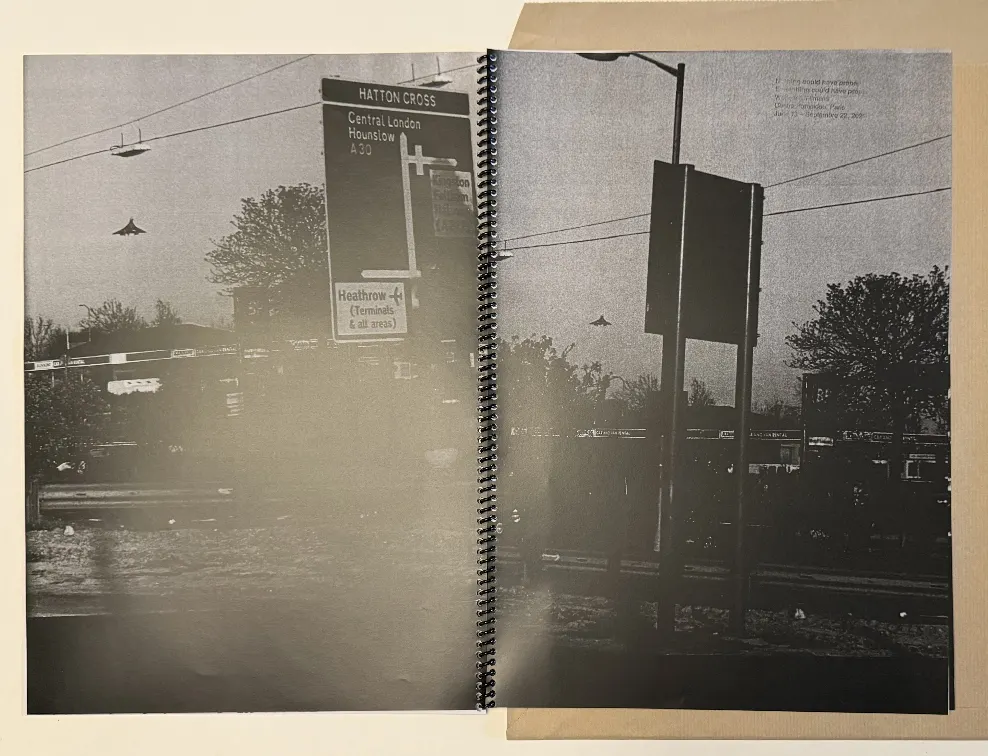
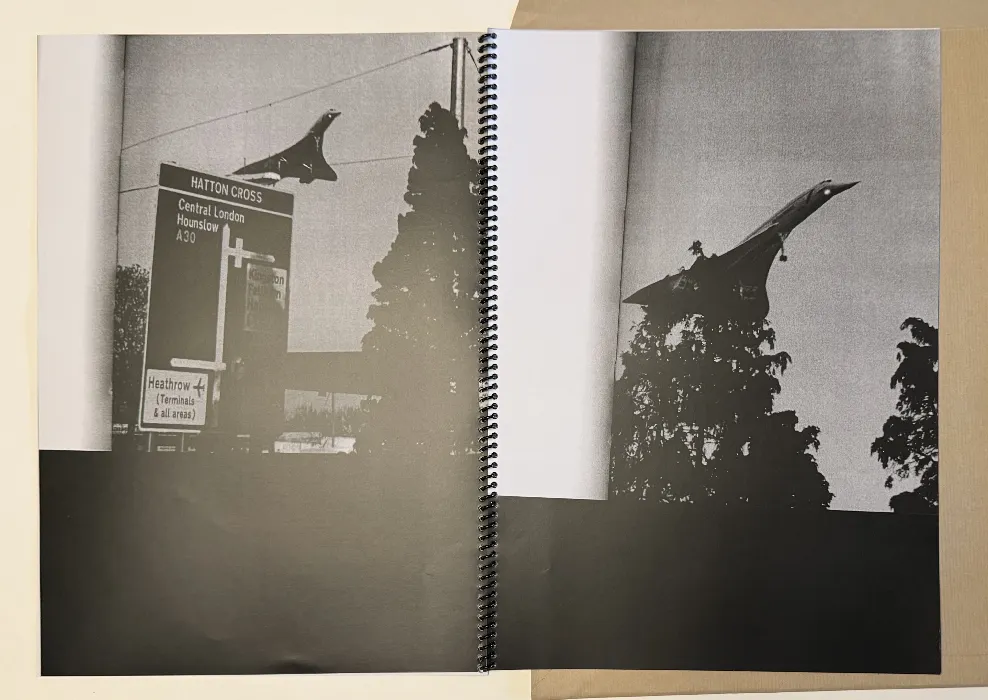
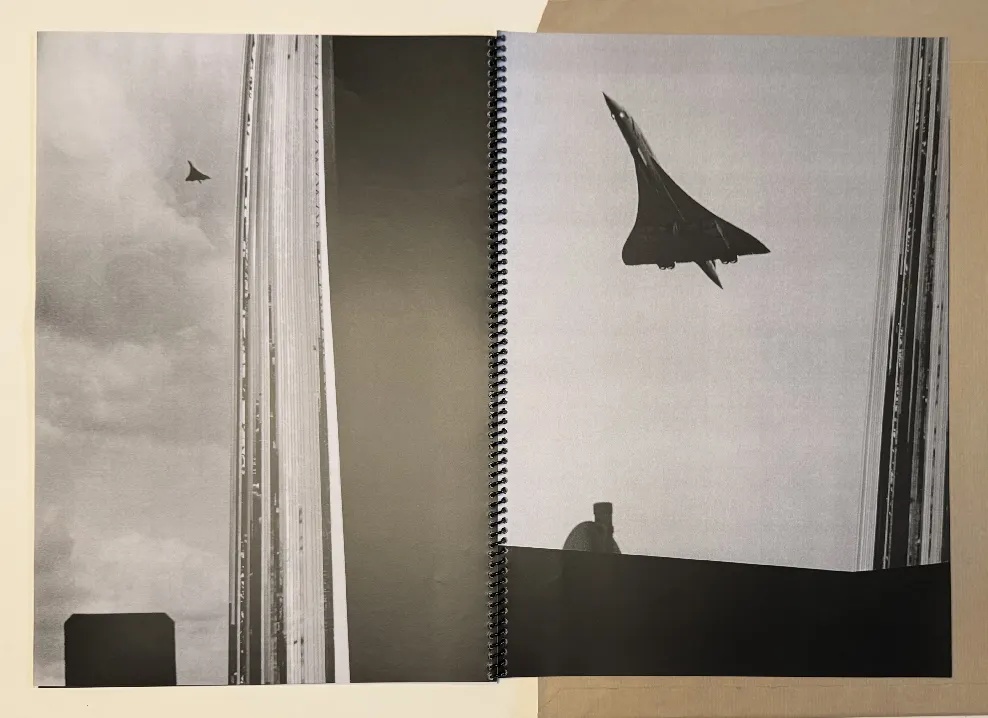
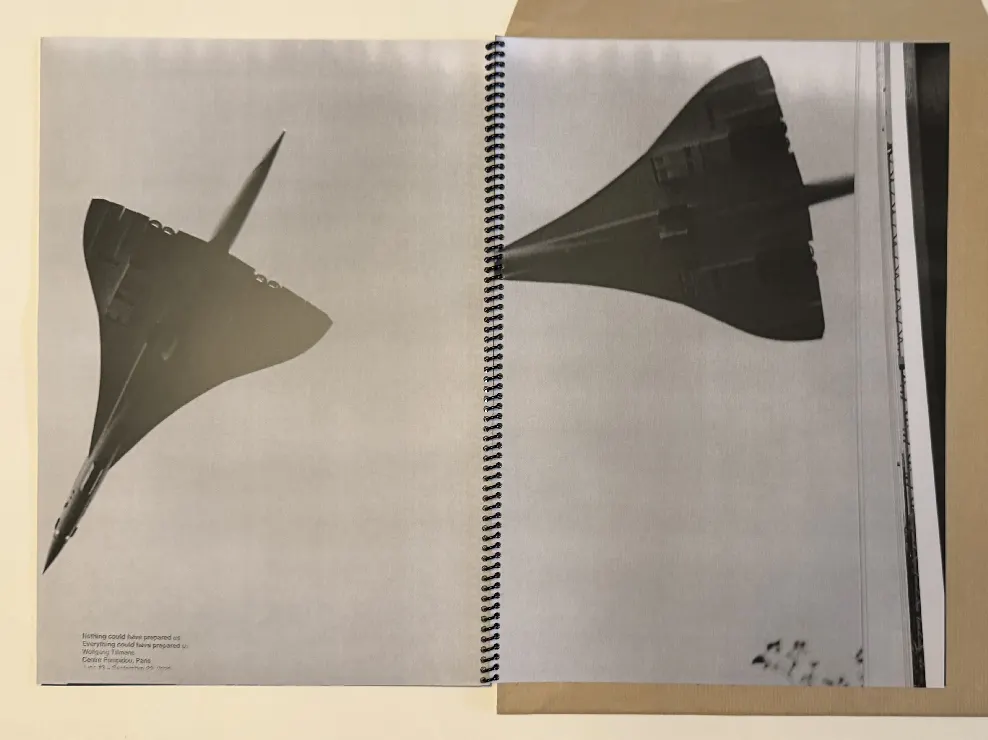
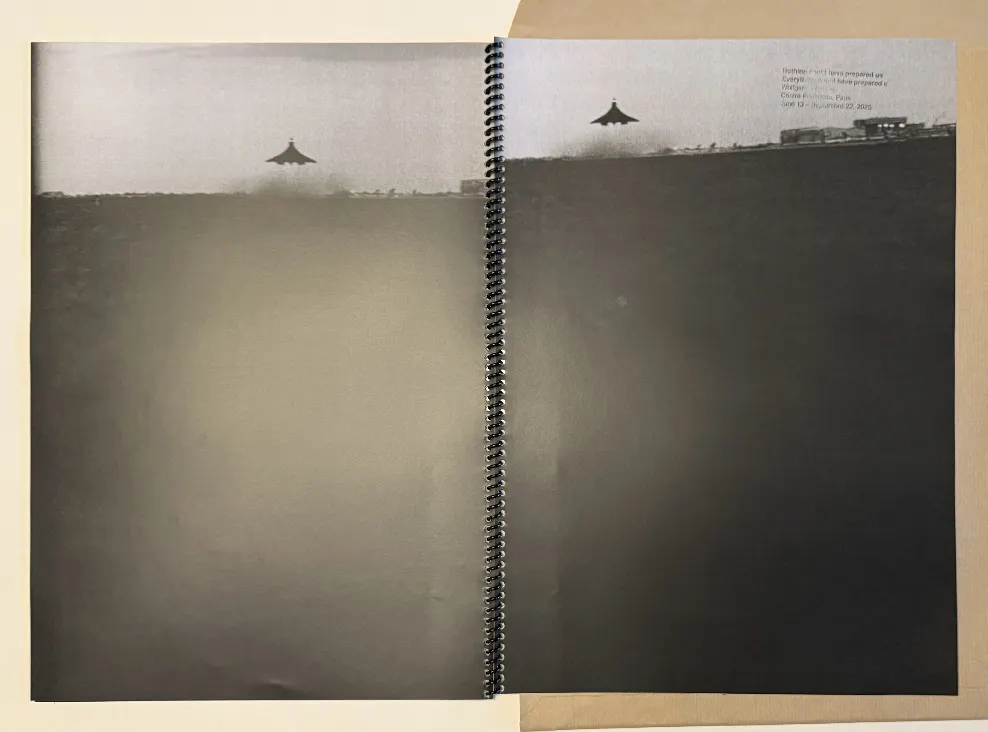
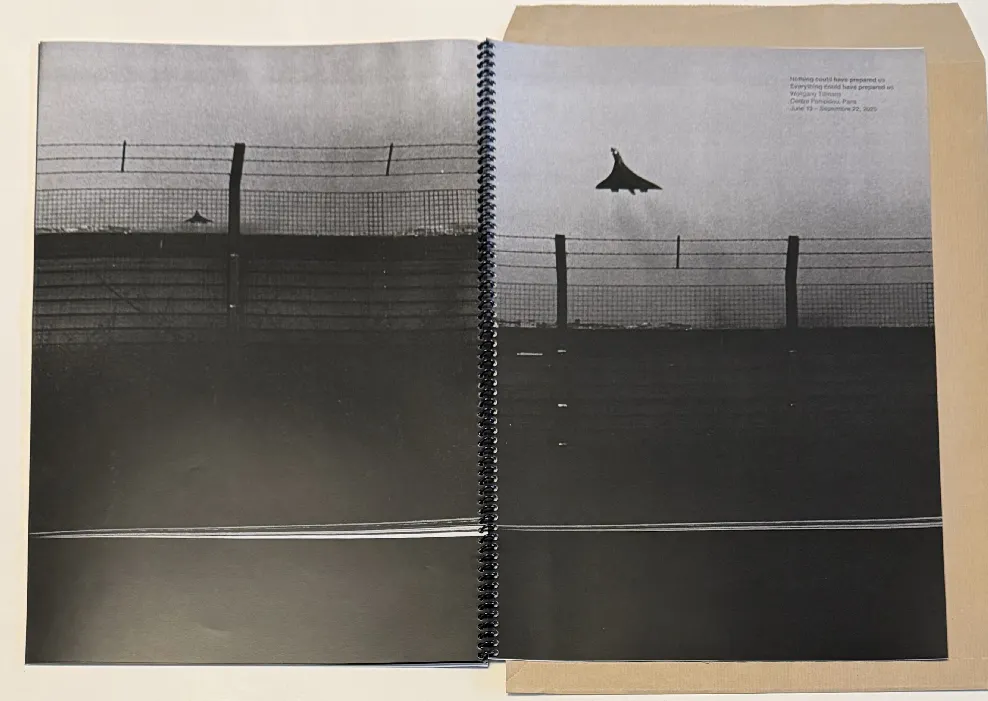
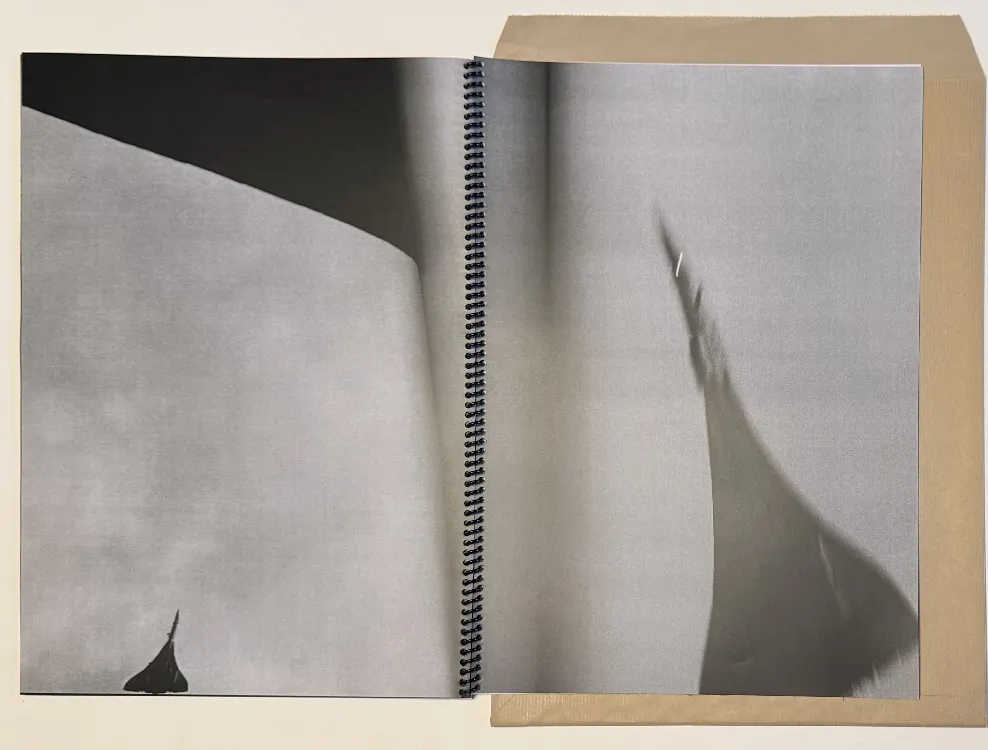
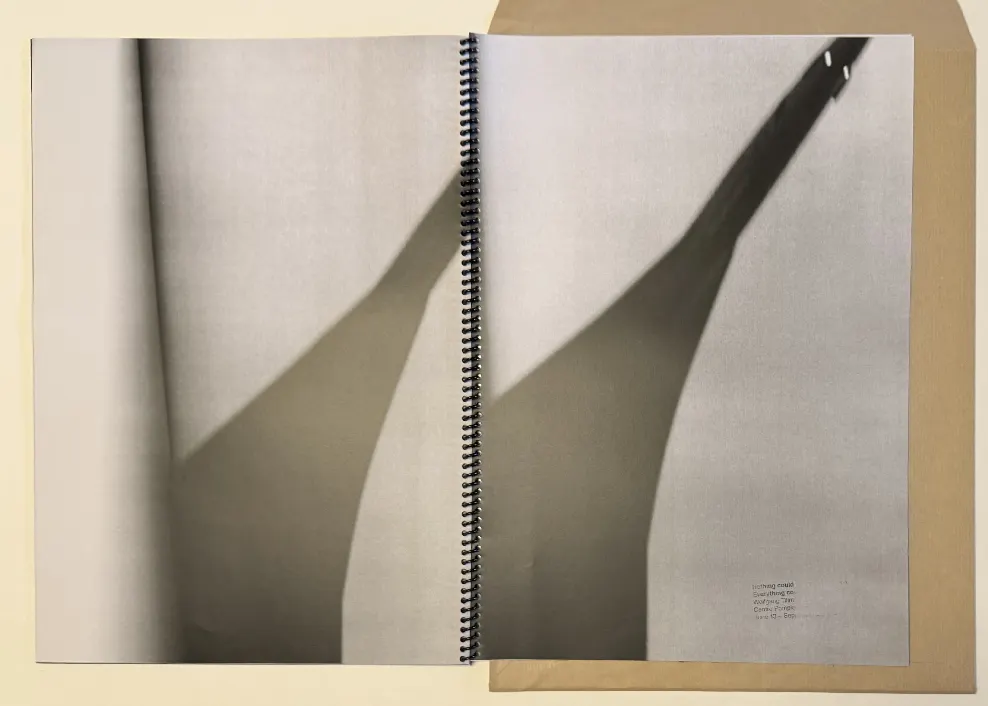
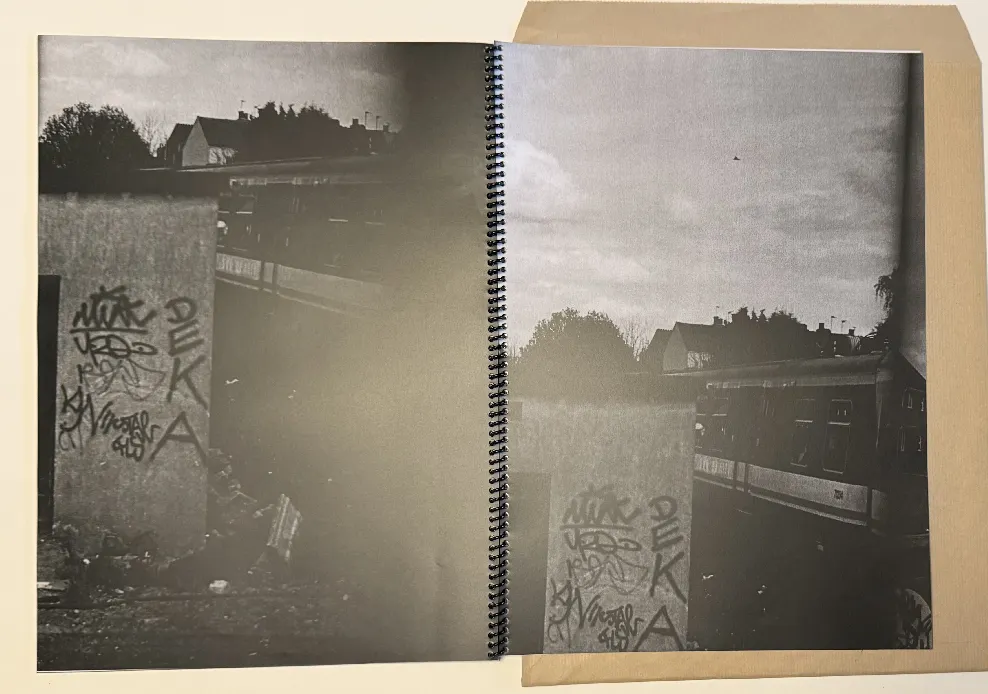
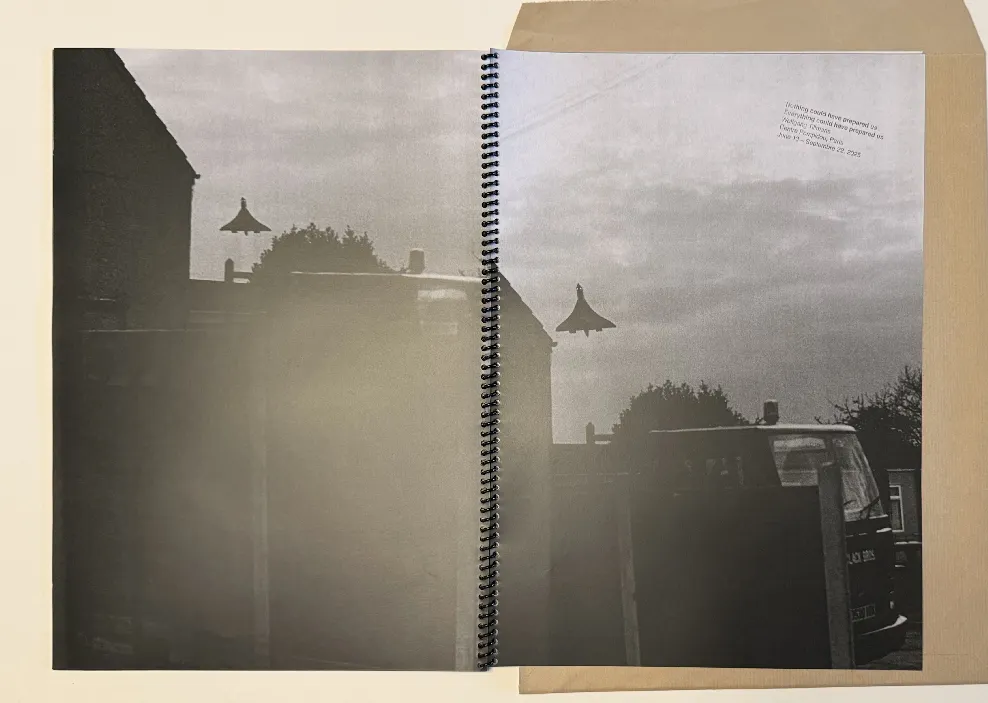
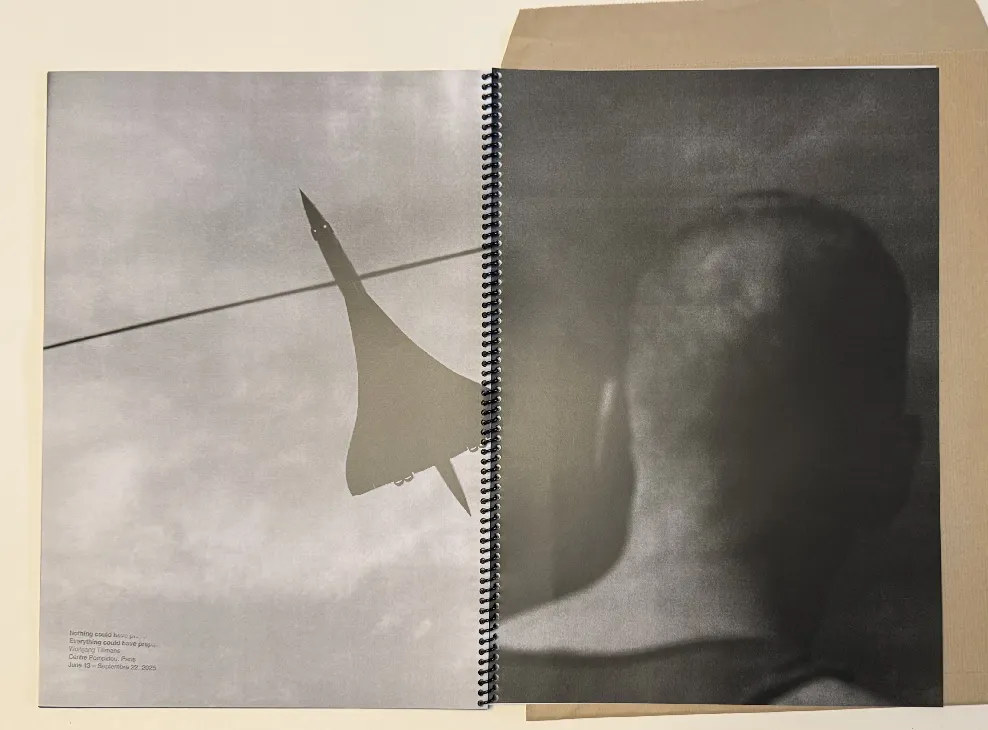
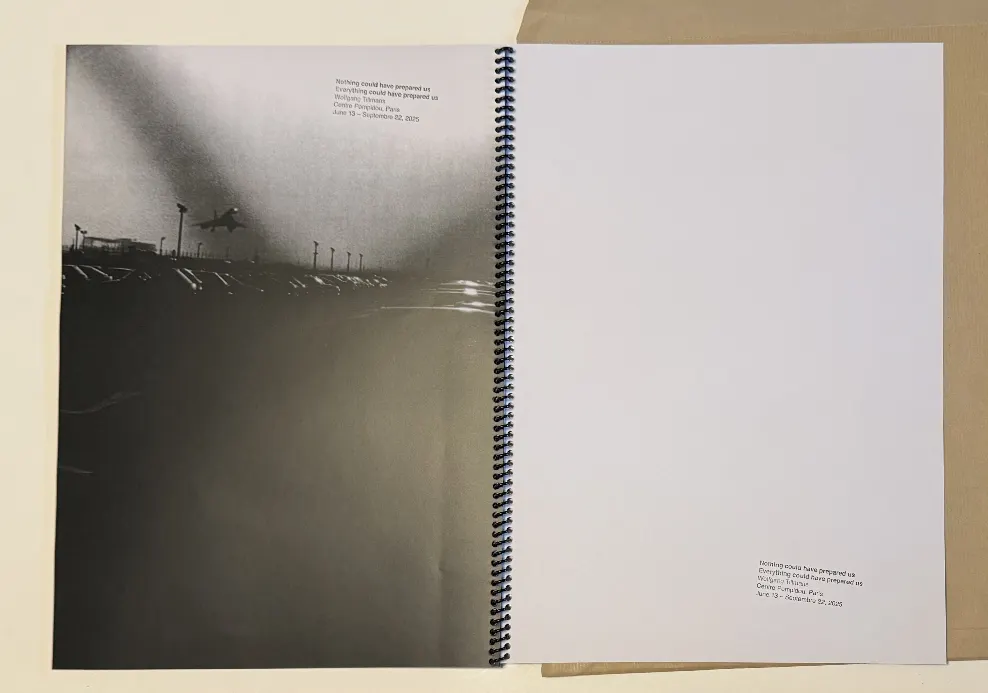
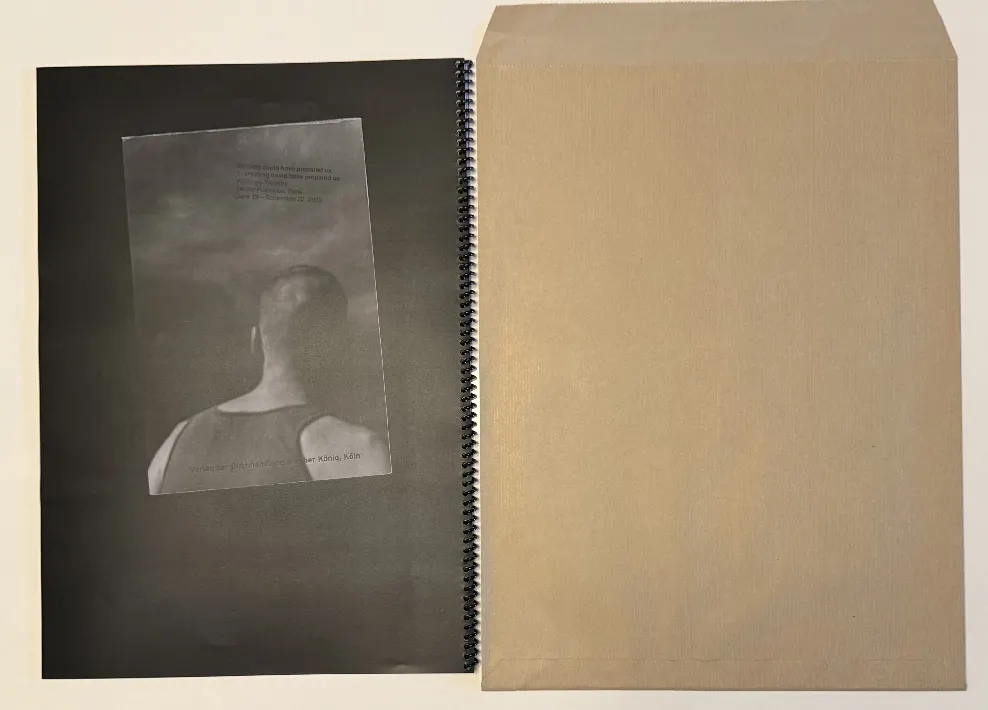
Sébastien Girard’s reappropriation of Wolfgang Tillmans’ Concorde operates as a brilliant intersection of homage, institutional critique, and guerrilla publishing. Executed during Tillmans’ 2025 retrospective at the Centre Pompidou, Girard utilized the exhibition’s own interactive elements, a public Xerox machine and an official exhibition stamp, to physically duplicate and mutate the iconic photobook sold in the museum's library. By producing a literal bootleg within the walls of the institution celebrating the original artist, Girard subverts traditional boundaries of authorship and copyright, transforming a simple act of mechanical copying into a profound conceptual gesture.
Aesthetically, this intervention radically alters the visual register of Tillmans' original work. Translated into an oversized, black-and-white format, the nuanced tonality of the original photographs is stripped away and replaced by the stark, high-contrast degradation inherent to the xerographic process. This deliberate mechanical distortion renders the images of the supersonic jet far more graphic and dramatic, reducing a sleek symbol of late-twentieth-century technological optimism to gritty, noise-heavy silhouettes. The repetitive application of the Pompidou’s exhibition stamp on each page further complicates the object, imposing a permanent aura of institutional authentication onto an otherwise illicit reproduction.
Within the Bushwick sur Seine archive, this unique volume stands as a crucial meditation on the limits and possibilities of mechanical reproducibility. Girard’s Concorde forces a reconsideration of the photobook as a democratic multiple, highlighting how the physical means of production can entirely shift the structural meaning of an image. As an artifact of printed matter, it bridges the polished legacy of contemporary photography with the raw ethos of zine culture, proving that the physical book remains a highly active, volatile space for conceptual interpretation.

Sébastien Girard’s reappropriation of Wolfgang Tillmans’ Concorde operates as a brilliant intersection of homage, institutional critique, and guerrilla publishing. Executed during Tillmans’ 2025 retrospective at the Centre Pompidou, Girard utilized the exhibition’s own interactive elements, a public Xerox machine and an official exhibition stamp, to physically duplicate and mutate the iconic photobook sold in the museum's library. By producing a literal bootleg within the walls of the institution celebrating the original artist, Girard subverts traditional boundaries of authorship and copyright, transforming a simple act of mechanical copying into a profound conceptual gesture.
Aesthetically, this intervention radically alters the visual register of Tillmans' original work. Translated into an oversized, black-and-white format, the nuanced tonality of the original photographs is stripped away and replaced by the stark, high-contrast degradation inherent to the xerographic process. This deliberate mechanical distortion renders the images of the supersonic jet far more graphic and dramatic, reducing a sleek symbol of late-twentieth-century technological optimism to gritty, noise-heavy silhouettes. The repetitive application of the Pompidou’s exhibition stamp on each page further complicates the object, imposing a permanent aura of institutional authentication onto an otherwise illicit reproduction.
Within the Bushwick sur Seine archive, this unique volume stands as a crucial meditation on the limits and possibilities of mechanical reproducibility. Girard’s Concorde forces a reconsideration of the photobook as a democratic multiple, highlighting how the physical means of production can entirely shift the structural meaning of an image. As an artifact of printed matter, it bridges the polished legacy of contemporary photography with the raw ethos of zine culture, proving that the physical book remains a highly active, volatile space for conceptual interpretation.