
Hardcover
ISBN:


John Szarkowski, Maria Morris
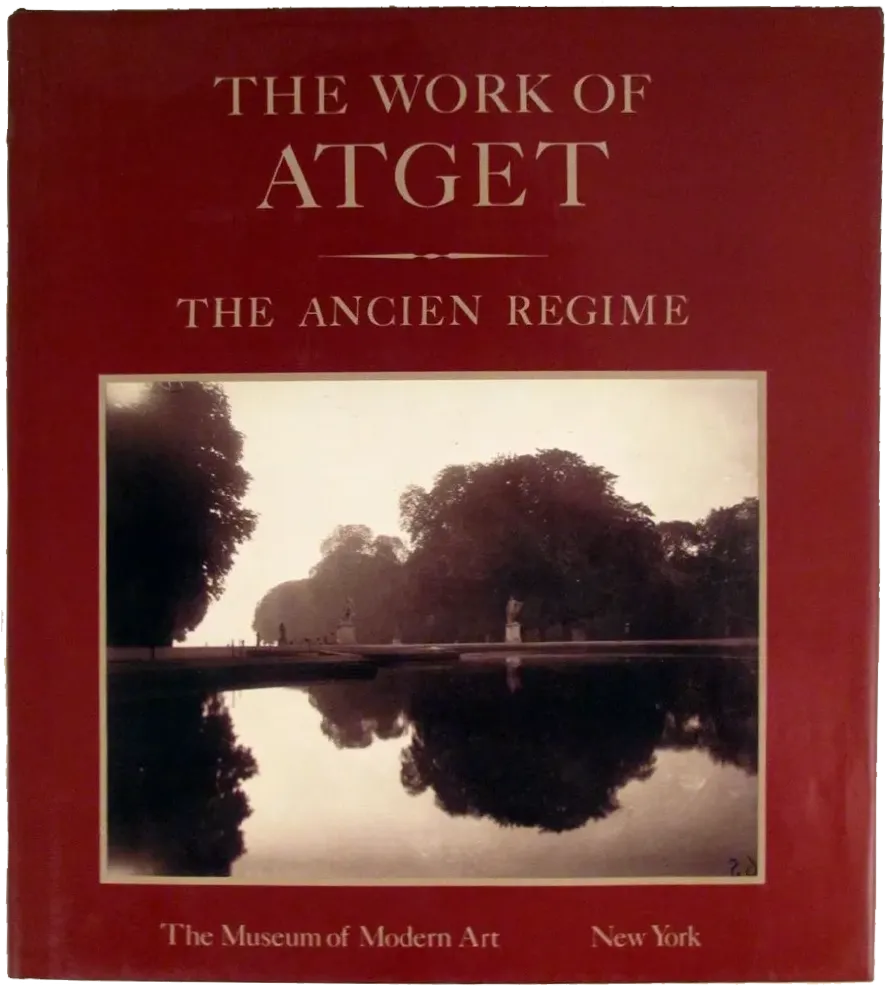
John Szarkowski and Maria Morris Hamburg’s monumental four-volume MoMA series, The Work of Atget, fundamentally redefined Eugène Atget’s legacy. While earlier volumes focused on antiquarian preservation and historic architecture, Volume IV, Modern Times, repositions Atget as a sharp observer of contemporary early 20th-century street life. This specific book curates his documentation of vernacular commercial culture, shop windows, street vendors, cafes, and working-class storefronts, proving that Atget was not merely a nostalgic archivist, but a vital precursor to modern documentary and street photography.
Through this carefully sequenced curation, Atget's mastery of spatial geometry and atmospheric depth is brought to the forefront. The plates showcase a deliberate balance between structured, utilitarian arrangements, such as stacked merchandise, graphic signage, or reflective glass, and the profound stillness necessitated by his cumbersome view camera and long exposure times. The reproductions in this volume emphasize the subtle gradations of light and shadow, highlighting the intricate textural details of a rapidly modernizing Paris without romanticizing its gritty reality.

John Szarkowski and Maria Morris Hamburg’s monumental four-volume MoMA series, The Work of Atget, fundamentally redefined Eugène Atget’s legacy. While earlier volumes focused on antiquarian preservation and historic architecture, Volume IV, Modern Times, repositions Atget as a sharp observer of contemporary early 20th-century street life. This specific book curates his documentation of vernacular commercial culture, shop windows, street vendors, cafes, and working-class storefronts, proving that Atget was not merely a nostalgic archivist, but a vital precursor to modern documentary and street photography.
Through this carefully sequenced curation, Atget's mastery of spatial geometry and atmospheric depth is brought to the forefront. The plates showcase a deliberate balance between structured, utilitarian arrangements, such as stacked merchandise, graphic signage, or reflective glass, and the profound stillness necessitated by his cumbersome view camera and long exposure times. The reproductions in this volume emphasize the subtle gradations of light and shadow, highlighting the intricate textural details of a rapidly modernizing Paris without romanticizing its gritty reality.