SOLD
Copyright ©
Edward Weston
or applicable right holders.
Poster



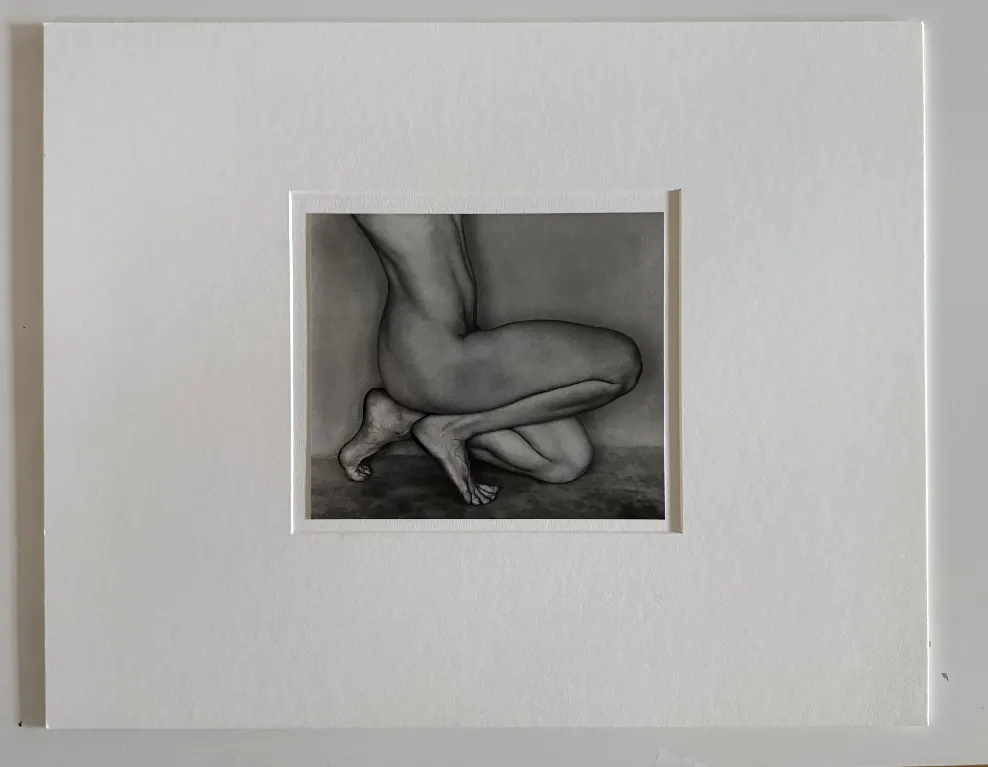
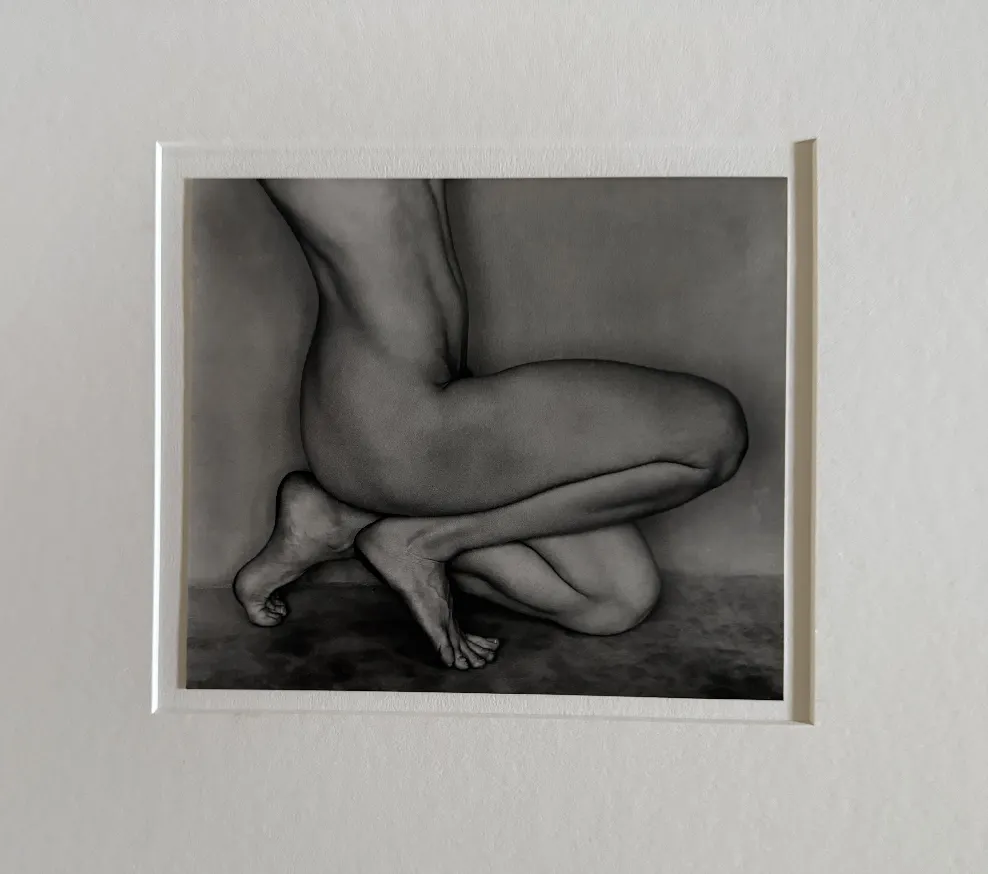
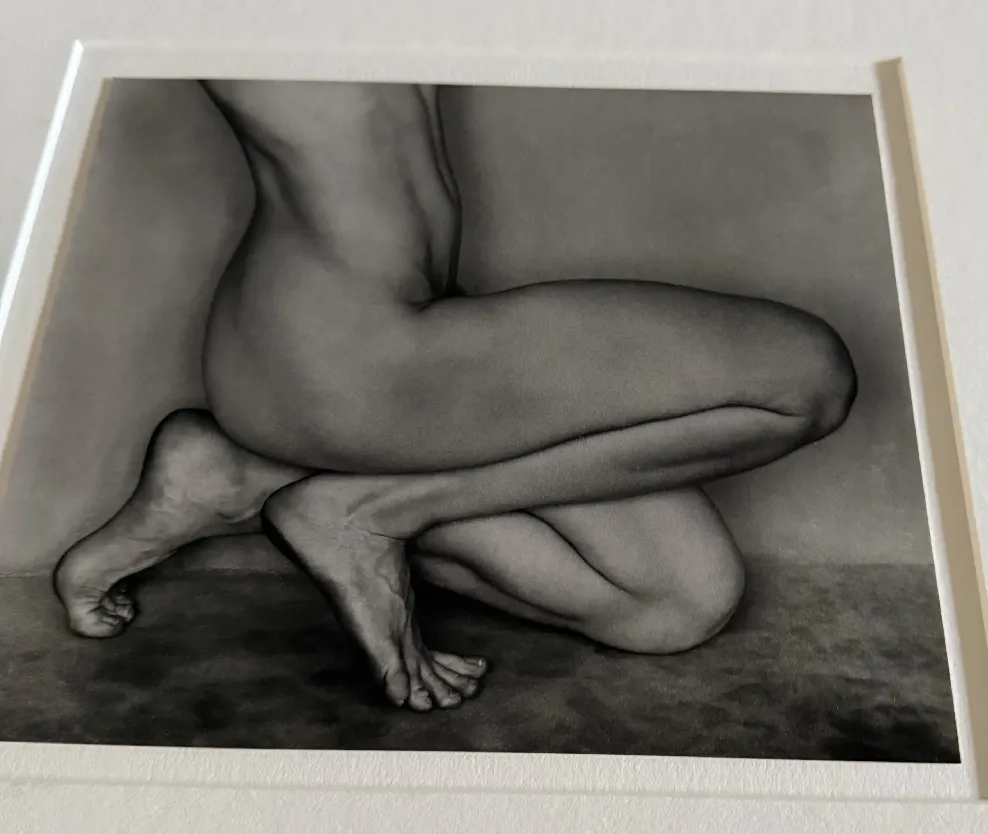
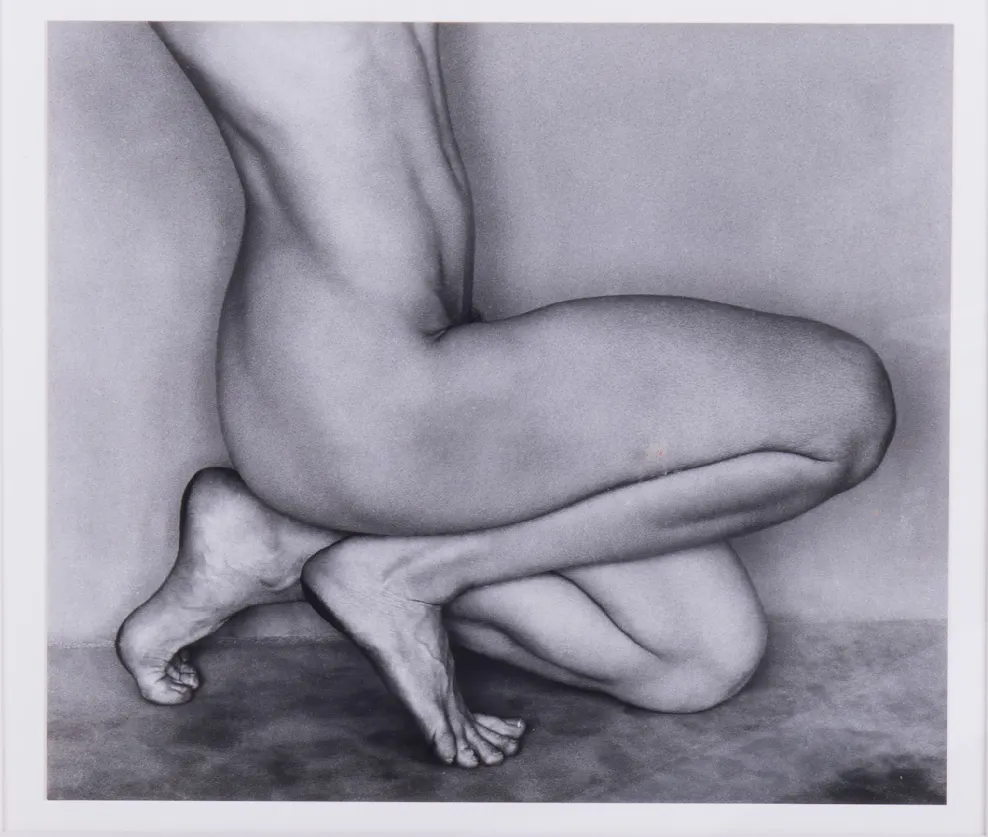
The model for this famous series was dancer Bertha Wardell. Weston approached the human form with the same sculptural, formalist rigor he applied to his famed peppers, shells, and rock formations. By tightly cropping the composition to focus on the geometric lines, taut muscles, and contours of the knees and torso, he transformed the anatomical study into an abstract architectural structure.
Created in 1927, this work represents a pivotal period in Weston’s career when he fully abandoned pictorialism (soft-focus, painterly photography) in favor of "straight photography", sharp focus, full tonal range, and an emphasis on formal structure and texture.
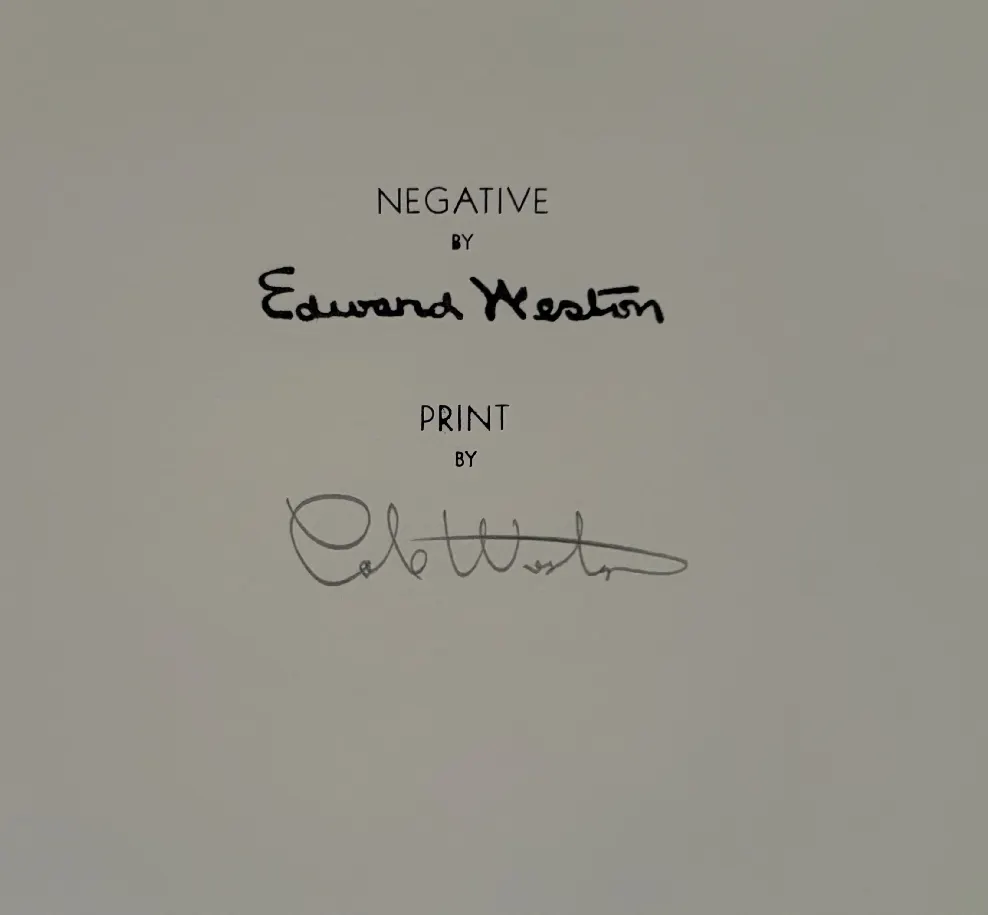
The negative was exposed by Edward Weston in 1927, and this specific piece is a modern/posthumous print produced by his son, Cole Weston, likely in the 1970s.
As designated in Edward Weston's will, Cole was authorized to print from his father's original glass-plate and film negatives using classic gelatin silver processing. Cole signed these prints on the reverse to distinguish them from lifetime prints made by Edward himself or earlier authorized prints made by Brett Weston.
The model for this famous series was dancer Bertha Wardell. Weston approached the human form with the same sculptural, formalist rigor he applied to his famed peppers, shells, and rock formations. By tightly cropping the composition to focus on the geometric lines, taut muscles, and contours of the knees and torso, he transformed the anatomical study into an abstract architectural structure.
Created in 1927, this work represents a pivotal period in Weston’s career when he fully abandoned pictorialism (soft-focus, painterly photography) in favor of "straight photography", sharp focus, full tonal range, and an emphasis on formal structure and texture.
The negative was exposed by Edward Weston in 1927, and this specific piece is a modern/posthumous print produced by his son, Cole Weston, likely in the 1970s.
As designated in Edward Weston's will, Cole was authorized to print from his father's original glass-plate and film negatives using classic gelatin silver processing. Cole signed these prints on the reverse to distinguish them from lifetime prints made by Edward himself or earlier authorized prints made by Brett Weston.