


Which art books, prints and posters are available by and about this artist? Here is a sample of items of interest to a typical collector:

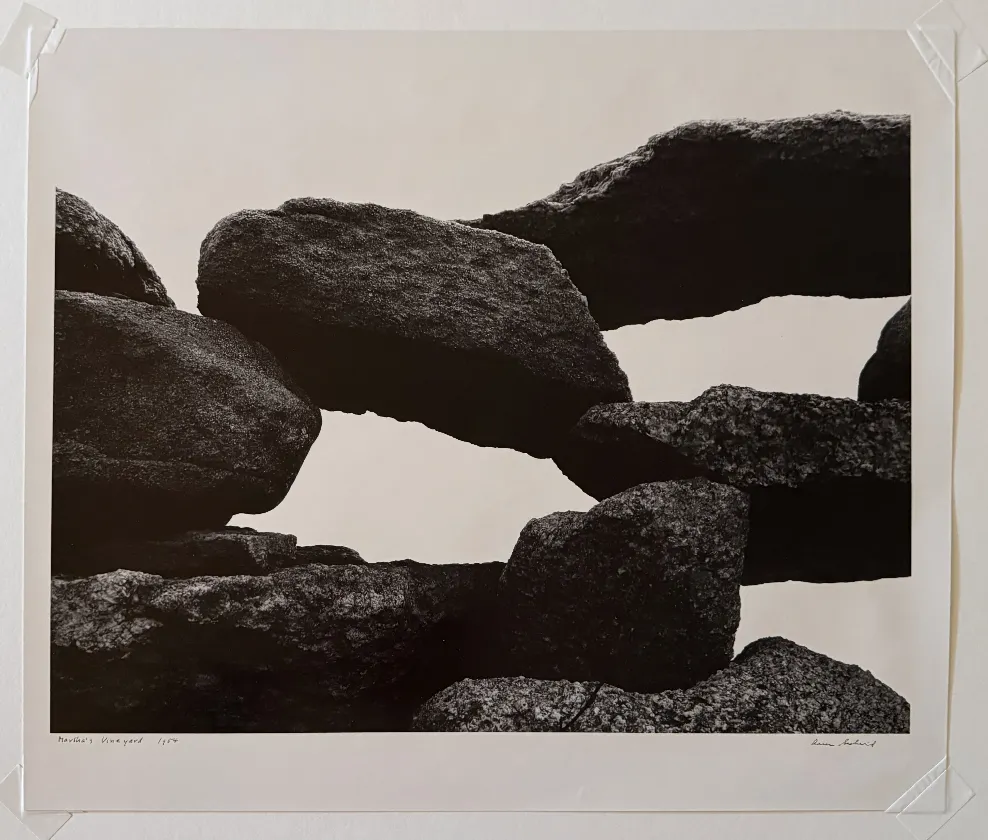
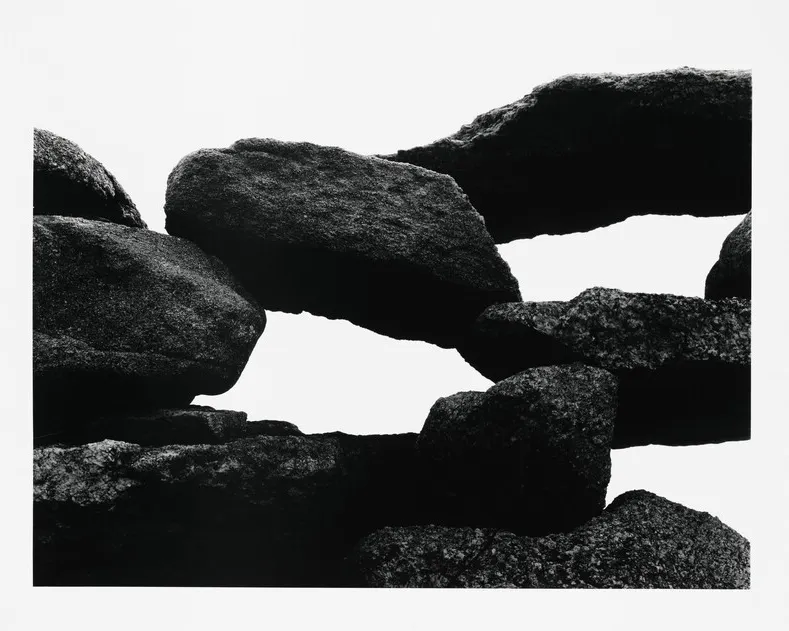
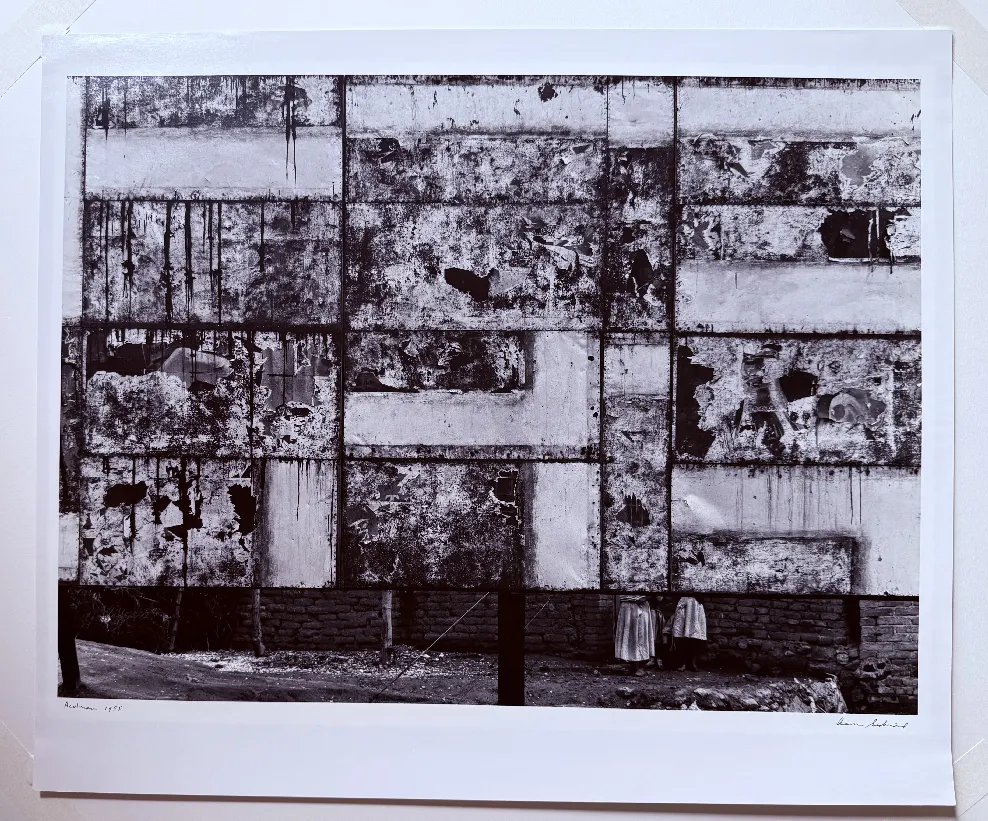
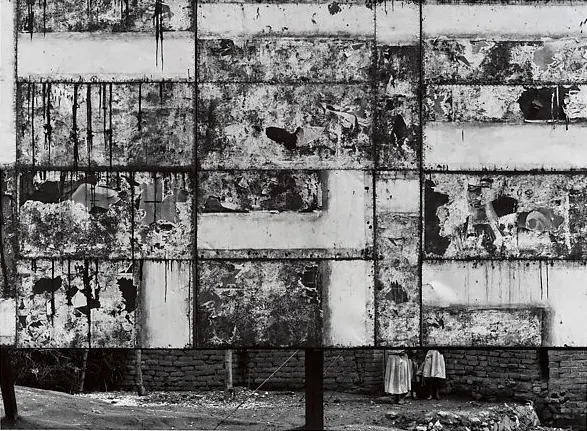
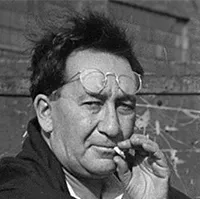
Born in New York City, Aaron Siskind graduated from the City College of New York in 1926 and taught high school English until he became interested in photography in 1930. In 1933 he joined the Film and Photo League in New York, a group of documentary photographers devoted to improving social conditions in contemporary society through their pictures. While involved with the League, Siskind made some of his most successful and well-known documentary photographs, including those for The Harlem Document (1937-40), but he had a falling out with the organization in 1941. At the time, his work was assuming a new, more abstract focus, as evident in Tabernacle City, a series of photographs depicting the vernacular architecture of Bucks County, Pennsylvania. When his exhibition of this series at the Photo League caused many members to protest his photography outright, he left the organization and found support among Mark Rothko, Franz Kline, and other painters, who recognized his elimination of pictorial space and his concentration on the arrangement of objects within the picture plane as qualities aligning his work with their own. Siskind's photographs have been widely exhibited and he won many awards for his photography, including a Guggenheim Fellowship, and the Distinguished Photography Award from the Friends of Photography. Siskind was a photography instructor at Chicago's Institute of Design and served as head of the department there from 1961 to 1971.
Siskind's abstract photographs from the late 1940s and early 1950s were a major force in the development of avant-garde art in America. In rejecting the third dimension, this work belied the notion that photography was tied exclusively to representation. As such, Siskind's work served as an invaluable link between the American documentary movement of the 1930s and the more introspective photography that emerged in the 1950s and 60s.


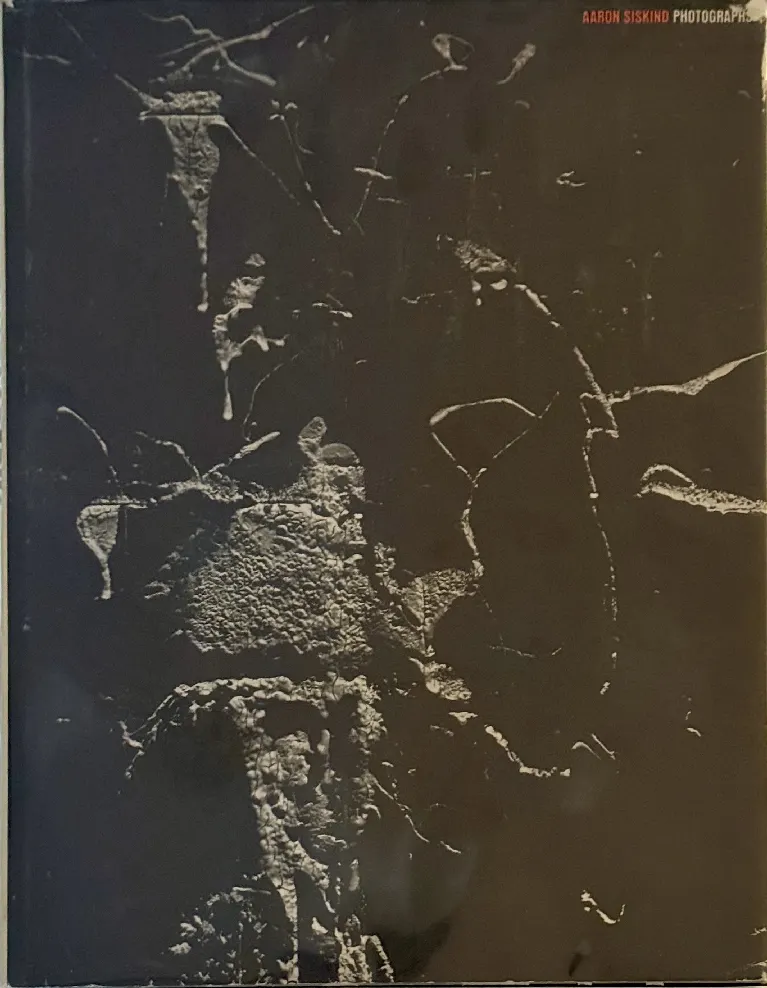
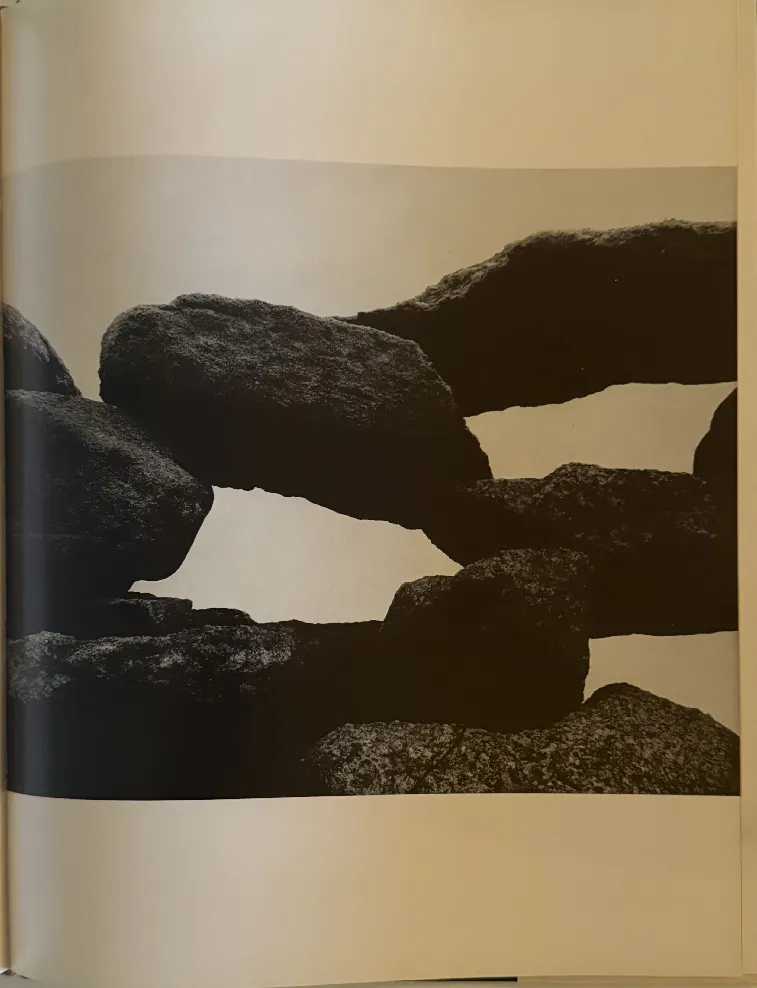
The 1959 self-titled monograph, Aaron Siskind: Photographs, published by Horizon Press, is a holy grail for a formalist collection. This was Siskind's very first monograph, and its publication marked a watershed moment in the history of the medium; it was the book that effectively forced the photographic world to accept absolute abstraction as a legitimate, autonomous fine art form.
In 1959, the photography book was almost exclusively used for documentary storytelling or sequencing narratives. Siskind and Horizon Press who brought in Chermayeff to design the book shattered this convention.
Chermayeff, who went` on to become one of the most legendary figures in American graphic design (co-founding the prominent firm Chermayeff & Geismar), brought a clean, modernist structural sensibility to the project. His design choices were instrumental in framing the book as an autonomous art object. By stripping away all text from the image pages and utilizing a bold, minimalist typographic layout for the cover and title pages, Chermayeff ensured that the viewer's focus remained entirely on the formal, two-dimensional qualities of Siskind's abstractions. The book features 50 stark, full-page plates with zero textual distraction on the image pages. It isolates his cropped frames of chipped paint, corroded metal, and weathered wood, translating three-dimensional urban detritus into purely two-dimensional graphic structures.
The production value of this first edition is incredible. It was printed using a high-quality sheet-fed gravure process that achieved deep, velvety, ink-rich blacks and a remarkably tactile surface texture. For a formalist collector, this printing method is vital: the ink sits on the heavy paper in a way that perfectly replicates the raw, gritty physical surfaces Siskind photographed, bridging the gap between the original mechanical object and the reproduced page.
Lastly, the book features a stellar introduction by the influential art critic Harold Rosenberg, a champion of Action Painting. Rosenberg's text explicitly ties Siskind's photographic frame to the canvas of the Abstract Expressionists (like Franz Kline and Willem de Kooning), cementing the idea that the camera could be used not to record an exterior scene, but to construct a self-contained visual order.