SOLD
Copyright ©
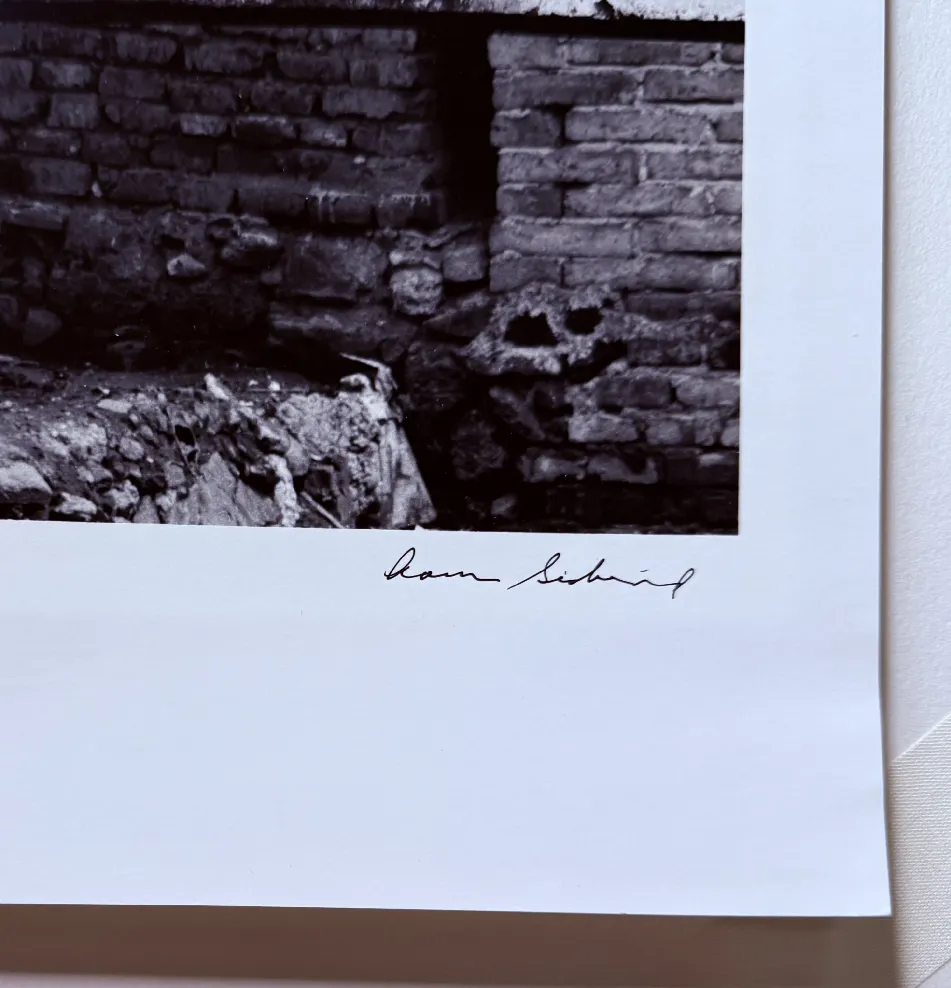
Aaron Siskind
or applicable right holders.
Poster



Other impressions of this photograph are included in the permanent collections of the Metropolitan Museum Of Art, NY (Object Number 1985.1149.10); the Art Institute of Chicago (Reference # 1964.301) and the High Museum, Atlanta (Accession # 74.224).

Other impressions of this photograph are included in the permanent collections of the Metropolitan Museum Of Art, NY (Object Number 1985.1149.10); the Art Institute of Chicago (Reference # 1964.301) and the High Museum, Atlanta (Accession # 74.224).
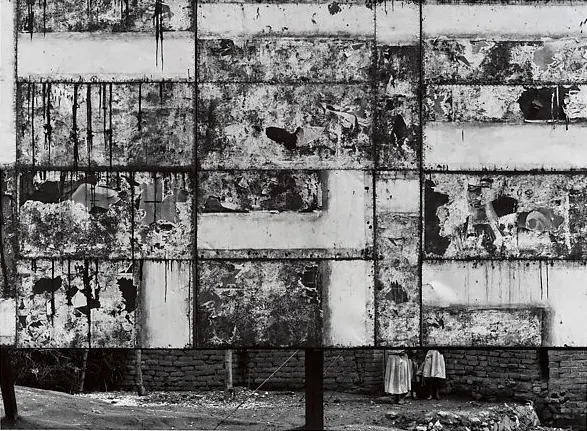
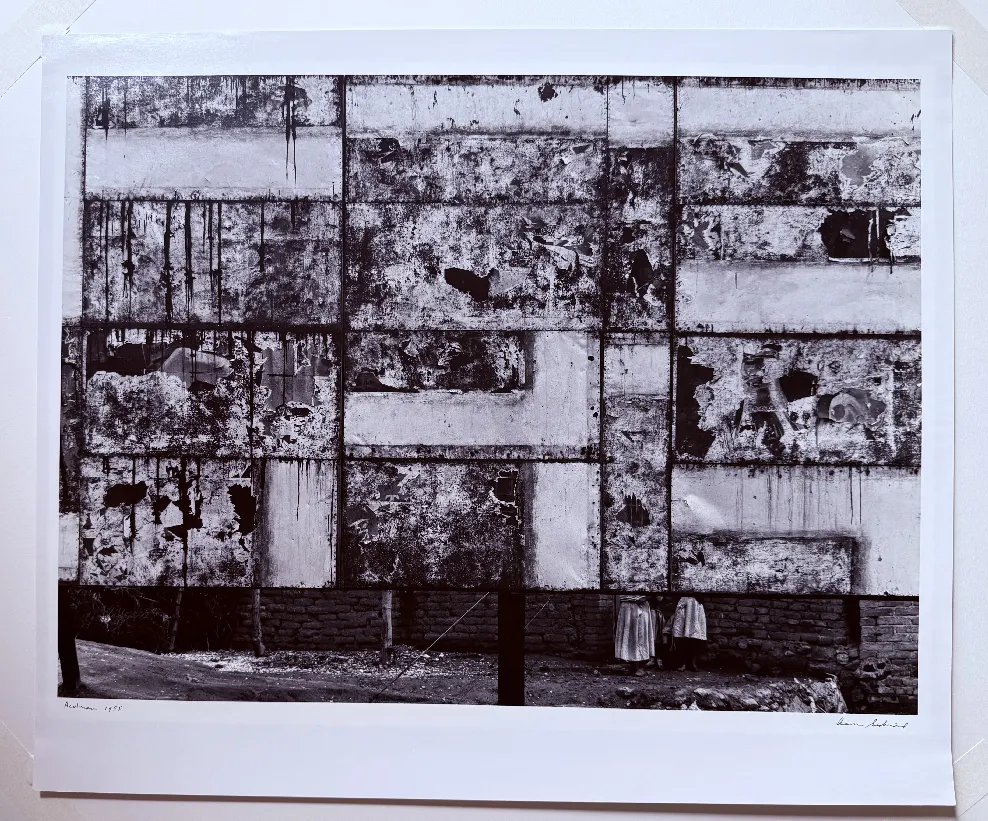
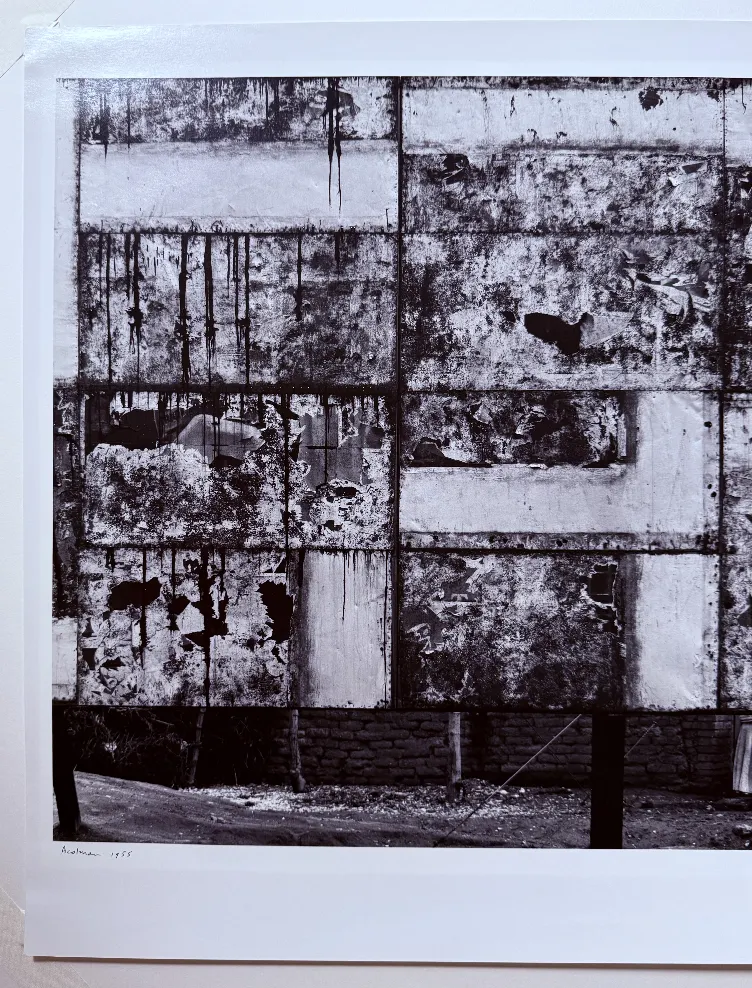
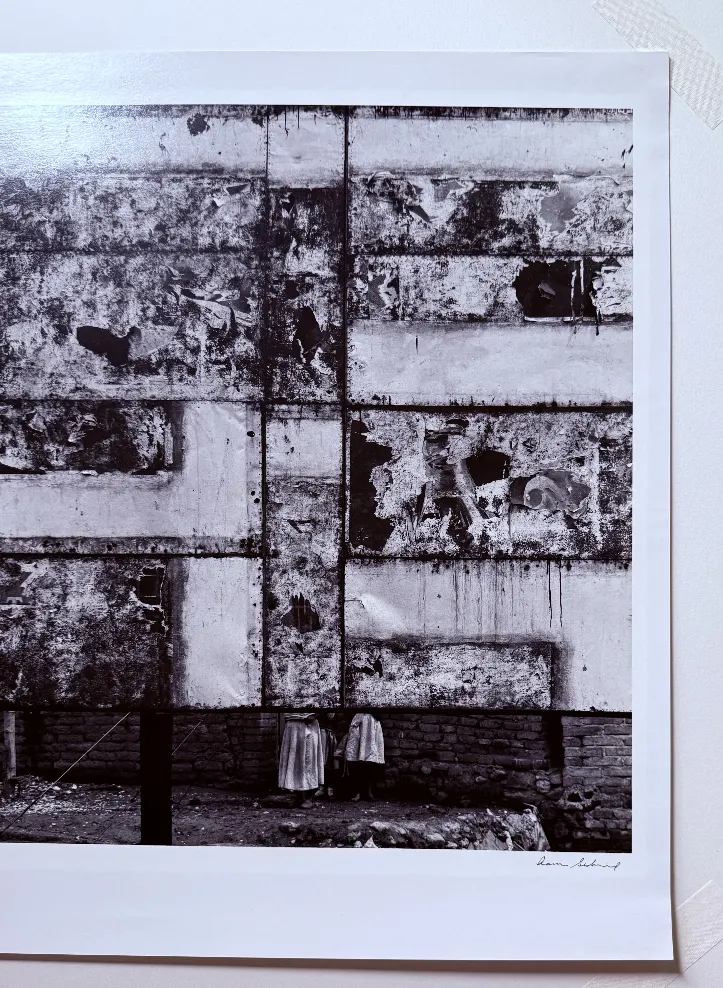
This striking image, Celaya (1955), is a pivotal work by Siskind that illustrates a transition point in his artistic trajectory. Taken during his travels through Mexico in 1955, the photograph serves as a bridge between his early roots in social documentary and his celebrated mid-century abstract formalism.
Siskind began his career in the 1930s as a documentary photographer with the New York Photo League, capturing socially conscious, narrative-driven series like the Harlem Document. However, by the early 1940s, he grew dissatisfied with the limitations of purely representative documentary work.
He shifted his focus toward exploring internal formal relationships, becoming the only photographer closely aligned with the Abstract Expressionist painters of the New York School (including his close friends Franz Kline, Willem de Kooning, and Mark Rothko). Siskind famously wrote:
"First, and emphatically, I accept the flat plane of the picture surface as the primary frame of reference of the picture."
Rather than using perspective to create an illusion of depth, Siskind treated the photographic frame as a flat, two-dimensional canvas. He used extreme close-ups, tight cropping, and sharp focus to transform everyday, weathered surfaces, like peeling paint, cracked asphalt, and crumbling masonry, into purely graphic arrangements of line, texture, and tone.
In Celaya, we see Siskind engaging with these formalist principles on a grander, architectural scale:
This striking image, Celaya (1955), is a pivotal work by Siskind that illustrates a transition point in his artistic trajectory. Taken during his travels through Mexico in 1955, the photograph serves as a bridge between his early roots in social documentary and his celebrated mid-century abstract formalism.
Siskind began his career in the 1930s as a documentary photographer with the New York Photo League, capturing socially conscious, narrative-driven series like the Harlem Document. However, by the early 1940s, he grew dissatisfied with the limitations of purely representative documentary work.
He shifted his focus toward exploring internal formal relationships, becoming the only photographer closely aligned with the Abstract Expressionist painters of the New York School (including his close friends Franz Kline, Willem de Kooning, and Mark Rothko). Siskind famously wrote:
"First, and emphatically, I accept the flat plane of the picture surface as the primary frame of reference of the picture."
Rather than using perspective to create an illusion of depth, Siskind treated the photographic frame as a flat, two-dimensional canvas. He used extreme close-ups, tight cropping, and sharp focus to transform everyday, weathered surfaces, like peeling paint, cracked asphalt, and crumbling masonry, into purely graphic arrangements of line, texture, and tone.
In Celaya, we see Siskind engaging with these formalist principles on a grander, architectural scale:
Other impressions of this photograph are included in the permanent collections of the Metropolitan Museum Of Art, NY (Object Number 1985.1149.10); the Art Institute of Chicago (Reference # 1964.301) and the High Museum, Atlanta (Accession # 74.224).