


Which art books, prints and posters are available by and about this artist? Here is a sample of items of interest to a typical collector:


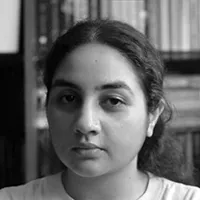
Farah Al Qasimi is an Emirati photographer, filmmaker, and musician whose practice investigates postcolonial structures, gender, consumer culture, and local aesthetics across the Gulf Arab states and the United States. Born in Abu Dhabi in 1991, Al Qasimi earned her BA from Yale University in 2012 and her MFA in photography from the Yale School of Art in 2017. Dividing her time between New York City and Dubai, she captures the social norms and subtle power dynamics of daily life through an approach that oscillates between straight documentary and surreal staging.
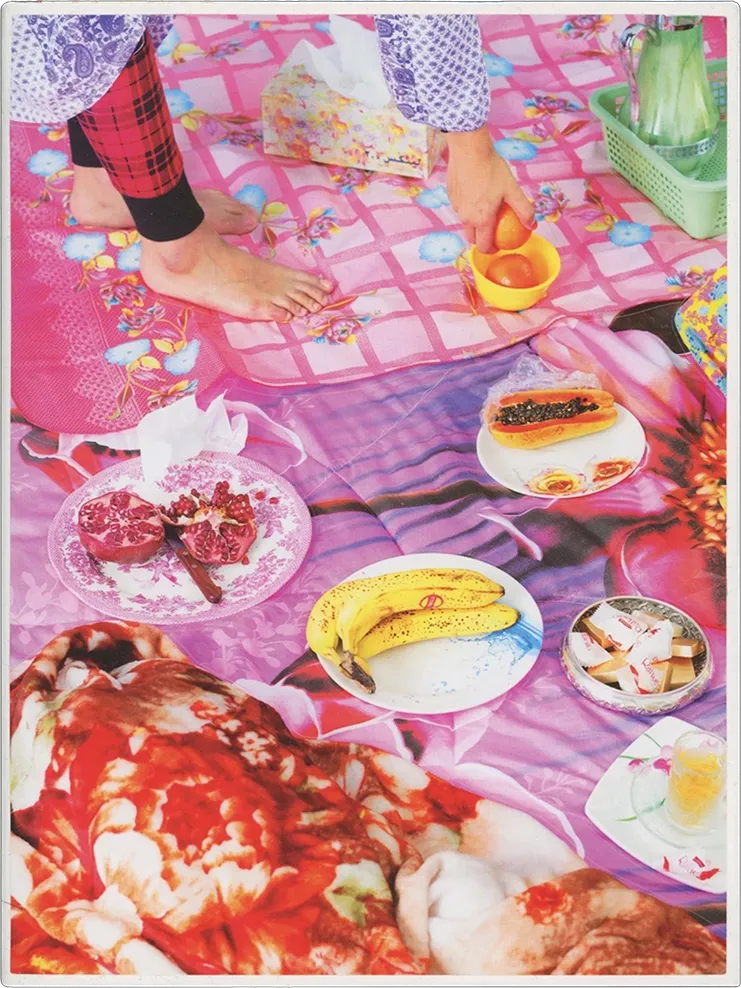
Her visual style is defined by vibrant, highly saturated color palettes, layered patterns, and intricate mise-en-scène. Al Qasimi frequently subverts traditional portraiture by obscuring her subjects’ faces behind patterned textiles, plumes of smoke, or precise cropping, drawing attention to decorative interiors and hyper-consumerist environments while preserving her subjects' privacy. Across both her photographs and semi-fictional short films, she explores how physical and digital spaces shape modern identity and public performance.
Al Qasimi's work has been presented in major solo exhibitions and public installations, including Back and Forth Disco with the Public Art Fund in New York, Funhouse at Helena Anrather, and shows at the C/O Berlin, the MIT List Visual Arts Center, and the SCAD Museum of Art. Named a Guggenheim Fellow in 2025, her photographs and video installations are held in international public collections, including the Museum of Modern Art and the Solomon R. Guggenheim Museum in New York, the Tate Modern in London, and the Centre Pompidou in Paris.

Hello Future (2021) is the landmark debut monograph by Emirati photographer, filmmaker, and musician Farah Al Qasimi, published by Capricious and designed by Alex Lin of Studio Lin. Compiling over five years of work across photography, performance, and video, the 300-page photobook functions as both a vibrant artistic retrospective and a sharp, sensory meditation on postcolonial power structures, hyper-consumerism, gender, and multi-national identity across the Persian Gulf states and the United States.
The title Hello Future references a vintage computer prompt, pointing to the internet and digital globalization as central portals through which contemporary cultures collide. Al Qasimi examines how global commercial icons, from SpongeBob and My Little Pony to Gatorade and fast-fashion prints, live alongside traditional Middle Eastern touchstones, such as falconry, hijabs, hookah smoke, and Islamic calligraphy. Rather than adopting a detached ethnographic lens, Al Qasimi explores the fluid anxiety of navigating multiple cultures at once. Her photographs traverse both private domestic interiors and commercial public spaces, revealing how environments and everyday objects shape human performance and identity under globalized capitalism.
Visually, Al Qasimi's imagery is marked by high-saturation color, dense pattern-matching, and complex framing. When human subjects appear, their faces are frequently concealed behind patterned fabrics, plumes of smoke, or reflective surfaces, protecting their privacy while treating the body as a sculptural element within a crowded, decorative environment. The main sequence of full-color photographs is occasionally interrupted by timestamped, pale cyan monochromatic images that function like visual palate cleansers, referencing the fading of early digital photo prints and signaling the passage of time.
Designed in close collaboration with Studio Lin, Hello Future is crafted as an interactive object. The book features a kiss-cut sticker dust jacket displaying a lush still-life table setting. Readers can peel off individual objects, such as fruit, perfumes, and plates, and adhere them onto the reflective, mirror-chrome hardcover beneath to customize their own cover art. The monograph received widespread critical acclaim upon release, earning a spot on the shortlist for the Aperture-Paris Photo Photobook of the Year Award and being named among the best photobooks of the year by TIME, ARTnews, and ArtReview.