


Which art books, prints and posters are available by and about this artist? Here is a sample of items of interest to a typical collector:


George Tice, American (1938- 2025)
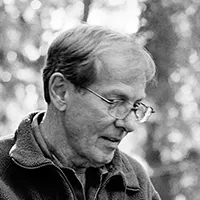
Born in Newark, New Jersey, Tice was a preeminent contemporary American photographer whose masterfully crafted black-and-white images offer a profound, elegiac chronicle of the American landscape, with a particular focus on his native New Jersey. A descendant of some of the earliest European settlers in the state, Tice discovered his passion for photography at a young age, joining the Newark Camera Club at just fourteen. He solidified his technical foundation through brief formal training at the Newark Vocational and Technical High School and, more critically, during his service as a photographer in the United States Navy. This early period instilled in him a rigorous discipline and a deep reverence for the physical print, setting the stage for a career defined by an uncompromising commitment to traditional darkroom craftsmanship.
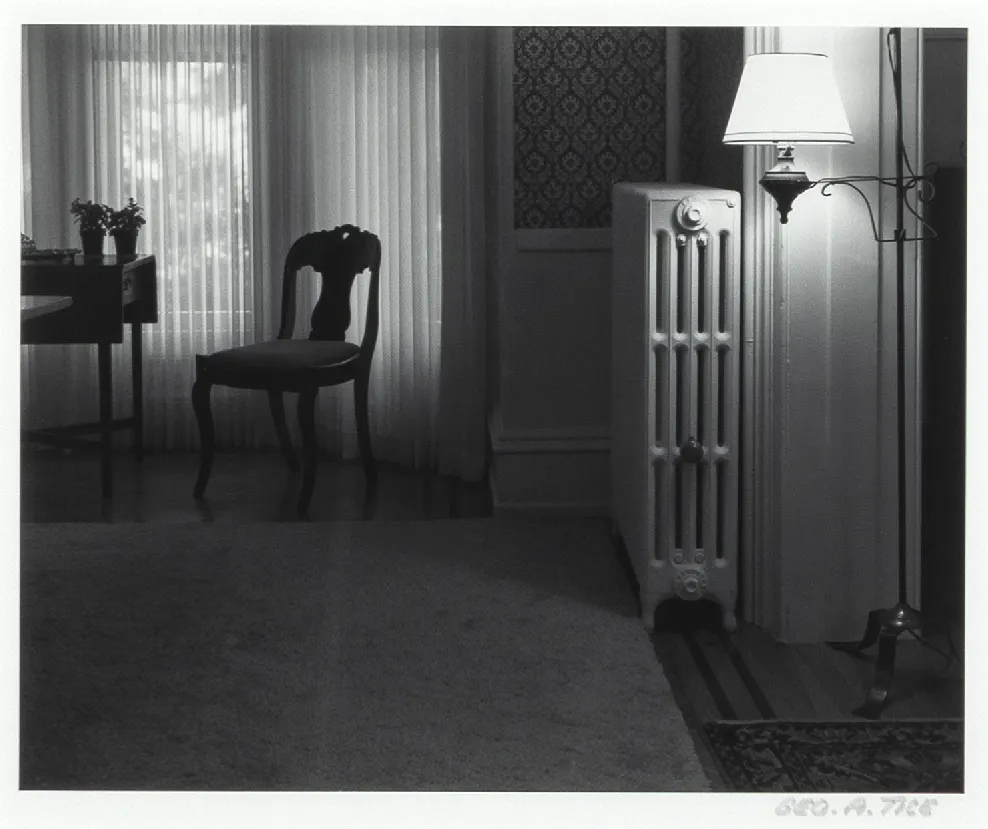
Tice is celebrated for his ability to uncover quiet majesty and deep cultural resonance in ordinary, often overlooked subjects. His lens frequently captures urban architecture, small-town streets, vintage diners, and industrial landscapes on the brink of obsolescence, transforming them into evocative monuments of American social history. Rather than chasing fleeting moments, Tice utilizes large-format cameras, ranging from 4x5 to 8x10 view cameras, to achieve an astonishing level of detail, clarity, and structural permanence. This deliberate, slow-paced methodology aligns his work with the historic tradition of American documentary photography, positioning him as a modern successor to figures like Walker Evans and a contemporary peer to regional documentarians like Robert Adams.
Central to Tice’s legacy is his mastery of the photographic print. Renowned globally as one of the finest printers of the twentieth and twenty-first centuries, he is particularly famous for his virtuosity with the platinum/palladium process, a complex technique that yields an exceptionally rich, subtle, and archival tonal scale. His expertise was so highly regarded that Edward Steichen chose Tice to print his legendary 70 Years of Photography exhibition portfolio in 1959. The Bushwick-sur-Seine colllection includes many photographs by Steichen printed by Tice. Tice has also dedicated much of his career to sharing this knowledge, instructing generations of photographers at institutions like the New School for Social Research and the Maine Photographic Workshops, and publishing Stone Walls, Grey Skies (1993), a monograph documenting his deep artistic connection to the landscape of Great Britain.
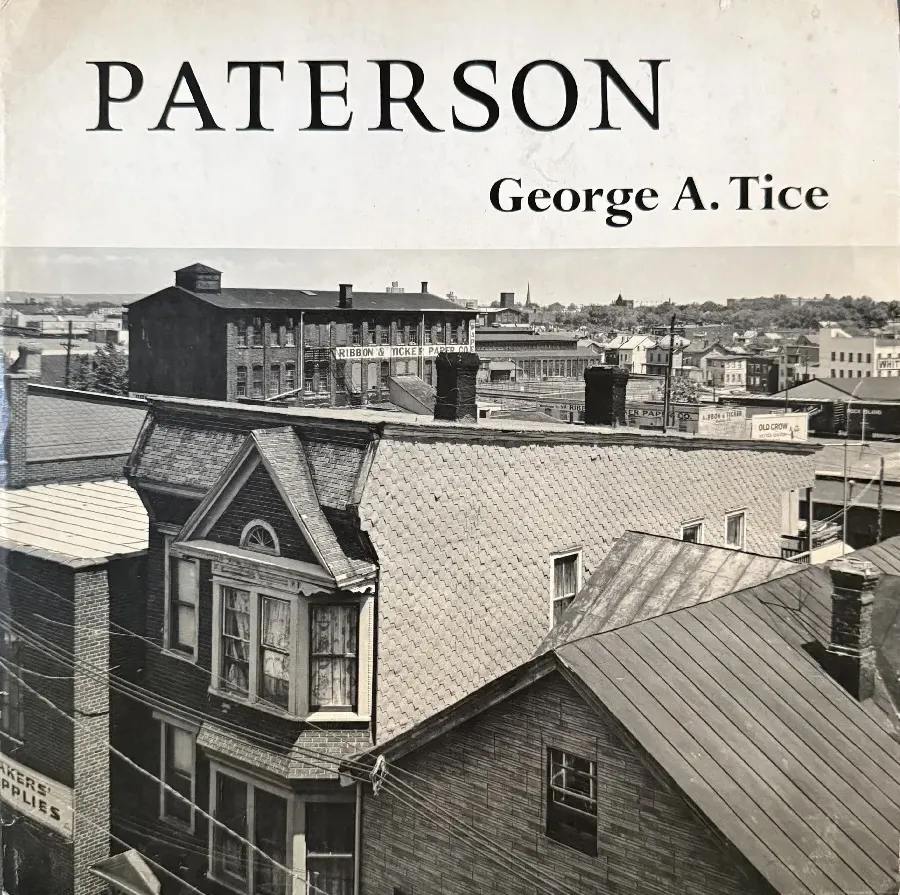
The definitive expressions of Tice's vision are preserved in his seminal monographs, most notably Paterson (1972) and Urban Landscapes: A New Jersey Narrative (1975), which stands as an authoritative visual study of his home state's evolving urban identity. His career has been honored with a fellowship from the Guggenheim Foundation, a National Endowment for the Arts fellowship, and a major retrospective at the Metropolitan Museum of Art in 1972, a rare distinction for a living photographer at the time. Today, Tice’s exquisite prints reside in the permanent collections of the world’s most prestigious cultural institutions, including the Museum of Modern Art, the Whitney Museum of American Art, and the Bibliothèque Nationale in Paris, securing his place as a definitive poet of the American vernacular.


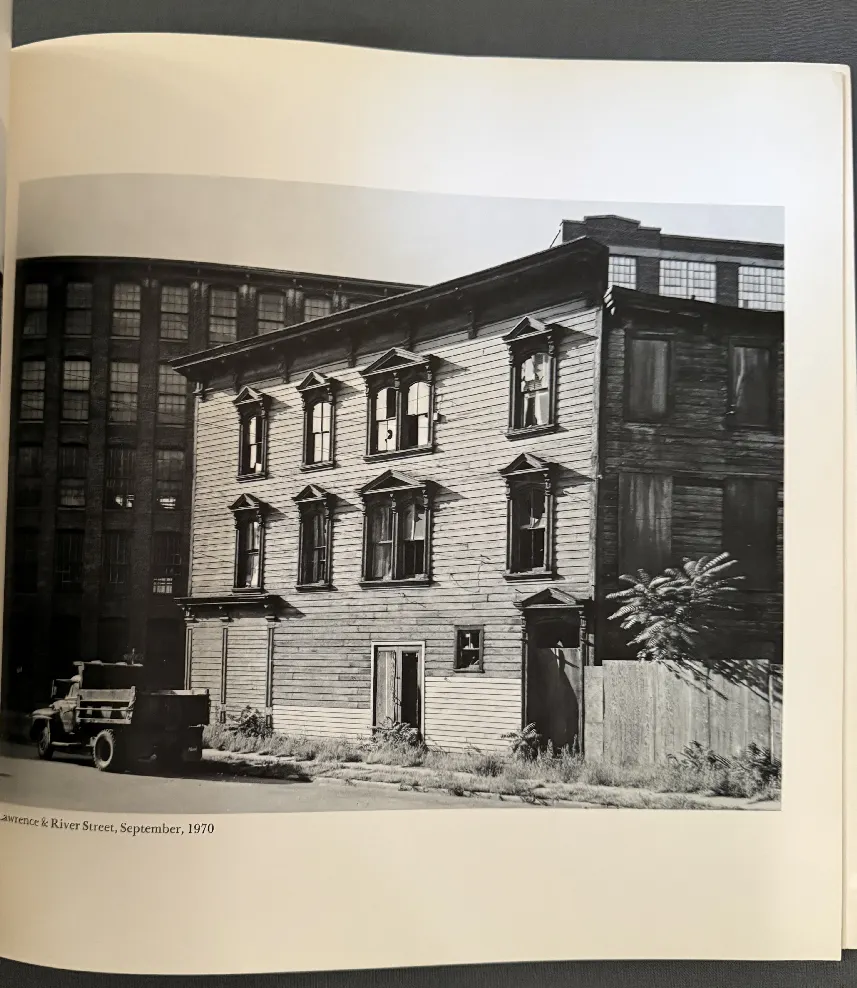
George A. Tice's Paterson (1972) is widely considered a landmark masterpiece of 20th-century American documentary photography. It redefined how photographers captured the American urban landscape, shifting away from idealized nature toward the beauty and decay of everyday post-industrial life.
The book's core photographs were the subject of a solo exhibition at the Metropolitan Museum of Art in 1972. This was an extraordinary milestone for Tice, making him one of the first living photographers to be granted a one-man show at the prestigious museum. It signaled a massive shift in the fine art world, legitimizing contemporary American documentary photography as a museum-worthy art form.
The monograph achieved immediate international renown within the arts community:
Before Paterson, much of American landscape photography was dominated by the grand, pristine natural vistas popularized by Ansel Adams. Tice, along with a few contemporaries, pioneered a shift toward the "vernacular landscape". Using a large-format 8x10 view camera, Tice captured the stark, quiet textures of an aging industrial city, its dilapidated architecture, quiet storefronts, and dramatic falls, with the same technical reverence usually reserved for mountain ranges.
Paterson is considered a vital precursor to the New Topographics show, which took place three years later at the George Eastman House in Rochester, NY.