



Which art books, prints and posters are available by and about this artist? Here is a sample of items of interest to a typical collector:







%252C%2520Avant%2520Arte%25202023%2520Ed%2520219%2520Recto%2520with%2520Signature.webp)


%252C%2520Avant%2520Arte%25202023%2520Ed%2520312%2520Recto%2520with%2520Signature.webp)

%2520Aperture%2520Ed70.webp)


Gregory Crewdson, American, b. 1962
Born in Brooklyn, NY, Gregory Crewdson is celebrated for his cinematic, meticulously staged, and large-scale images that capture the melancholic and eerie psychogeography of small-town and post-industrial America. Earning his MFA from Yale University, where he is now the director of graduate studies in photography, Crewdson approaches image-making more like a film director than a traditional documentary photographer.
His productions famously require massive crews, elaborate set designs, street closures, and complex lighting rigs to capture a single, psychologically charged tableau. Series such as Twilight, Beneath the Roses, Cathedral of the Pines, and Eveningside evoke a silent, liminal space between the mundane and the mythic, frequently drawing comparisons to the paintings of Edward Hopper and the surreal cinema of David Lynch.
Crewdson’s practice offers a compelling intersection of highly controlled composition and an extensive, tactile output of printed material, making it highly relevant to an archive focused on formalist photography, books, and multiples like Bushwick Sur Seine. While his work is deeply narrative, the absolute precision of his lighting, staging, and framing is intrinsically formalist. Every visual element within the frame, from the angle of a shadow to the placement of a prop, is intentionally constructed and obsessively controlled. There is no reliance on chance; the image is an exercise in rigorous structural design.
From 1998 to 2002, the Twilight series solidified Crewdson’s signature directorial style, depicting intensely colored, elaborately staged tableaux that explore the psychological disquiet hidden within the American family and suburban landscape. Blurring the lines between the domestic and the fantastical, the images feature seemingly normal neighborhoods where the uncanny intrudes, from a pregnant woman covered in fireflies to flooded living rooms and strange flora growing out of residential floors. The work draws heavy inspiration from the surreal, eerie aesthetics of science fiction and independent cinema, transforming mundane domesticity into a place of wonder, isolation, and anxiety.
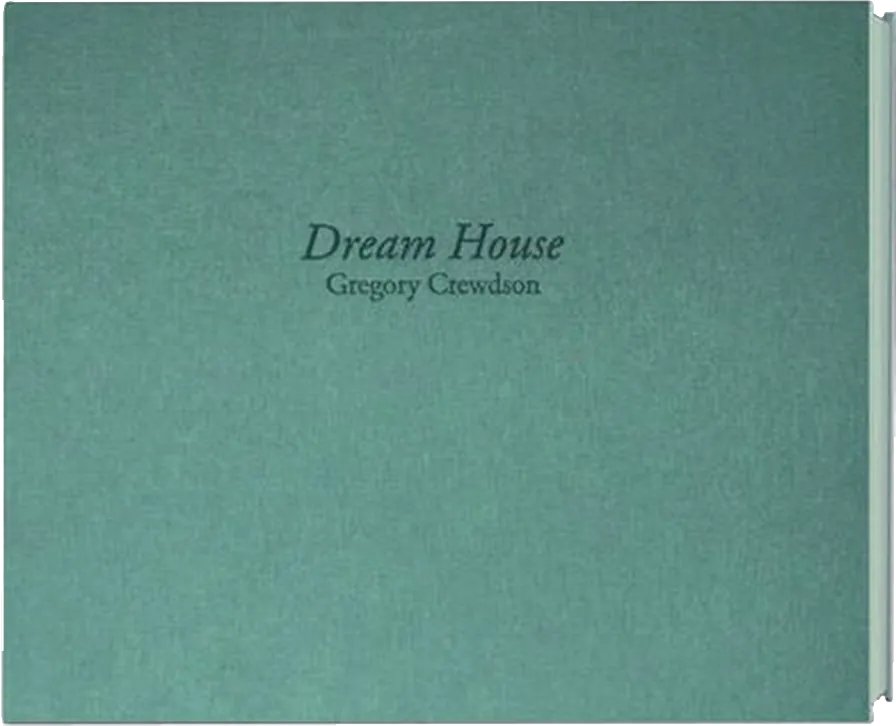
Dream House (2002) occupies a fascinating, transitional space in Gregory Crewdson’s bibliography, Originally commissioned as a twelve-part portfolio by The New York Times Magazine, the series acts as a bridge between the domestic surrealism of his earlier work and the massive, cinematic scale that would define his mid-career
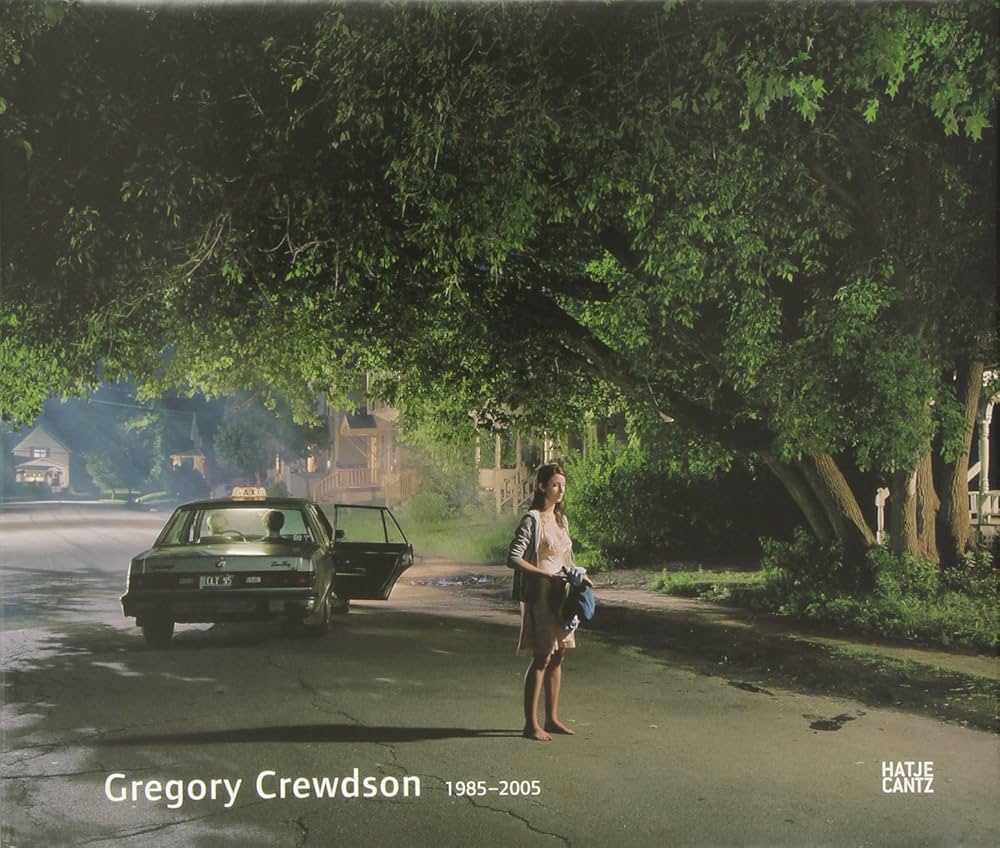
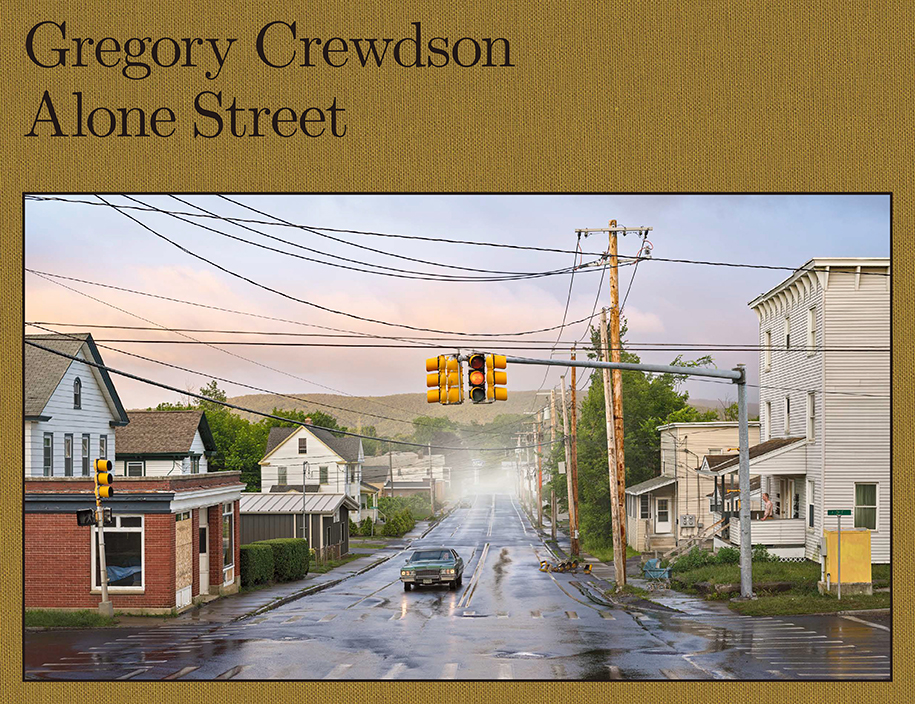
This move happened between 2003 and 2008 through the Beneath the Roses series. This new body of work expanded Crewdon's production scale to rival feature films, Crewdson moved beyond the home to capture entire town streets, forests, and abandoned industrial sites across unnamed small towns. Working with large crews, street closures, and complex cinematic lighting rigs, he captured moments of deep isolation and melancholy. The subjects in Beneath the Roses are often frozen in emotionally charged, ambiguous moments of disconnect or contemplation. The series cemented his ability to create a visually breathtaking "calm before the storm," where epic municipal scale meets intimate human fragility.
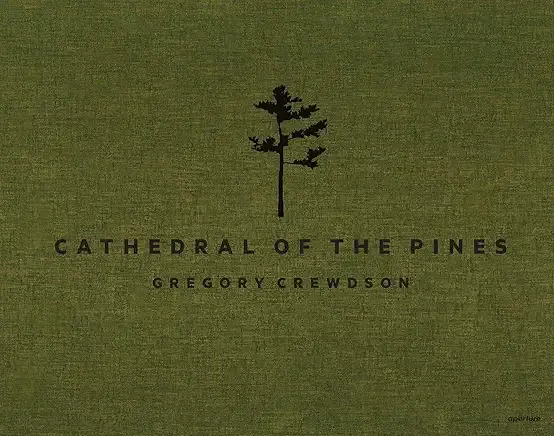
Cathedral of the Pines (2013-2014) marked a period of personal and artistic transition for Crewdson, this series is named after a trail in the deep forests of Becket, Massachusetts, where he relocated. While retaining his hallmark cinematic lighting and rigorous control over the frame, the work is noticeably quieter, more intimate, and less theatrical than his earlier suburban scenes. The imagery explores a deeply personal sense of stillness and connection to the natural world, acting as a ceremonial crystallization of space, time, and hidden sorrows within rural interiors and woodland landscapes.
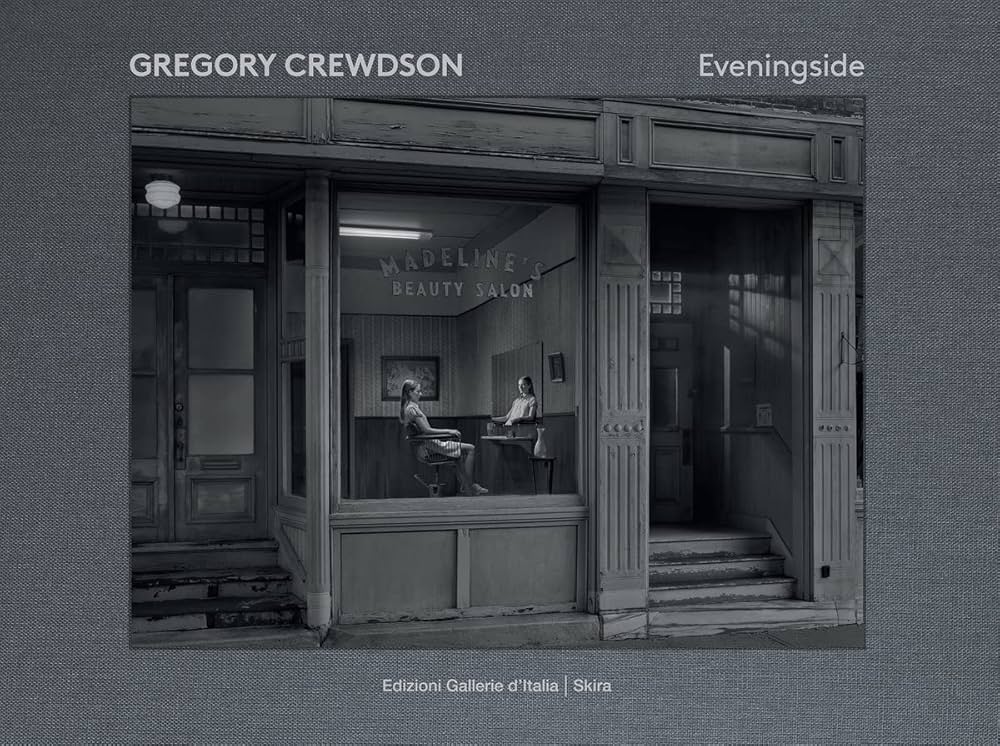
Envisioned as the final movement of a trilogy spanning a decade (following Cathedral of the Pines and An Eclipse of Moths), Eveningside (2021-2022) explores moments of contemplation in and around places of everyday employment, storefront windows, bank teller drive-throughs, dairy bars, and hardware stores. For the first time using his full production team to shoot in a monochromatic palette, Crewdson employed a heightened range of light and shadow, complete with practical effects like fog, rain, and haze. The resulting black-and-white images exude a rich, gothic atmosphere evocative of classic film noir, capturing the quiet wonders and stark realities of routine, post-industrial American life.


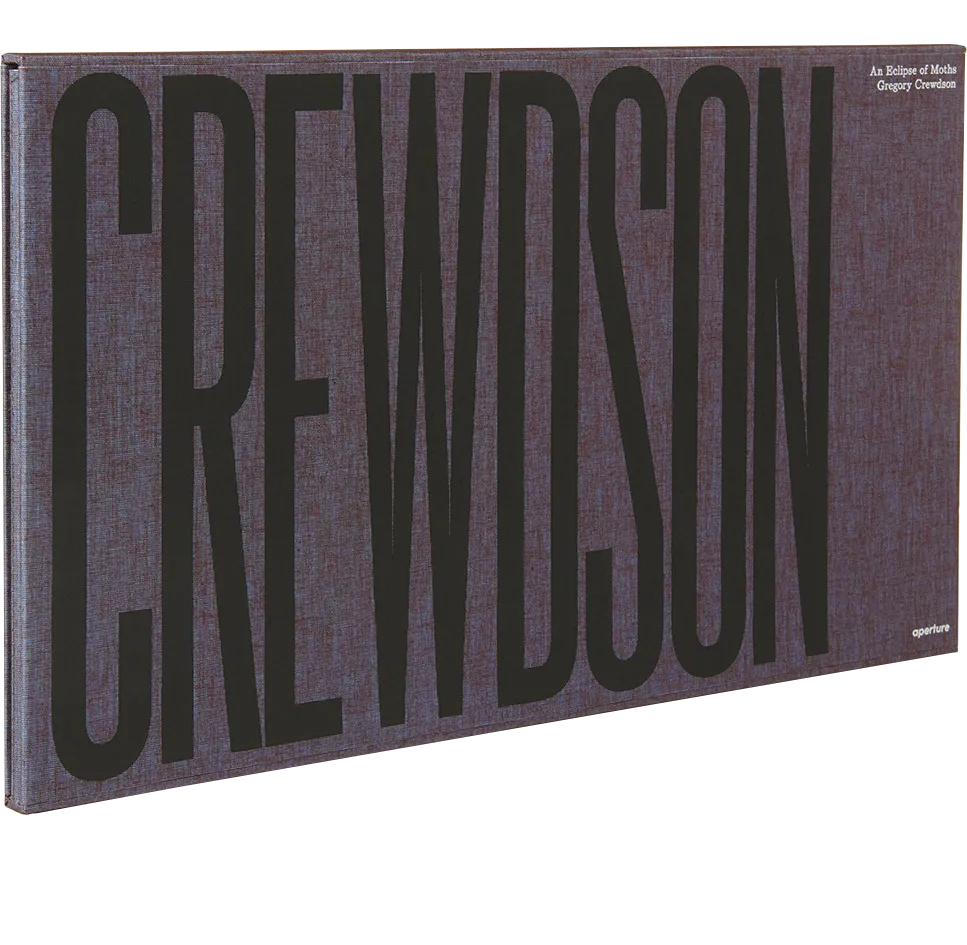
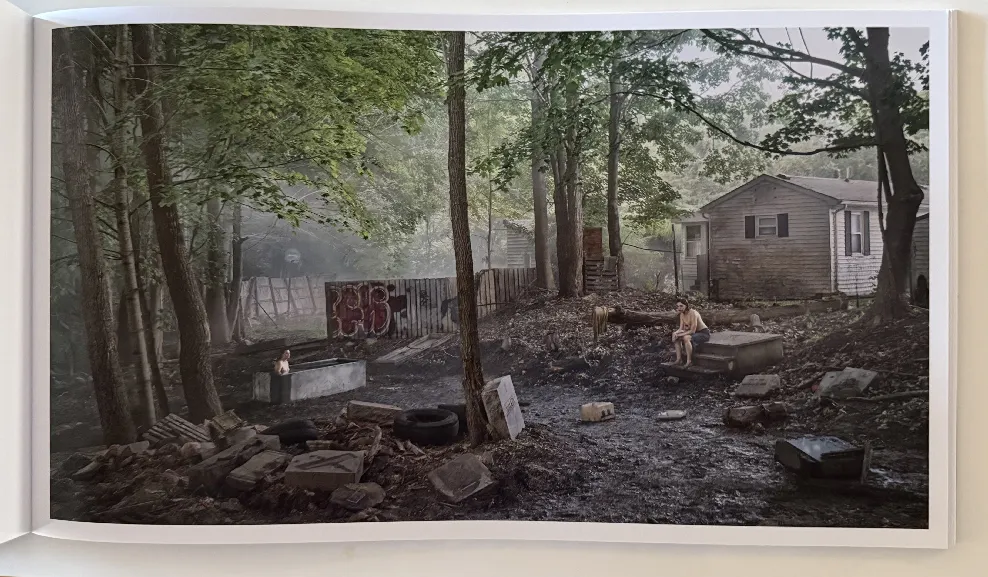
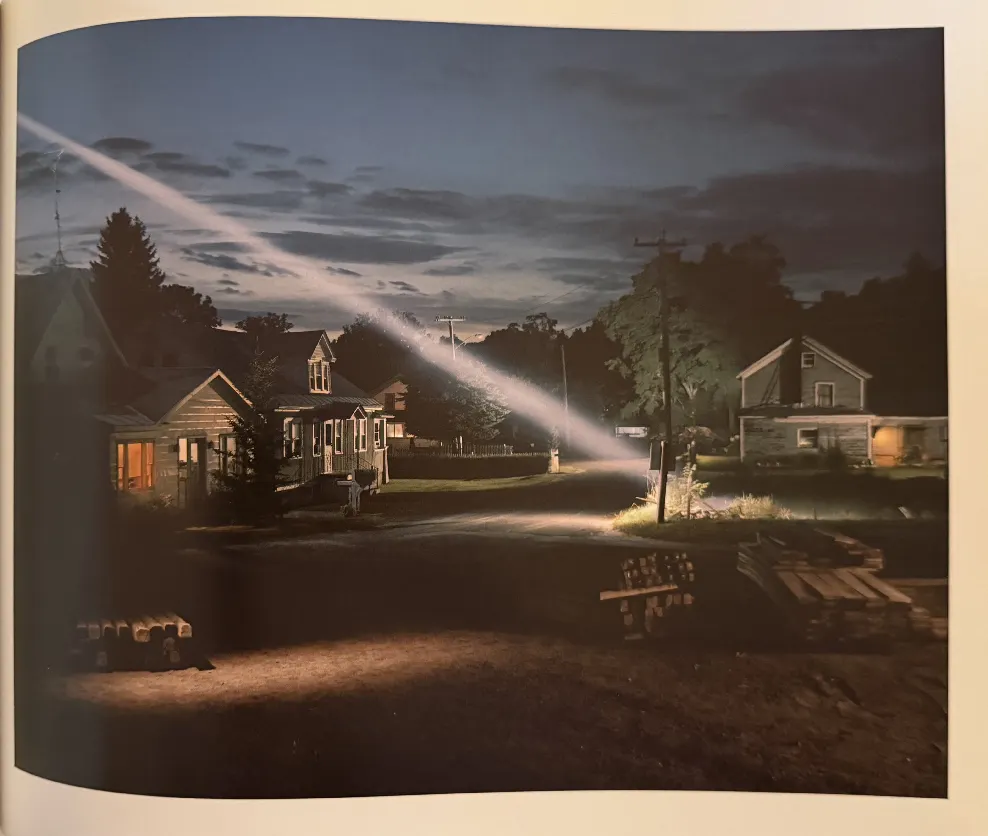
An Eclipse of Moths extends Gregory Crewdson’s obsessive exploration of the small-town, postindustrial American landscape. Each of these sixteen, never-before-published images was composed at a cinematic scale with the artist’s signature auteurial care.