


Which art books, prints and posters are available by and about this artist? Here is a sample of items of interest to a typical collector:


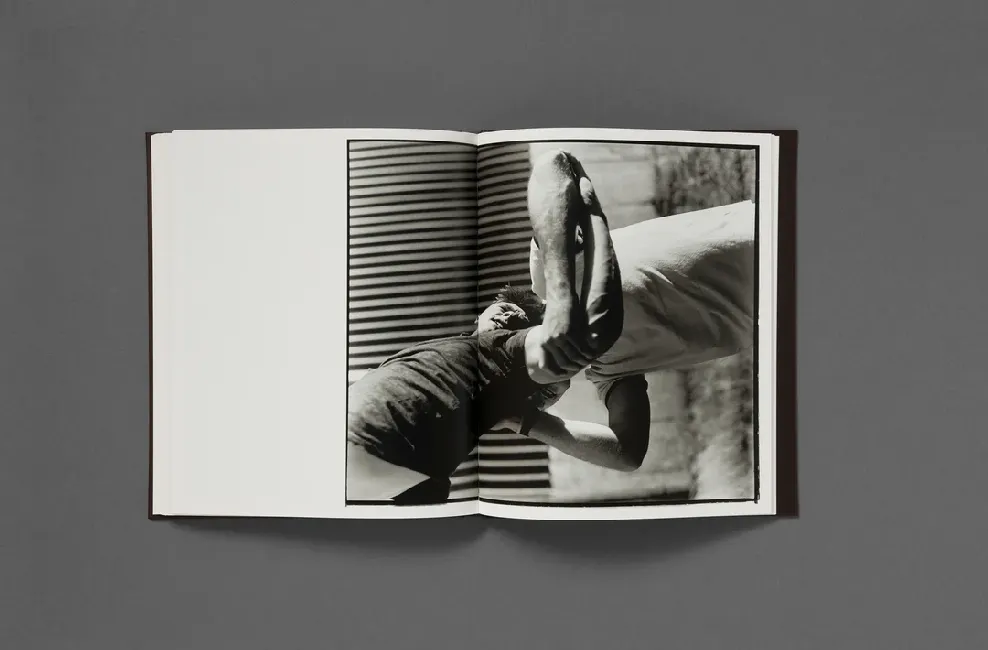

People of the Mud was made collaboratively amongst the communities of County Wexford in Ireland, where ancient tradition and modern life rub shoulders daily.
With a background in professional dance, Rodriguez’s work pays tribute to the metaphorical weight of centuries of physical labour behind cultivating the landscape and maintaining cultural heritage. Images of scarred limbs and hands, weathered faces and choreographed bodies appear as a cartography of this labour, reflecting how culture both shapes and is shaped by individuals. Elsewhere, we see the exaggerated glamour of modern female Irish dancers taken out of the glitzy ballrooms and into the fields, creating a rupture across time and space.
While in Wexford, Rodriguez was struck by the intense physicality of the sport of hurling. Considered to be the fastest sport on grass, while watching slow-motion footage of hurling Rodriguez saw that within seconds the players would go through pushing, shoving, grabbing, hugging, knocking each other down and then lifting one another up. Rodriguez worked with players to reform these gestures: creating sculptures out of bodies, directing and literally layering players upon one another.
At the outset of his project, Rodriguez wanted to create a large family photograph, an idea that was quickly surpassed by other strands of enquiry. However, with a step backwards we can see People of the Mud as just that, a collective community portrait of all the different elements that construct modern, rural Irish identities. Just like any family portrait, it is at times dysfunctional and contradictory; it gathers all the ruptures and continuities between the past and present in modern Ireland, while being held in a landscape and moment in time. This moment is both still, posed and paused, and in perpetual motion, looking towards the future.

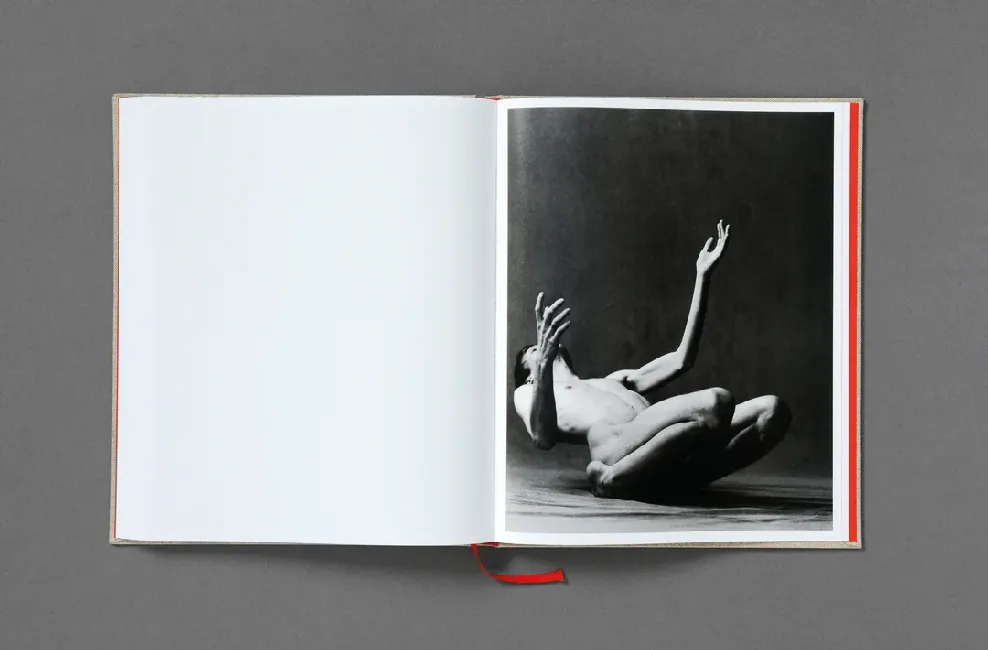
Conceived in the isolation and anxiety of the 2020 lockdowns, Luis Alberto Rodriguez’s O. functions as an existential meditation on mortality, self-preservation, and the fragile construction of identity. Transitioning from the sweeping cultural documentation of his earlier work to an intensely introspective framework, the Dominican-American artist turns the photographic studio into an arena of spiritual vulnerability. The monograph navigates the tension between control and release, integrating deeply personal elements such as images of his father alongside his mother’s practice of tasseography, divination through coffee cup readings. These autobiographical threads anchor the project in a lineage of familial heritage, grounding the ethereal exploration of the human condition in the tactile reality of ancestral roots.
Drawing upon his extensive background as a professional dancer, Rodriguez approaches the human figure with an inherently choreographic sensibility. The visual language of the book is characterized by dynamic, sculptural nudes isolated against stark studio backdrops, stripping away environmental context to focus entirely on corporeal expression. Through dramatic lighting and precise framing, bodies are captured in states of contortion, free-fall, and suspension, transforming physical tension into a metaphor for existential precariousness. The resulting compositions evoke a symphony of raw, involuntary gestures, a visual echo of the titular "O," which the artist describes as a gasp, a vibration, and a collective wail.