Copyright ©
Ruth van Beek
or applicable right holders.


Which art books, prints and posters are available by and about this artist? Here is a sample of items of interest to a typical collector:

Van Zoetendaal Gallery
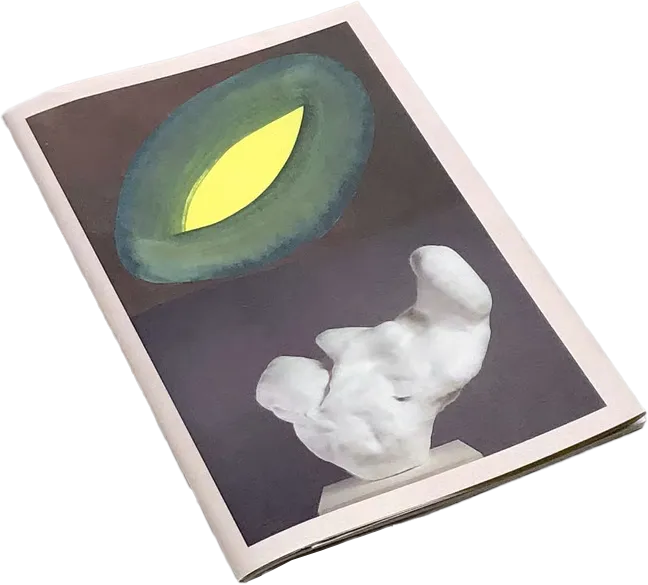
The Ravestijn Gallery brings together works by Dutch artists Ruth van Beek and Mariken Wessels. Their mutual interest in exploring the act of creation and their interventions in existing material overlap to form a powerful reflection on the female artist. In Van Beek's spatial installation of collages, ordinary objects take on a body and life of their own. She explores the thin borders between studio and domestic life, the repetition of daily tasks, and the origins of her interest in manuals and household books. In the series of sculptures and collage works by Wessels, it is the female body that becomes matter.
With poems by Basje Boer and an essay by Robert Petzoldt
Van Zoetendaal Gallery
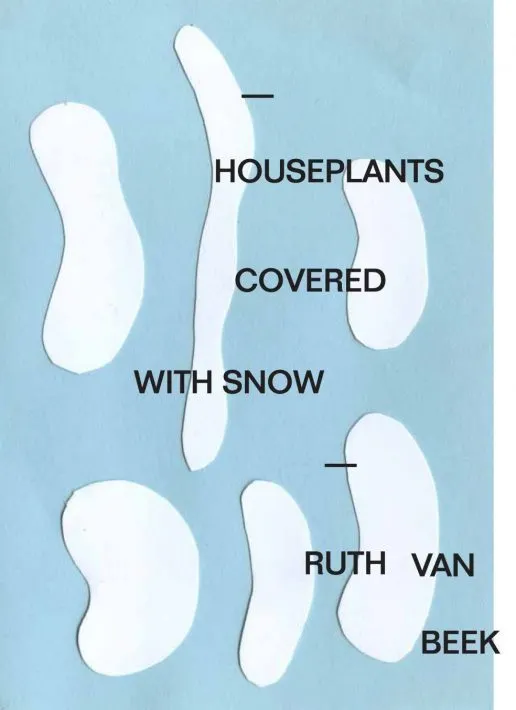
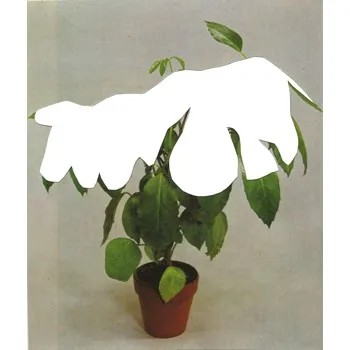
Sourcing vernacular images of everyday indoor plants, van Beek subverts their banal, decorative function by physically intervening in the photographic record. Through meticulous folding, cutting, and overpainting, she transforms these familiar botanical subjects into strange, animated entities. This project illustrates her ongoing conceptual drive to liberate found imagery from its original, static context, treating the historical document as a malleable raw material capable of generating new, surreal taxonomies.
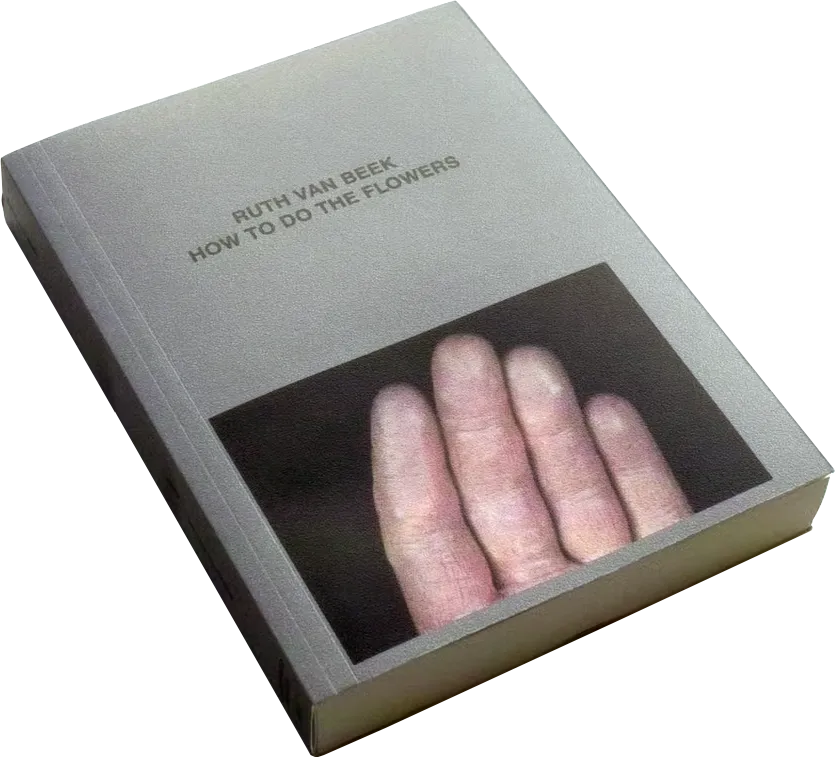
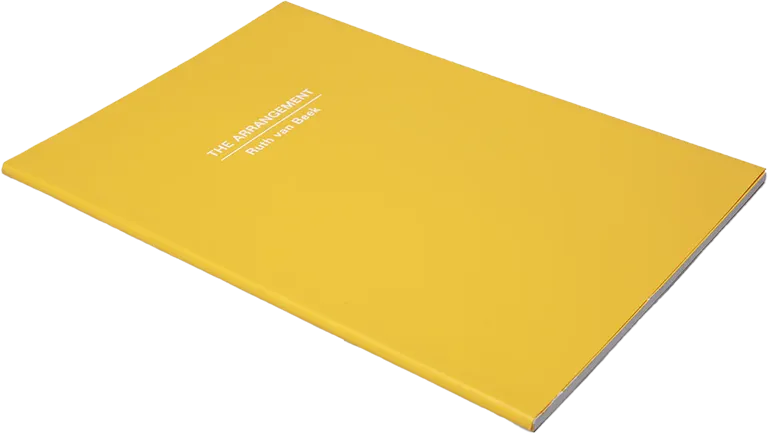
The Arrangement (2013) serves as a playful yet rigorous reinterpretation of the photographic archive, specifically focusing on the domestic art of flower arranging. Drawing from a personal collection of mid-century instructional manuals, van Beek treats these vintage found images not as static historical documents, but as malleable raw material. By isolating and manipulating the strict rules of traditional floral design, she constructs an entirely new, surreal taxonomy of abstract flora. This project establishes her signature methodological approach, where the book itself functions as a contained, alternative universe for these cultivated, bizarre botanical inventions.
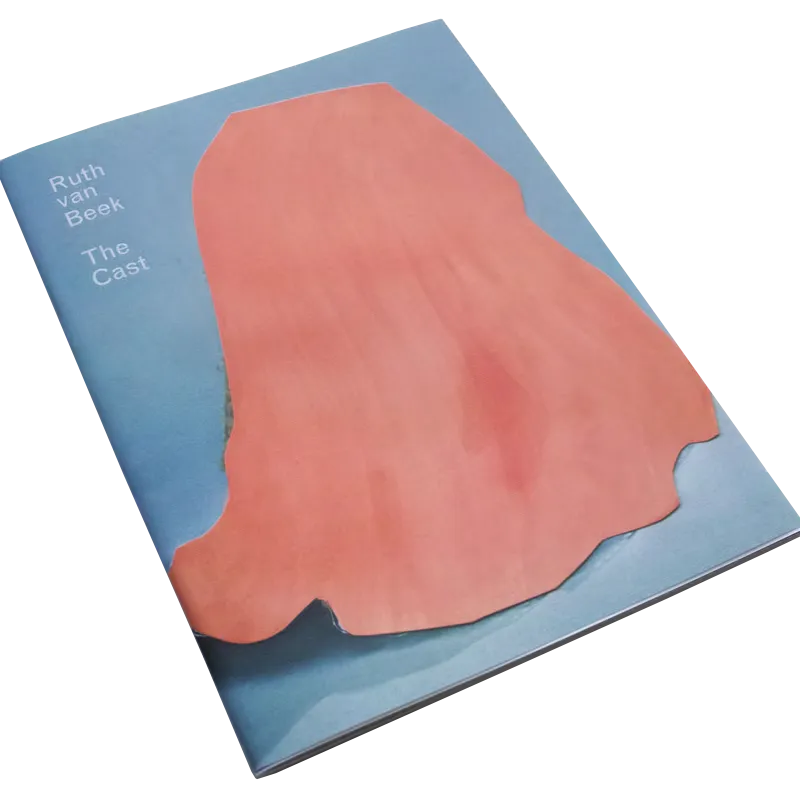
Ruth van Beek’s The Cast (2017) functions as a radical reinterpretation of the photographic archive, transforming discarded instructional manuals and vintage magazines into an obscure, animated taxonomy. Operating from her studio in the Netherlands, van Beek treats found imagery not as static historical documents, but as malleable raw material. By meticulously cutting, folding, and rearranging these domestic, often banal source photographs, she strips them of their original context. The title itself points to her methodological approach: she conceptualizes her collages as a theatrical production, where geometric backgrounds serve as the stage, and the manipulated found images act as the performing cast.
Aesthetically, the publication sits at the exact intersection of photography, collage, and sculptural intervention. Van Beek subverts the traditional flatness of the image by physically altering the surface of the paper, creating uncanny, lifelike compositions from inanimate subjects. The resulting figures often resembling exaggerated characters or strange domestic objects are rendered through precise, graphic isolation against solid bases. This deliberate physical manipulation emphasizes the tactile reality of the printed matter, forcing the viewer to confront the photograph as a constructed artifact rather than a transparent window.
New Documents
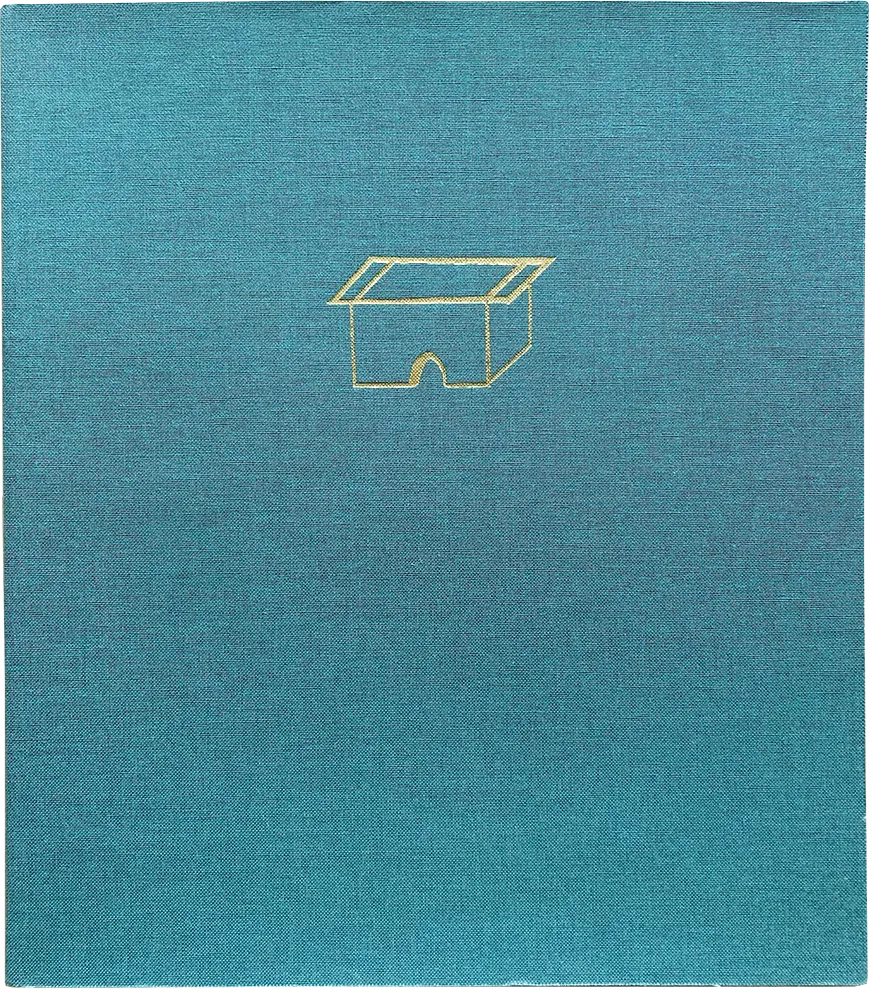
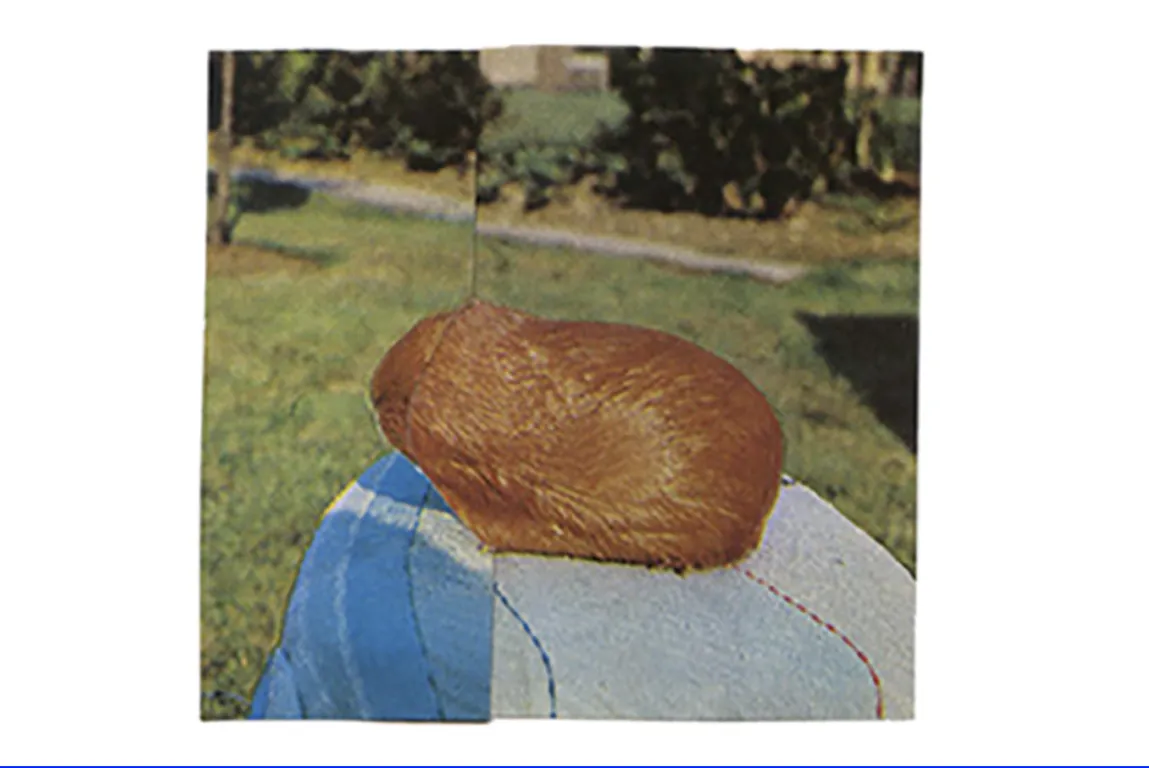
Ruth van Beek’s The Hibernators serves as a foundational exploration of her unique approach to the photographic archive, wherein vintage imagery is treated not as a static record, but as a site for physical and psychological intervention. Sourcing vernacular photographs of domestic pets and captive animals, van Beek meticulously obscures the original subjects, transforming familiar household companions into strange, ambiguous creatures seemingly suspended in a state of deep dormancy. This conceptual hijacking strips the source material of its original, often sentimental context, redefining the archival photograph as a fluid, malleable material capable of generating entirely new, surreal narratives.
Aesthetically, the publication is defined by its rigorous sculptural manipulation of the two-dimensional plane. By physically folding the found photographs, applying bold geometric shapes, and painting out recognizable features, van Beek isolates these mysterious, bulbous forms against stark, graphic backgrounds. The resulting compositions actively blur the line between photography, collage, and object-making.
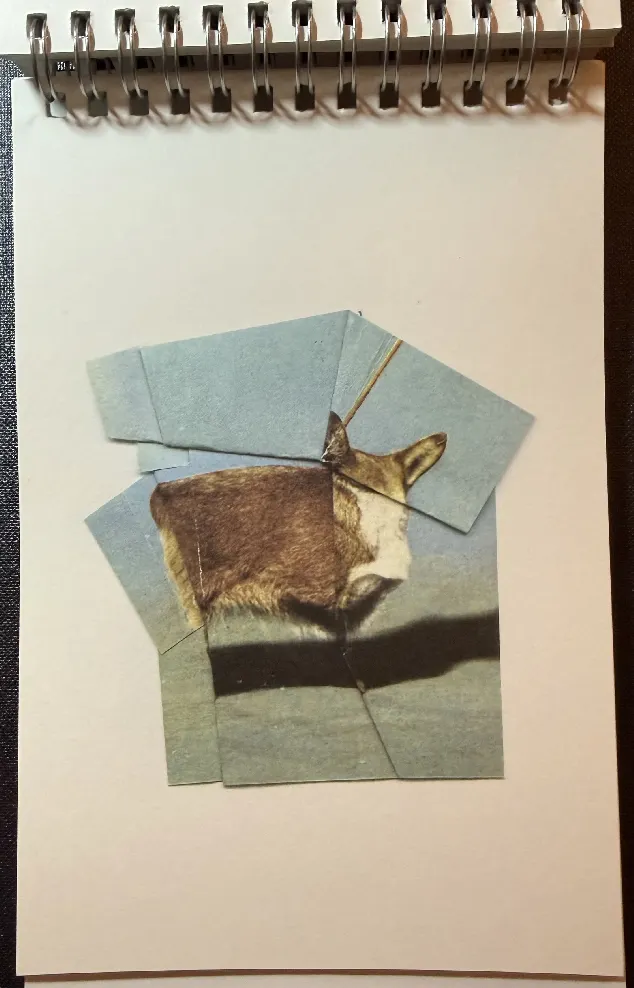
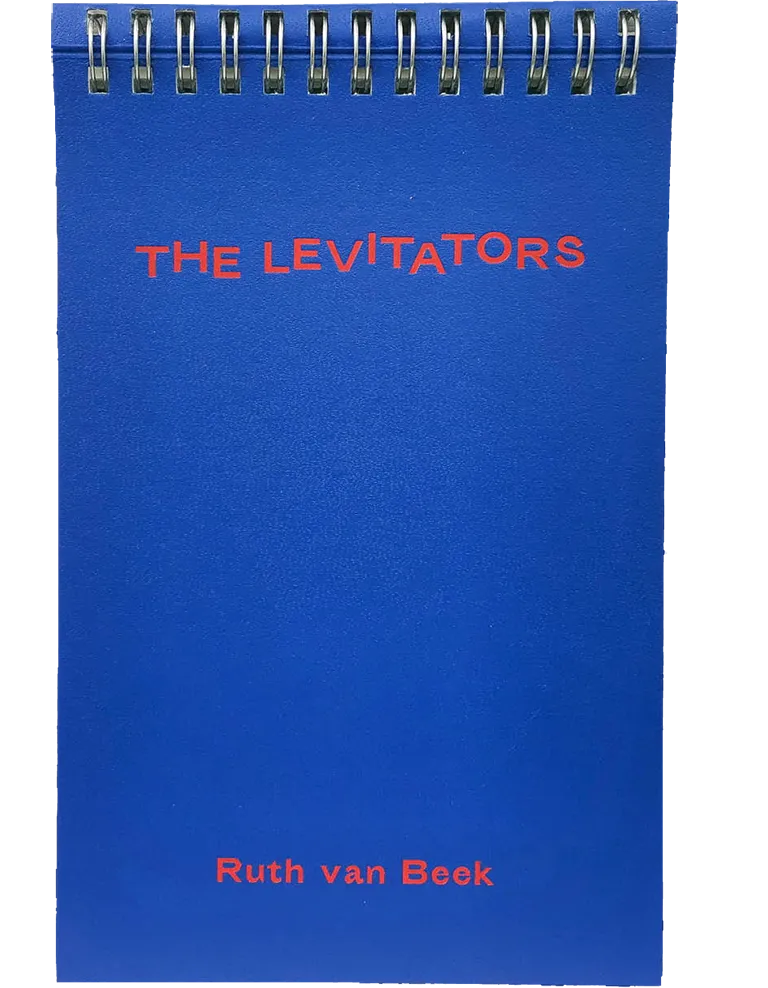
In this series, The Levitators are a species of animals that originated from images of domestic dogs. Seeing these pets, now bred in all possible shapes and forms, it is hard to believe that they descend from wild animals. In the photos they pose patiently for the camera of their owner, looking their best, tails wagging. To bring the dogs back to life, Ruth van Beek cuts and fold the images. Through this process of animation and fixation many things go awry. In her attempt to make the dogs fly, they gradually loose their original dog-shape, transforming into fluffy objects, unsuccessful animals. Thus through this uncertainty they become moldable and open to new interpretations.
Van Zoetendaal Gallery
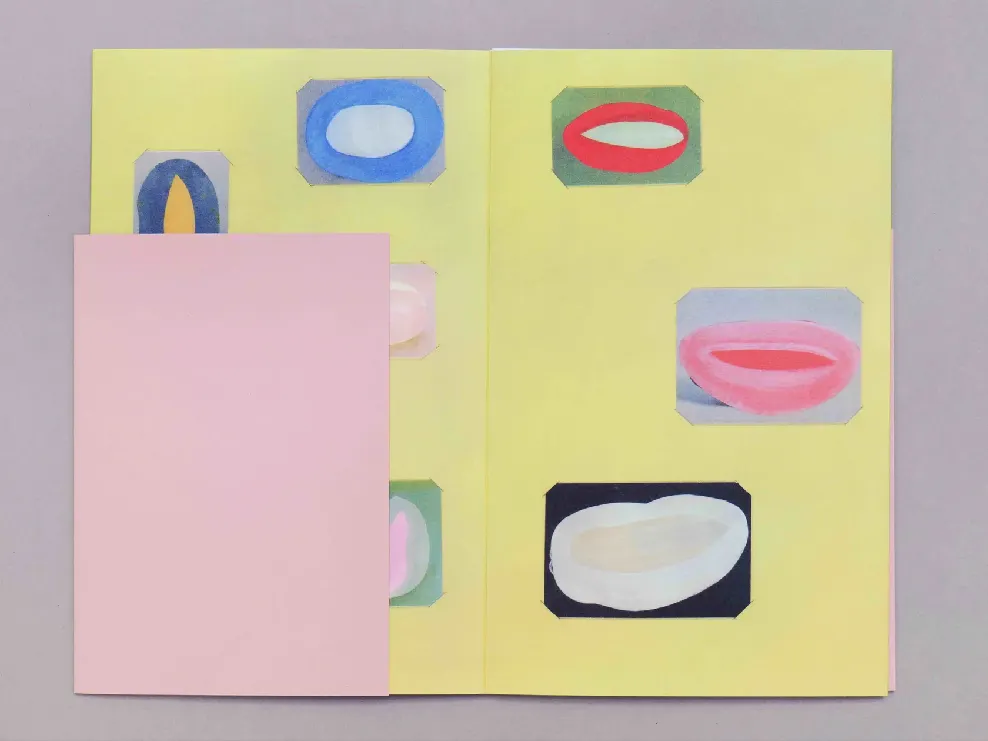
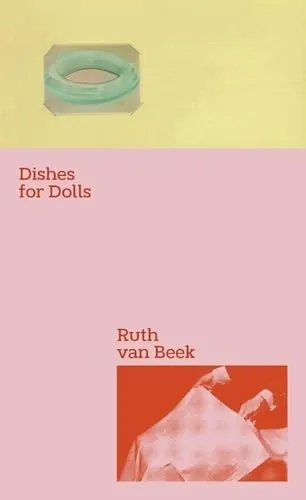

Unsigned, printed "Dashwood Edition of 150" on the print's verso.
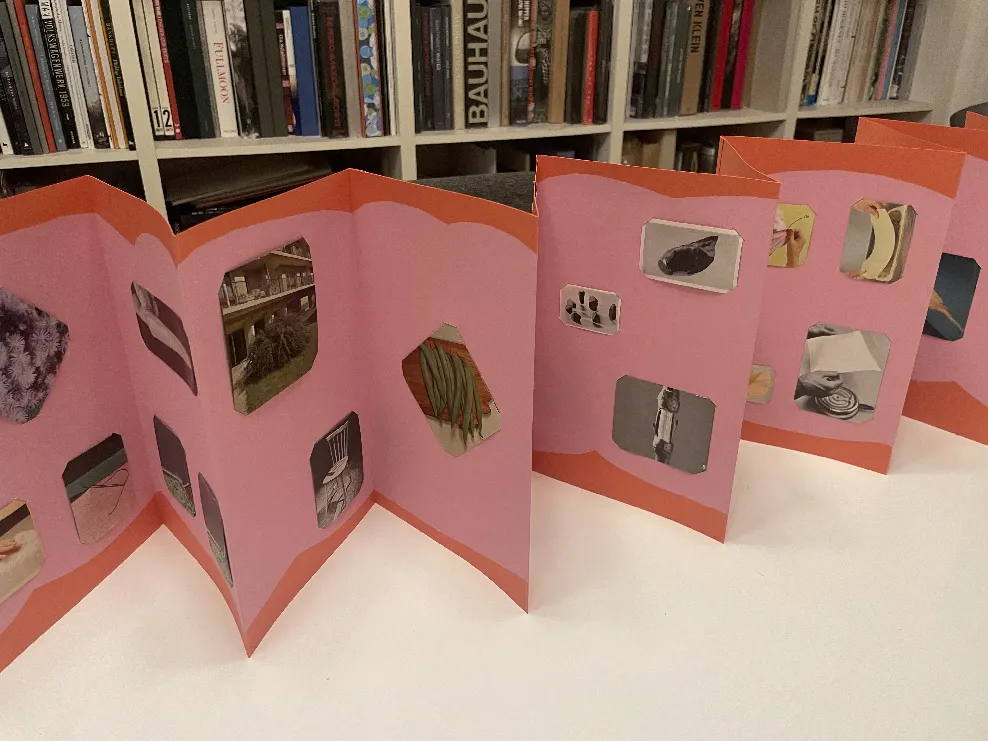
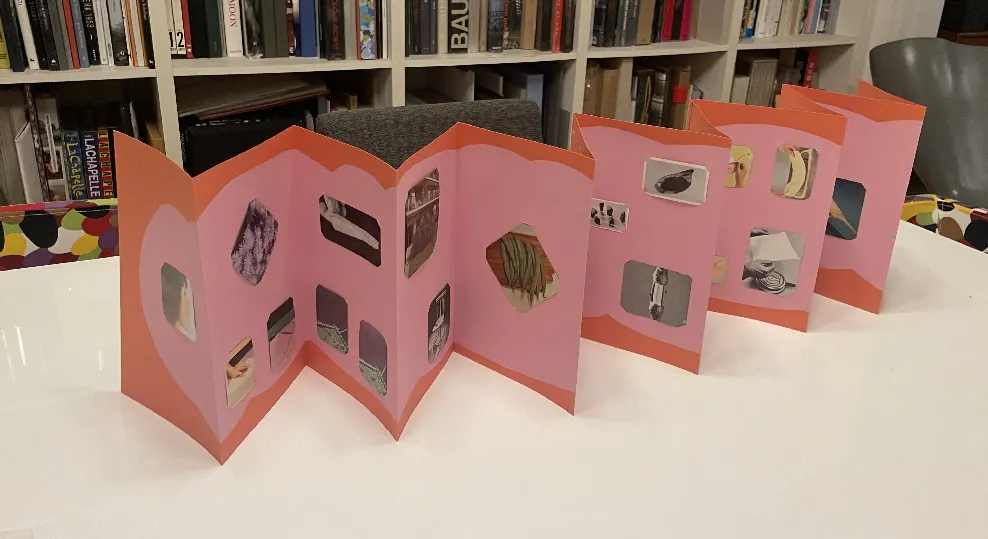
"Lazybones" is a work that lingers between a book and a collage. In collaboration with RVB Books, Ruth van Beek has made 20 unique leporello books. Each book hosts a collection of images from her archive, always set in different constellations. She inserted each image without glue on the page, by making small incisions through the surface of the paper. A similar method that was used in old photo albums.
These handmade leporello editions give a body to hundreds of seemingly useless small photos that linger in Ruth’s archive. Collected and cut out from old books and magazines over a period of many years, these images were meant to inform and instruct on the one hand and to distract and dream away on the other. Brought together in a new position and context, both as objects and representations, they form an incantation, they are fixed and irrevocably connected to each other.
The elongated format of the leporello and the content of the photos both refer to a visual language that we know from daily life and history. Sequences are used to instruct us, to tell stories, sing songs and cast magic spells. The pink shape refers to a body, a leg, a bone, the bowels. The images are inside, they represent the inner life and the capillaries of the archive. The lazy, meaningless, negligible photos are given the leading role in this book. And now, treated with care, they invite us to look again.
12-page leporello, 16X25cm folded. All inserted photos are originals from the artist's archive. Each copy is completely unique.
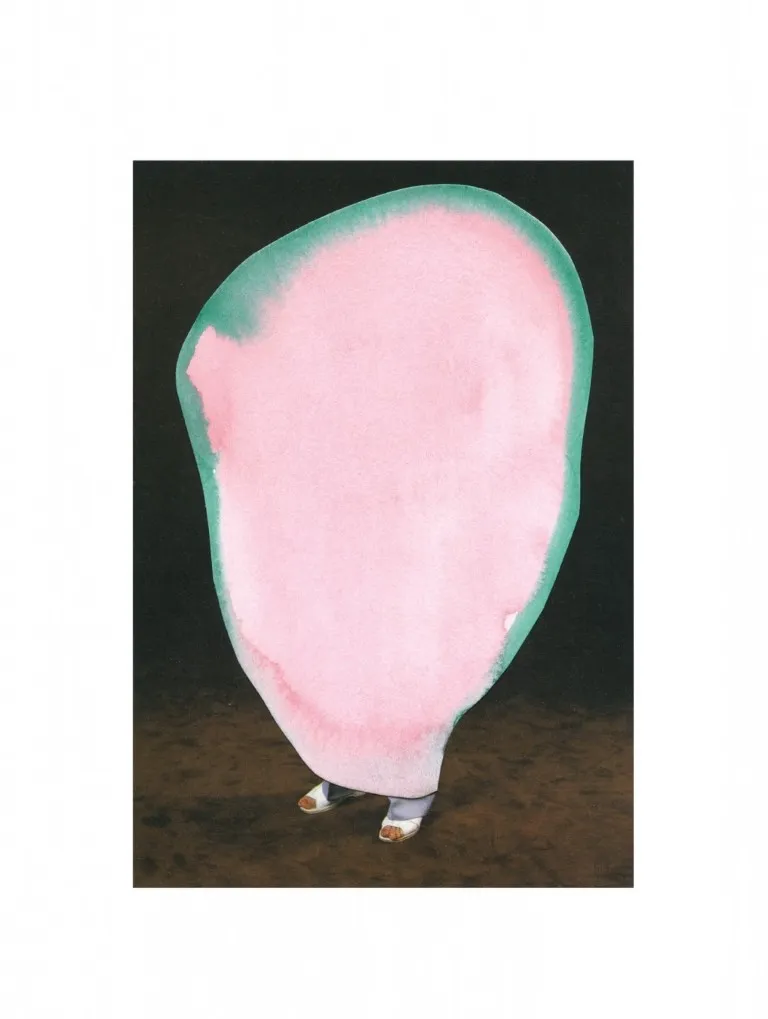
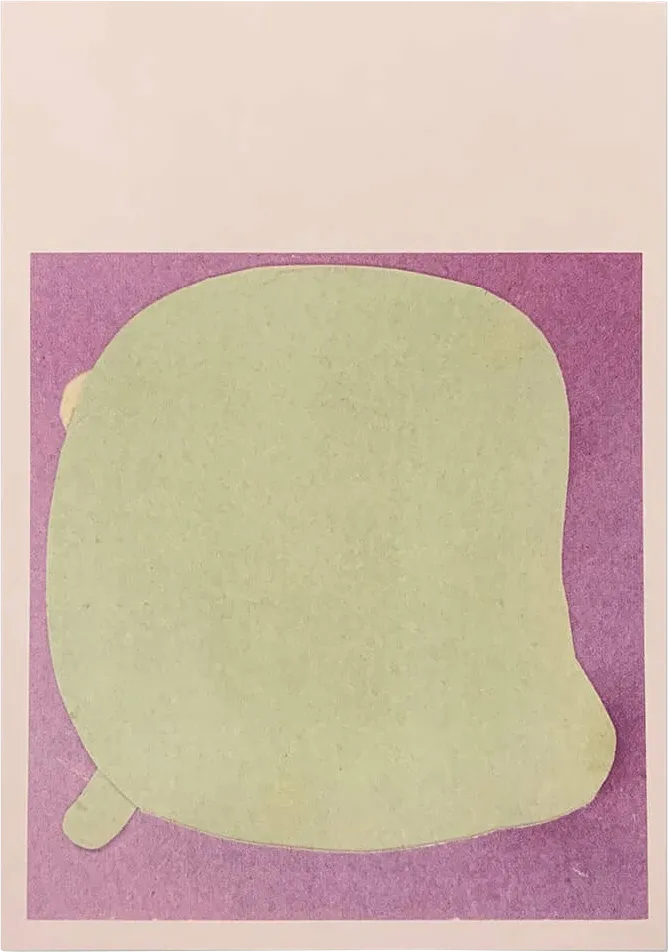
Ruth van Beek’s work from The Cast transforms discarded instructional manuals and vernacular photographs into an obscure, animated taxonomy. By isolating specific manipulated forms from her broader collaged universe, this standalone print recontextualizes her physical interventions. It presents the mutated, abstracted figure not merely as a sequence within a book, but as a singular entity commanding its own defined space. The image subverts the original context of the found domestic photography, treating the historical document as malleable raw material to generate a completely new, surreal character on a two-dimensional stage.
Aesthetically, the image relies on sharp graphic isolation. The bulbous, altered form characteristic of van Beek's methodology is set against a stark, solid background, generating a compelling spatial dynamic between the original photographic source and her aggressive physical alterations. Rendered at an intimate scale of 25.5 x 17.5 cm, the piece is effectively a full-bleed window. This compositional choice means the physical edges of the paper act as the direct borders for the central figure, emphasizing the tactile reality of the printed surface.
Print came as part of a limited edition of the book Hibernators.
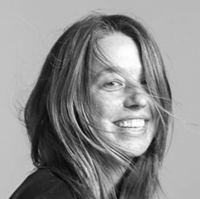
Ruth van Beek, Dutch b. 1977
Van Beek is an artist and bookmaker who transforms found photographic imagery into tactile, three-dimensional collages. Born and based in Koog aan de Zaan, she graduated from the Gerrit Rietveld Academy in 2002. Her work is primarily derived from her extensive personal archive of vintage manuals, cookbooks, and instructional guides from the 1950s through the 1970s. By physically intervening with these images—using techniques such as folding, cutting, and applying layers of painted paper—she strips them of their original domestic context to create surreal, biomorphic forms that often appear to be living, autonomous characters.
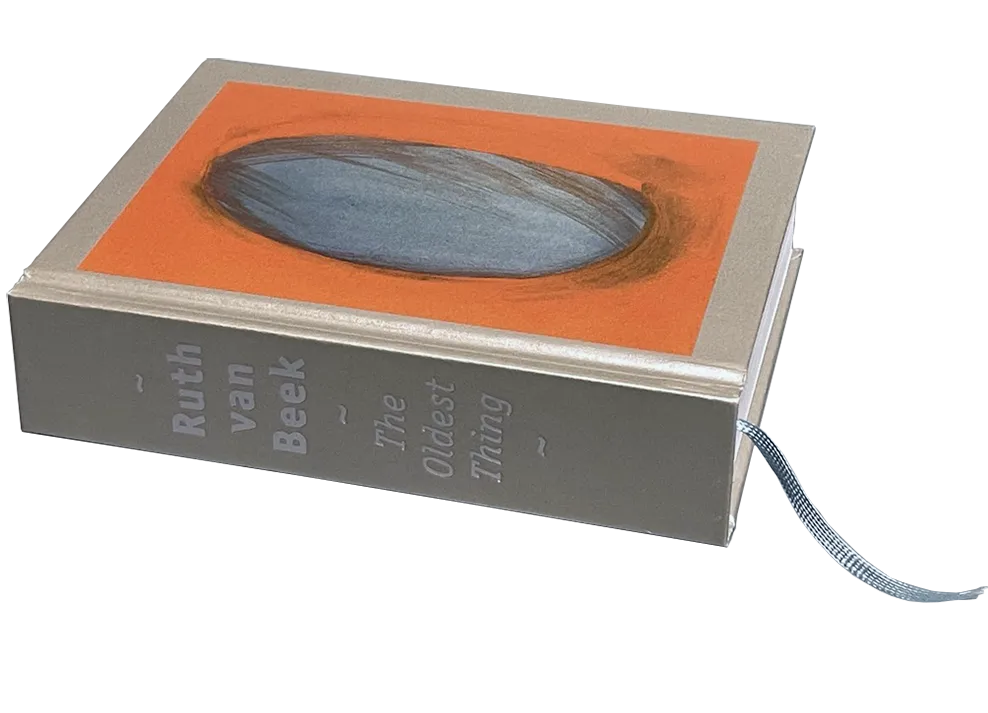
Her practice is deeply tied to the photobook as an artistic medium rather than a simple catalog of work. Notable publications include The Hibernators (2011), The Arrangement (2013), which was shortlisted for the Aperture Photobook of the Year Award, and the massive 500-page volume The Oldest Thing (2023), which explores the connection between her own archival methods and her mother's collection of household binders. van Beek's work has been exhibited internationally at venues such as The Ravestijn Gallery in Amsterdam, Fraenkel Gallery in San Francisco, and Flowers Gallery in London. Her unique aesthetic, which balances the familiar with the uncanny, has also led to high-profile collaborations with fashion labels like Marni.