SOLD
Copyright ©
Ruth van Beek
or applicable right holders.
Poster



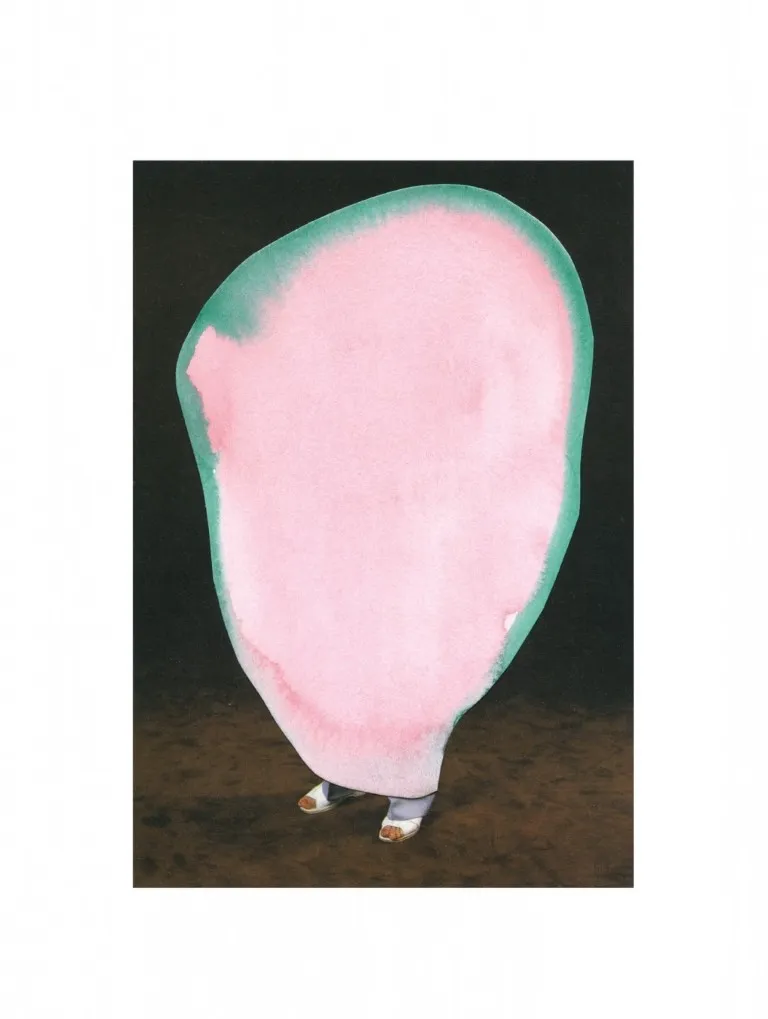
Ruth van Beek’s work from The Cast transforms discarded instructional manuals and vernacular photographs into an obscure, animated taxonomy. By isolating specific manipulated forms from her broader collaged universe, this standalone print recontextualizes her physical interventions. It presents the mutated, abstracted figure not merely as a sequence within a book, but as a singular entity commanding its own defined space. The image subverts the original context of the found domestic photography, treating the historical document as malleable raw material to generate a completely new, surreal character on a two-dimensional stage.
Aesthetically, the image relies on sharp graphic isolation. The bulbous, altered form characteristic of van Beek's methodology is set against a stark, solid background, generating a compelling spatial dynamic between the original photographic source and her aggressive physical alterations. Rendered at an intimate scale of 25.5 x 17.5 cm, the piece is effectively a full-bleed window. This compositional choice means the physical edges of the paper act as the direct borders for the central figure, emphasizing the tactile reality of the printed surface.