
Sigmar Polke

Sigmar Polke
To artist biography

Sigmar Polke

Which art books, prints and posters are available by and about this artist? Here is a sample of items of interest to a typical collector:

Edition:
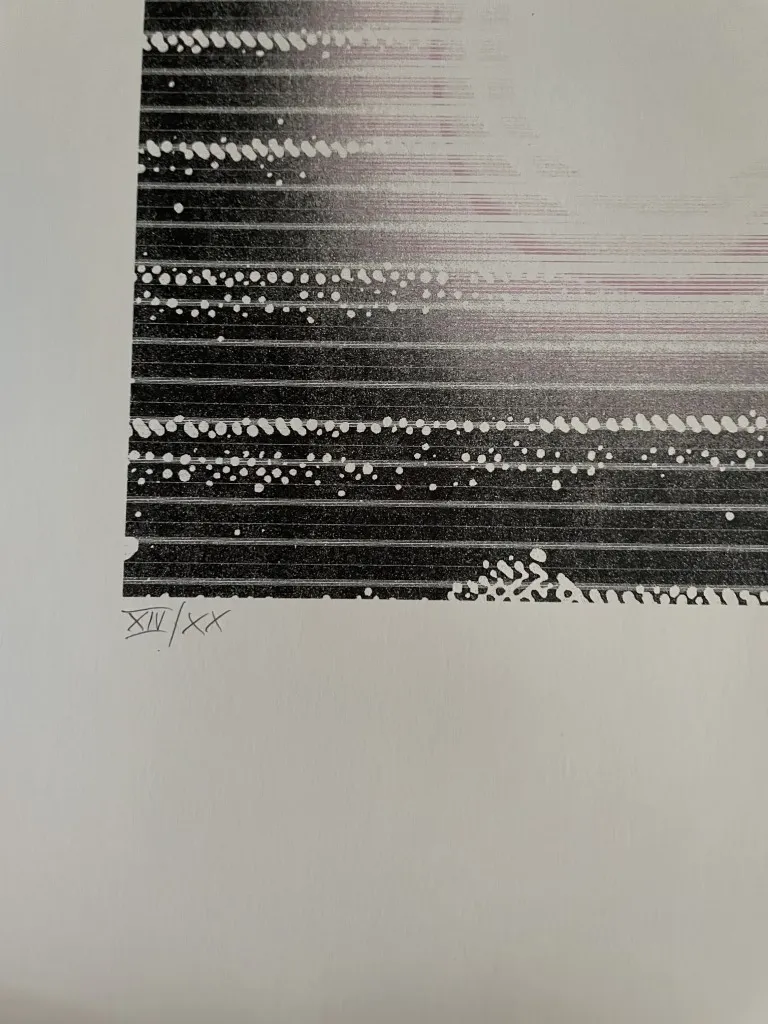
XIV/75 +XX AP
Signed and numbered on print's recto below the image
Year of work:
2000
Image size:
392 x 490 mm
Print size:
50 x 70 cm
Printed in
Framed size:
unframed
Provenance:
Edition Staeck, Heidelberg, acquired through Artedio, Berlin
Offset lithograph on cardboard
Condition:
Pristine

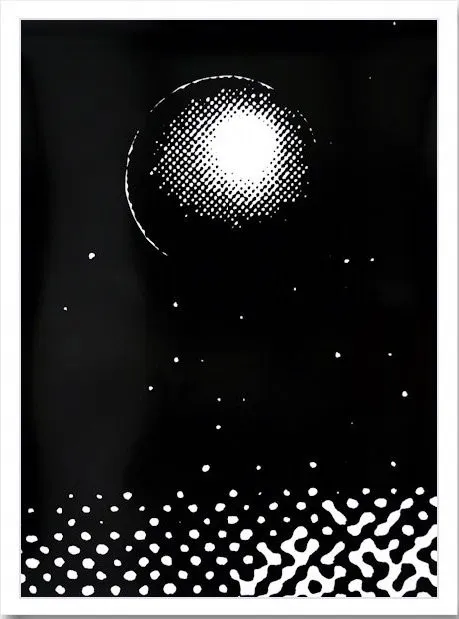
Die Treppe von Cannes (2000) is a notable graphic edition by Sigmar Polke that exemplifies his satirical critique of media spectacle and celebrity culture. Translating to "The Stairs of Cannes," the work directly references the iconic red-carpeted steps of the Palais des Festivals at the Cannes Film Festival. Fascination with mass culture and consumer obsession led Polke to focus on Cannes as a symbol of prestige, glamour, and visual illusion. The artwork was conceived and created directly as a printed graphic edition rather than being painted on canvas first. Published as an offset lithograph on cardboard in an edition of 75 with 20 artist proofs, the heavy support gives a physical permanence to an otherwise fleeting media image. Polke treated prints and editions as a primary, standalone medium rather than secondary reproductions of gallery paintings. Rather than capturing a clean photo, he manipulated found press imagery by overlaying halftone raster dots and visual noise to question the truthfulness of mass-produced media. The work was published by Edition Staeck in Heidelberg, founded by Klaus Staeck, a frequent collaborator who shared Polke's vision of democratic printmaking. Though produced in 2000, the print carries the core conceptual spirit of the Capitalist Realism movement Polke co-founded in the 1960s.

Today, this piece is preserved within the Bushwick Sur Seine collection, representing Polke's lifelong engagement with mechanical reproduction, image distortion, and tactile materiality.

Literature and Collections:
Edition:
6/75
Signed and numbered on print's verso
Year of work:
2003
Image size:
50 x 70 cm
Print size:
50 x 70 cm
Printed in
Framed size:
unframed
Provenance:
Edition Staeck, Heidelberg, acquired through Artedio, Berlin
Screenprint on cardboard
Condition:
Pristine

Edition of 75 with 10 APs numbered with roman numerals.

Literature and Collections:
No items found.
No items found.

Sigmar Polke (1941–2010) was a major post-war German painter, photographer, and printmaker who famously co-founded Capitalist Realism alongside Gerhard Richter and Konrad Lueg. Known for his satirical perspective on consumerism, pop culture, and Western society, Polke’s work spans a restless variety of media characterized by irony, chemical experimentation, and a defiance of rigid artistic categories.  

While widely recognized for his figurative and abstract paintings, photography and published editions hold a central, transformative position in his body of work. During the late 1960s and 1970s, Polke set painting aside to focus intensely on darkroom experimentation and travel photography. He approached the darkroom as an alchemical lab, intentionally breaking technical rules through physical folding, chemical spills, double exposures, and manual manipulation during development.  

His editions, encompassing artist books, photographic suites, portfolios, and multiples, were a key venue for testing new visual concepts. Rather than using editions merely to reproduce existing imagery, Polke treated prints and photobooks as spaces to alter backgrounds, layer motifs, or manually modify individual prints, turning editioned items into unique objects. Significant publications like Daphne, a 2003 artist book featuring hundreds of individually photocopied and manipulated pages, and multi-medium prints such as Die Treppe von Cannes underscore his lifelong fascination with mechanical reproduction, image distortion, and tactile materiality.