
Look Inside
Which art books, prints and posters are available by and about this artist? Here is a sample of items of interest to a typical collector:
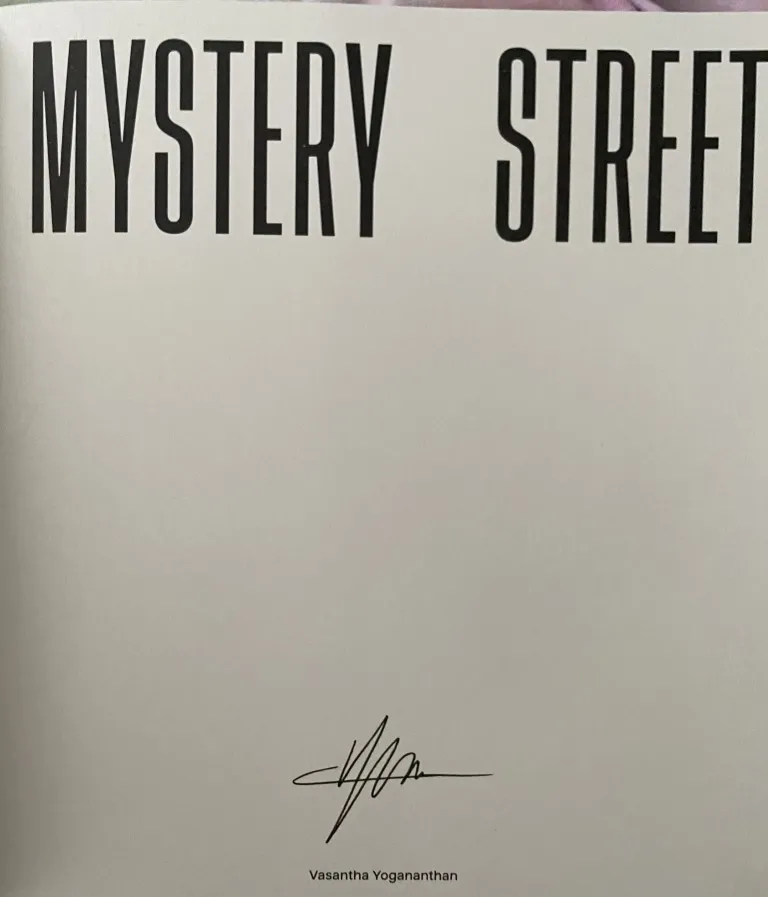
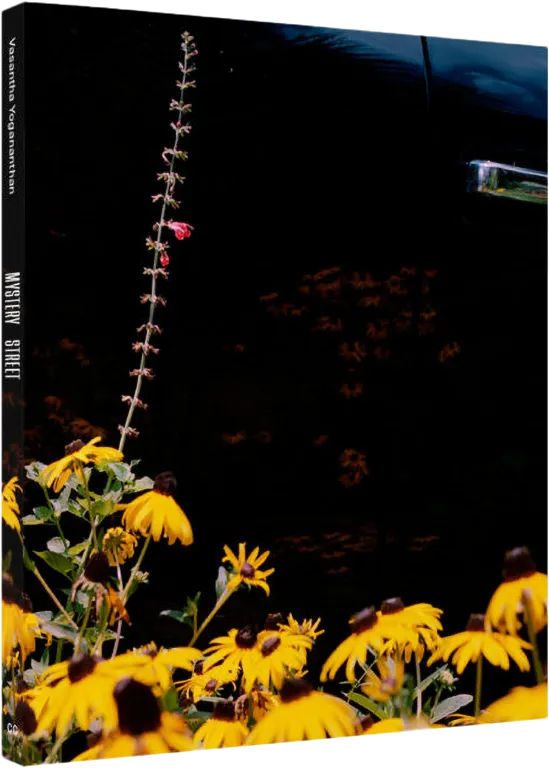
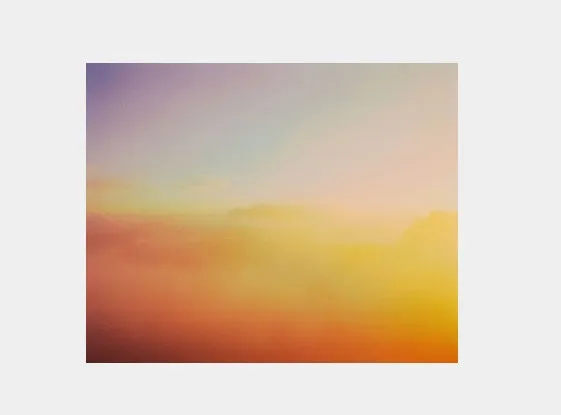
In a fragment of summer that lingers, where the New Orleans sun seems to suspend the ephemeral, Vasantha Yogananthan positions himself at child’s height, presenting the city as a vast playground.
Mystery Street begins and ends with children. Children playing, beaming and daydreaming. Children becoming. In his first North-American series, French photographer Vasantha Yogananthan stands next to the youth and gazes at their level.
With this project, Yogananthan makes a return to documentary photography, yet frees himself from prescriptions and pushes beyond the frame of tradition. Mystery Street works both as a conversation with the real and an escape into multiple narrative possibilities. If this body of work is mainly composed of portraits, Yogananthan’s preferred genre, it is not intended as a comprehensive portrait of New Orleans.
Set under the burning sun of Louisiana, this body of work is a fable, it says something about reality, but uses crossroads. It is a comment on human behaviors and yet a transfiguration of the common.
Fragments of a lingering summer, Mystery Street provides us with a minimum of information about space, time, or place, aware of how some figuration bears great weight. In an effort to suspend or avoid overdetermination, he invites viewers to be caught by their own expectations. A turning point in Vasantha Yogananthan’s practice, Mystery Street takes a caring look at kinship, at the intersection of body and environment.
This body of work has been shown at the Henri Cartier-Bresson Foundation (Paris) from May to September 2023 and is now showing at the International Center of Photography (New York City) until January 2024. It was produced as part of Immersion, a French-American Photography Commission of the Fondation d’enterprise Hermès, in partnership with the Fondation Henri Cartier-Bresson and the International Center of Photography.
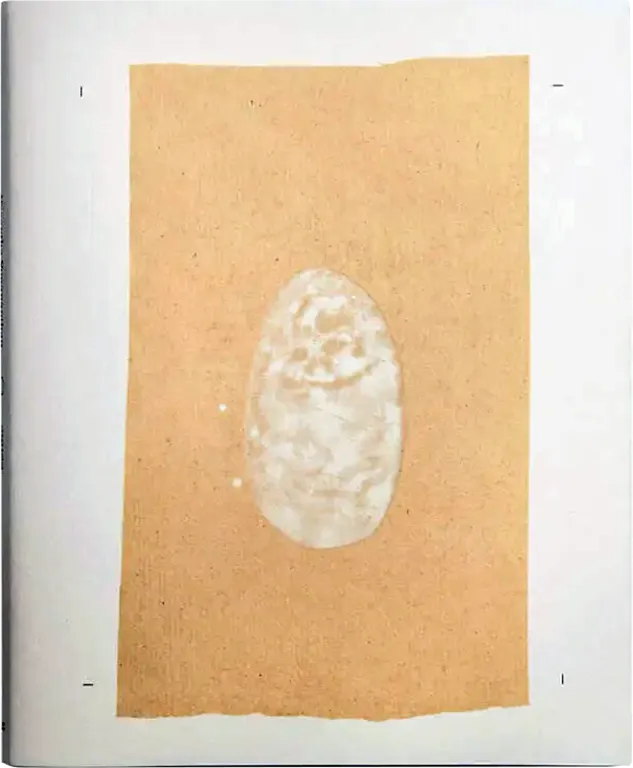
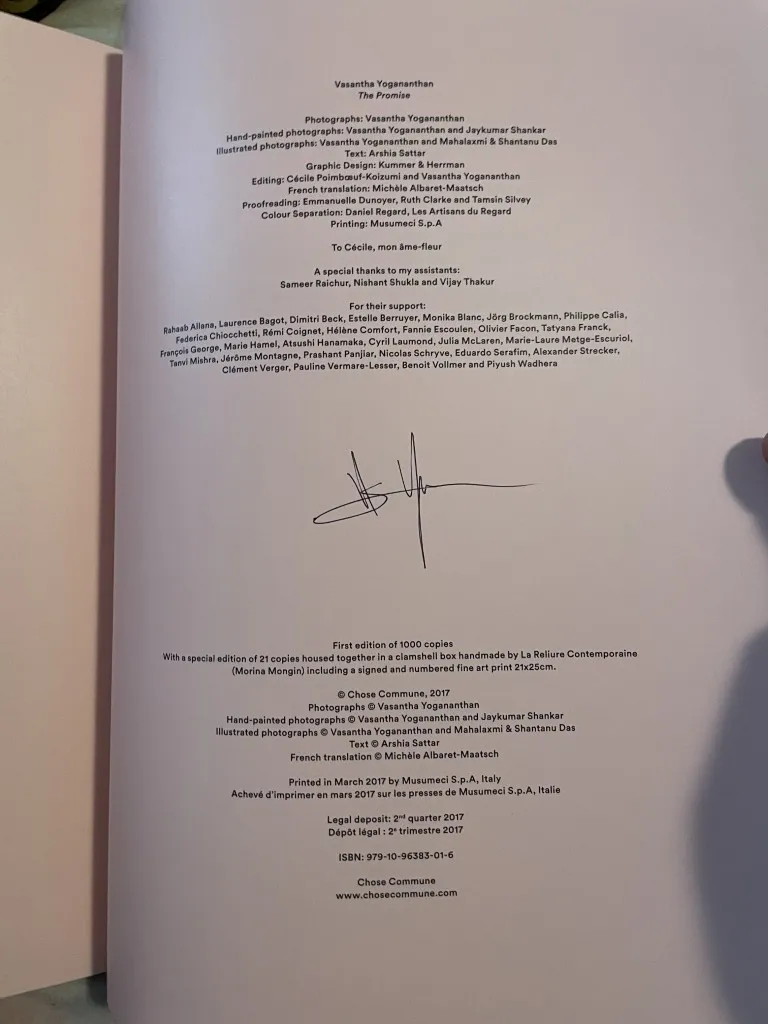
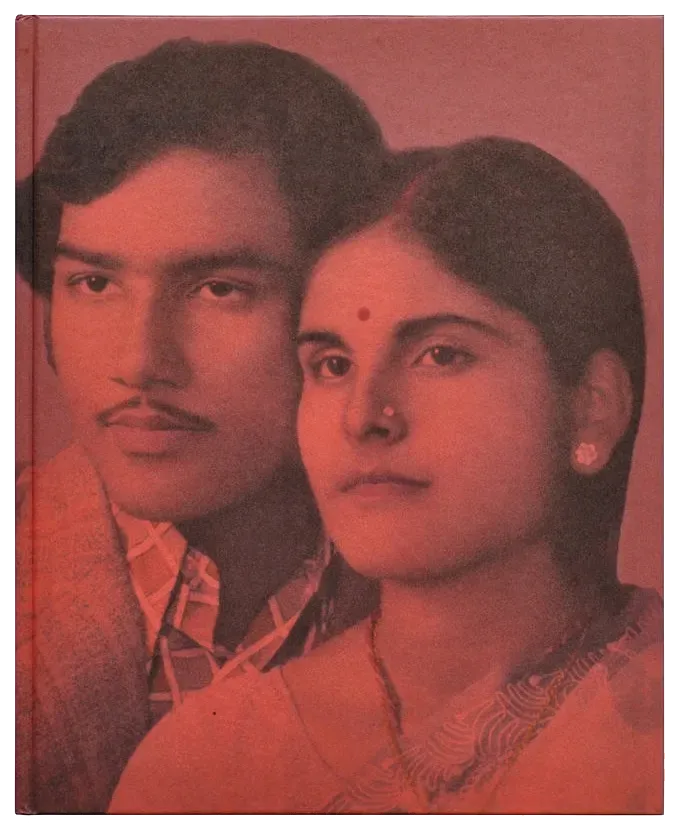
Published in 2017 by Chose Commune, The Promise is the second book in French photographer Vasantha Yogananthan’s acclaimed seven-part project titled A Myth of Two Souls. The overall multi-volume series offers a contemporary visual reimagining of the Ramayana, one of the central epics of Hindu mythology.
While the broader series follows the epic journey of the myth's heroes across India and Nepal, this specific volume focuses on the romance, courtship, grand wedding, and vows exchanged between Prince Rama and Princess Sita. The book explores how their union, a celebratory yet complex event, remains deeply embedded in the collective cultural imagination across South Asia.
To tell this story, Yogananthan uses a distinct blend of documentary, mythology, and fiction. His artistic approach interweaves large- and medium-format color photography with traditional hand-tinted and hand-painted photographs alongside local vernacular imagery. He staged scenes with local residents acting out parts of the story, set alongside candid imagery of everyday life in regions associated with the myth. The visual narrative is accompanied by textual retellings of the epic written by Indian scholar and author Arshia Sattar.
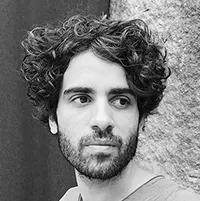
Vasantha Yogananthan (born in 1985 in Grenoble) lives and works in Marseille.
He is a self-taught photographer who is deeply attached to silver photography. The book is a central object in his practice, which led him to co-found the publishing house Chose Commune. He has carried out his projects over a long period of time, first in France on the beach at Piémanson (2009-2013), then in India and Sri Lanka Sri-Lanka around the myth of the Rāmāyana (2013-2021). In 2022, he carried out a new project in New Orleans, USA, as part of the Immersion program of the Fondation d'entreprise Hermès, of which it is a winner.
He is represented by Jhavery contemporary (Mumbay) and The Photographers’ Gallery Print Sales (London).

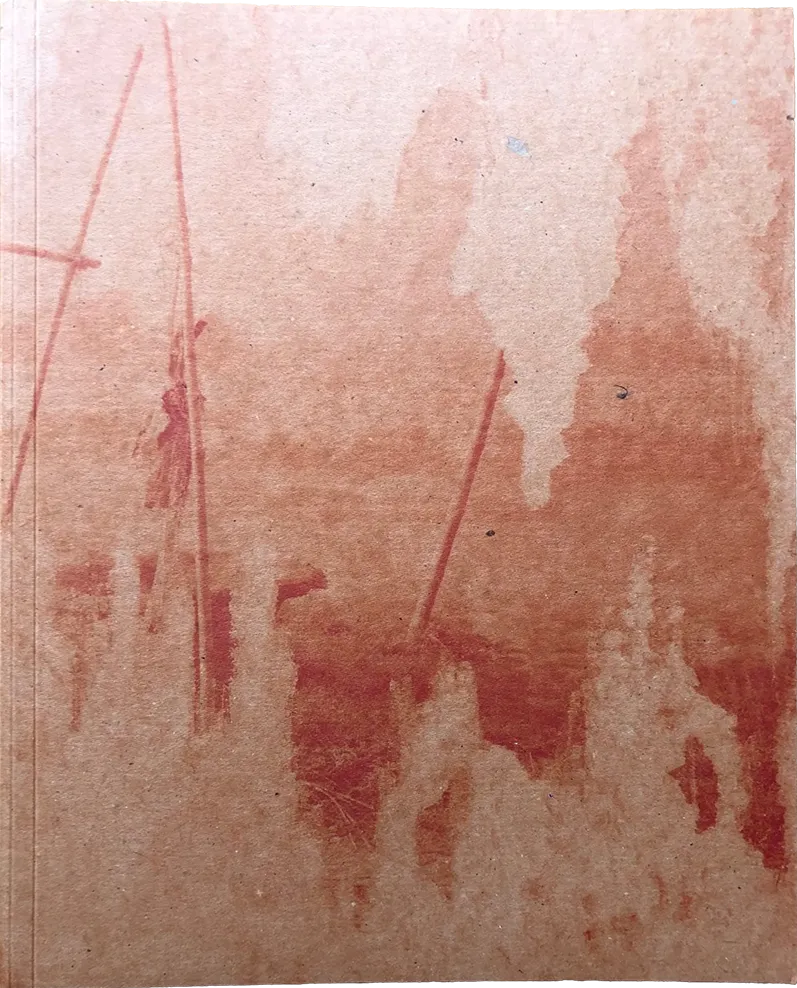
Published in 2020 by Chose Commune, Afterlife is the sixth volume in French photographer Vasantha Yogananthan’s seven-part project, A Myth of Two Souls. The overarching series offers a contemporary visual retelling of the Ramayana, an ancient Indian epic, following its mythical journey from northern to southern India.
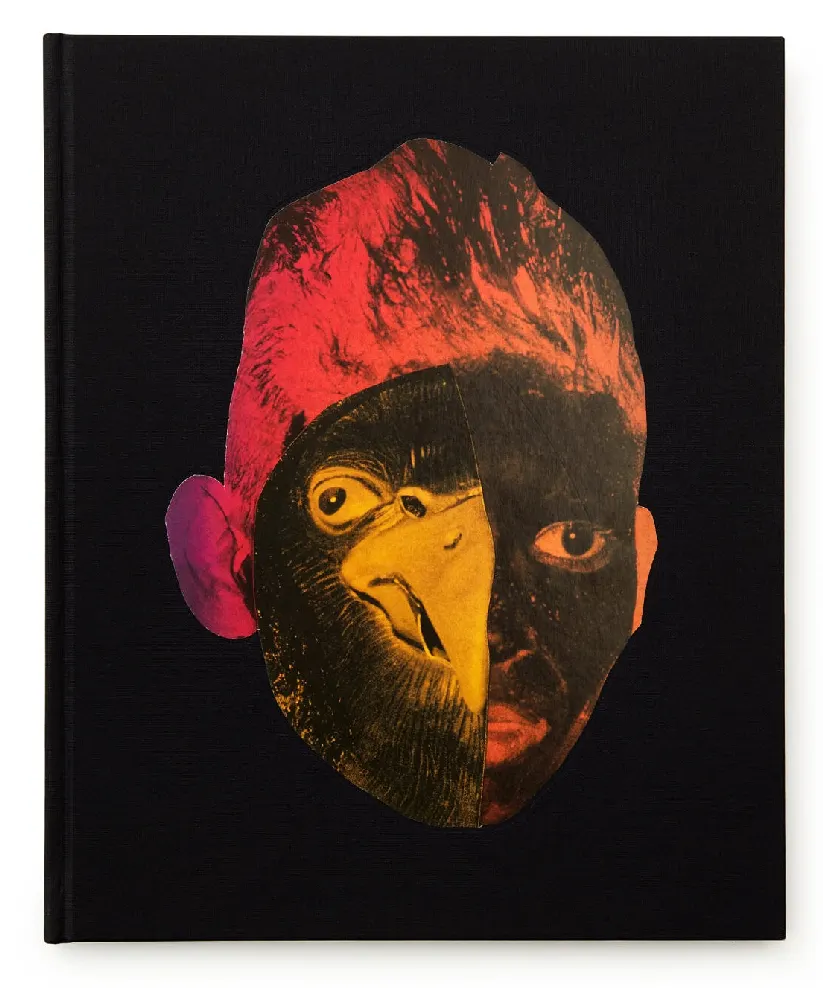
Afterlife marks a dark turn in the series as it centers on the climax of the epic: the brutal war between Prince Rama's army and the demon king Ravana's forces. Rather than emphasizing classic heroics, this volume serves as a psychological exploration of Rama’s descent into darkness and cruelty. True to its title, the story wrestles with heavy themes of warfare, mortality, spiritual transformation, and reincarnation.
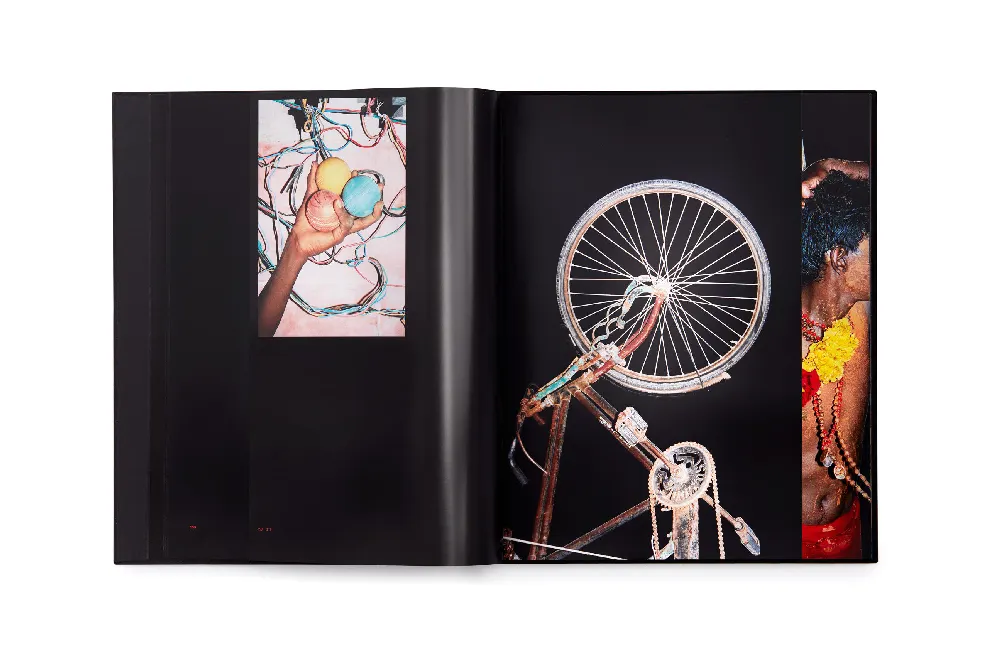
To reflect the disorienting, chaotic nature of war, Yogananthan shifts away from the realistic portraiture of earlier volumes and adopts a surrealist approach. He captured imagery during the Hindu festival of Dussehra in Rajasthan and Tamil Nadu, focusing on revelers wearing theatrical costumes and painted faces who were attempting to enter trance-like states. In his studio, he cut and layered multiple photographs into surreal collages to evoke a sense of disorientation. The physical book incorporates forty shorter insert pages that overlap different photographs as the reader turns them, while the visual narrative is complemented by textual retellings and poetic interpretations by Indian author and activist Meena Kandasamy.