
%20Resized.webp)
Copyright ©
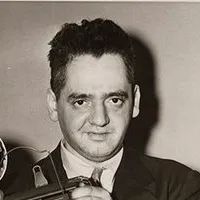
Weegee
or applicable right holders.


Which art books, prints and posters are available by and about this artist? Here is a sample of items of interest to a typical collector:


Weegee (born Usher Fellig; June 12, 1899 – December 26, 1968) was an Austrian-born American photojournalist and street photographer whose raw, high-contrast imagery defined 20th-century New York tabloid photojournalism.
Born in Lemberg (now Zolochiv, Ukraine), Fellig immigrated with his Jewish family to New York’s Lower East Side in 1909 to escape European antisemitism. Upon arrival at Ellis Island, his first name was Americanized to Arthur.
After dropping out of school at age 13 to support his family, he worked various odd jobs—including a pony-ride street photographer. By the 1920s, he became a darkroom technician at Acme Newspictures. His nickname, Weegee, likely derived from his early role as a "squeegee boy" in newsroom darkrooms, though he later leaned into the popular myth that it was a phonetic spelling of Ouija, referencing a psychic-like ability to arrive at crime scenes before the police.
Leaving Acme in 1935 to freelance, Weegee became the first private citizen granted a license for a shortwave police radio. He slept fully clothed next to the scanner, keeping a 4x5 Speed Graphic camera, flashbulbs, typewriter, and a portable darkroom in the trunk of his Chevrolet.
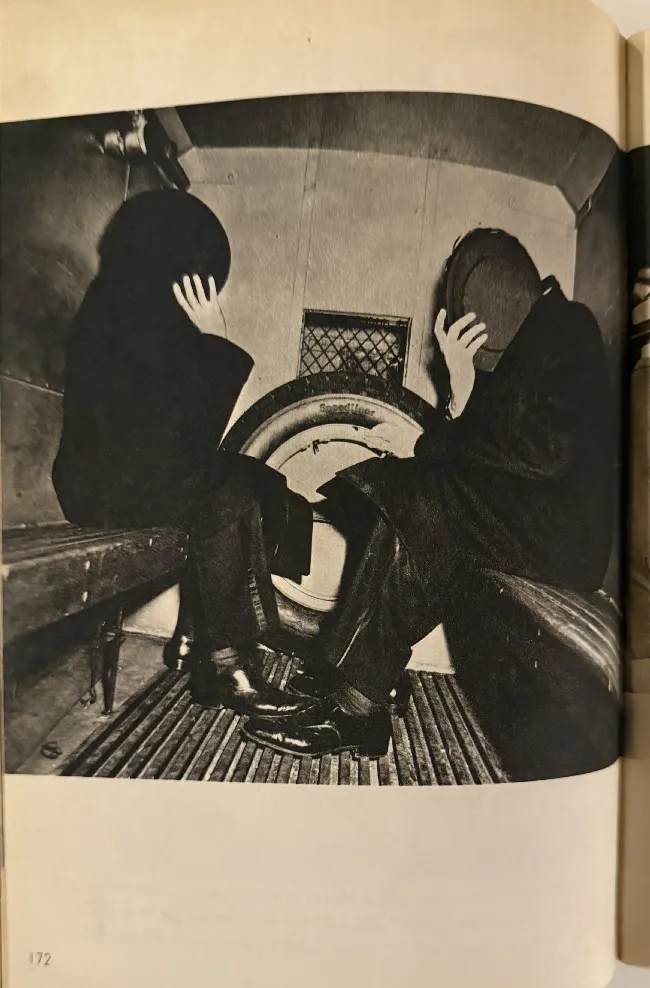
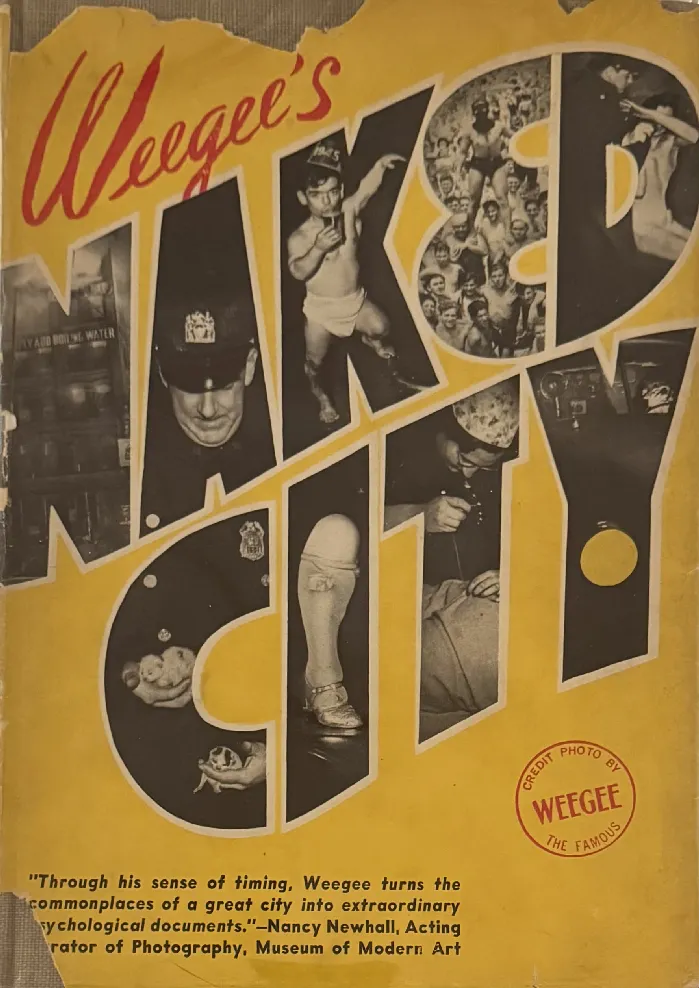
Shooting primarily at night with stark, unflattering flashbulbs, he documented gritty street scenes, fires, mob hits, tenement life, and nightlife crowds. His compositions blended sensationalism with deep empathy and stark social critique. In 1945, he published his seminal photobook, Naked City, which enjoyed immediate commercial and critical success, later inspiring the iconic 1948 film noir of the same name. He followed it with Weegee's People (1946).
In the late 1940s and 1950s, Weegee relocated to Hollywood. He shifted away from crime reporting toward celebrity portraits, experimental trick lenses, and film consulting. He served as a special effects consultant and stills photographer, notably collaborating with director Stanley Kubrick on Dr. Strangelove (1964)—his distinctive accent was even an inspiration for Peter Sellers' voice work in the film.
Weegee returned to New York, where he lived until his death in 1968. His voyeuristic, unvarnished aesthetic left a profound impact on documentary photography, heavily influencing artists like Diane Arbus and Andy Warhol.

see book page for more details
Weegee's (Arthur Fellig) Naked City (published in 1945 by Essential Books) is a landmark masterpiece of mid-century tabloid photojournalism and urban documentary.
Capturing New York City at its most raw and unscripted, Weegee utilized a heavy 4x5 Speed Graphic camera with intense flashbulb illumination to record late-night crime scenes, tenement fires, emergency rooms, crowded beaches, and candid street figures. Rather than sensationalizing noir drama alone, the book presents a stark, empathetic portrait of urban life across all socio-economic strata.
From Newsprint Ephemera to Art Object: Weegee's photographs originally existed as fast, disposable halftone prints in daily tabloid newspapers. Naked City represents a pivotal moment of reproduction where ephemeral press images were re-bound into a formal, sequential book, elevating sensationalist crime reporting into enduring formalist social commentary.
Mass Reproduction as Urban Rhythm: The book reflects the pace of modern industrial communication, rapid capture, flash illumination, and high-contrast offset printing designed for mass distribution. By sequence-matching dramatic nocturnal scenes with humanizing moments of daily life, the volume demonstrates how mechanical printing can construct a collective narrative of a metropolis rather than isolated headlines.