
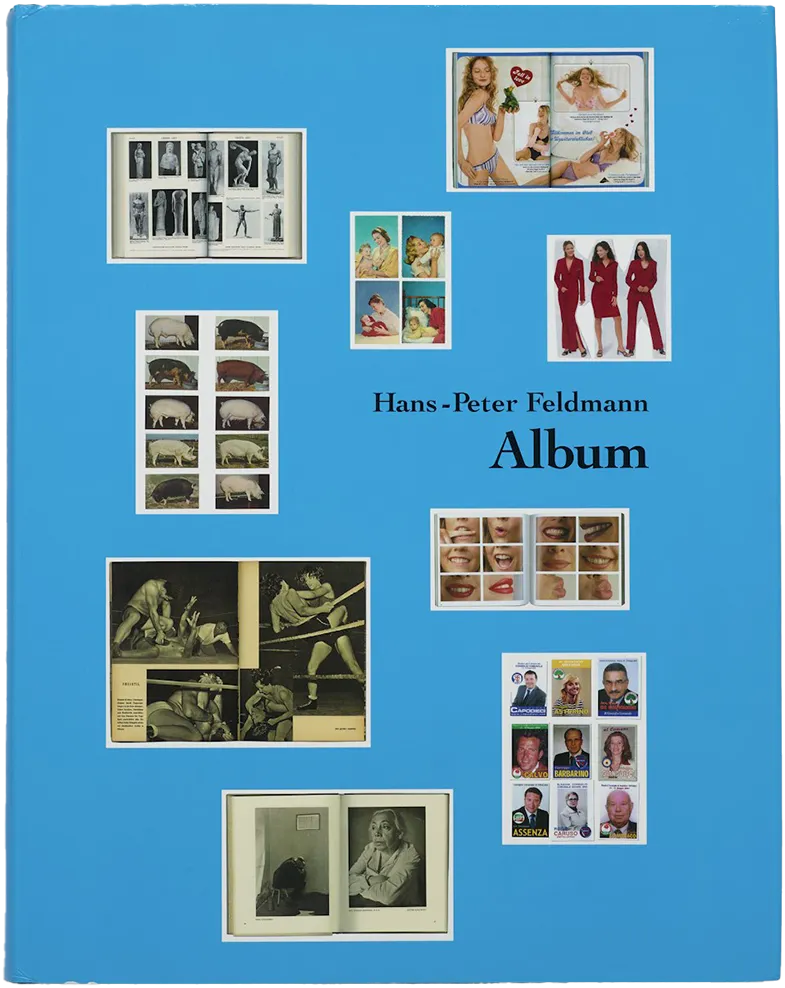
Hardcover with dust jacket
ISBN:
9783865602602


Hans-Peter Feldmann’s Album serves as a cornerstone of his career-long conceptual investigation into the overwhelming proliferation of everyday images. Operating as a relentless collector and editor rather than a traditional photographer, the German artist harvested amateur snapshots, mass-media clippings, and found ephemera, stripping them of their original context and traditional authorship. This publication functions as a democratic, encyclopedic archive of the banal, compiling mundane subjects, from unmade beds and anonymous portraits to landscapes and domestic objects, into a vast typological study. By treating all images with equal weight, Feldmann dismantled the hierarchy of the fine art masterpiece, proposing instead that the true cultural resonance of photography lies in its ubiquitous, vernacular application.
The visual language of the monograph is decidedly anti-heroic, rooted in the inherent flaws and charming realities of the amateur snapshot. Images are presented with minimal intervention, retaining their soft focus, awkward framing, and faded color palettes. Instead of relying on singular, striking compositions, the aesthetic power of the book emerges from its seriality and deliberate sequencing. By placing disparate visual fragments in proximity, Feldmann creates a subtle rhythmic interplay across the page spreads, allowing unexpected structural rhymes and narrative associations to surface from the collective visual noise. The layout relies on an unpretentious, straightforward presentation that emphasizes the sheer volume and repetitive nature of mass photography.