
Softcover thick
ISBN:
9783037641668


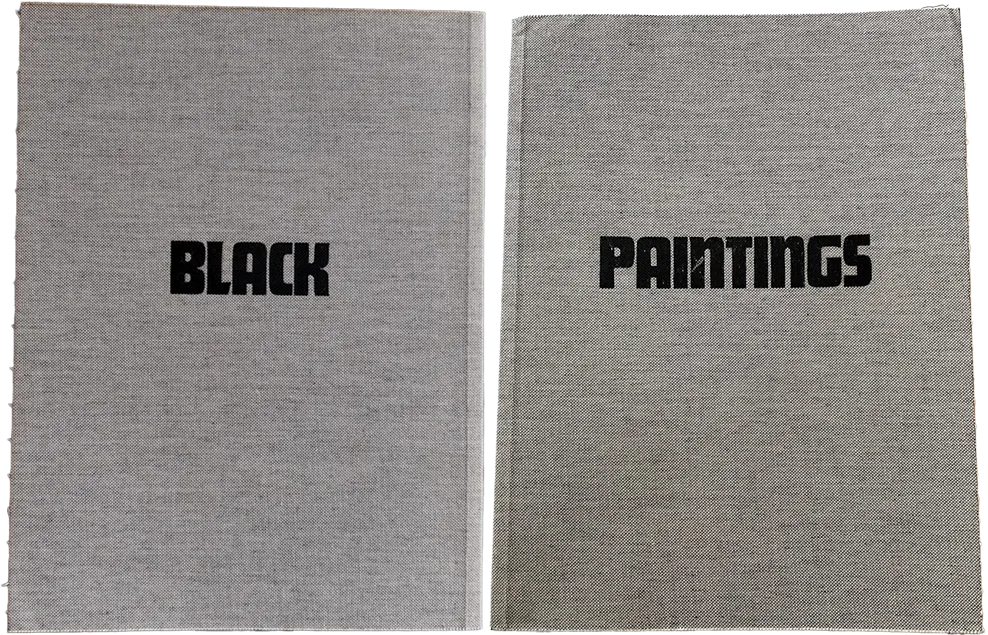
Black Paintings is an exceptional example of Guyton's work where the book format itself functions as a primary artistic medium. Rather than compiling pre-existing documentation, Guyton first designed the book and then literally fed the physical pages through the same Epson inkjet printers he uses for his large-scale canvases. Because the desktop printers struggled with the massive density of black ink, the pages display the signature stutters, misalignments, ink bleeds, and digital compression artifacts that define his visual vocabulary. Those printed pages were subsequently scanned and reproduced via offset printing. Running at an expansive 800 pages, the heavy cloth-bound volume operates as a direct physical extension of his painting practice, translating the mechanical reproducibility and material limits of his studio process into the tactile structure of a massive book object.
Black Paintings is an exceptional example of Guyton's work where the book format itself functions as a primary artistic medium. Rather than compiling pre-existing documentation, Guyton first designed the book and then literally fed the physical pages through the same Epson inkjet printers he uses for his large-scale canvases. Because the desktop printers struggled with the massive density of black ink, the pages display the signature stutters, misalignments, ink bleeds, and digital compression artifacts that define his visual vocabulary. Those printed pages were subsequently scanned and reproduced via offset printing. Running at an expansive 800 pages, the heavy cloth-bound volume operates as a direct physical extension of his painting practice, translating the mechanical reproducibility and material limits of his studio process into the tactile structure of a massive book object.

Black Paintings is an exceptional example of Guyton's work where the book format itself functions as a primary artistic medium. Rather than compiling pre-existing documentation, Guyton first designed the book and then literally fed the physical pages through the same Epson inkjet printers he uses for his large-scale canvases. Because the desktop printers struggled with the massive density of black ink, the pages display the signature stutters, misalignments, ink bleeds, and digital compression artifacts that define his visual vocabulary. Those printed pages were subsequently scanned and reproduced via offset printing. Running at an expansive 800 pages, the heavy cloth-bound volume operates as a direct physical extension of his painting practice, translating the mechanical reproducibility and material limits of his studio process into the tactile structure of a massive book object.