
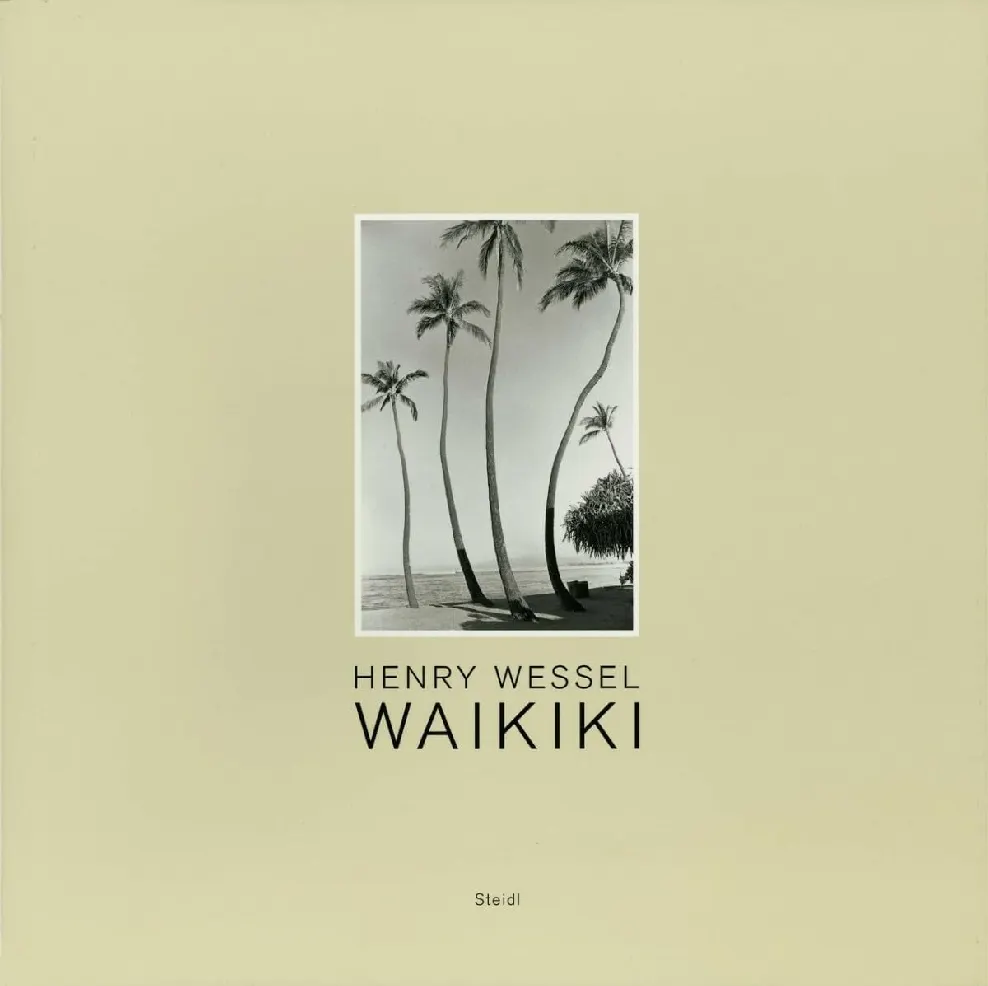
Hardcover with DJ
ISBN:
9783869303000


Wessel’s Waikiki stems from his trips to Honolulu during the late 1970s and early 1980s. As a central figure of the New Topographics movement, Wessel applied his characteristically wry, observational approach, typically reserved for the arid American West, to the highly commercialized tropical landscape of Hawaii. The series isolates the friction between the organic environment and the aggressive expansion of the manufactured leisure industry.
The book sequences these observations to document the peculiar sociology of tourists, concrete resort architecture, and the omnipresent glare of the Pacific sun. Rather than presenting a romanticized island paradise, the volume catalogs the banal and often surreal intersections of paved surfaces, sunburned vacationers, and manicured flora, capturing the artificiality of the modern vacation experience.