
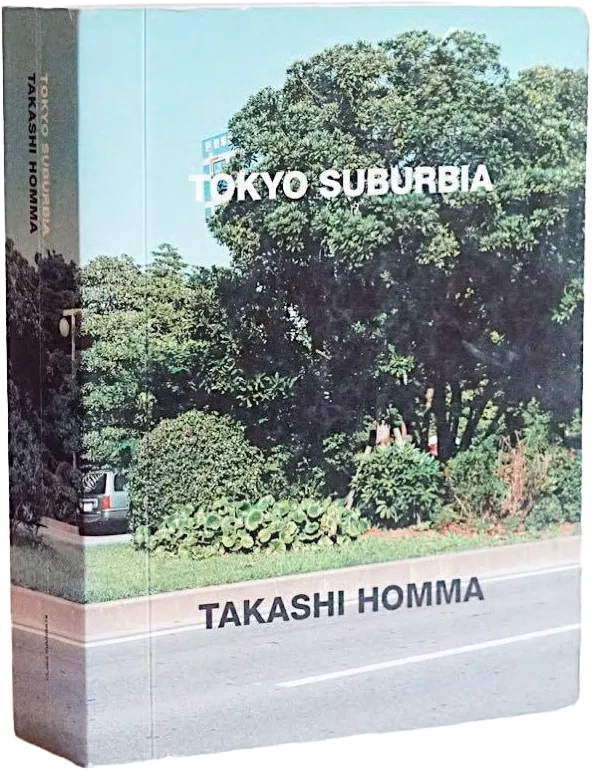
Thick boards with thick cardboard pages
ISBN:
9784771303447


Tokyo Suburbia (1998) by Takashi Homma is a landmark publication in contemporary Japanese photography and a defining visual record of Japan's post-bubble "Lost Decade."
Moving away from the gritty, emotional style of previous generations, Homma employed a bright, detached, and deadpan "new documentary" approach to capture Tokyo's expanding, sterile "New Towns." The images portray a profound sense of alienation, capturing disengaged youth navigating soulless concrete environments.
In a brilliant conceptual choice, publisher Korinsha Press produced the volume on thick, rigid cardboard pages, mimicking a children's board book to ironically contrast with the isolated reality of its subjects.
The project won the 24th Kimura Ihei Award in 1999 and is prominently cited in Martin Parr and Gerry Badger’s The Photobook: A History, Volume II.