



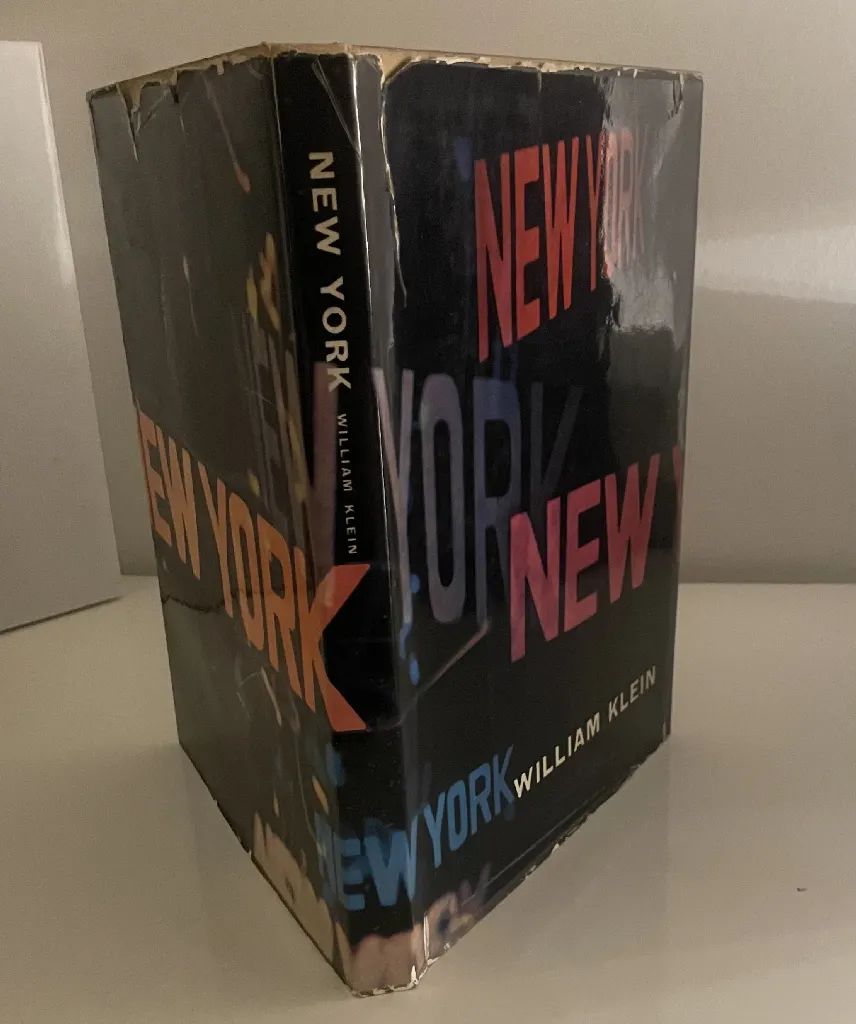
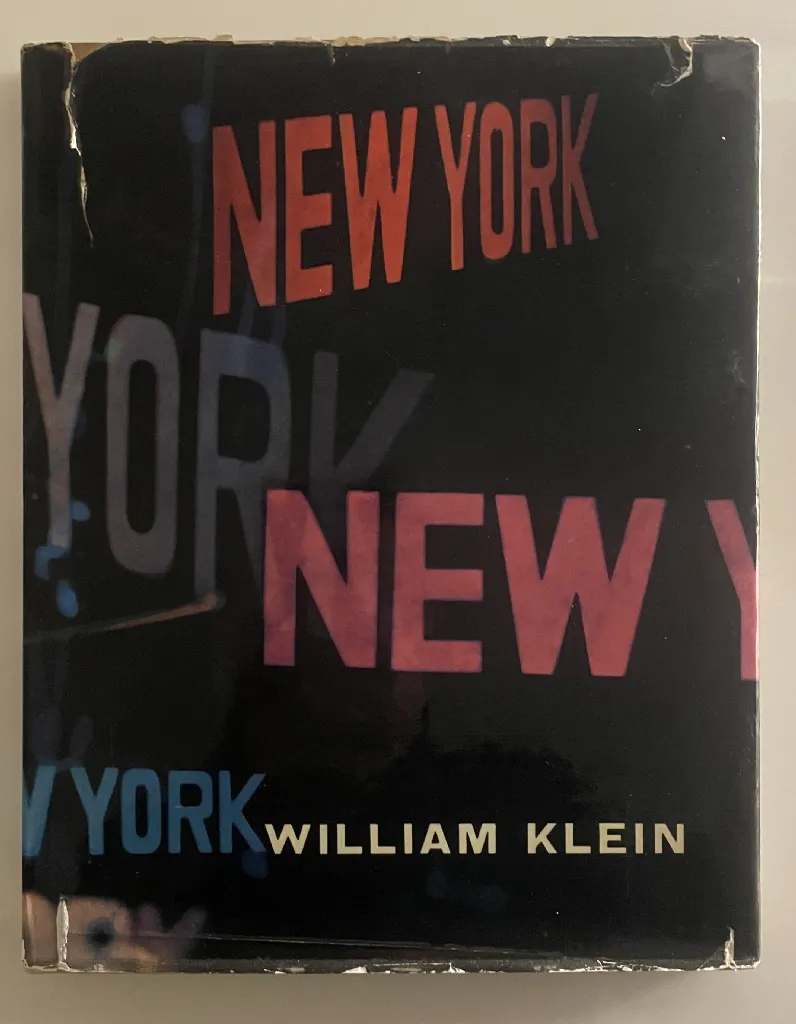

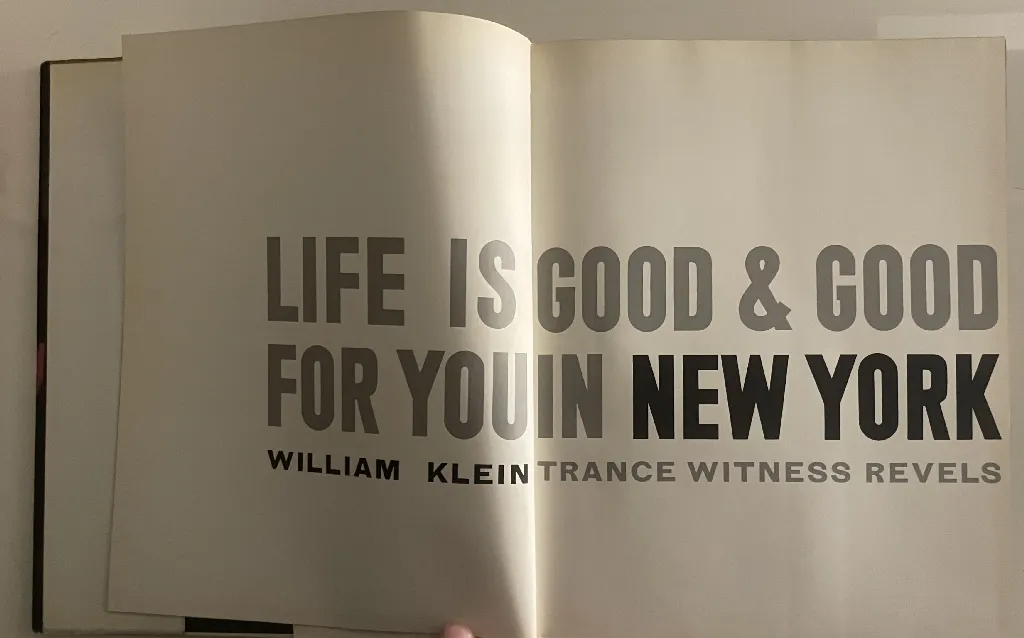
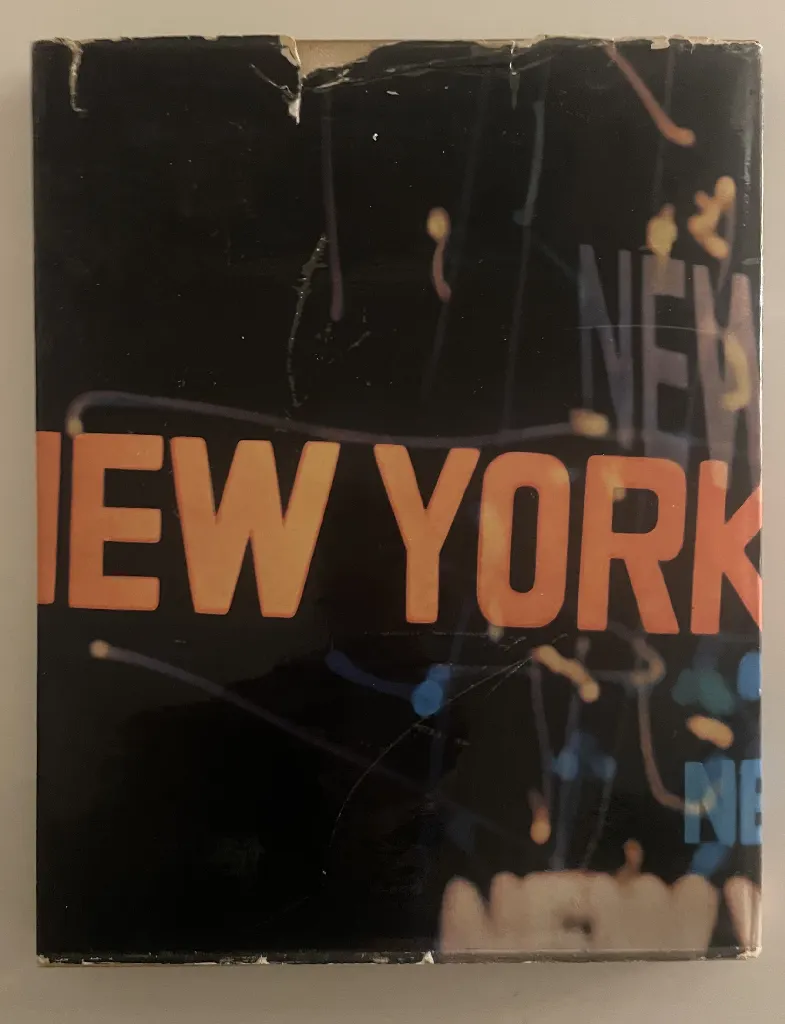

First published in 1956, Life is Good & Good for You in New York is widely considered one of the most groundbreaking and influential photography books of the 20th century. Returning to his hometown after studying painting in Paris and working in fashion photography, Klein sought to capture a raw, unglamorized, and chaotic vision of New York City, a place he famously described as "the world capital of anguish."
Unlike traditional photojournalists of the era, Klein broke almost every rule of photographic convention:
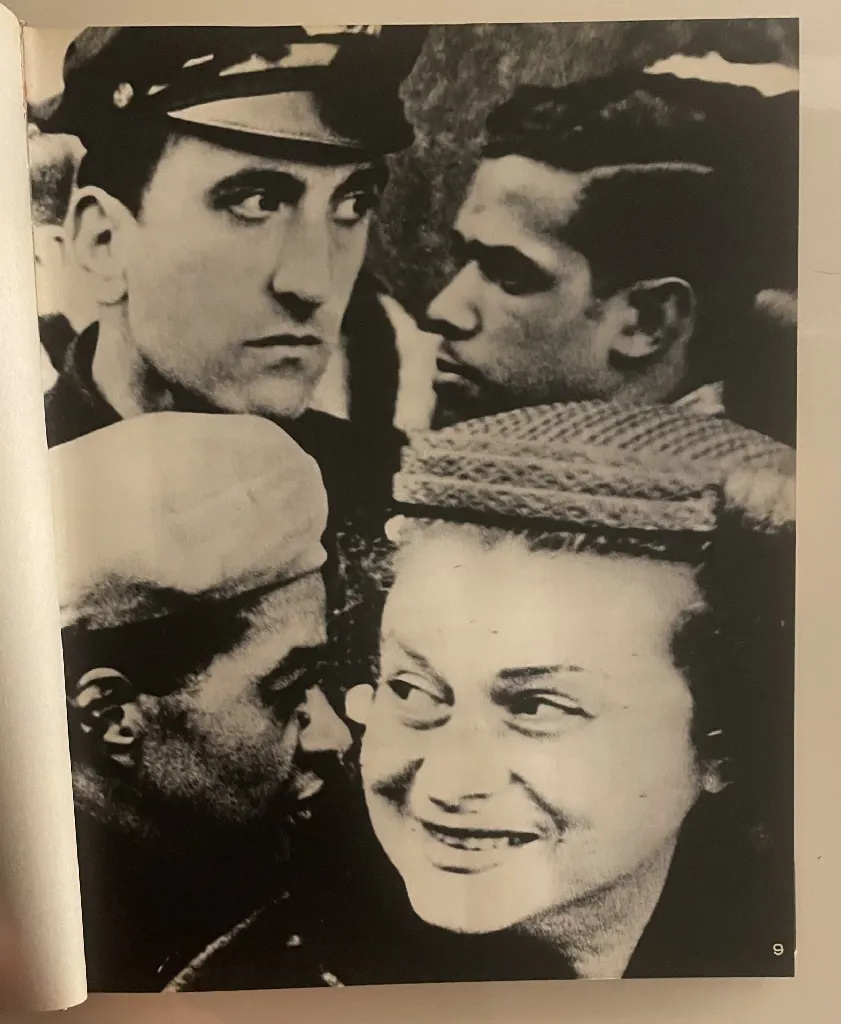
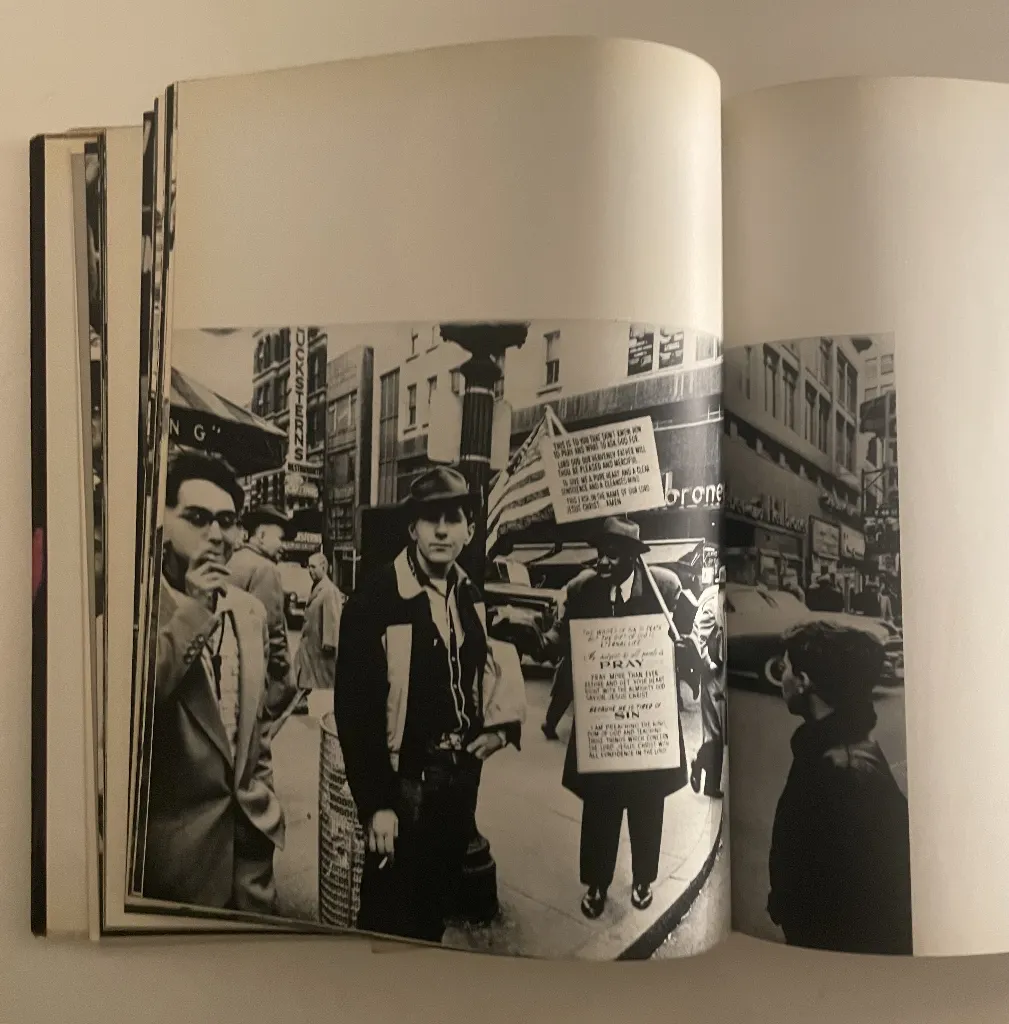
He rejected detached objectivity, often getting right up close to his subjects and encouraging them to pose, perform, or react directly to his lens. He intentionally embraced motion blur, heavy grain, high-contrast, wide-angle distortion, and off-center compositions to match the pulse of the city.
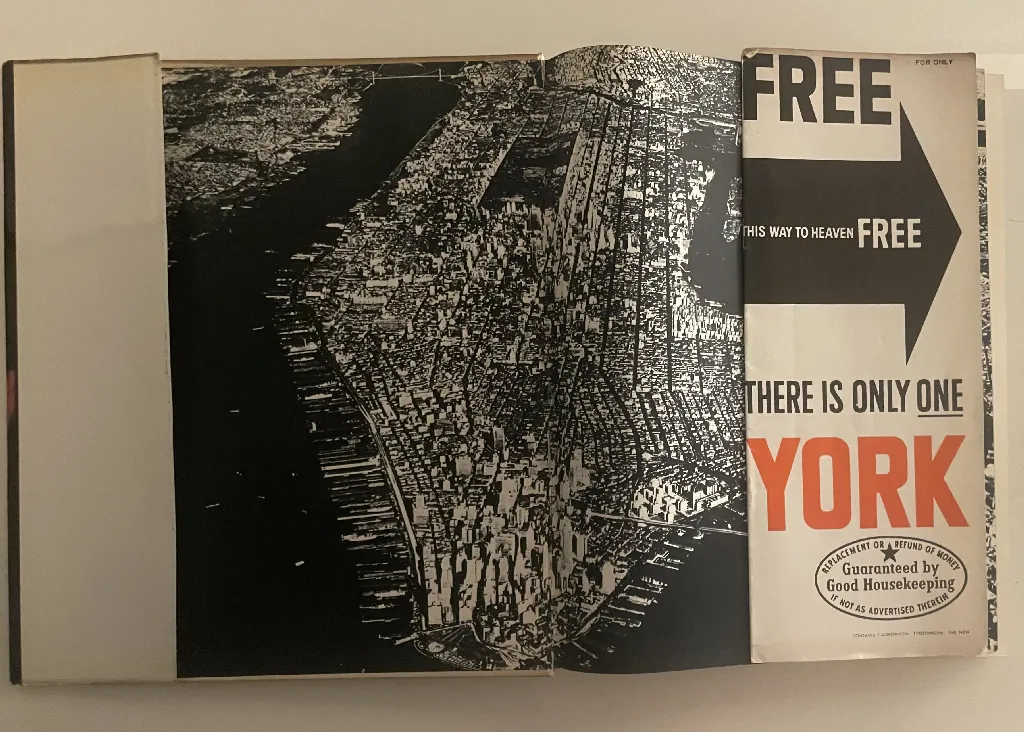
Klein designed the layout himself, eliminating traditional white margins to create tight, cinematic full-bleed spreads with dynamic, "bebop" editing rhythms.
Klein initially pitched the project to American publishers, but every major publisher in the US rejected it. Their refusal stemmed from several key factors. American publishers felt Klein's depiction of New York was too dark, chaotic, and unflattering. They were accustomed to polished, romanticized, or heroic imagery of post-WWII America and felt Klein's vision was "too violent" or "vulgar". Klein broke almost every rule of conventional photography, embracing extreme motion blur, heavy grain, wide-angle distortion, and off-center compositions. American photo-editors saw these stylistic choices as technical defects rather than deliberate art. Traditional photo books of the era featured neatly centered photos with wide white margins and quiet captions. Klein designed the layout himself with tight, aggressive, full-bleed images that collided on the page ' a style mainstream US publishers didn't know how to digest.
Because of this rejection in his home country, Klein returned to Paris, where he was already living at the time, and found an audience and publisher willing to embrace his avant-garde visual language. The book was first published in Paris in 1956 by the French publishing house Éditions du Seuil. It was released as part of their Petite Planète album series, with international co-editions published simultaneously (or shortly after) in London and in Italy (though all three editions were printed in France).
The copy in the BSS collection is the Italian edition, published by Feltrinelli, which includes the leaflet in Italian language. The book's text is in French, English and Italian. Colophon in French.

First published in 1956, Life is Good & Good for You in New York is widely considered one of the most groundbreaking and influential photography books of the 20th century. Returning to his hometown after studying painting in Paris and working in fashion photography, Klein sought to capture a raw, unglamorized, and chaotic vision of New York City, a place he famously described as "the world capital of anguish."
Unlike traditional photojournalists of the era, Klein broke almost every rule of photographic convention:
He rejected detached objectivity, often getting right up close to his subjects and encouraging them to pose, perform, or react directly to his lens. He intentionally embraced motion blur, heavy grain, high-contrast, wide-angle distortion, and off-center compositions to match the pulse of the city.
Klein designed the layout himself, eliminating traditional white margins to create tight, cinematic full-bleed spreads with dynamic, "bebop" editing rhythms.
Klein initially pitched the project to American publishers, but every major publisher in the US rejected it. Their refusal stemmed from several key factors. American publishers felt Klein's depiction of New York was too dark, chaotic, and unflattering. They were accustomed to polished, romanticized, or heroic imagery of post-WWII America and felt Klein's vision was "too violent" or "vulgar". Klein broke almost every rule of conventional photography, embracing extreme motion blur, heavy grain, wide-angle distortion, and off-center compositions. American photo-editors saw these stylistic choices as technical defects rather than deliberate art. Traditional photo books of the era featured neatly centered photos with wide white margins and quiet captions. Klein designed the layout himself with tight, aggressive, full-bleed images that collided on the page ' a style mainstream US publishers didn't know how to digest.
Because of this rejection in his home country, Klein returned to Paris, where he was already living at the time, and found an audience and publisher willing to embrace his avant-garde visual language. The book was first published in Paris in 1956 by the French publishing house Éditions du Seuil. It was released as part of their Petite Planète album series, with international co-editions published simultaneously (or shortly after) in London and in Italy (though all three editions were printed in France).
The copy in the BSS collection is the Italian edition, published by Feltrinelli, which includes the leaflet in Italian language. The book's text is in French, English and Italian. Colophon in French.