
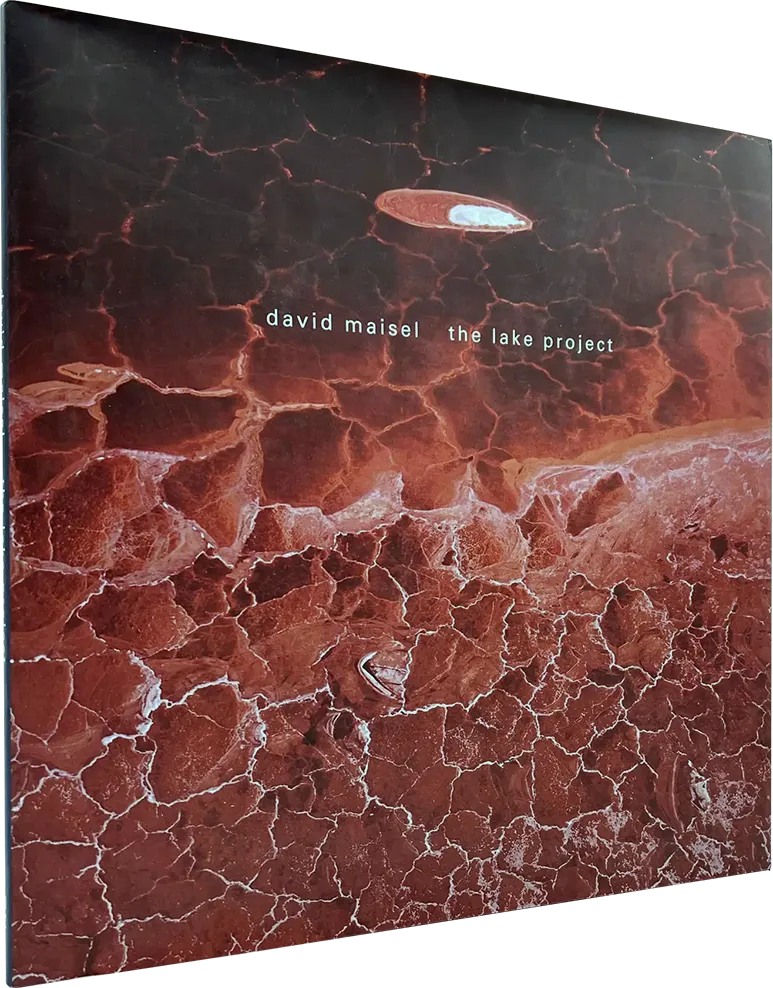


The Lake Project (2003) is a seminal photographic study documenting the environmental devastation of Owens Lake in California.
Located in Eastern California, Owens Lake was completely drained starting in 1913 to fill the Los Angeles Aqueduct, turning a 110-square-mile body of water into a dry lakebed.
The desiccated lake bed became the single largest source of carcinogenic particulate dust pollution in North America. Mitigation efforts later flooded parts of the lakebed with water and chemical treatments, creating unusual mineral deposits, toxic concentration pools, and concentrated bacterial blooms.
Maisel captured the lakebed from low-altitude aircraft, looking straight down onto the terrain to eliminate the horizon line. The resulting imagery flattens the landscape into brilliant, surreal abstractions, resembling abstract expressionist paintings, blood-red veins, cellular biology, or cosmic maps rather than recognizable topography.
The Toxic Sublime of Invisible Disasters
â€The project engages with the concept of the "sublime", creating stunning visual beauty out of severe environmental damage and human disruption.
â€By bringing an aerial lens to a hidden ecological disaster, the work exposes the far-reaching physical footprint of urban water diversion and resource extraction.

The Lake Project (2003) is a seminal photographic study documenting the environmental devastation of Owens Lake in California.
Located in Eastern California, Owens Lake was completely drained starting in 1913 to fill the Los Angeles Aqueduct, turning a 110-square-mile body of water into a dry lakebed.
The desiccated lake bed became the single largest source of carcinogenic particulate dust pollution in North America. Mitigation efforts later flooded parts of the lakebed with water and chemical treatments, creating unusual mineral deposits, toxic concentration pools, and concentrated bacterial blooms.
Maisel captured the lakebed from low-altitude aircraft, looking straight down onto the terrain to eliminate the horizon line. The resulting imagery flattens the landscape into brilliant, surreal abstractions, resembling abstract expressionist paintings, blood-red veins, cellular biology, or cosmic maps rather than recognizable topography.
The Toxic Sublime of Invisible Disasters
â€The project engages with the concept of the "sublime", creating stunning visual beauty out of severe environmental damage and human disruption.
â€By bringing an aerial lens to a hidden ecological disaster, the work exposes the far-reaching physical footprint of urban water diversion and resource extraction.