




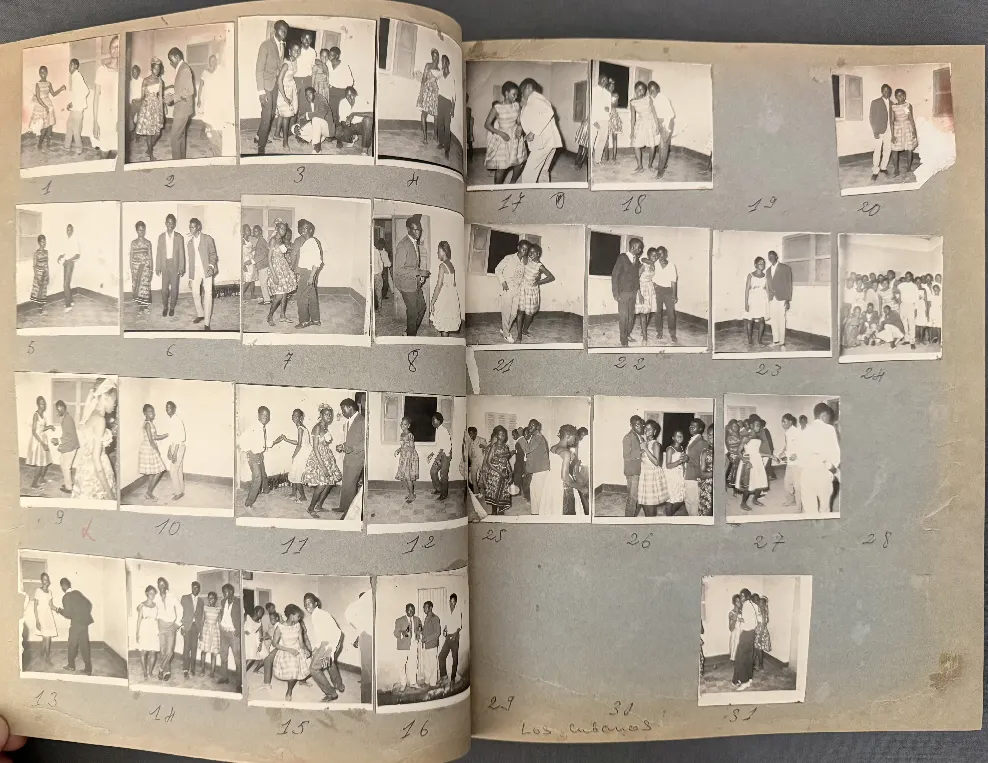


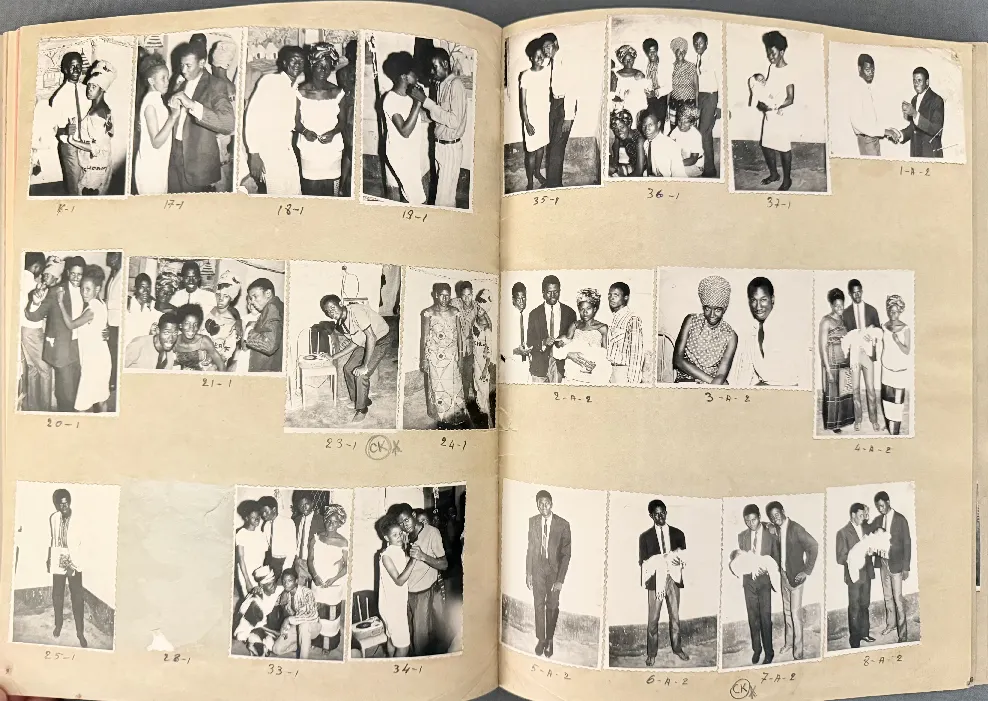
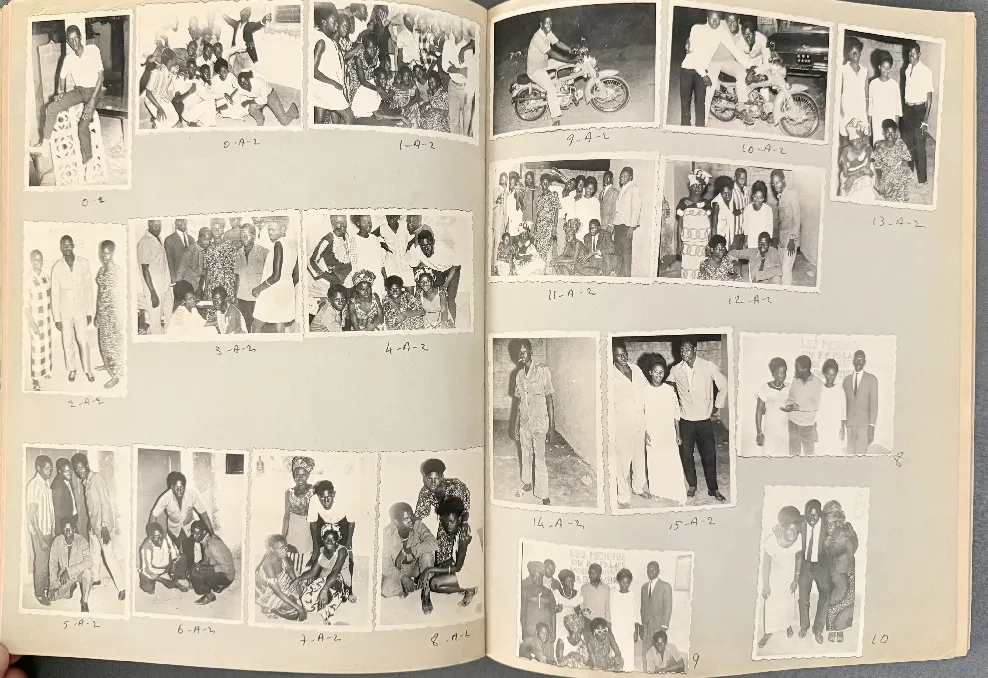


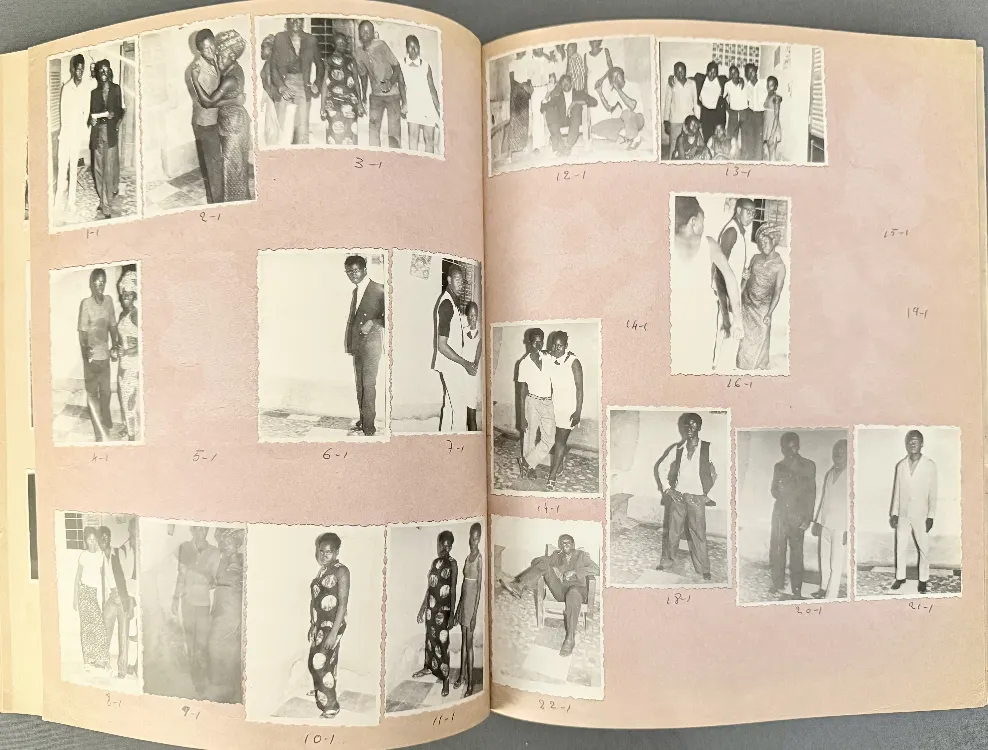
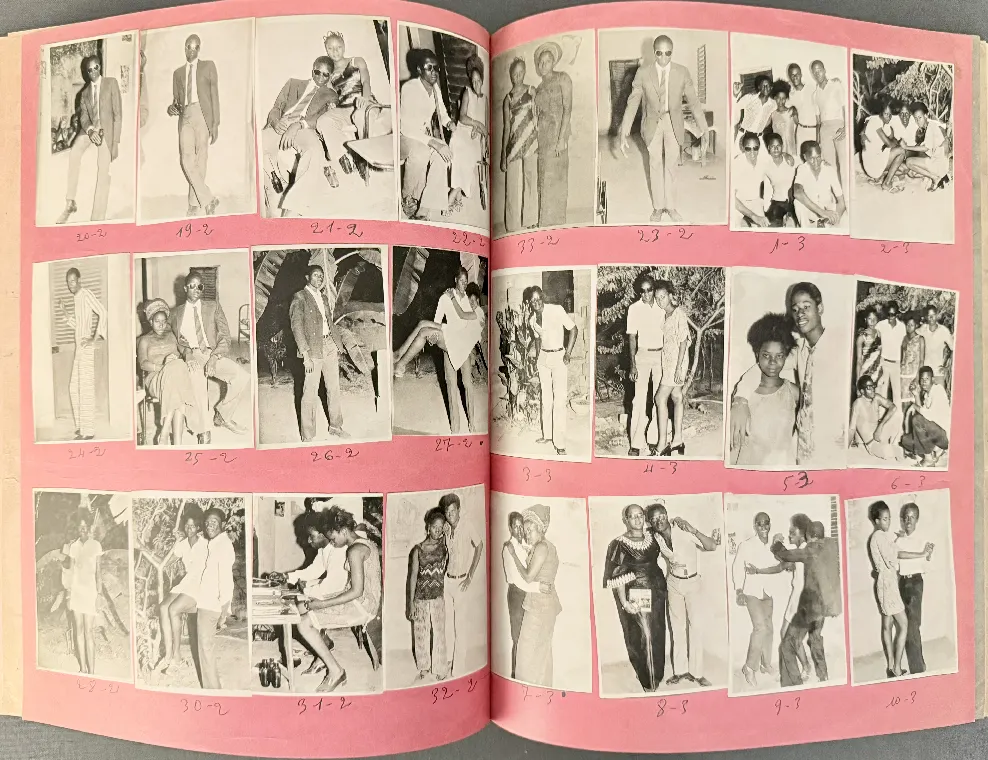
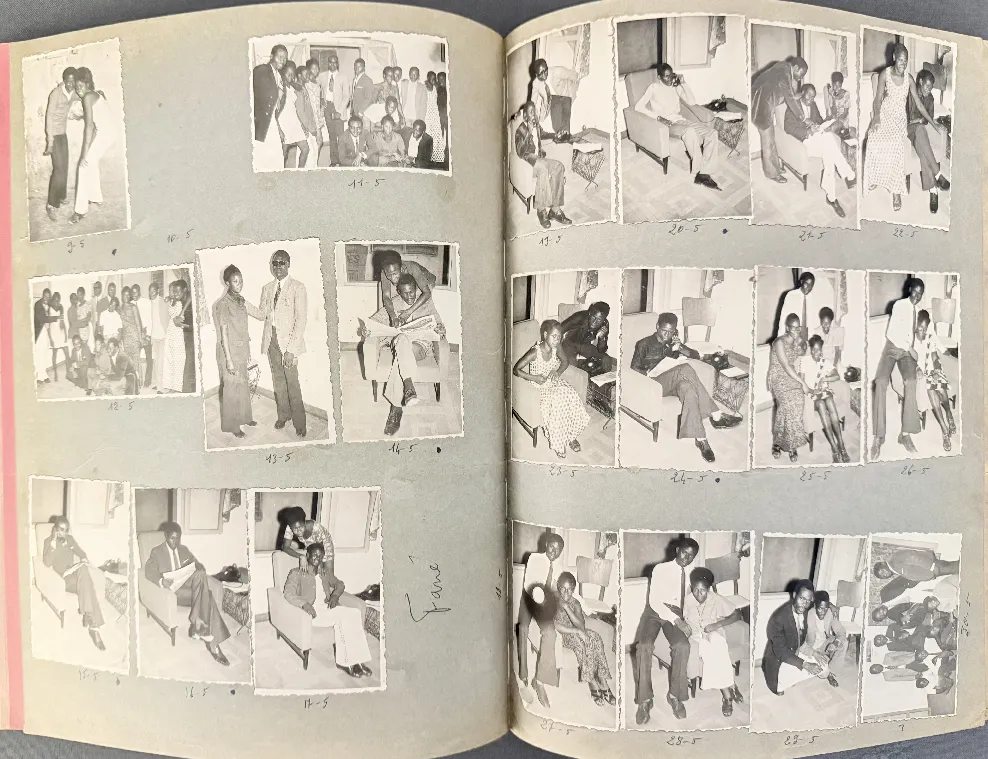
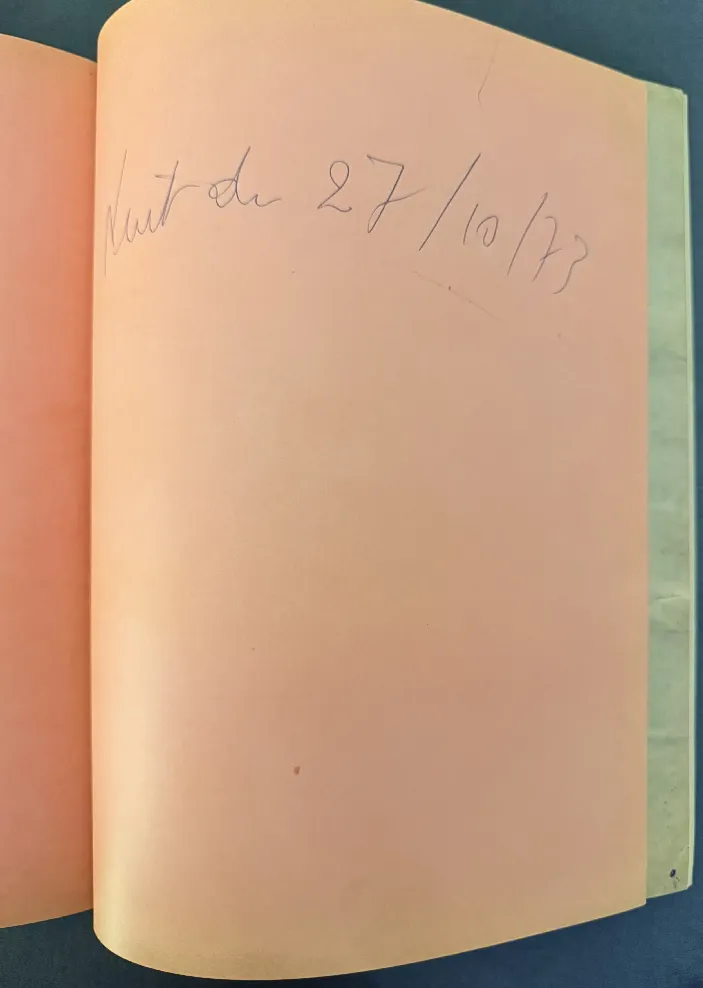
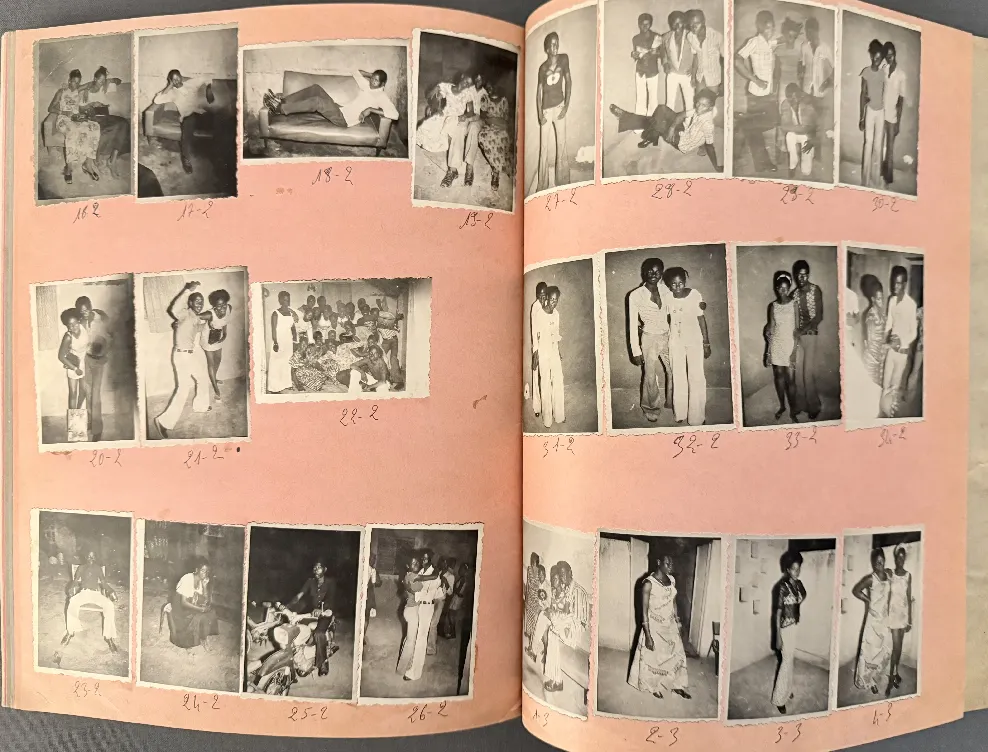



That the beginnings of Malick Sidibé's career as a photographer coincided with Mali's independence from France (in 1960) was serendipitous, and he was certainly the right man to portray the country's postcolonial euphoria. Sidibé focused on the explosion of youth culture and music in 1960s Bamako, photographing all the happening events and ceremonies, including football matches, weddings, Christmas Eve celebrations and parties at clubs like Los Cubanos, Les Caïds, Les Las Vegas, names that convey the influx of Western music into Mali. Visiting as many as five of these venues in one evening, Sidibé would capture Bamako's youth in a close-up snapshot style that conveys the joyful conviviality of this era, and the blending of African and western cultures in dances like the Mali Twist, and in curious combinations of traditional and European clothing. Sidibé would then display his carefully numbered index prints, glued onto administrative folders, on his studio walls for customers, usually the subjects of his photographs, to peruse. These are the "chemises" of this book's title. Chemises surveys what is now a large portion of Sidibé's oeuvre, as much as an invaluable document of 1960s Mali.

That the beginnings of Malick Sidibé's career as a photographer coincided with Mali's independence from France (in 1960) was serendipitous, and he was certainly the right man to portray the country's postcolonial euphoria. Sidibé focused on the explosion of youth culture and music in 1960s Bamako, photographing all the happening events and ceremonies, including football matches, weddings, Christmas Eve celebrations and parties at clubs like Los Cubanos, Les Caïds, Les Las Vegas, names that convey the influx of Western music into Mali. Visiting as many as five of these venues in one evening, Sidibé would capture Bamako's youth in a close-up snapshot style that conveys the joyful conviviality of this era, and the blending of African and western cultures in dances like the Mali Twist, and in curious combinations of traditional and European clothing. Sidibé would then display his carefully numbered index prints, glued onto administrative folders, on his studio walls for customers, usually the subjects of his photographs, to peruse. These are the "chemises" of this book's title. Chemises surveys what is now a large portion of Sidibé's oeuvre, as much as an invaluable document of 1960s Mali.