

Boards with 12.6x17.6cm print (142 x 115 cm image), signed on verso
ISBN:
9781590055717


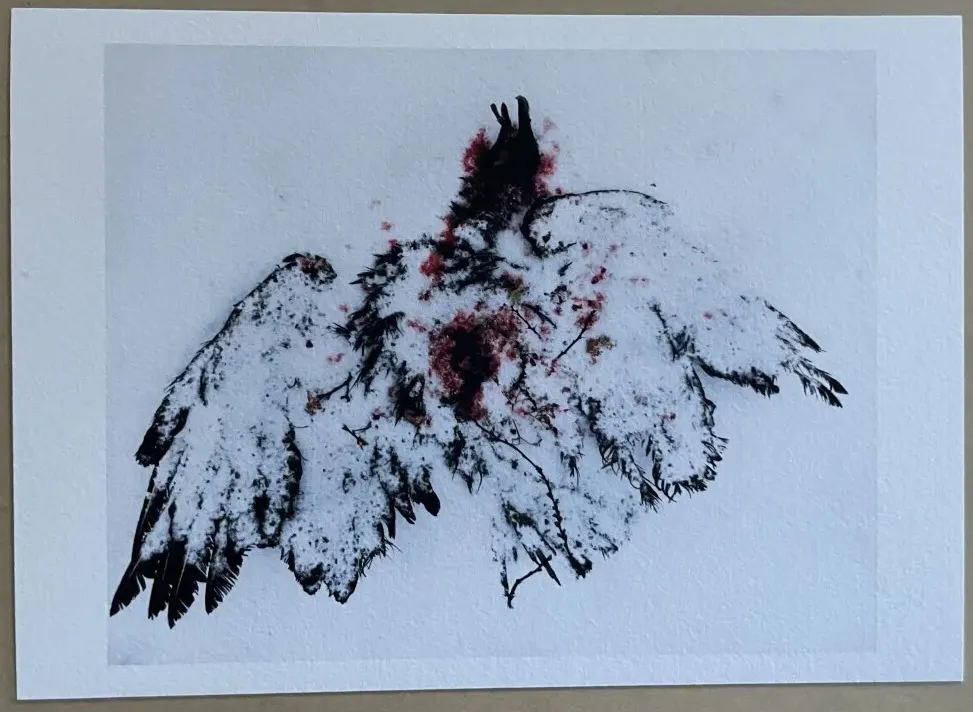
Tanya Marcuse’s Portent operates as an allegorical exploration of nature, decay, fertility, and theatrical artifice. Emerging as a pivotal chapter in her acclaimed large-scale photographic tableaus, following her earlier investigations into Eden and the underworld, the work constructs elaborate, highly staged sets inside natural landscapes, weaving intricate tableaus from flora, fauna, and discarded organic matter.
Visually, the composition is defined by a staggering density of detail, rich tonal depth, and a theatrical chiaroscuro lighting that evokes the solemn grandeur of Northern Renaissance painting. The meticulous framing of tangled branches, fallen fruit, creeping vines, and animal carcasses creates a profound spatial tension between the chaotic luxuriance of nature and the rigorous, classical discipline of the picture plane, drawing the viewer into an immersive examination of cycle and decay.