
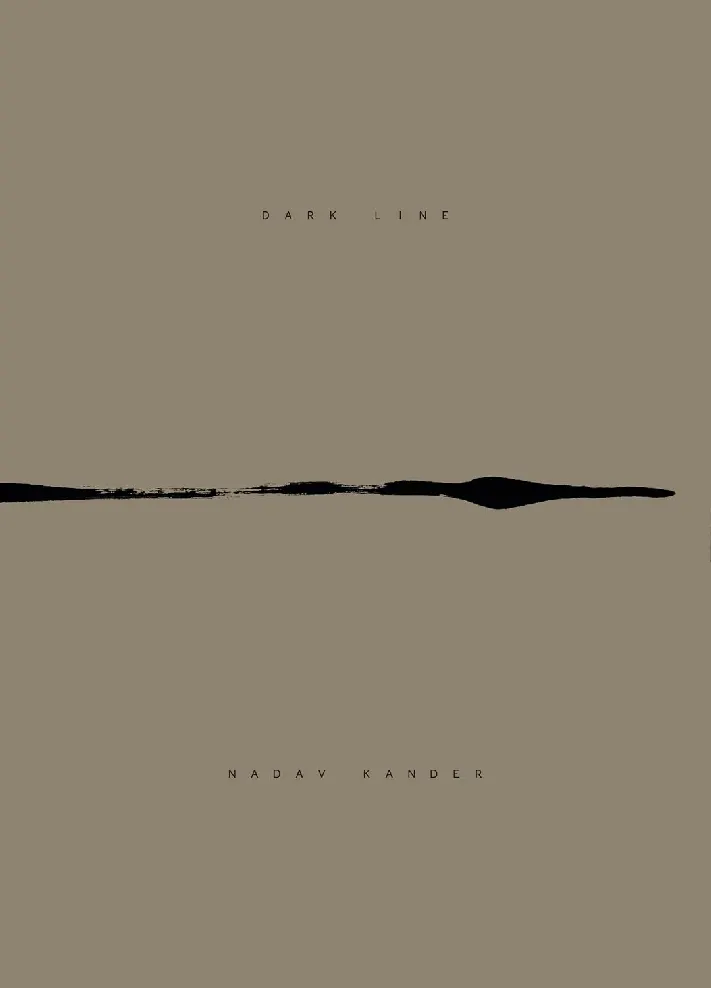
Hardcover, 32X22.6 cm, 84 p.
ISBN:
9781805980575


Nadav Kander’s Black Line: The Thames Estuary emerges as a haunting, liminal meditation on post-industrial decay, ecological fragility, and the psychological weight of historical terrain at the edge of the British capital. Departing from the crisp, pristine geometry of his earlier portraiture and urban surveys, Kander trains his lens on the desolate marshes, abandoned fortifications, and industrial ruins flanking the mouth of the River Thames, a landscape rich with centuries of maritime and wartime commerce yet suspended in an eerie state of abandonment.
Visually, the project is defined by a heavy, atmospheric murk, muted chromatic tones, and an expansive, melancholic compositional structure that evokes nineteenth-century Romantic painting filtered through a contemporary dystopian lens. The interplay of overcast skies, murky tidal waters, rusted military relics, and solitary industrial outposts establishes a profound spatial stillness, compelling the viewer to confront the silent friction between human engineering and the relentless reclamation of nature.
Black Line marks a critical conceptual pivot toward landscape as a psychological mirror, solidifying his reputation as an investigator of spaces marked by quiet trauma and transformation. In projects like Yangtze – The Long River Kander documented the monumental ecological transformations along China's major river system and the toxic, ghost-like remnants of the Soviet nuclear test site in Kazakhstan. These earlier works operated on a grand, epic scale, capturing the sweeping scars of human industry, geopolitical displacement, and planetary anxiety across expansive vistas.
By contrast, Black Line: The Thames Estuary scales down into a more intimate, claustrophobic, and liminal territory. Rather than surveying vast industrial corridors or catastrophic nuclear sites, Kander turns his lens inward to the moody, overcast mudflats, abandoned military forts, and decaying estuaries on the fringe of Britain. The work relies on a heavier atmospheric murk and a quieter, more psychological stillness, treating the landscape not as an epic geopolitical monument, but as a silent, brooding repository of history and decay at the edge of the domestic horizon.