


Copyright ©
Nadav Kander
or applicable right holders.


Which art books, prints and posters are available by and about this artist? Here is a sample of items of interest to a typical collector:





Nadav Kander (b. 1961, Tel Aviv) is an Israeli-born, London-based photographer and artist whose work spans portraiture, landscape, and moving image. Raised in Johannesburg, South Africa, he took up photography at thirteen with a camera bought with his Bar Mitzvah money, and later worked in an air force darkroom printing aerial photographs before relocating to London to pursue photography professionally.
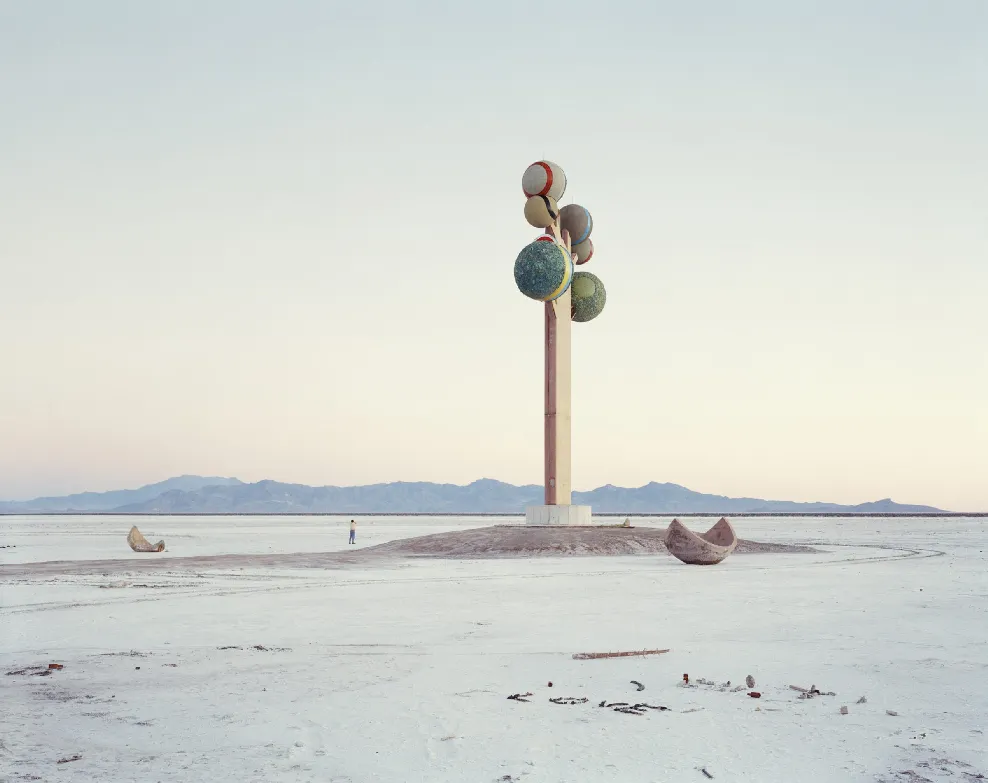
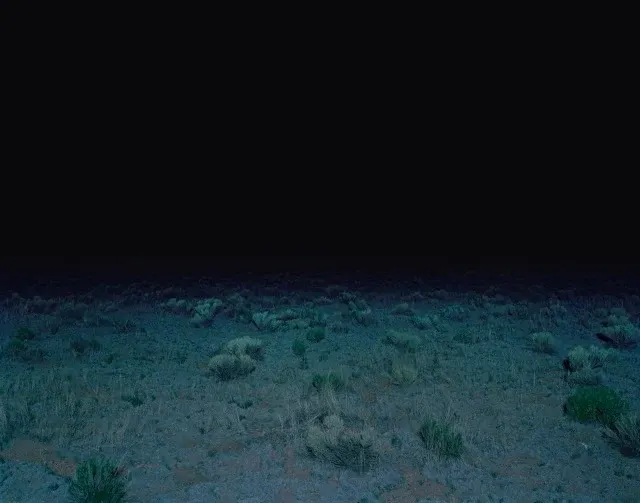
Landscape sits at the center of Kander's practice, running alongside and often overlapping with his portraiture. His earliest sustained body of work, God's Country (1995–2009), surveyed the American interior, Utah, New Mexico, Nevada, Texas, Louisiana, and beyond, not as untouched wilderness but as terrain already reshaped by industry and infrastructure; Kander has said flatly that "the American wilderness does not exist in my landscapes," and the series reads as a study of a commercialized, man-altered West photographed in solitary, early-morning light.
That interest in landscape as a record of human impact carried through Half Life, The Chernobyl Disaster (2004), made in the exclusion zone around the reactor, and Dust (2011), which photographed the abandoned Soviet test sites and secret cities on the Kazakhstan–Russia border, radioactive ruins left behind by the Cold War's nuclear program. Both series treat the landscape as a slow-motion aftermath, beautiful and contaminated at once.
His best-known landscape project, Yangtze - The Long River (2006–2010), followed the river from its mouth to its source, photographing the land and the people dwarfed within it as China's industrial expansion transformed the country in real time. Kander worked intuitively over several trips, deliberately avoiding preconceptions, and described the images as documents of a place "that can never be taken again." The series won the inaugural Prix Pictet in 2009 and remains his most widely exhibited body of work.
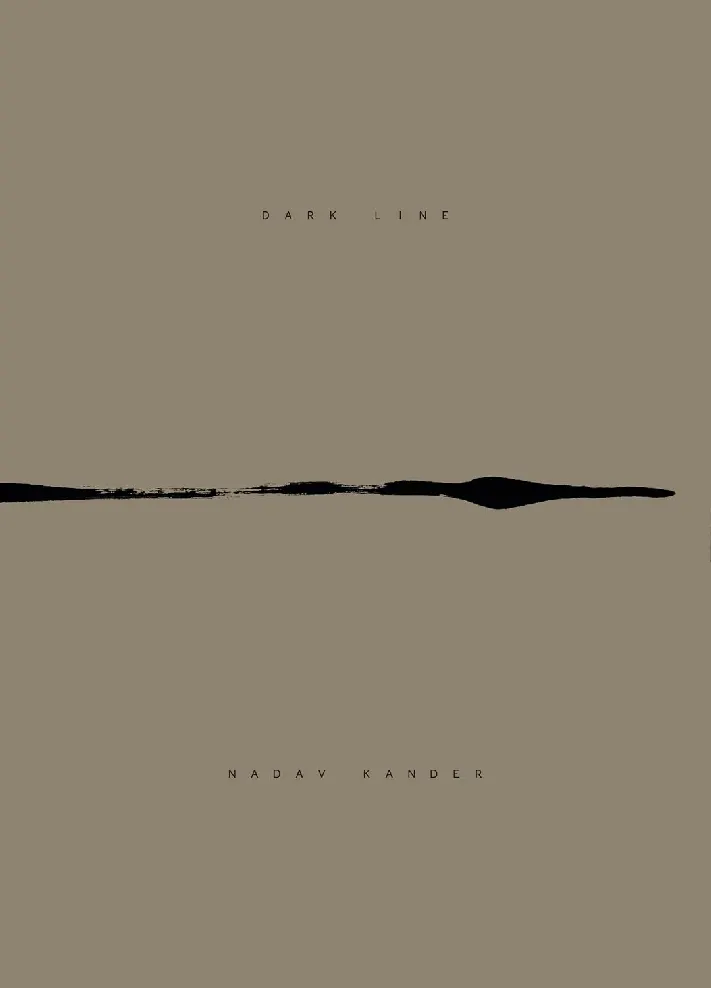
More recently, Dark Line, The Thames Estuary (2015–2022, ongoing) turns to the river closest to home, treating the Thames Estuary as "a metaphor for the perpetual cycle of change and renewal," with nods to Conrad and Dickens and to the estuary's long history of invasion, settlement, and trade. Unlike the documentary directness of the earlier work, these images are built through lengthy exposures, layering, and repeated overprinting in the darkroom (Kander often reworks a single print over months) producing darker, more painterly and atmospheric pictures. A companion film, The Edge of the Stream, accompanies the series. Kander has also made a smaller body of Arctic landscape work, Arctic Circle, extending the same concerns with remoteness and environmental change to the far north.
His portrait practice runs in parallel. Obama's People, a portfolio of 52 portraits commissioned by The New York Times Magazine around Barack Obama's first inauguration, remains one of the publication's largest single photographic features, and he has photographed a wide range of political, cultural, and artistic figures across editorial and personal work.
Kander's principal body of nude work, Bodies. 6 Women. 1 Man. (2010–2013), applies the same formal, almost forensic attention he brings to landscape to the human figure. Six women and one man, Isley, Audrey, Elizabeth, Stella, Ali, Mengxi, and Michael, were photographed nude against black backgrounds with white paint and dust worked directly onto their skin, so that the bodies read as sculptural forms emerging from darkness rather than conventional studio nudes. Kander has described the project as concerned with paradox, "revealed yet concealed, shameless yet shameful", and deliberately resisted the airbrushed idealism of popular imagery, favoring imperfection, shadow, and vulnerability as sources of beauty in their own right; some images incorporate animals or allude to art-historical poses. The work was shown as an exhibition and published as a monograph, and a related film accompanied the project.
His accolades include the Prix Pictet, an Honorary Fellowship from the Royal Photographic Society, International Photographer of the Year at the Lucie Awards, and a World Press Photo first prize. His work is held in public collections including the National Portrait Gallery and Victoria & Albert Museum in London and the Museum of Contemporary Photography in Chicago, and has been exhibited at institutions such as the Barbican Centre and Palais de Tokyo.
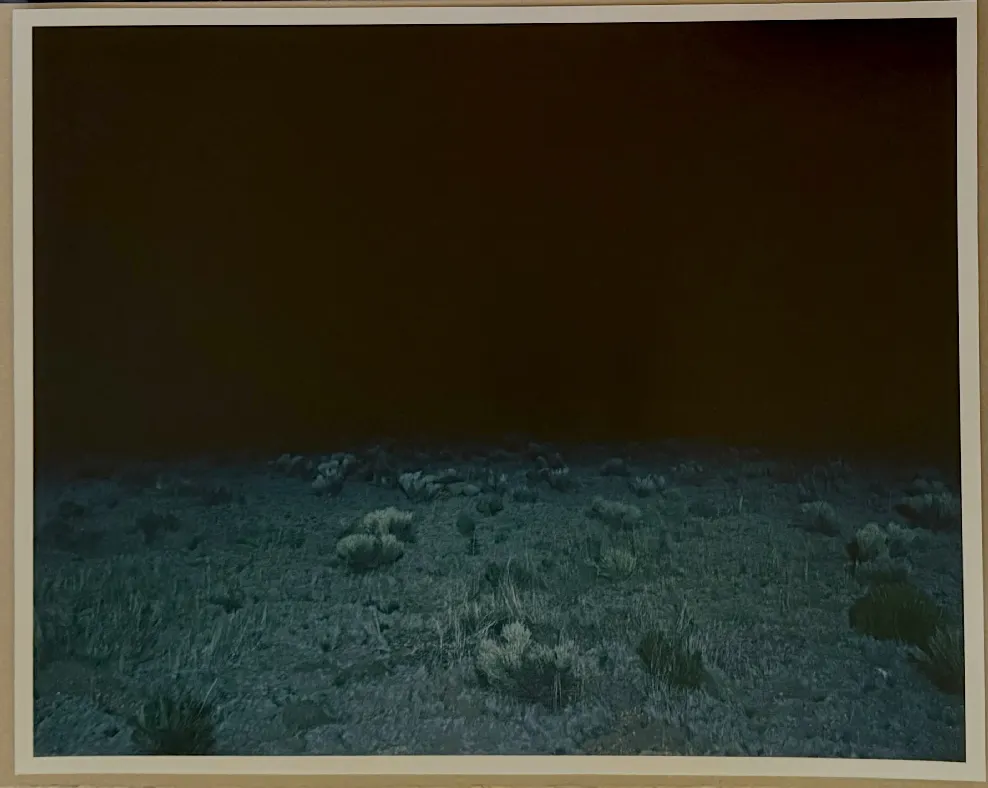


Kander’s Beauty's Nothing (2001) serves as his inaugural monograph and a foundational statement of his photographic philosophy. Rather than presenting a linear narrative, the book is structured as a disjointed, eclectic sequence where his early portraiture, vast landscapes, and nocturnal cityscapes are interleaved with texts from writers such as Nick Cave, Peter Carey, and Julia Alvarez. Thematic focus centers on the vulnerability and isolation of the human condition, frequently positioning solitary, diminished figures against the overwhelming scale of the natural or built environment. The project disrupts the conventions of traditional beauty, using formal perfection as a lure to explore deeper psychological unease and the friction between the subject and their surroundings.