
Hardcover with dust jacket
ISBN:
9783775726832


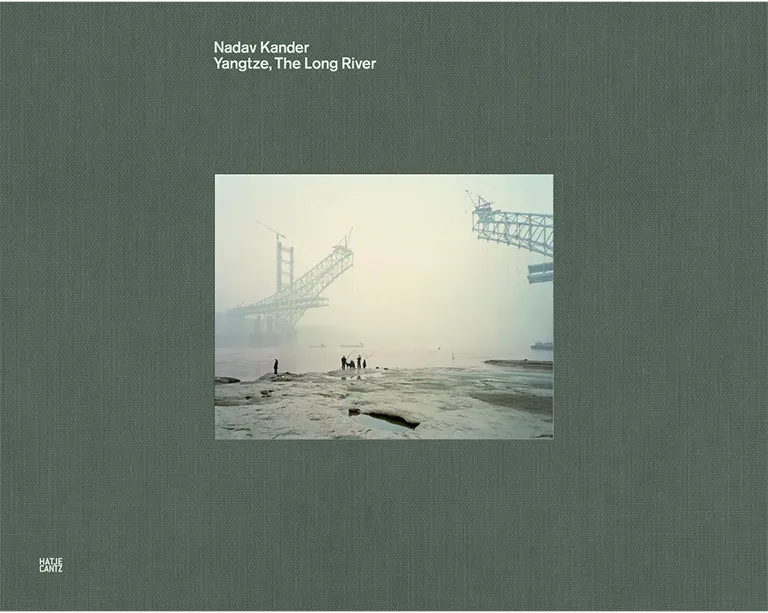
Kander’s Yangtze - The Long River stems from multiple journeys along China’s primary waterway during a period of relentless, rapid industrialization and the massive engineering of the Three Gorges Dam. Rather than producing a traditional photojournalistic essay on mass displacement, Kander approaches the altered landscape as a site of profound psychological and ecological dislocation. The series captures the overwhelming scale of modernization, where deep-rooted cultural histories are rapidly submerged and replaced by sprawling concrete infrastructure, rendering the human figures within these spaces as isolated, diminutive presences against the vastness of their shifting environment.
The publication sequences these sweeping vistas with a deliberate, melancholic pacing, emphasizing the thick atmospheric smog that heavily blankets the region. Visually, Kander employs a washed-out, pastel-leaning color palette and large-format precision to flatten the immense physical space, turning enormous bridges, half-finished apartment blocks, and crumbling riverbanks into rigorous formal compositions. The physical volume matches this expansive scope, utilizing wide, high-fidelity reproductions that invite viewers to scrutinize the finest details of the compromised landscape, effectively turning the polluted air into a dense, tangible texture on the printed page.