
 Look inside

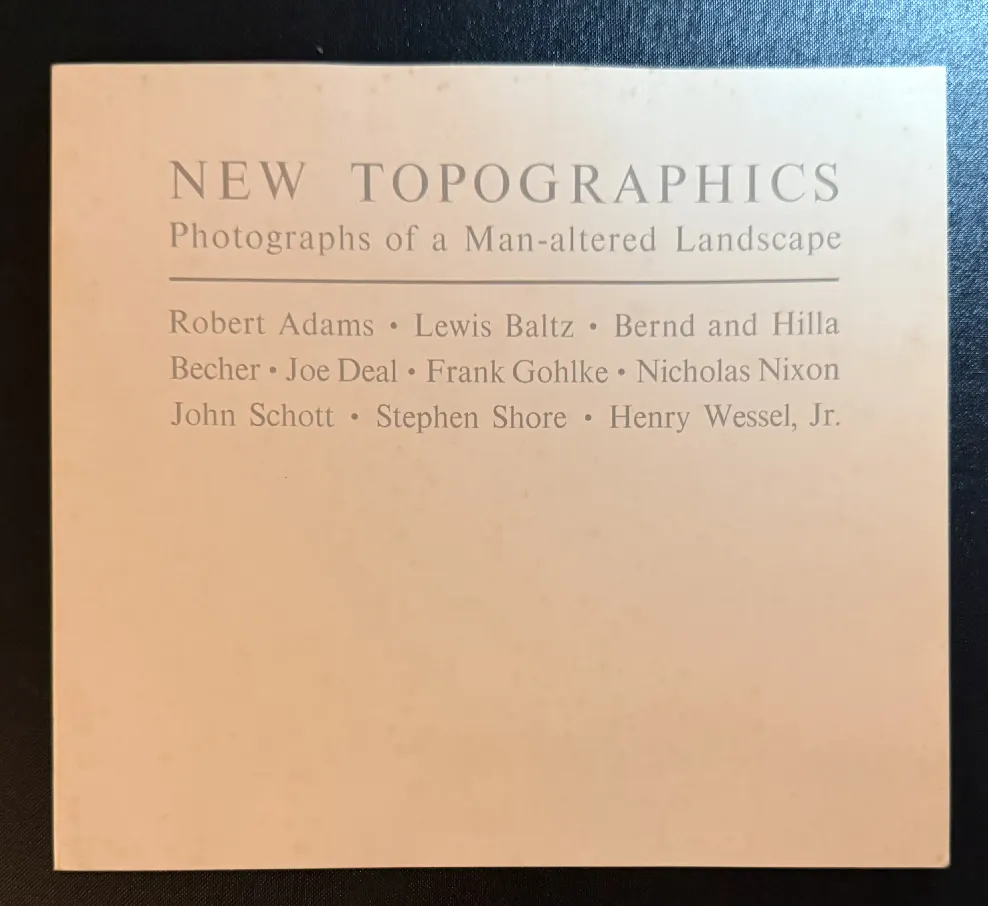
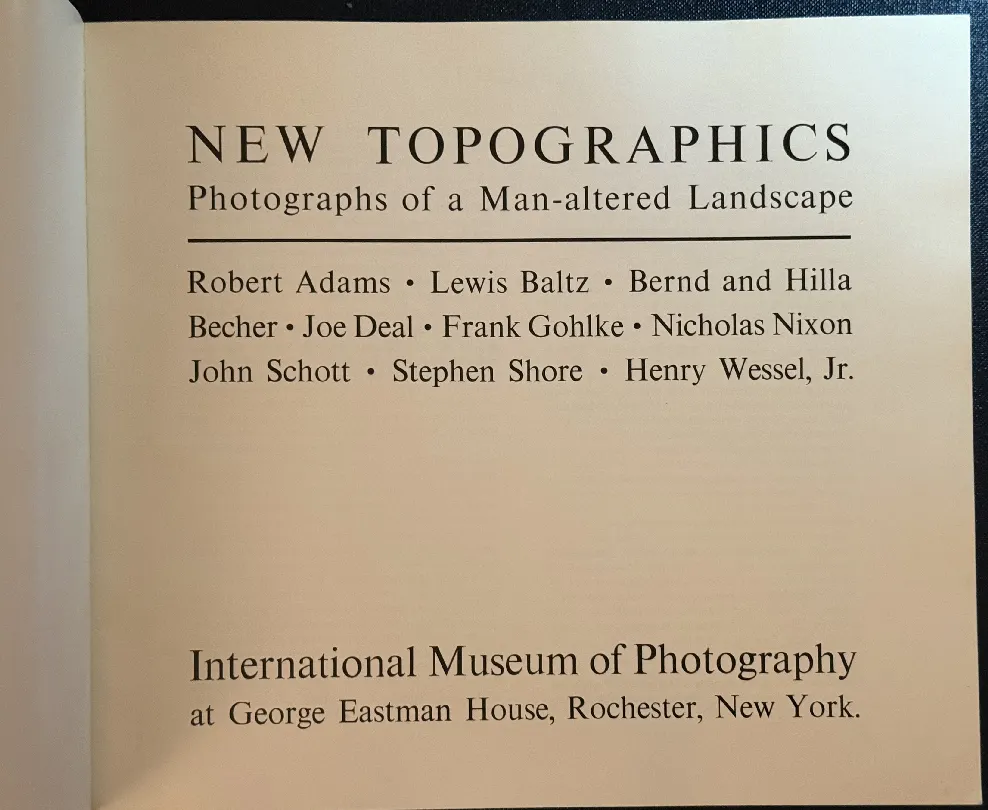
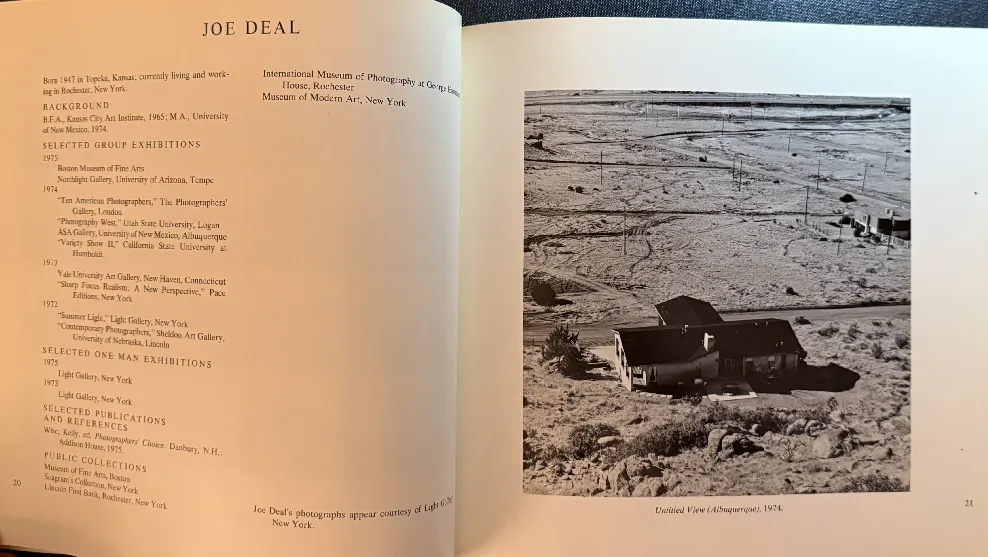
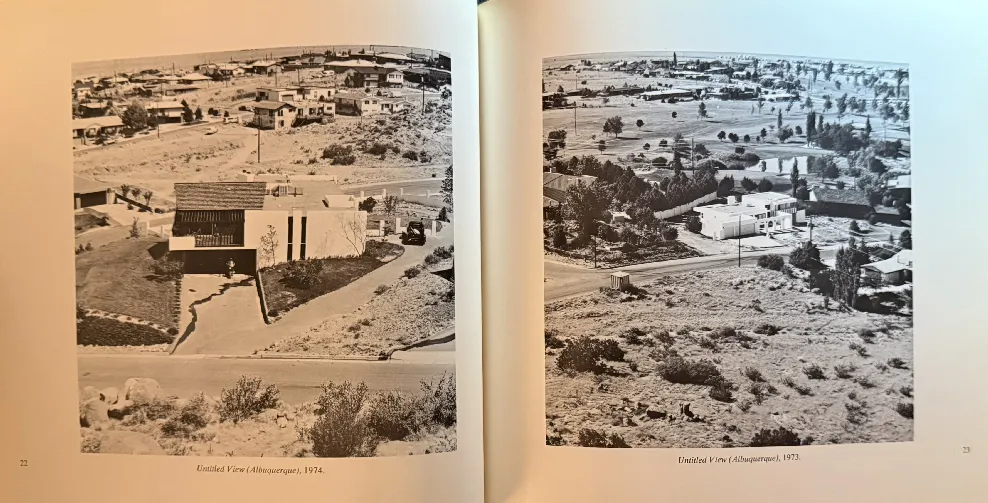
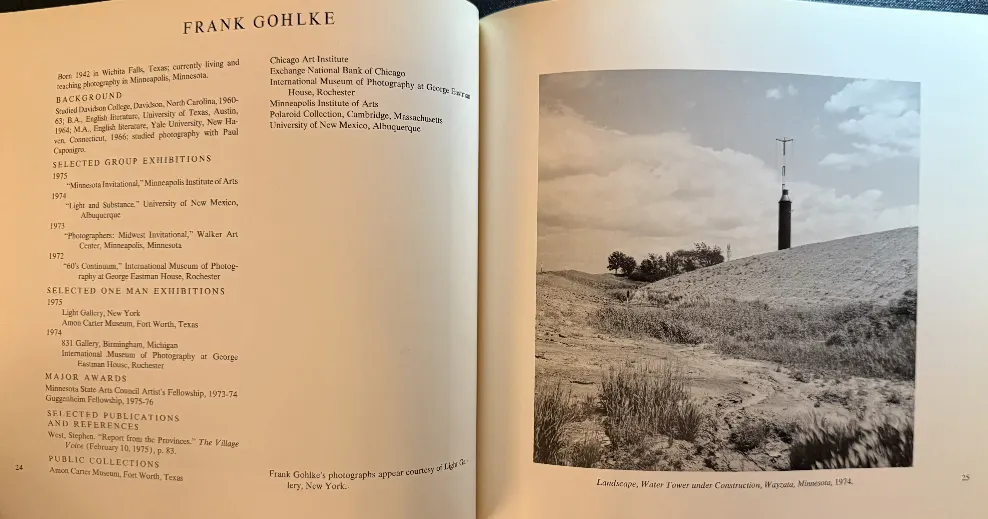
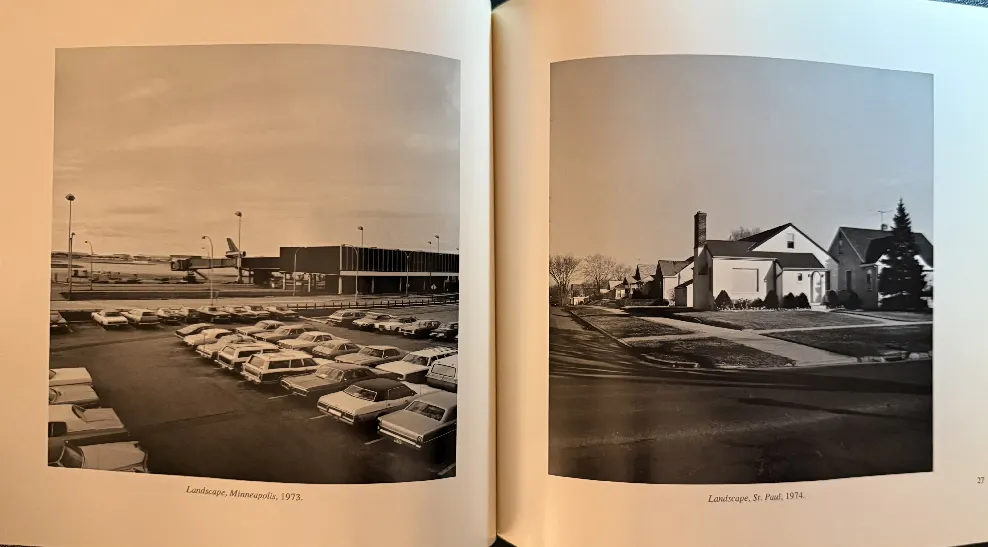
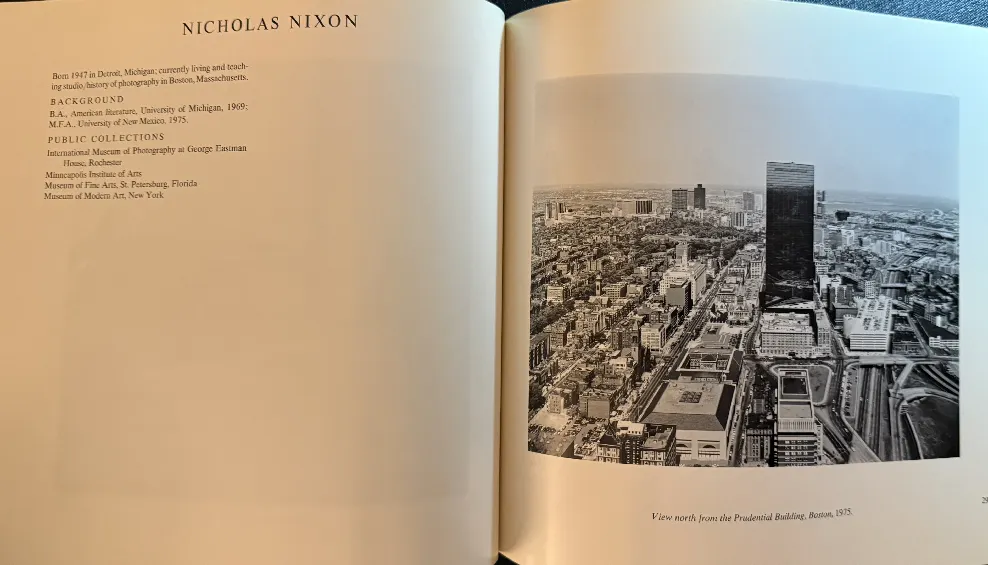
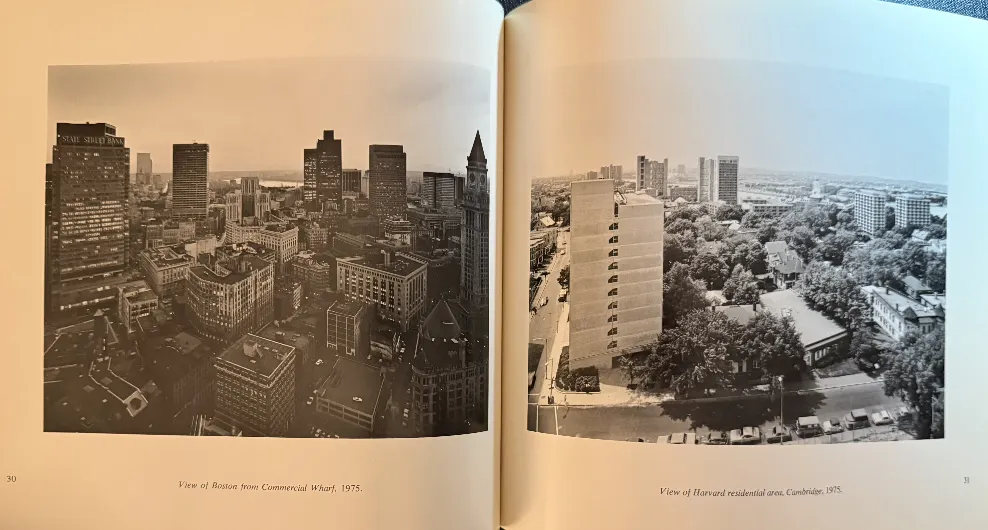
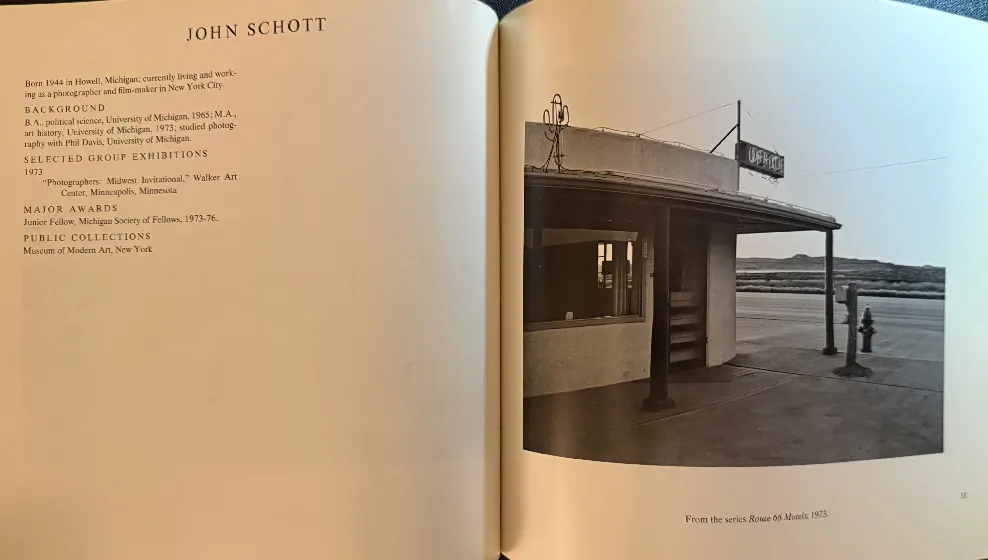
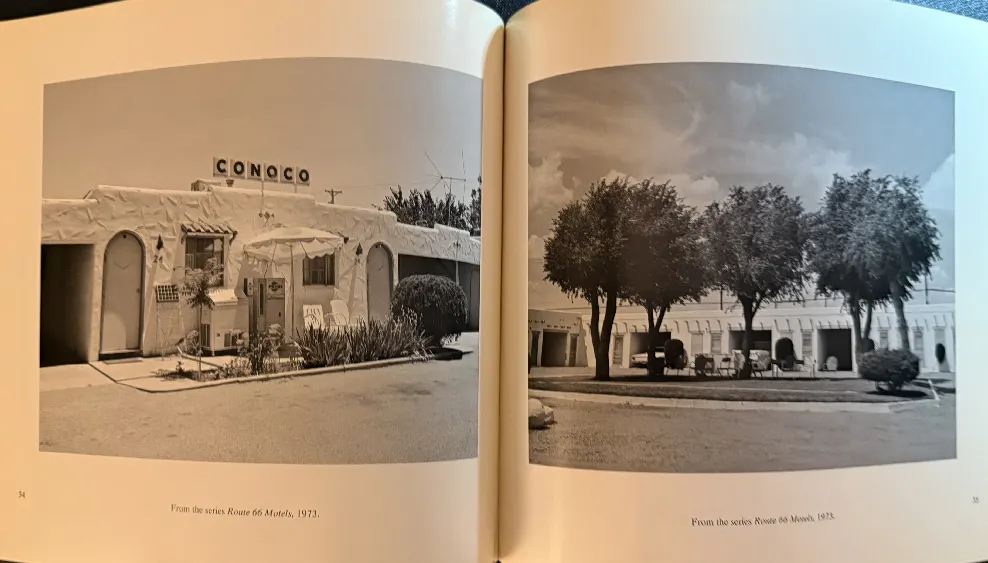
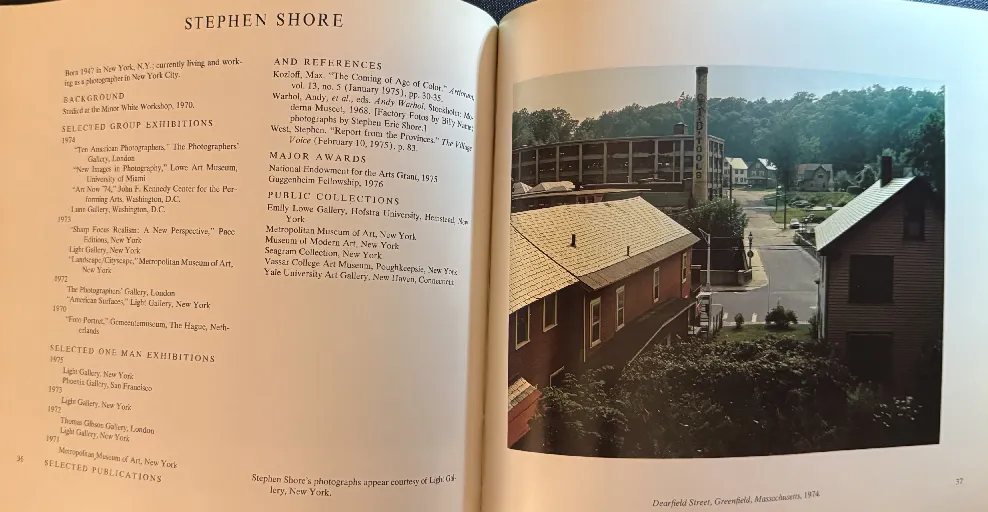
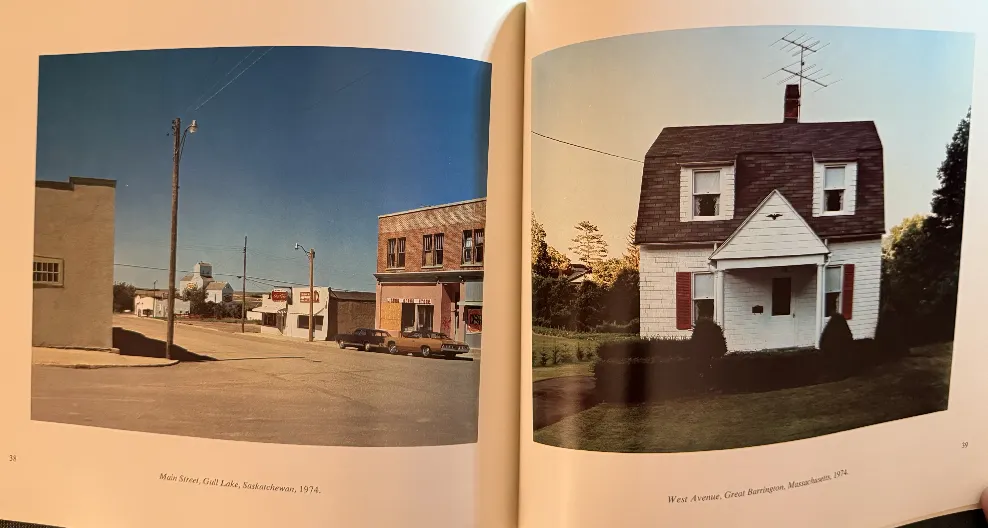
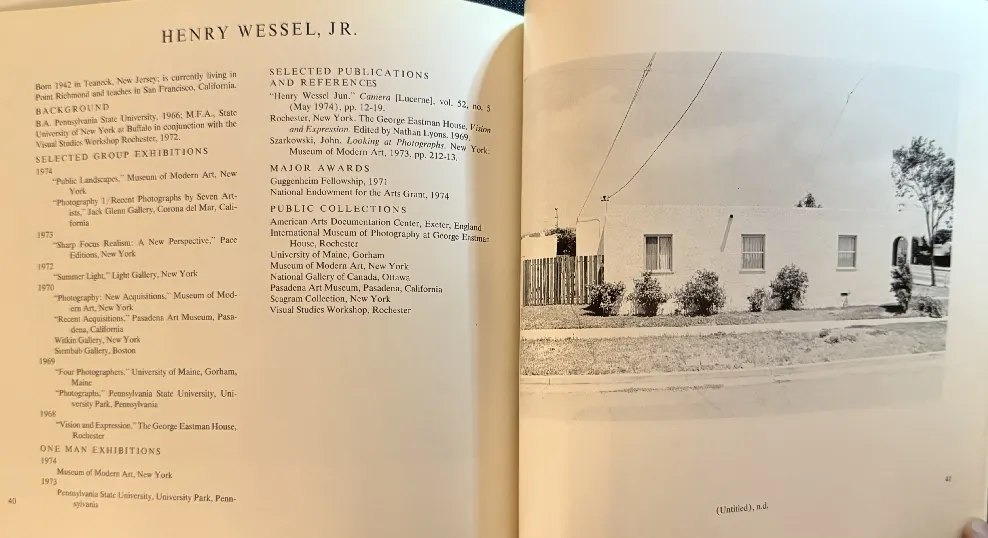
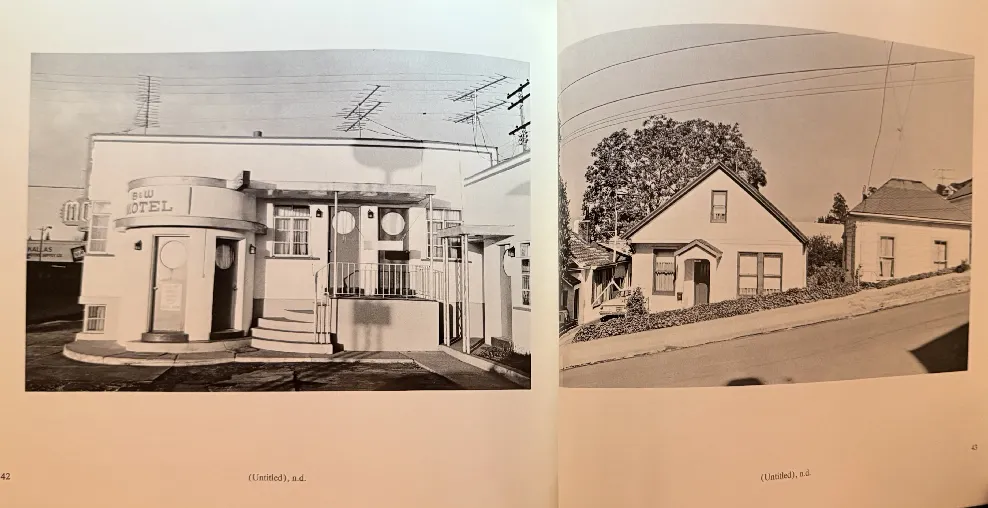
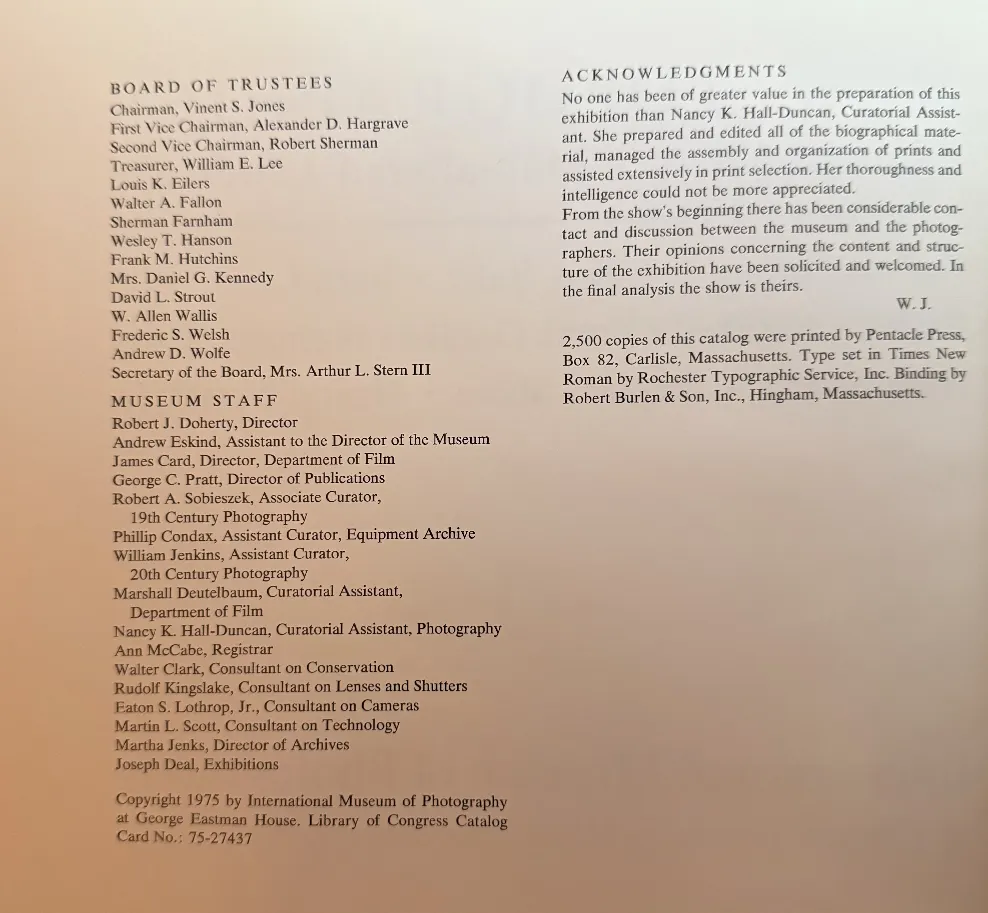
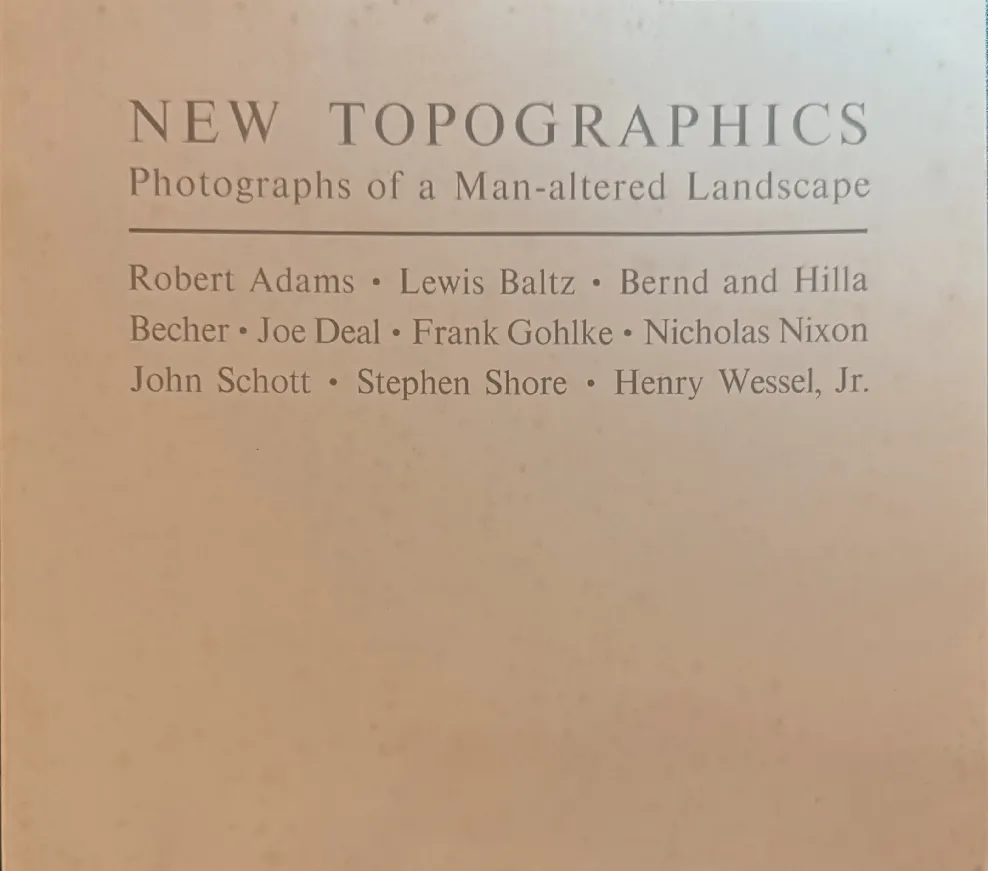
New Topographics: Photographs of a Man-Altered Landscape (1975) is the seminal exhibition catalog published by the International Museum of Photography at George Eastman House for the groundbreaking exhibition curated by William Jenkins.
The catalog documents a pivotal shift in 20th-century American landscape photography away from the idealized, majestic wilderness traditions of Ansel Adams and Edward Weston. Instead, it features artists who approached the modern built environment with deadpan neutrality, clinical detachment, and objective, documentary precision.
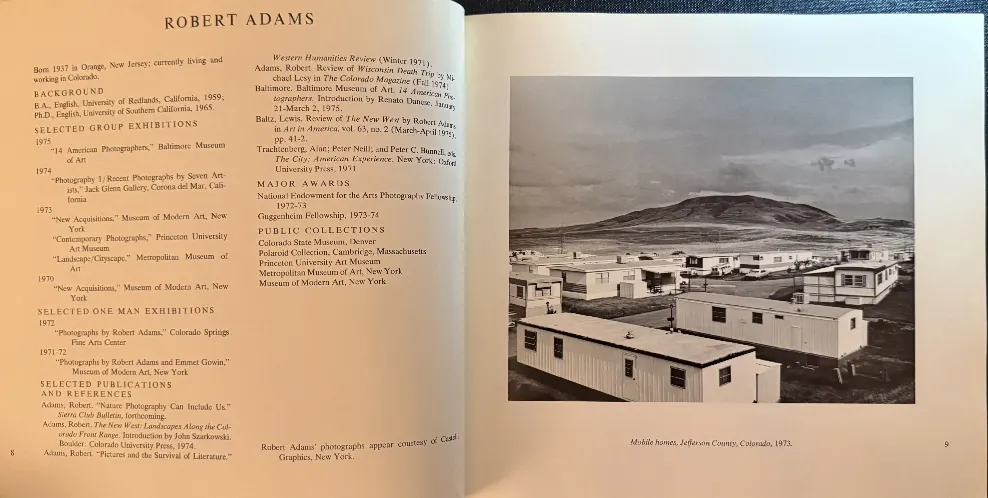
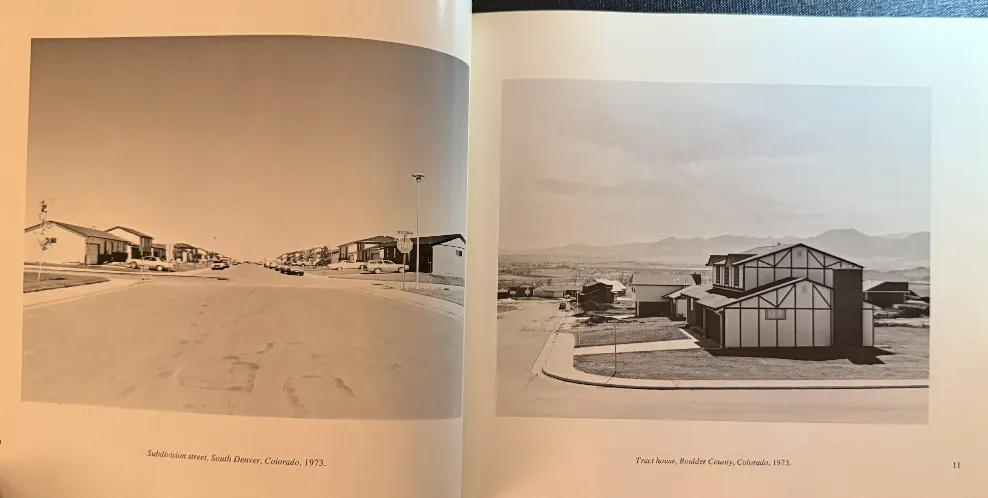
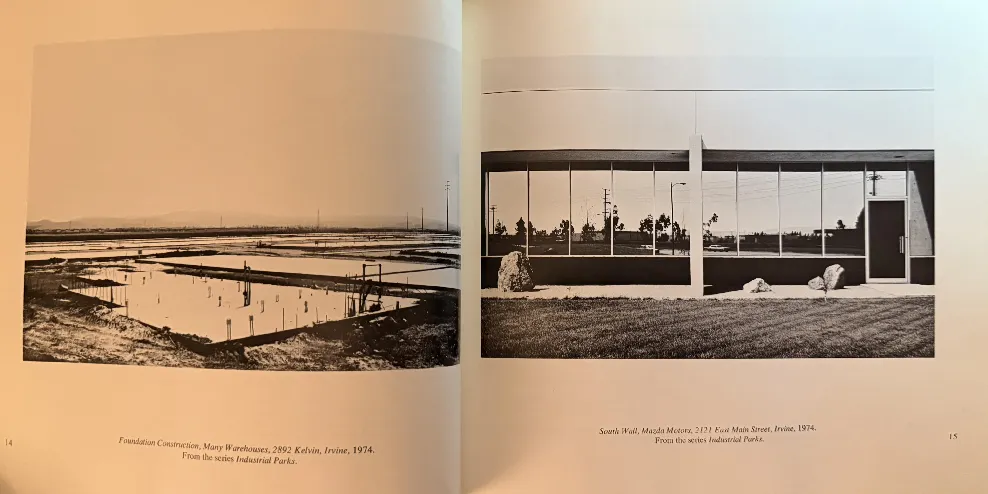
The featured photographers, Robert Adams, Lewis Baltz, Bernd and Hilla Becher, Joe Deal, Frank Gohlke, Nicholas Nixon, John Schott, Stephen Shore, and Henry Wessel, systematically recorded suburban suburban sprawl, industrial parks, highway strip developments, housing developments, and motels across the American West and industrial centers.
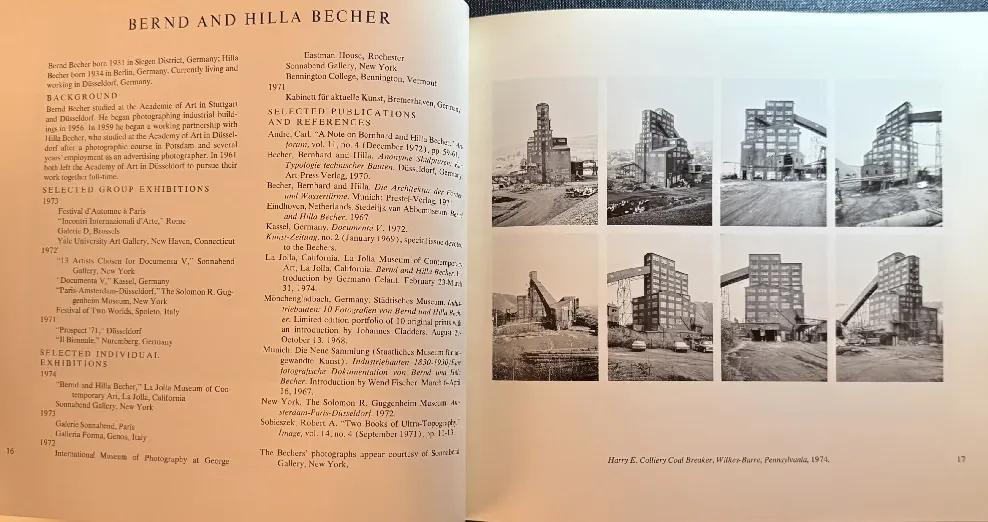
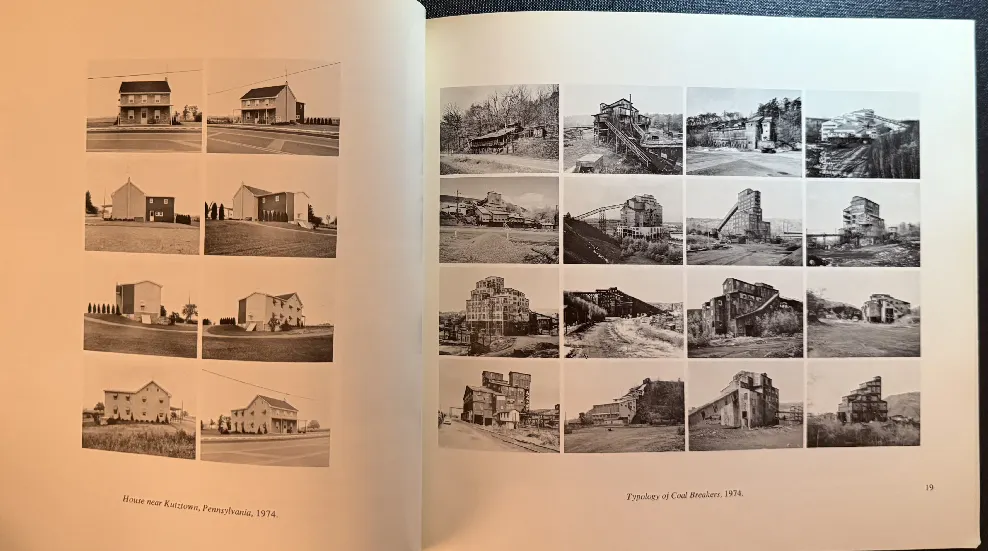
Rather than seeking untouched natural beauty, the project examines the visual reality of human intrusion, suburban expansion, and land development. Images are characterized by a banality of subject matter, rigid geometric composition, wide-angle or large-format clarity, and an intentional lack of drama, sentimentality, or overt emotional commentary. Influenced heavily by Bernd and Hilla Becher’s systematic documentation of industrial structures in Europe, the catalog emphasizes seriality, architectural forms, and comparative observation.
New Topographics fundamentally redefined how landscape photography was understood and practiced. By elevating ordinary, human-altered environments to formal art, it influenced generations of photographers and remains one of the most important intellectual and aesthetic turning points in contemporary photography.

New Topographics: Photographs of a Man-Altered Landscape (1975) is the seminal exhibition catalog published by the International Museum of Photography at George Eastman House for the groundbreaking exhibition curated by William Jenkins.
The catalog documents a pivotal shift in 20th-century American landscape photography away from the idealized, majestic wilderness traditions of Ansel Adams and Edward Weston. Instead, it features artists who approached the modern built environment with deadpan neutrality, clinical detachment, and objective, documentary precision.
The featured photographers, Robert Adams, Lewis Baltz, Bernd and Hilla Becher, Joe Deal, Frank Gohlke, Nicholas Nixon, John Schott, Stephen Shore, and Henry Wessel, systematically recorded suburban suburban sprawl, industrial parks, highway strip developments, housing developments, and motels across the American West and industrial centers.
Rather than seeking untouched natural beauty, the project examines the visual reality of human intrusion, suburban expansion, and land development. Images are characterized by a banality of subject matter, rigid geometric composition, wide-angle or large-format clarity, and an intentional lack of drama, sentimentality, or overt emotional commentary. Influenced heavily by Bernd and Hilla Becher’s systematic documentation of industrial structures in Europe, the catalog emphasizes seriality, architectural forms, and comparative observation.
New Topographics fundamentally redefined how landscape photography was understood and practiced. By elevating ordinary, human-altered environments to formal art, it influenced generations of photographers and remains one of the most important intellectual and aesthetic turning points in contemporary photography.