
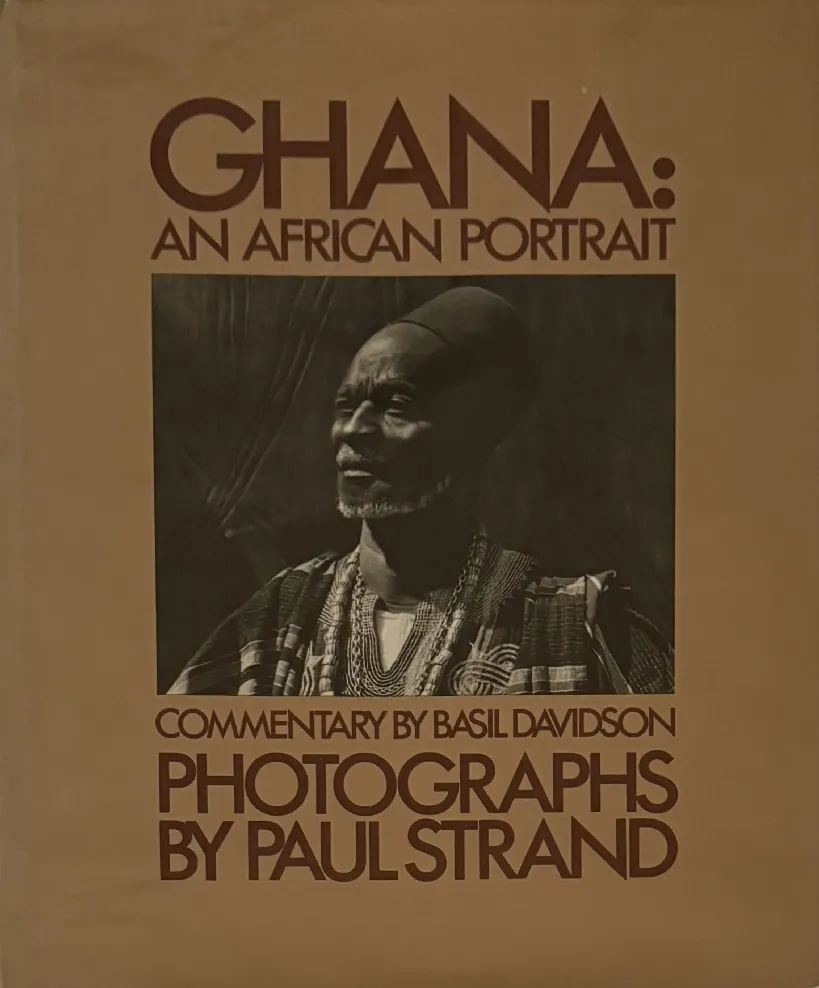
Hardcover with DJ
ISBN:
0900406739


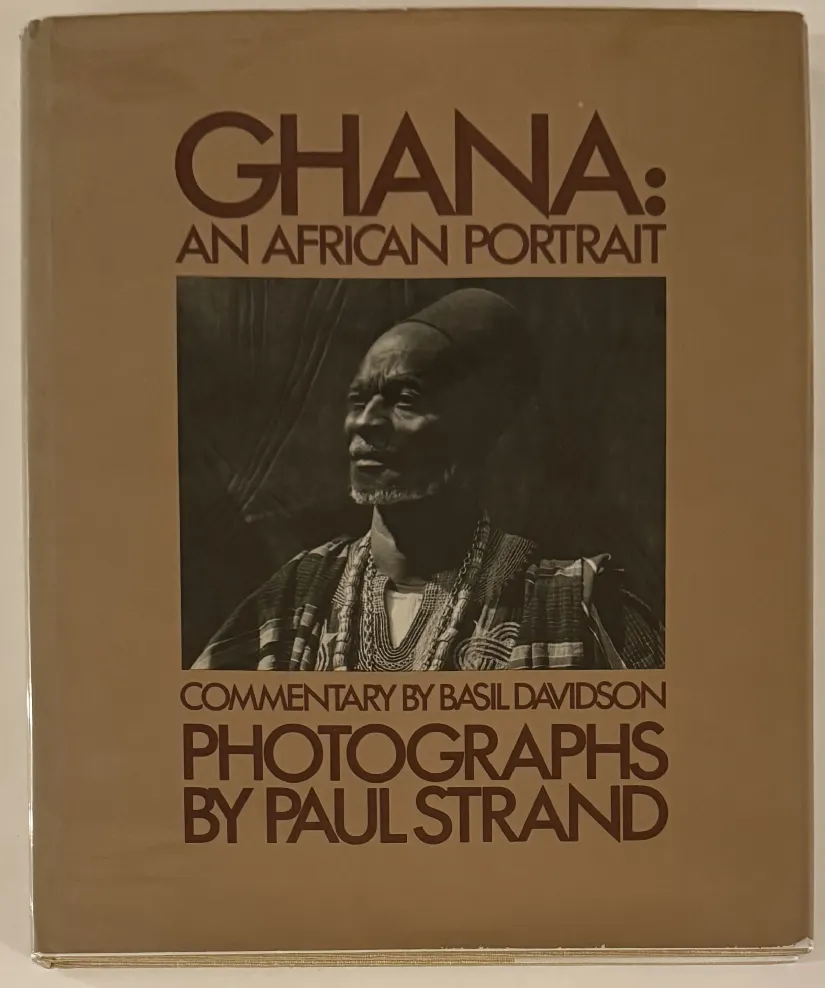
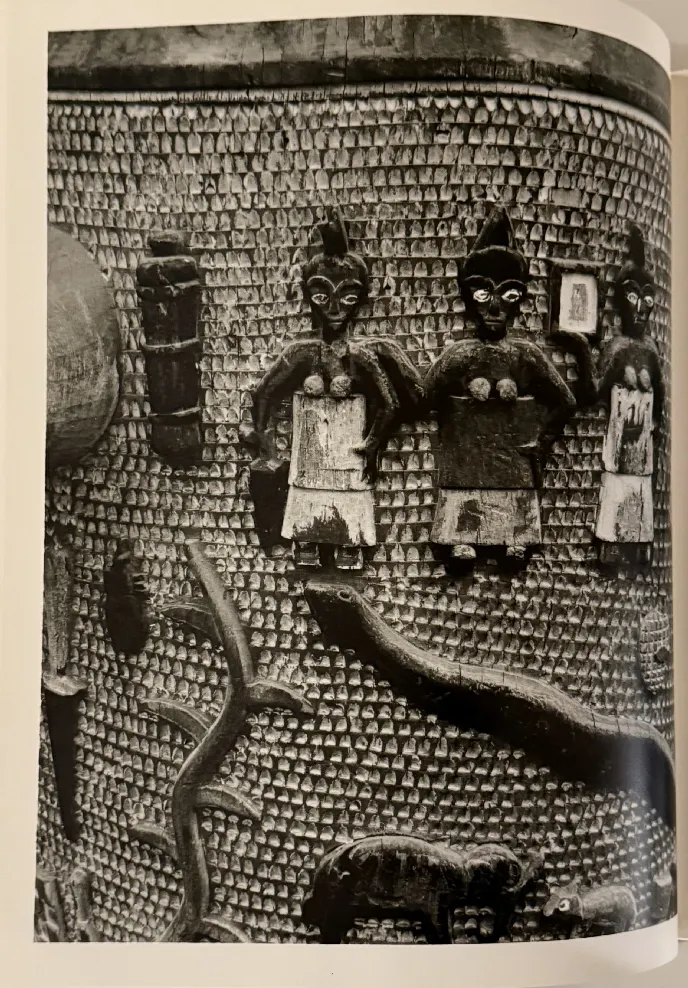
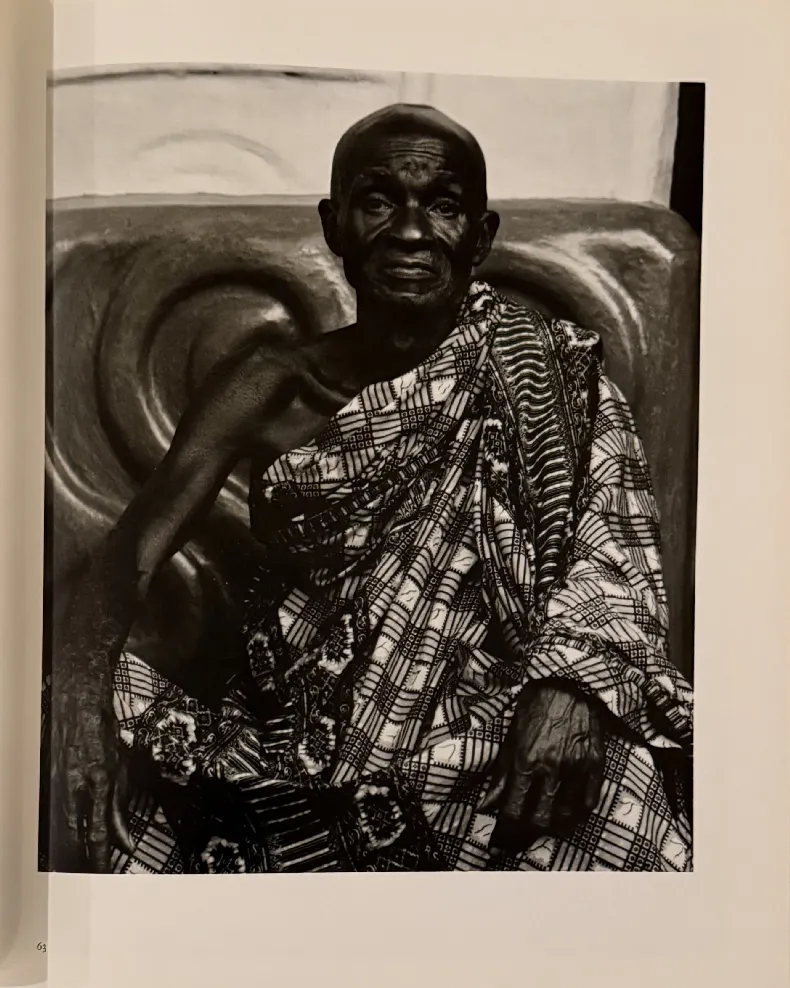
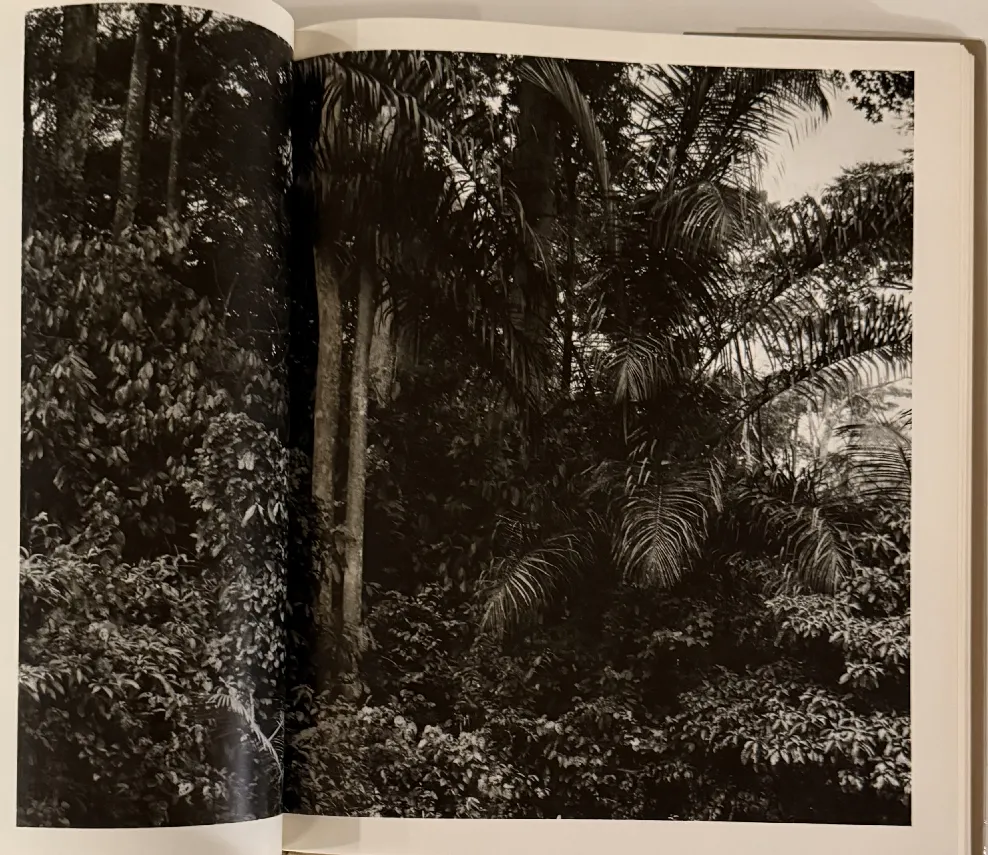
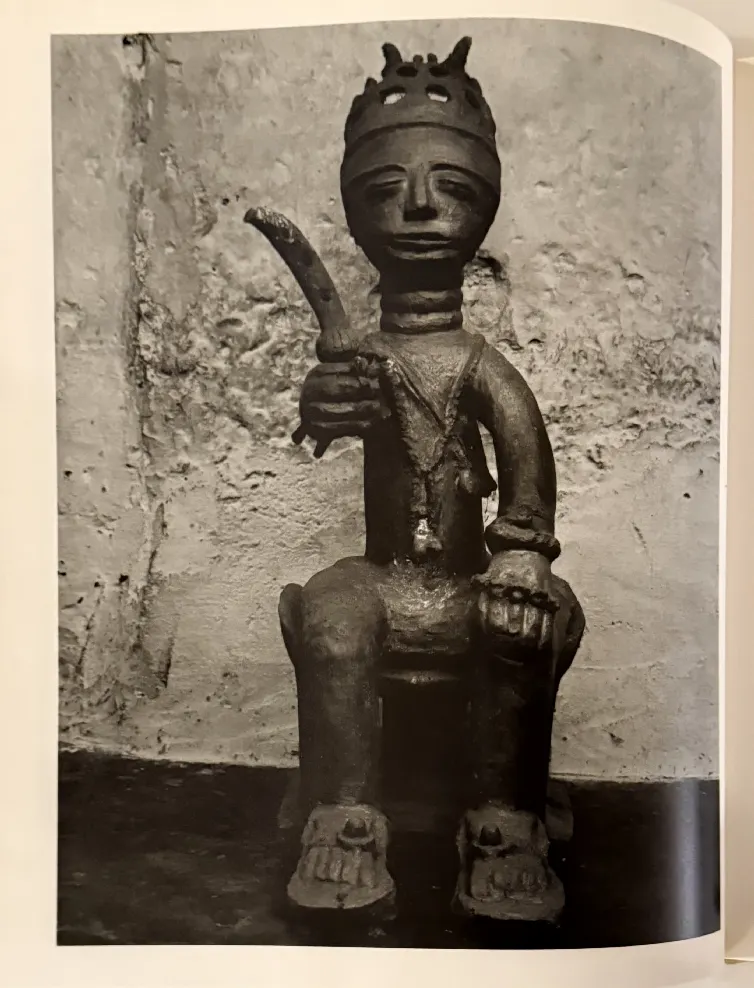
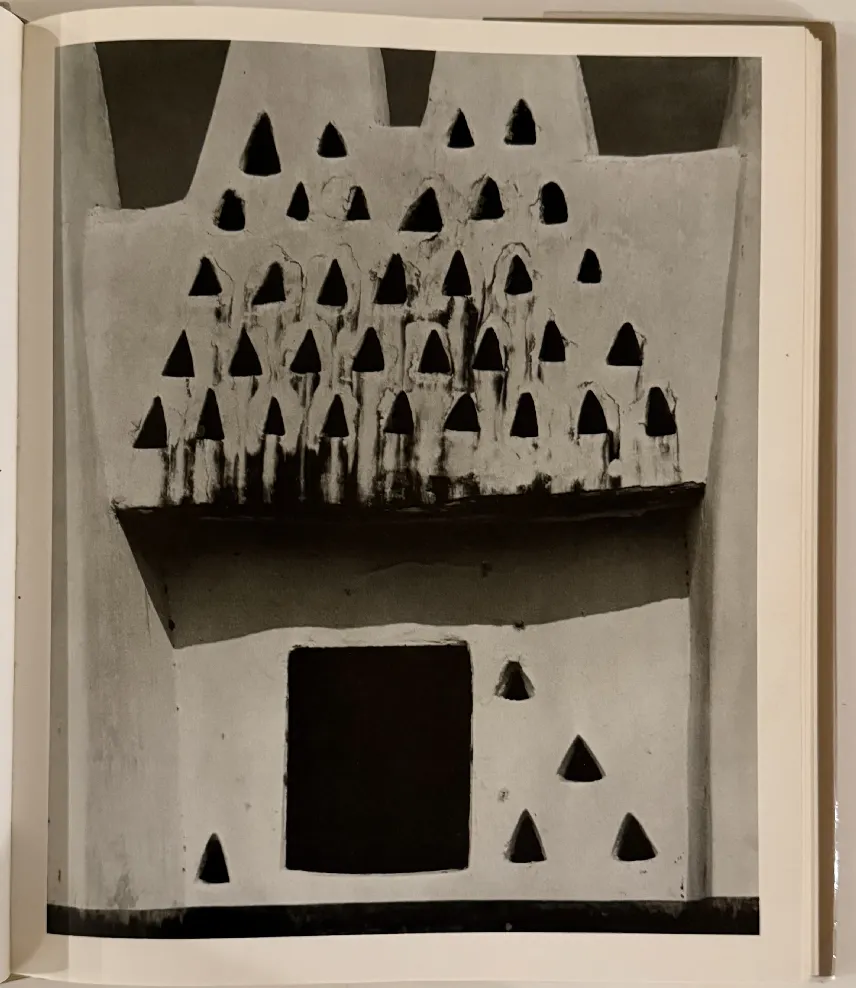
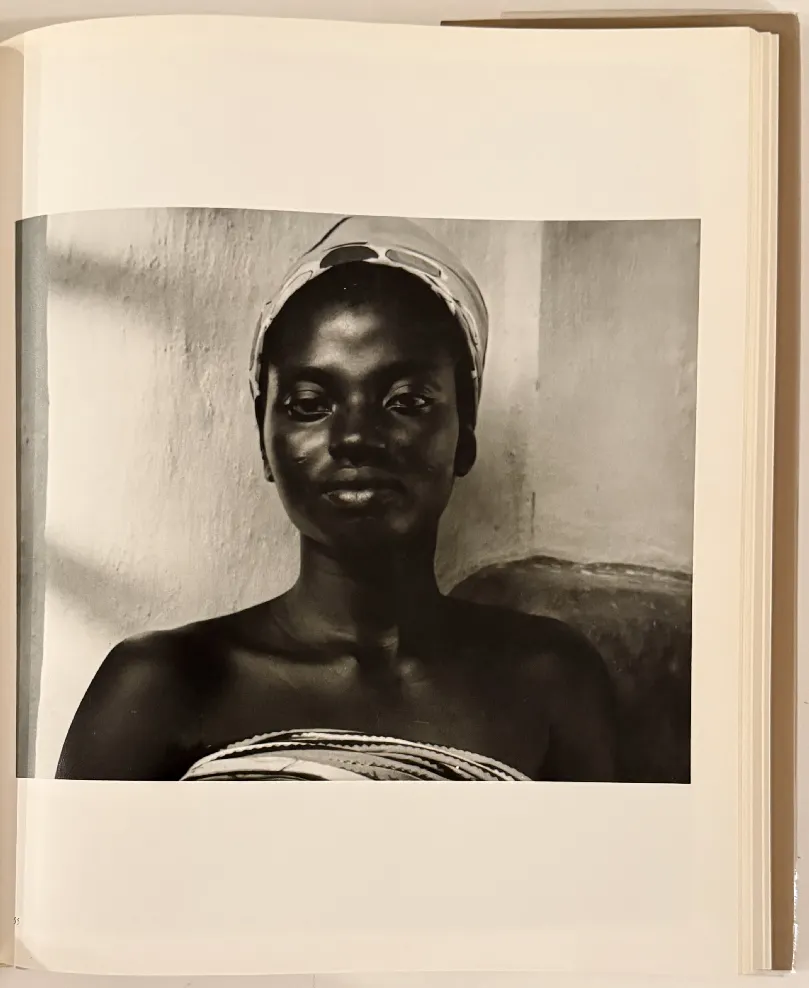
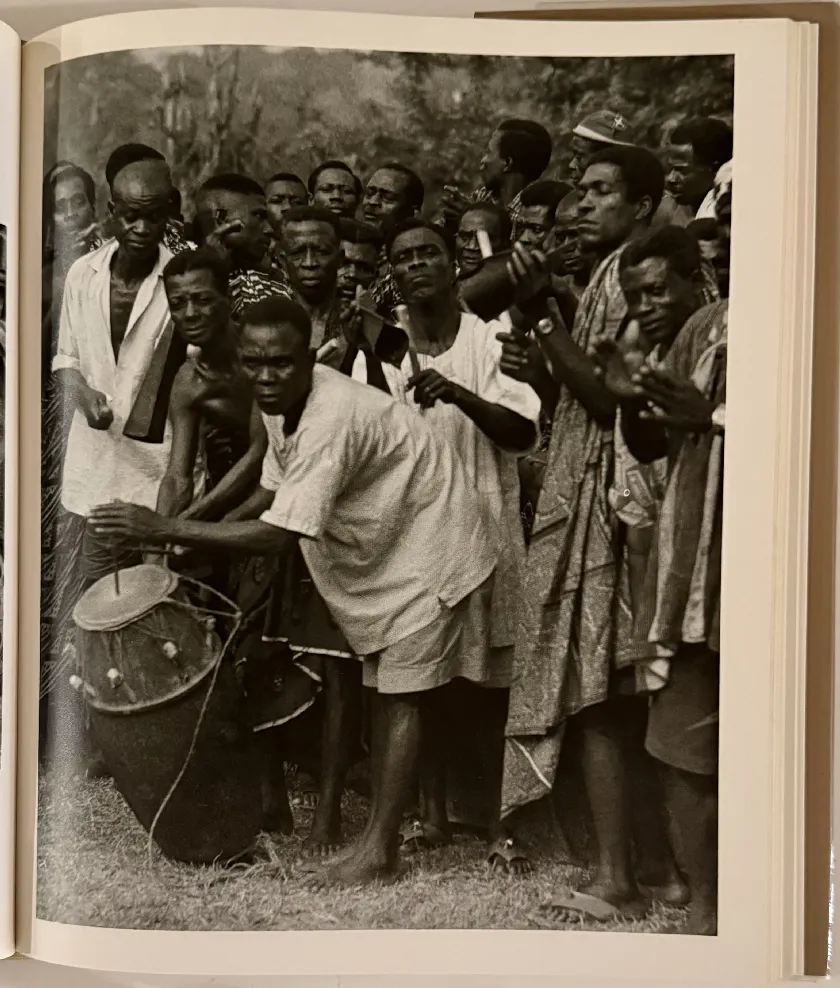
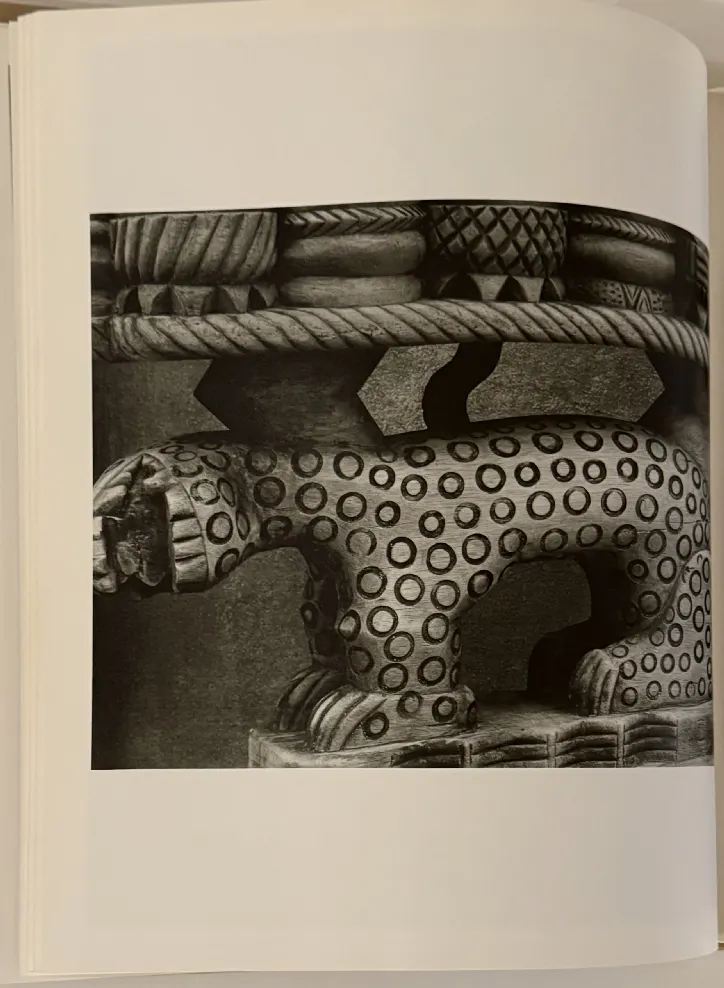
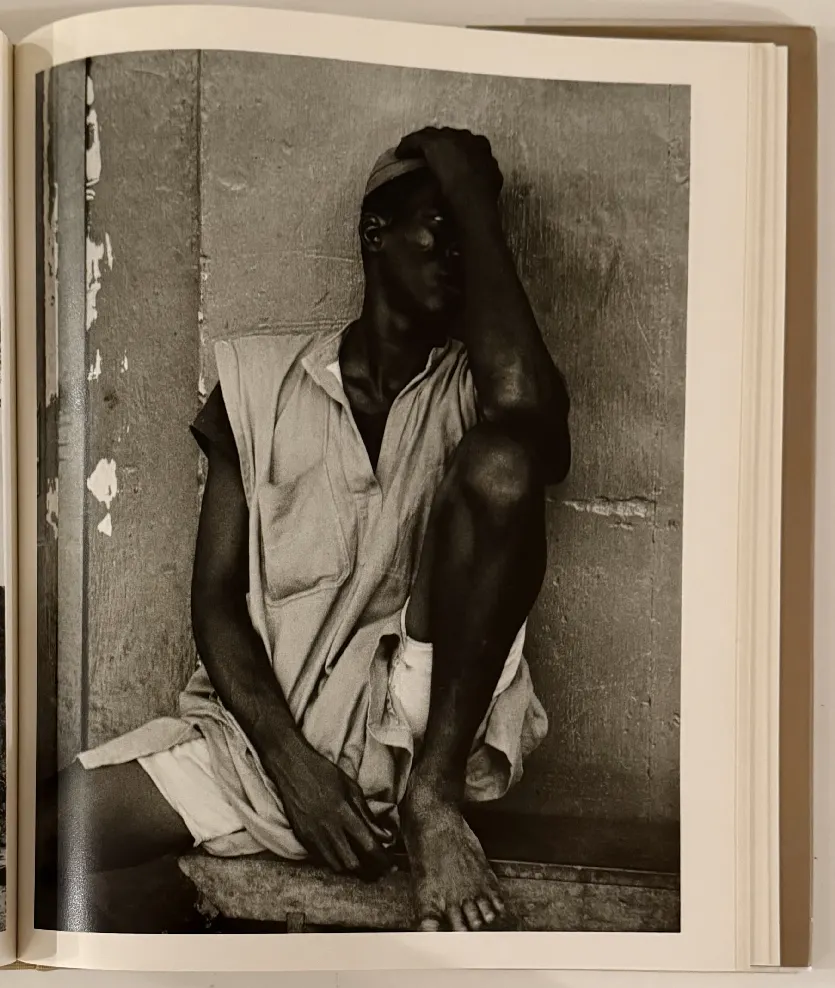
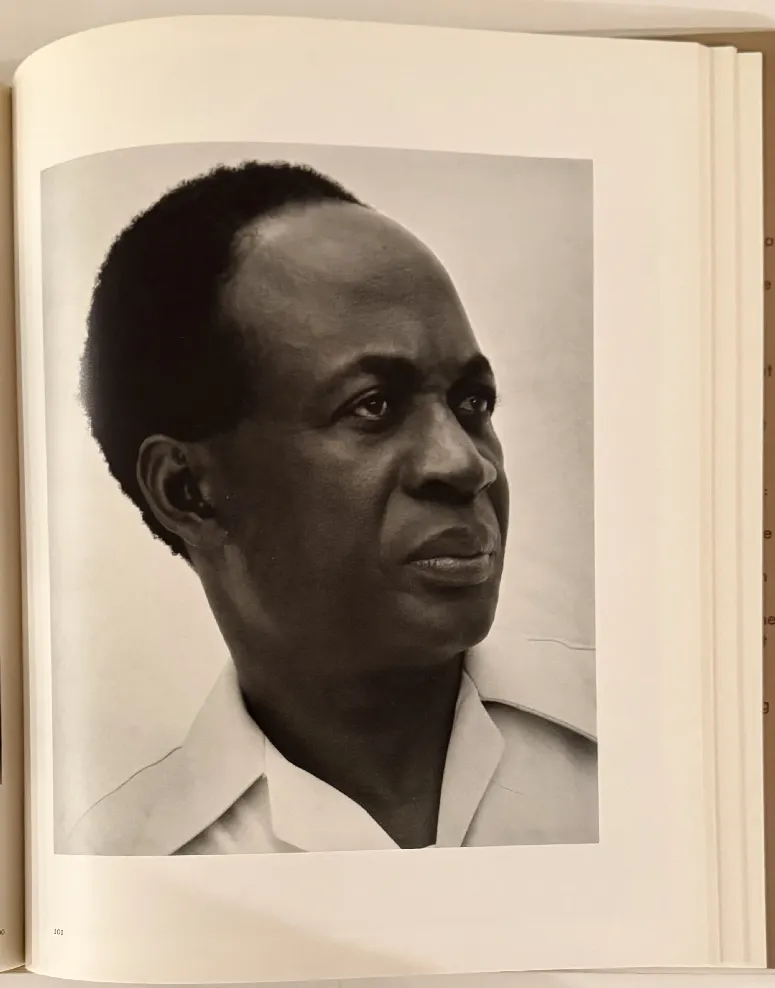

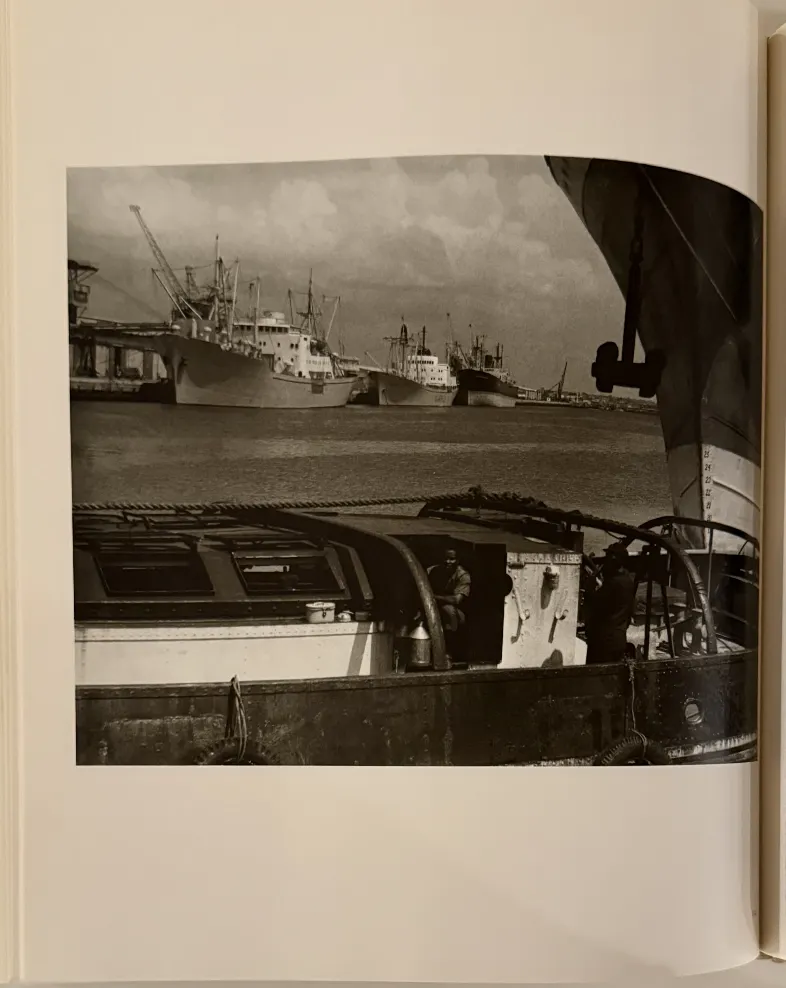
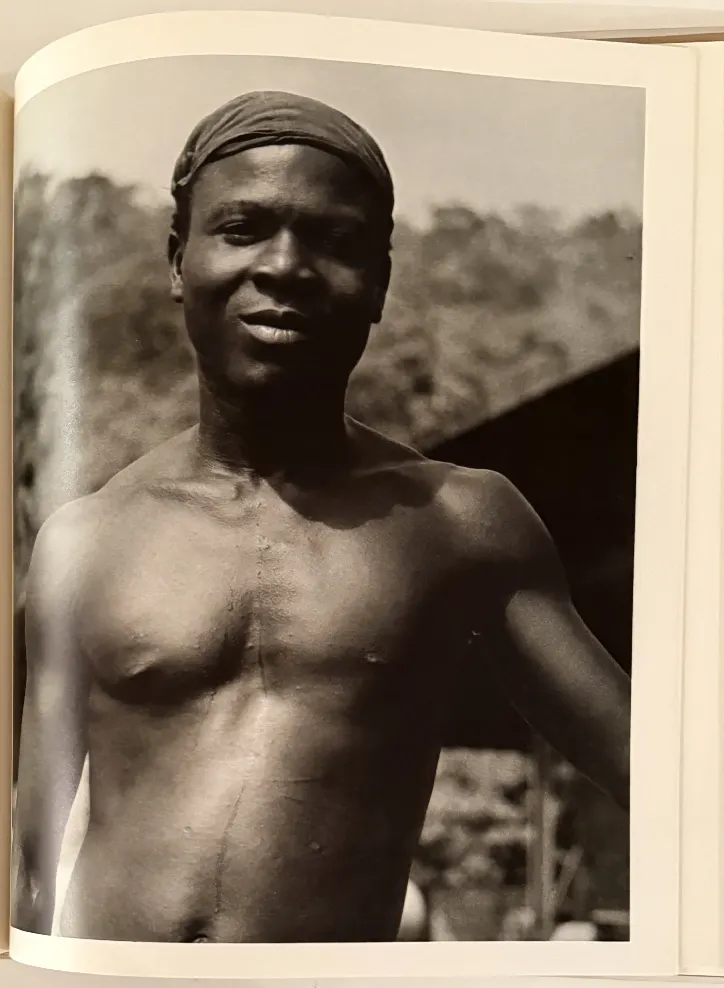
Ghana: An African Portrait (Aperture, 1976) is a landmark photobook capturing the spirit, culture, and emerging identity of Ghana during a pivotal historical moment.
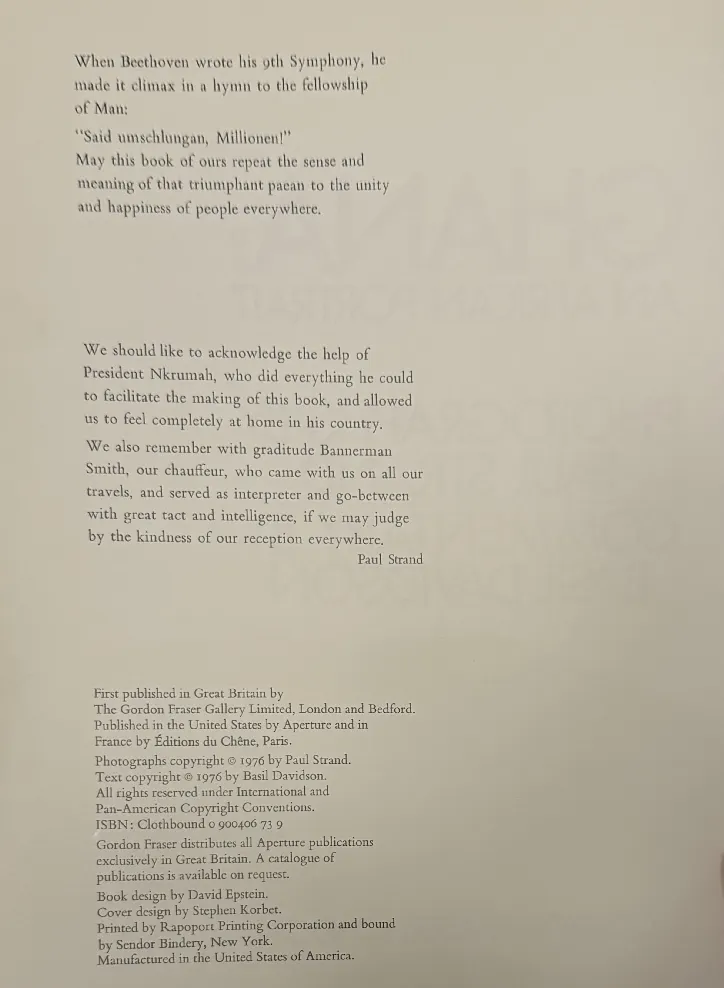
In 1963, pioneering American photographer Paul Strand spent four months traveling across Ghana at the invitation of its first president, Kwame Nkrumah.
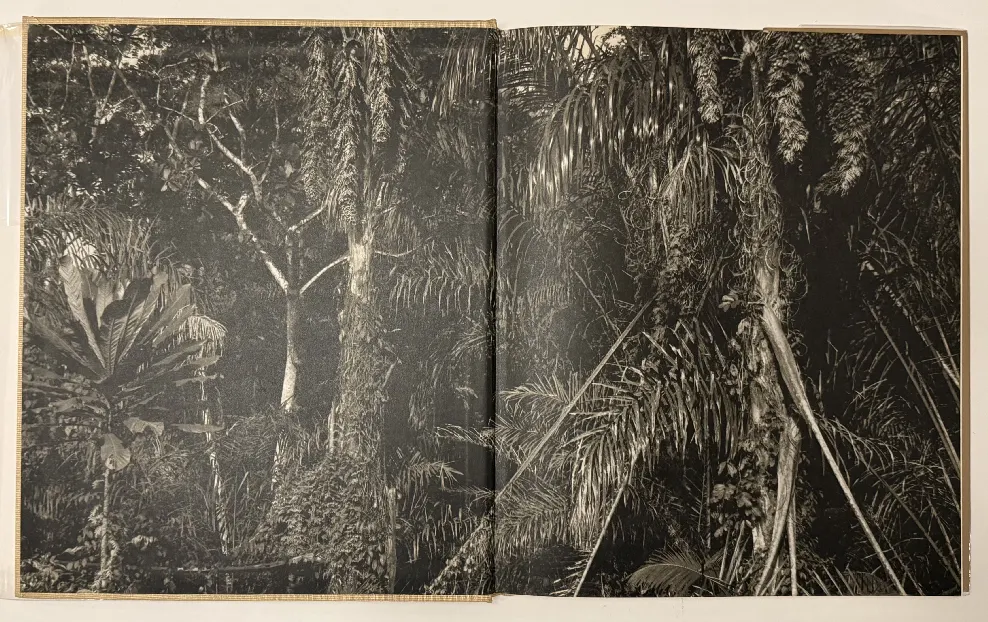
The book serves as a humanist portrait of a newly independent African nation poised for industrial and cultural ascension. Rather than acting as photojournalism, Strand's lens focuses on the underlying character, dignity, and daily life of the people, alongside the country's art, landscape, and architectural shifts.
Published shortly before Strand's death, the monograph features tens of striking black-and-white photographs complemented by commentary from the prominent British historian and writer Basil Davidson.
Ghana: An African Portrait (Aperture, 1976) is a landmark photobook capturing the spirit, culture, and emerging identity of Ghana during a pivotal historical moment.
In 1963, pioneering American photographer Paul Strand spent four months traveling across Ghana at the invitation of its first president, Kwame Nkrumah.
The book serves as a humanist portrait of a newly independent African nation poised for industrial and cultural ascension. Rather than acting as photojournalism, Strand's lens focuses on the underlying character, dignity, and daily life of the people, alongside the country's art, landscape, and architectural shifts.
Published shortly before Strand's death, the monograph features tens of striking black-and-white photographs complemented by commentary from the prominent British historian and writer Basil Davidson.

Ghana: An African Portrait (Aperture, 1976) is a landmark photobook capturing the spirit, culture, and emerging identity of Ghana during a pivotal historical moment.
In 1963, pioneering American photographer Paul Strand spent four months traveling across Ghana at the invitation of its first president, Kwame Nkrumah.
The book serves as a humanist portrait of a newly independent African nation poised for industrial and cultural ascension. Rather than acting as photojournalism, Strand's lens focuses on the underlying character, dignity, and daily life of the people, alongside the country's art, landscape, and architectural shifts.
Published shortly before Strand's death, the monograph features tens of striking black-and-white photographs complemented by commentary from the prominent British historian and writer Basil Davidson.