
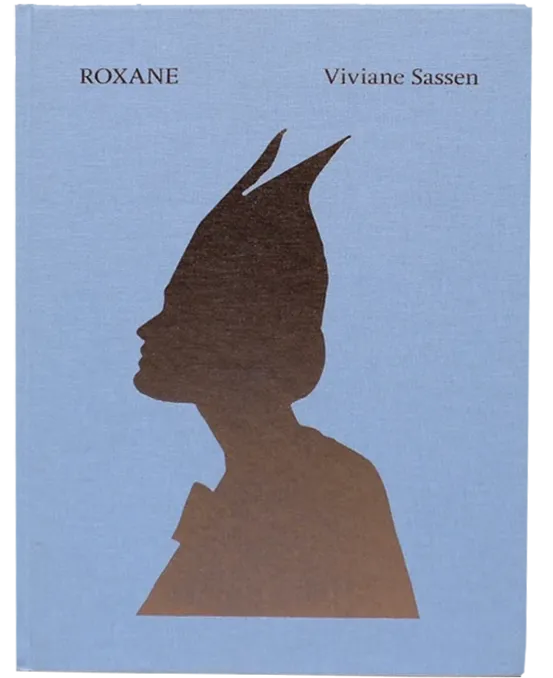
Hardcover without dust jacket, as issued
ISBN:
9780957038912


Roxane (2012) operates as an intimate visual journal documenting the evolving relationship between the photographer and her muse, Roxane Danset. Created over several years, the book diverges from traditional portraiture to explore the collaborative, performative dynamic between the two women. Rather than a straightforward documentary project, it functions as a fluid exchange of ideas, where Roxane's body serves as a malleable conduit for Sassen’s directorial vision. This ongoing dialogue strips away standard fashion narratives, presenting a highly personal exploration of the creative process, trust, and the shifting boundaries between observer and subject.
Aesthetically, the publication distills Sassen’s signature visual vocabulary into a concentrated, interior space. The images rely on stark lighting, abrupt cropping, and unexpected poses to transform the human figure into a series of graphic, sculptural shapes. By obscuring facial features and focusing on the geometry of limbs, fabric, and bold swaths of color, Sassen creates structural ambiguity. The rigorous sequence of these abstracted forms forces the viewer to engage with the body not merely as a representation of an individual, but as a deliberate formalist puzzle, balancing bold aesthetic choices with diaristic intimacy.