
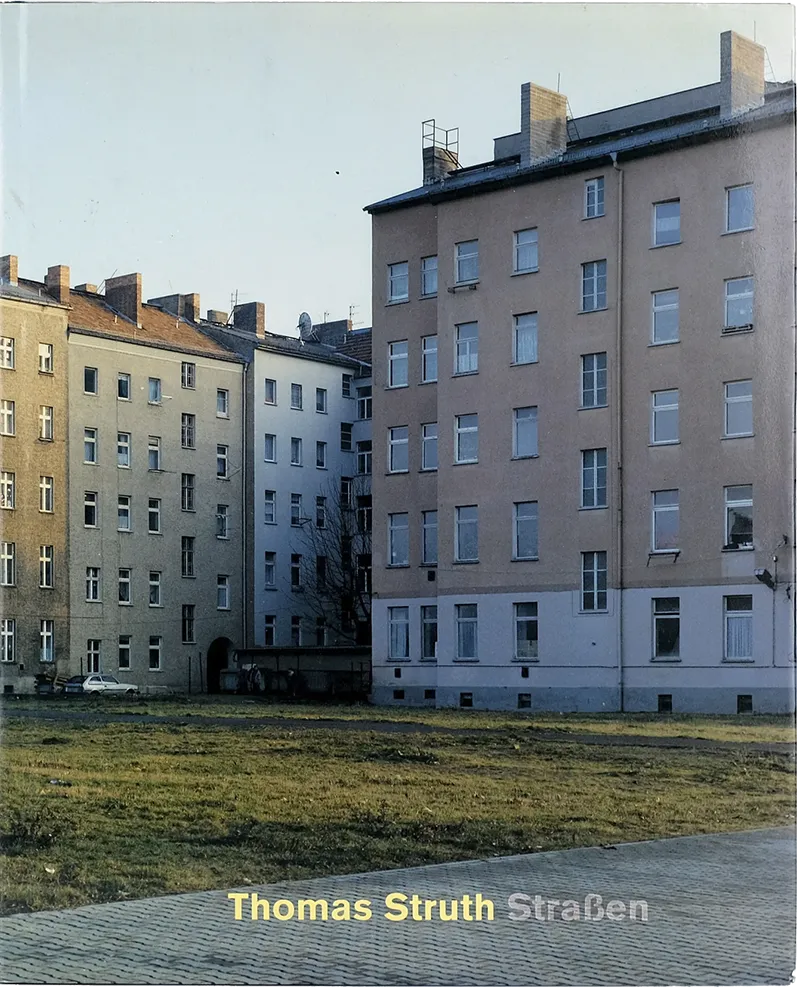
Hardcover with dust jacket
ISBN:
9783879094417


Thomas Struth’s Strassen: Photographie 1976 bis 1995, published by Schirmer/Mosel, is a retrospective of the artist’s systematic documentation of urban thoroughfares across Europe, America, and Asia. Bringing together his foundational street views captured with a large-format camera, the monograph presents an uncompromising, frontal examination of the built environment devoid of human presence.
The compositions utilize a rigorous, non-hierarchical perspective that places the viewer at street level, treating ordinary residential blocks, commercial facades, and historic urban corridors with an extraordinary depth of detail. The neutral daylight and objective framing strip away romanticism, transforming the architecture of everyday streets into silent, structural diagrams that reveal the complex layers of social history, urban planning, and collective memory embedded in modern cities.