SOLD
Copyright ©
Aaron Siskind
or applicable right holders.
Poster


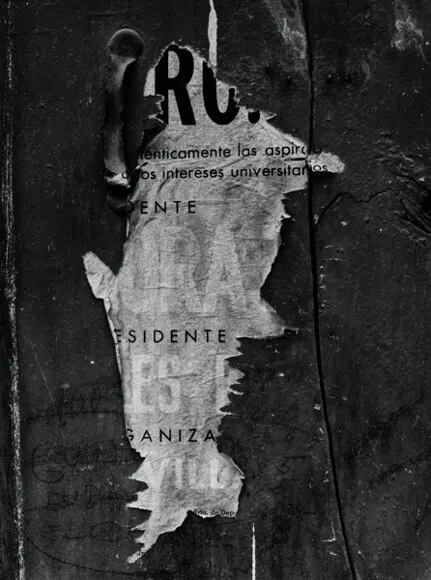
Aaron Siskind’s Guadalajara 5, 1961 exemplifies the artist’s groundbreaking shift toward abstract expressionist photography, where the objective world is stripped of its utilitarian function and transformed into a powerful graphic tapestry of flat planes, textures, and stark tonal contrasts.
Captured during his travels in Mexico, the composition isolates weathered architectural surfaces, peeling plaster, or decaying walls, translating them into intricate arrangements of form and line that evoke the immediacy of modern painting. By flattening perspective and focusing intensely on micro-details of decay and human inscription, Siskind elevates commonplace deterioration into an autonomous visual language of profound psychological and formal resonance.
Within Siskind's broader oeuvre, this work represents a mature peak of his career-long quest to find metaphor in the material textures of the built environment, bridging the gap between documentary street photography and abstract art.