%20Resized.webp)
SOLD
Copyright ©
Brett Weston
or applicable right holders.
Poster



Special Edition 1951 and Career Overview, Lodima, 2006 (The Portfolio Books of Brett Weston series)
Another impression of this photograph is included in the collection of MOMA, NY in the Brett Weston, New York Portfolio 1945-1947 (object # 33.1971.1-12).
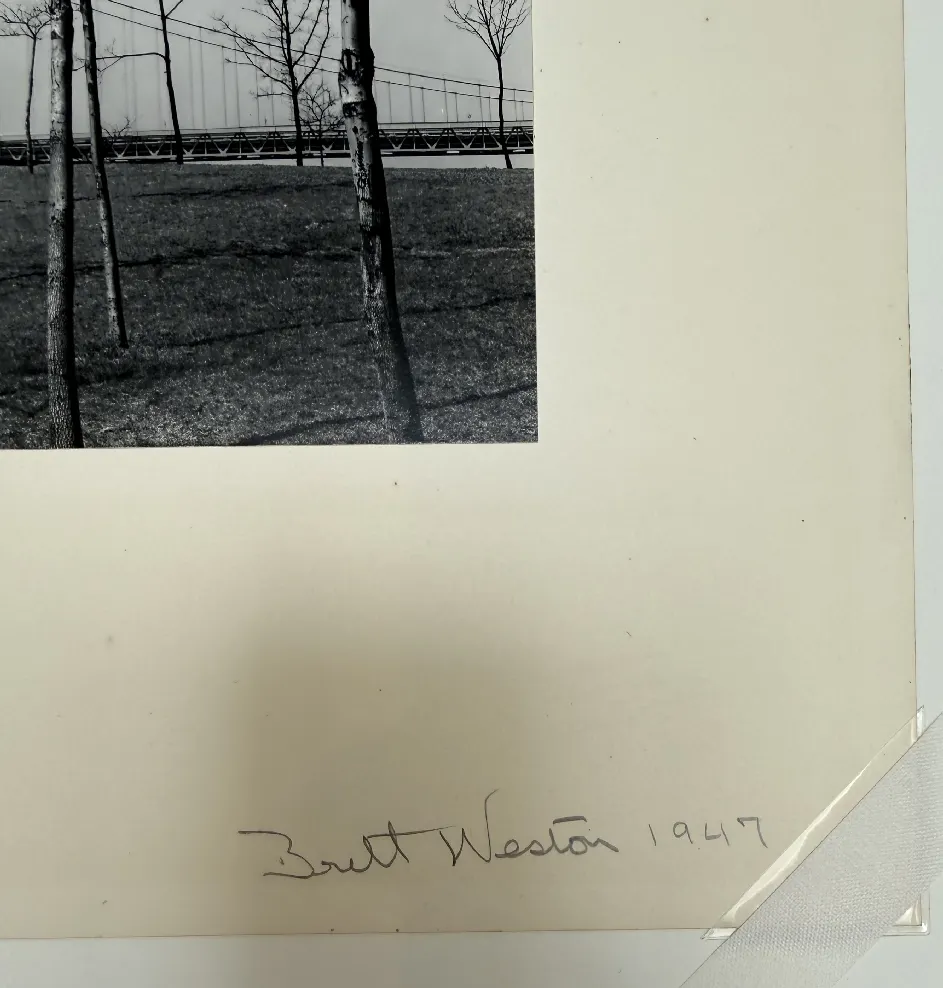
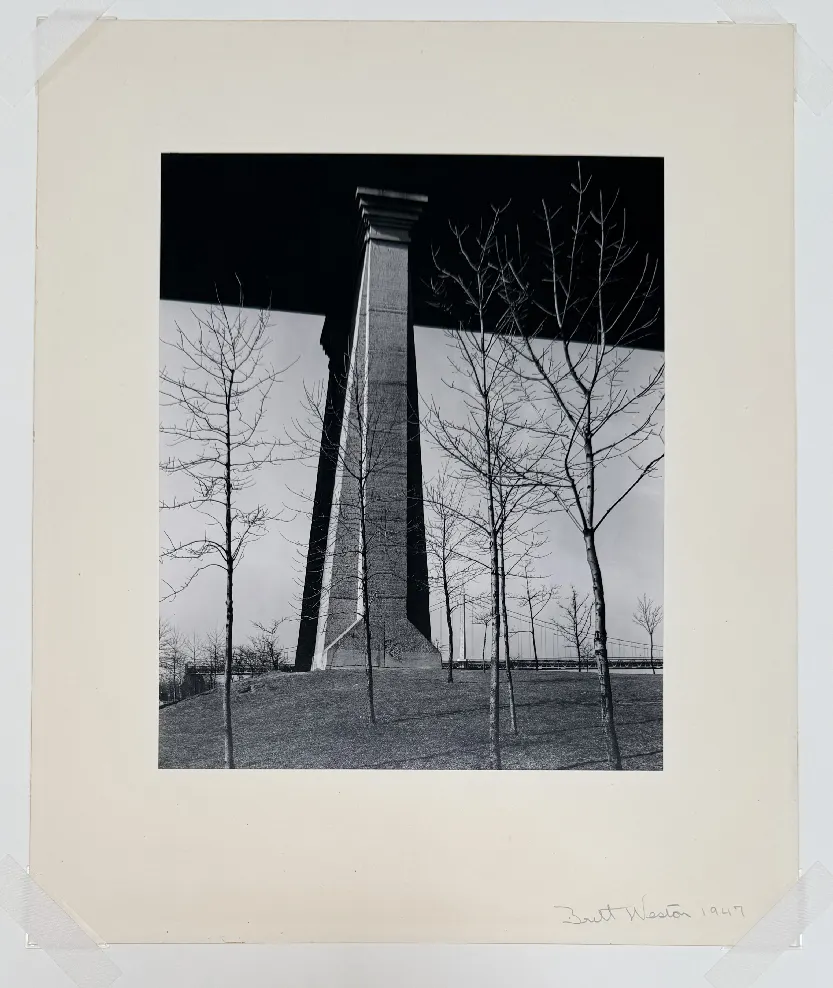
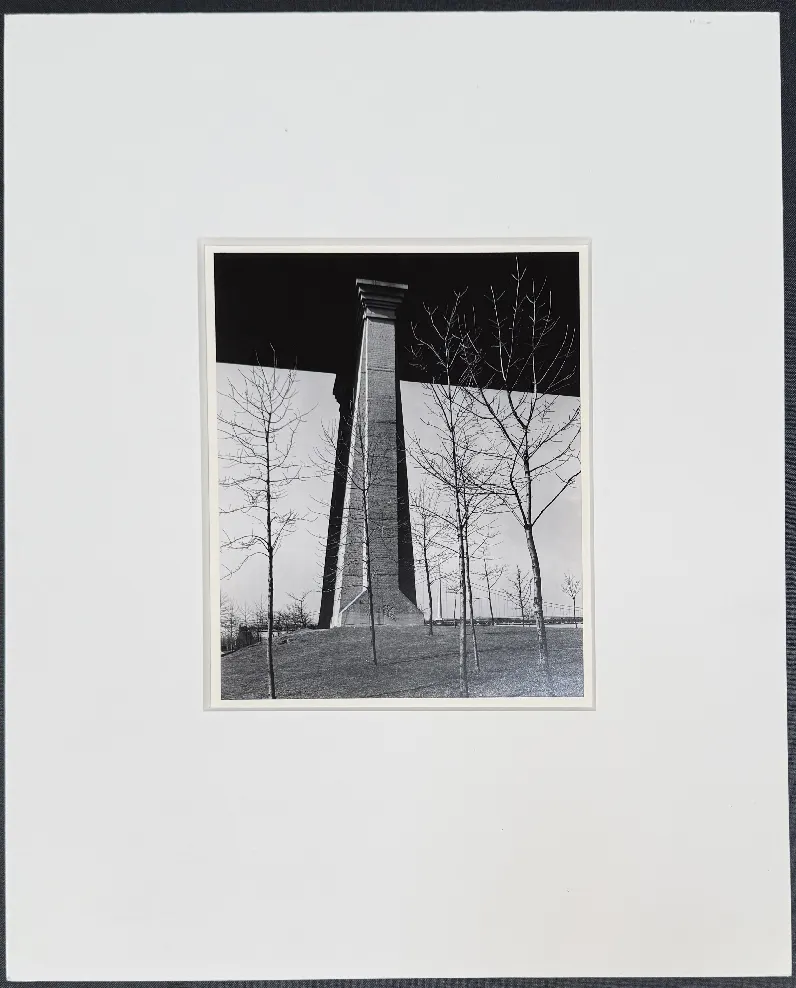
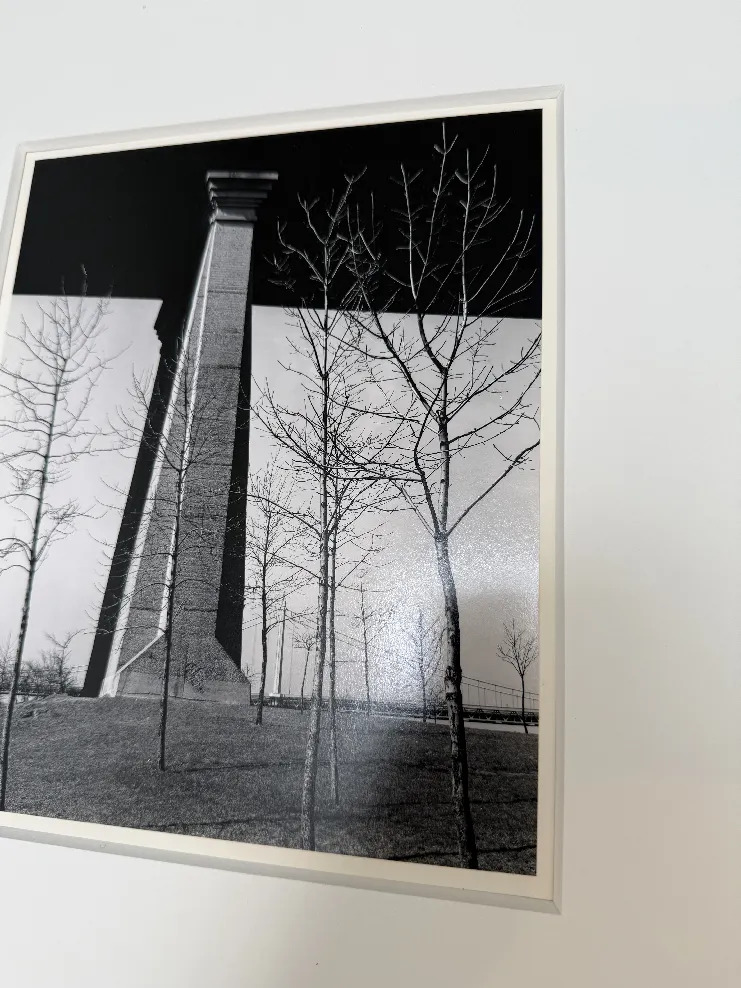
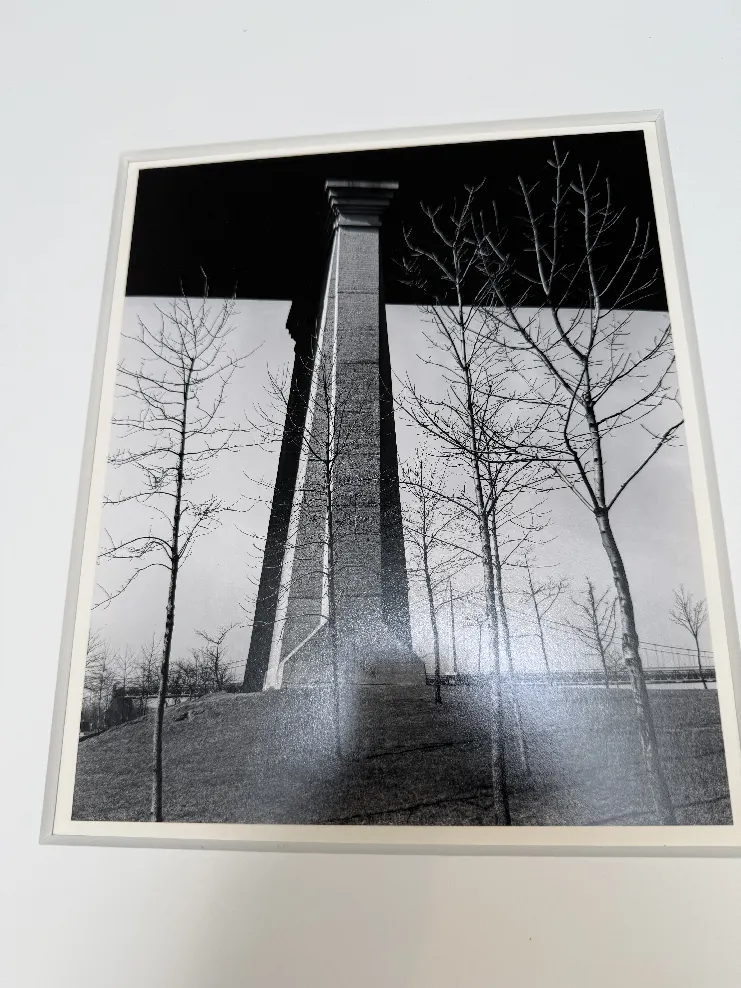
The Triborough Bridge,1947 (also cataloged in institutional sales and auctions under the title Bridge Support and Trees, New York) was made during a defining moment in Brett Weston’s career.
After serving in the Signal Corps during WWII, Weston was awarded a prestigious Guggenheim Fellowship in 1945. This fellowship allowed him to travel to the East Coast, where he spent extended time in New York City documenting its architectural infrastructure, bridges, grids, and street geometry.
Unlike traditional urban photography that focused on human narrative or social documentary (e.g., Walker Evans or Lewis Hine), Weston approached New York with a pure formalist lens. In The Triborough Bridge, he uses the massive, immovable concrete/stone mass of the bridge support to juxtapose dark, heavy architectural geometry against the delicate organic lines of nearby trees.
Printed on glossy gelatin silver paper, the image is characterized by deep, ink-black shadows, high tonal contrast, and precise edge-to-edge sharpness, hallmarks of West Coast "straight photography" applied to an urban landscape.
It sits at the cross-section of 20th-century American formalism and urban landscape studies. It offers a strong dialogue with other post-war formalist works, such as Harry Callahan’s structural city studies or Aaron Siskind’s architectural abstractions, by treating the built environment as a canvas of pure line, mass, and negative space.
The tension between the heavy pylon and the organic tree branches also provides a sophisticated counterpoint to pure architectural prints, showing how natural elements interact with man-made structures.
While not included in his primary 1951 portfolio as a lead plate, it belongs to the exact body of work created during his 1940s New York explorations (republished in the 2006 by Lodima in the Brett Weston - Special Edition 1951 Volume).
Special Edition 1951 and Career Overview, Lodima, 2006 (The Portfolio Books of Brett Weston series)
Another impression of this photograph is included in the collection of MOMA, NY in the Brett Weston, New York Portfolio 1945-1947 (object # 33.1971.1-12).


The Triborough Bridge,1947 (also cataloged in institutional sales and auctions under the title Bridge Support and Trees, New York) was made during a defining moment in Brett Weston’s career.
After serving in the Signal Corps during WWII, Weston was awarded a prestigious Guggenheim Fellowship in 1945. This fellowship allowed him to travel to the East Coast, where he spent extended time in New York City documenting its architectural infrastructure, bridges, grids, and street geometry.
Unlike traditional urban photography that focused on human narrative or social documentary (e.g., Walker Evans or Lewis Hine), Weston approached New York with a pure formalist lens. In The Triborough Bridge, he uses the massive, immovable concrete/stone mass of the bridge support to juxtapose dark, heavy architectural geometry against the delicate organic lines of nearby trees.
Printed on glossy gelatin silver paper, the image is characterized by deep, ink-black shadows, high tonal contrast, and precise edge-to-edge sharpness, hallmarks of West Coast "straight photography" applied to an urban landscape.
It sits at the cross-section of 20th-century American formalism and urban landscape studies. It offers a strong dialogue with other post-war formalist works, such as Harry Callahan’s structural city studies or Aaron Siskind’s architectural abstractions, by treating the built environment as a canvas of pure line, mass, and negative space.
The tension between the heavy pylon and the organic tree branches also provides a sophisticated counterpoint to pure architectural prints, showing how natural elements interact with man-made structures.
While not included in his primary 1951 portfolio as a lead plate, it belongs to the exact body of work created during his 1940s New York explorations (republished in the 2006 by Lodima in the Brett Weston - Special Edition 1951 Volume).