%20Resized.webp)
SOLD
Copyright ©
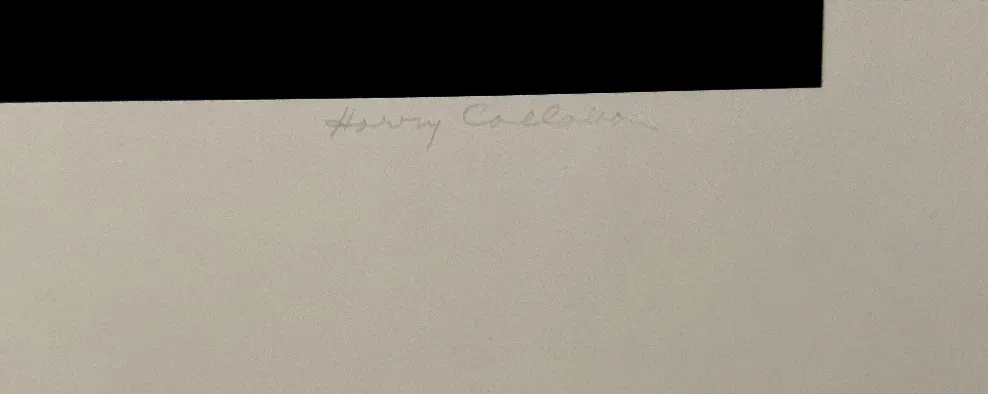
Harry Callahan
or applicable right holders.
Poster



Harry callahan, El Mochuelo, 1964, p.45; Harry Callahan, Aperture, 1976, p.129.
Another impression of this photograph is in the collection of ICP, NY (accession No. 3418.1992). Exhibition catalogue, Harry Callahan, National Gallery of Art, Washington, D.C., 1996, p. 120; Britt Salvesen, Harry Callahan: The Photographer at Work, Yale University Press, New Haven, 2006, p. 124.

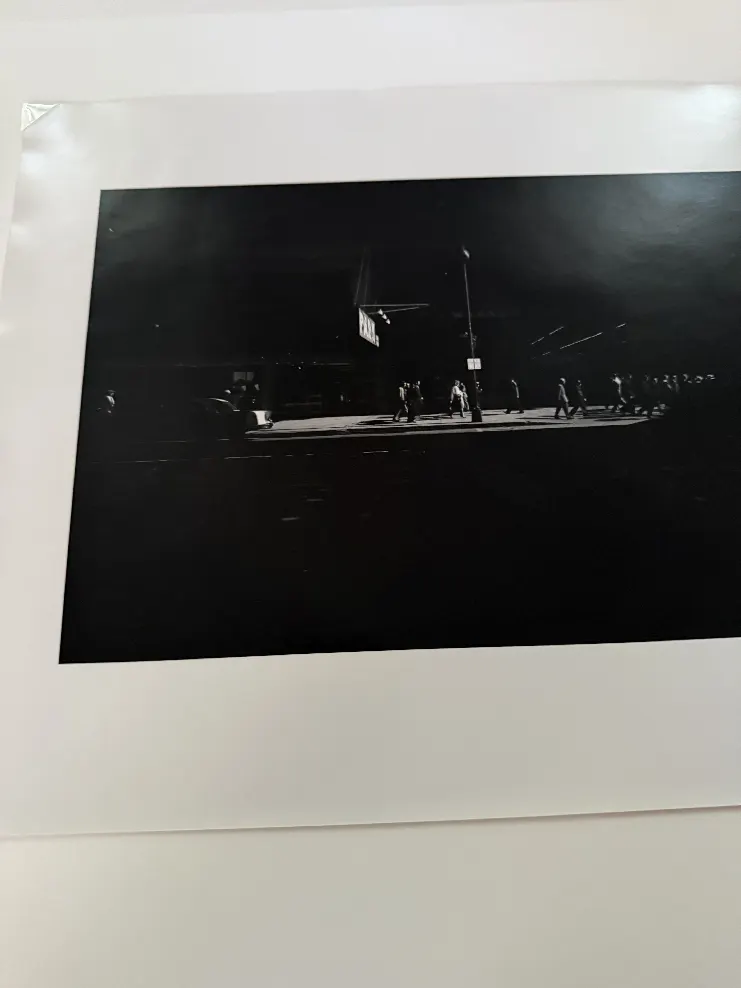
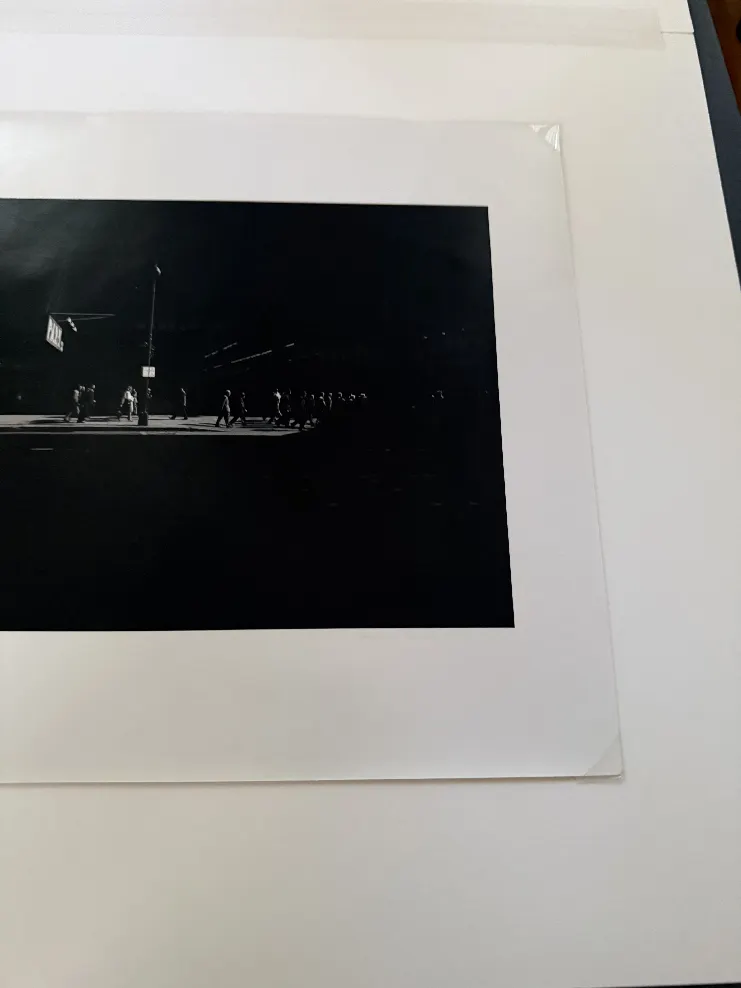
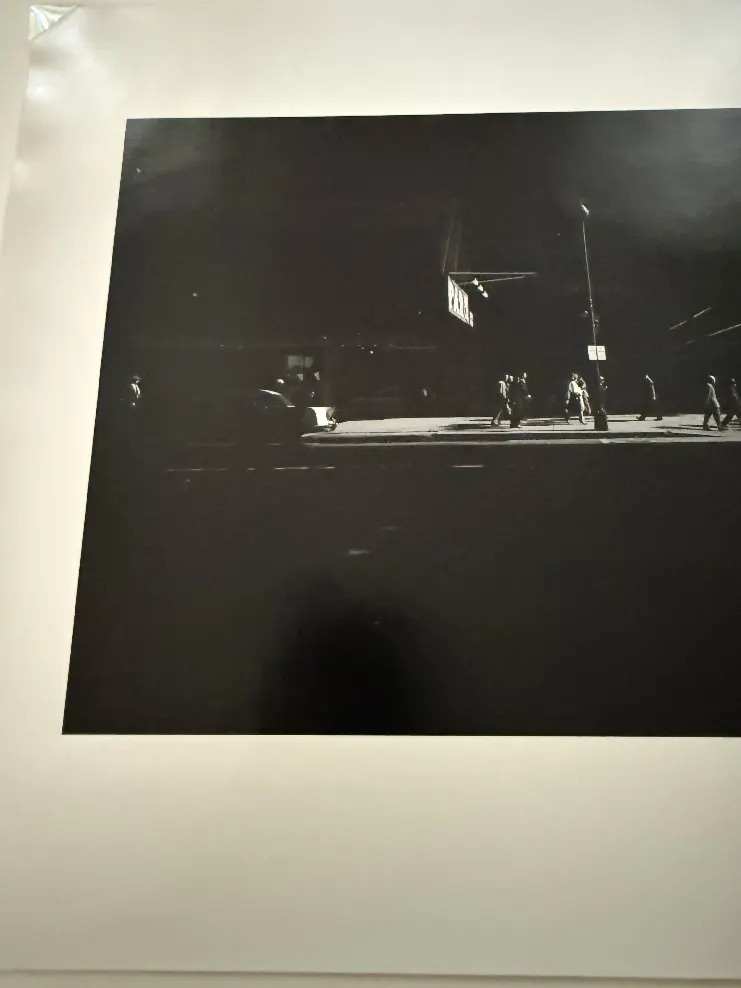


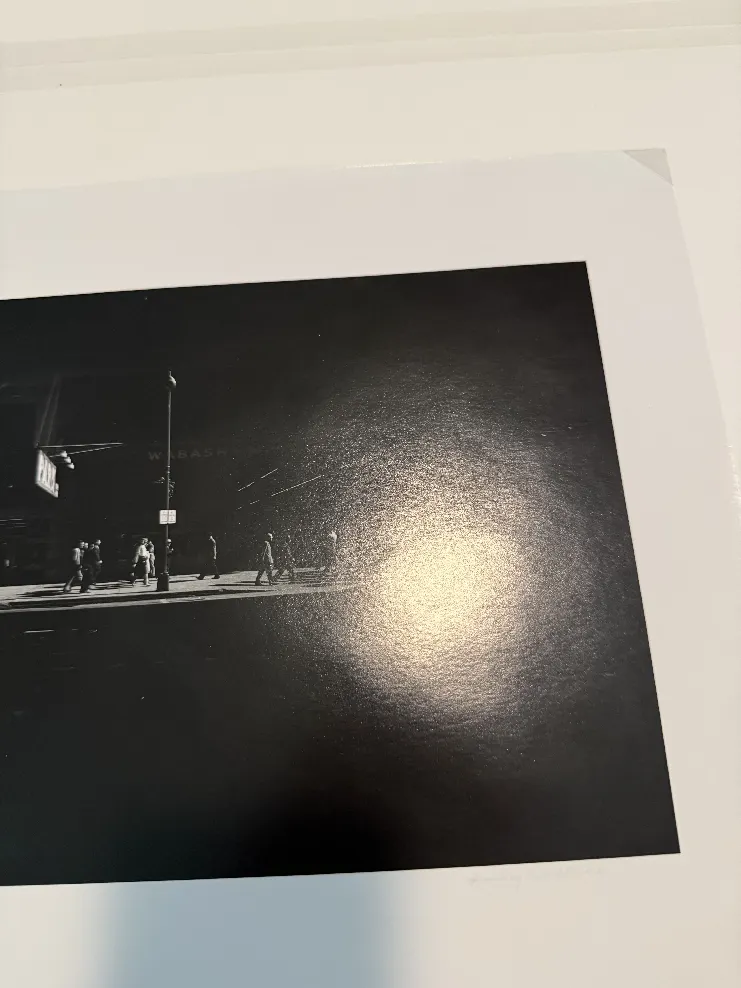
Wabash Avenue, Chicago (1958) captures the essence of Harry Callahan’s distinct approach to mid-century urban landscapes. Photographed during his tenure at the Institute of Design in Chicago, this image demonstrates his mastery in isolating human subjects within vast, heavily shadowed environments. In the print, the intense contrast creates a stark geometric baseline where a silhouetted figure moves along the sidewalk, framed against an imposing, almost entirely blacked-out background. Rather than chronicling the bustling social narrative of Chicago, Callahan transforms a routine city street into a minimalist exercise in light, form, and extreme negative space.
Callahan’s approach to lighting radically departed from the classical, continuous tonal scales favored by many of his contemporaries. Influenced by both Ansel Adams’s technical precision and the experimental philosophy of the New Bauhaus under László Moholy-Nagy, Callahan treated the camera as a tool for visual reduction. He frequently underexposed or overdeveloped his film to strip away extraneous mid-tones and shadow details. This technique allowed him to manipulate sunlight as a literal spotlight, effectively casting city streets into darkness and transforming pedestrians into anonymous, elegant silhouettes. By manipulating contrast so severely, he elevated ordinary light leaks, alleyway shadows, and sunlit pavements into primary graphic elements.
In the broader realm of street photography, Callahan’s work stands apart from the prevailing "decisive moment" style of narrative photojournalism. Instead of seeking out candid social interactions or dramatic events, he pursued an introspective, conceptual framework. Whether capturing tightly framed close-ups of pedestrians lost in thought or rendering solitary figures as small shapes within soaring architectural frames, his imagery addresses the alienation and solitude of modern urban life. His street photography was characterized by a deep discipline, frequently walking the city daily with his camera, using relentless experimentation with exposures and framing to turn the chaotic, everyday reality of the street into timeless, poetic abstraction.
Harry callahan, El Mochuelo, 1964, p.45; Harry Callahan, Aperture, 1976, p.129.
Another impression of this photograph is in the collection of ICP, NY (accession No. 3418.1992). Exhibition catalogue, Harry Callahan, National Gallery of Art, Washington, D.C., 1996, p. 120; Britt Salvesen, Harry Callahan: The Photographer at Work, Yale University Press, New Haven, 2006, p. 124.


Wabash Avenue, Chicago (1958) captures the essence of Harry Callahan’s distinct approach to mid-century urban landscapes. Photographed during his tenure at the Institute of Design in Chicago, this image demonstrates his mastery in isolating human subjects within vast, heavily shadowed environments. In the print, the intense contrast creates a stark geometric baseline where a silhouetted figure moves along the sidewalk, framed against an imposing, almost entirely blacked-out background. Rather than chronicling the bustling social narrative of Chicago, Callahan transforms a routine city street into a minimalist exercise in light, form, and extreme negative space.
Callahan’s approach to lighting radically departed from the classical, continuous tonal scales favored by many of his contemporaries. Influenced by both Ansel Adams’s technical precision and the experimental philosophy of the New Bauhaus under László Moholy-Nagy, Callahan treated the camera as a tool for visual reduction. He frequently underexposed or overdeveloped his film to strip away extraneous mid-tones and shadow details. This technique allowed him to manipulate sunlight as a literal spotlight, effectively casting city streets into darkness and transforming pedestrians into anonymous, elegant silhouettes. By manipulating contrast so severely, he elevated ordinary light leaks, alleyway shadows, and sunlit pavements into primary graphic elements.
In the broader realm of street photography, Callahan’s work stands apart from the prevailing "decisive moment" style of narrative photojournalism. Instead of seeking out candid social interactions or dramatic events, he pursued an introspective, conceptual framework. Whether capturing tightly framed close-ups of pedestrians lost in thought or rendering solitary figures as small shapes within soaring architectural frames, his imagery addresses the alienation and solitude of modern urban life. His street photography was characterized by a deep discipline, frequently walking the city daily with his camera, using relentless experimentation with exposures and framing to turn the chaotic, everyday reality of the street into timeless, poetic abstraction.