SOLD
Copyright ©
Masao Gozu
or applicable right holders.
Poster



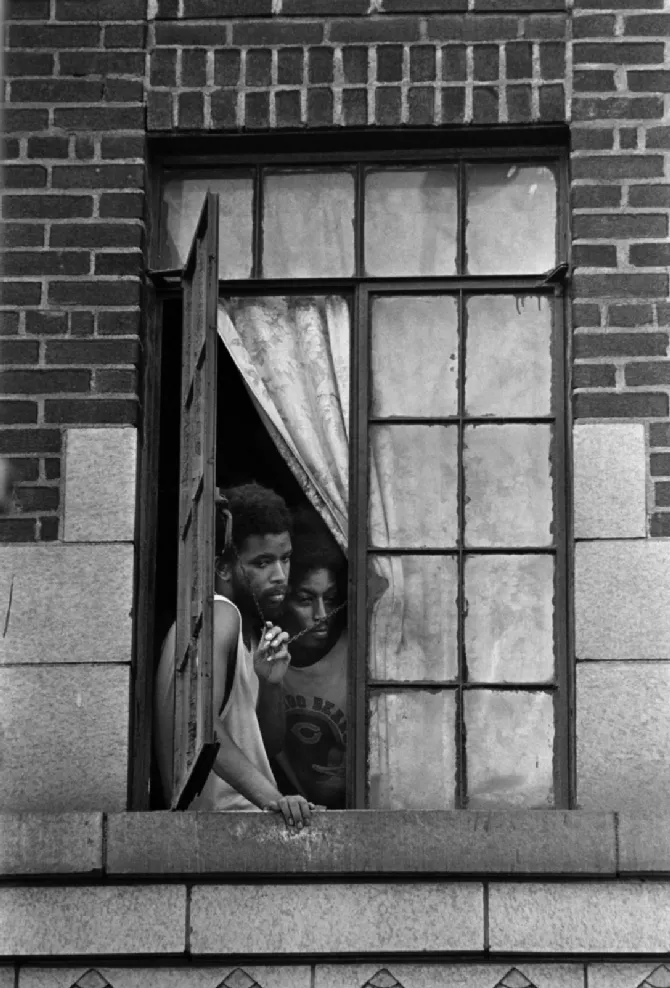
This image is from the Gozu's iconic People at Windows series.
His signature approach is carefully made, perspective-corrected photographs in which the window works as both a frame and a symbol. The result is the flat, frontal look we see in this window image. The grid of panes and the brick courses read as an exact geometric grid, with the person framed inside it.
As with all images in this series, the title of the image is a geographical and time stamp.


This image is from the Gozu's iconic People at Windows series.
His signature approach is carefully made, perspective-corrected photographs in which the window works as both a frame and a symbol. The result is the flat, frontal look we see in this window image. The grid of panes and the brick courses read as an exact geometric grid, with the person framed inside it.
As with all images in this series, the title of the image is a geographical and time stamp.
Note on perspective-corrected photographs: When a photographer points a camera upward at a tall building, the vertical lines appear to lean inward and converge toward the top (called "keystoning"). That happens because the camera's back isn't parallel to the wall. Correcting it makes the verticals truly vertical and the window frame a proper rectangle, as if you had shot the building dead-on. In the 1970s, when this print was made, this result could be achieved with a view camera or a perspective-control (shift) lens. These let you raise the lens without tilting the camera, so the building stays parallel to the film. The other option is to correct it afterward in the darkroom by tilting the easel when enlarging, or, today, with software.