SOLD
Copyright ©
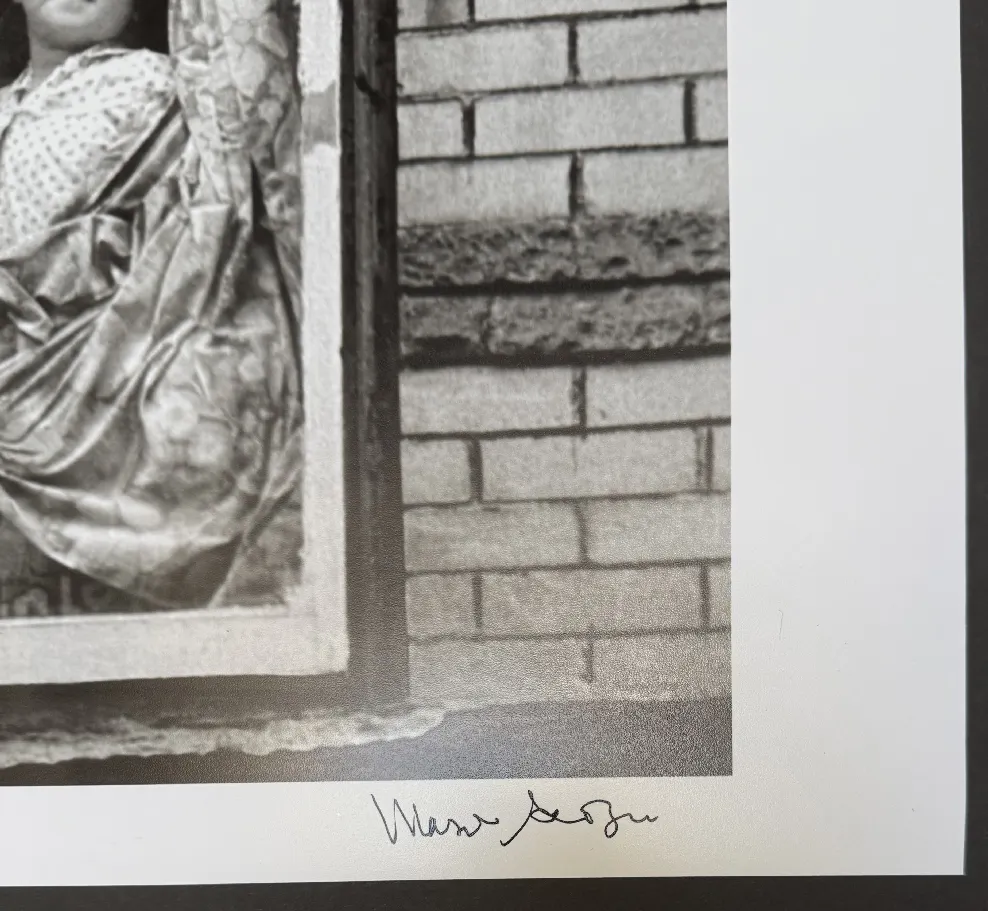
Masao Gozu
or applicable right holders.
Poster


Masao Gozu, In New York (Feb. 1971-Nov. 1980), 1981; Masao Gozu, New York, Zen Photo Gallery, 2018.

Masao Gozu, In New York (Feb. 1971-Nov. 1980), 1981; Masao Gozu, New York, Zen Photo Gallery, 2018.
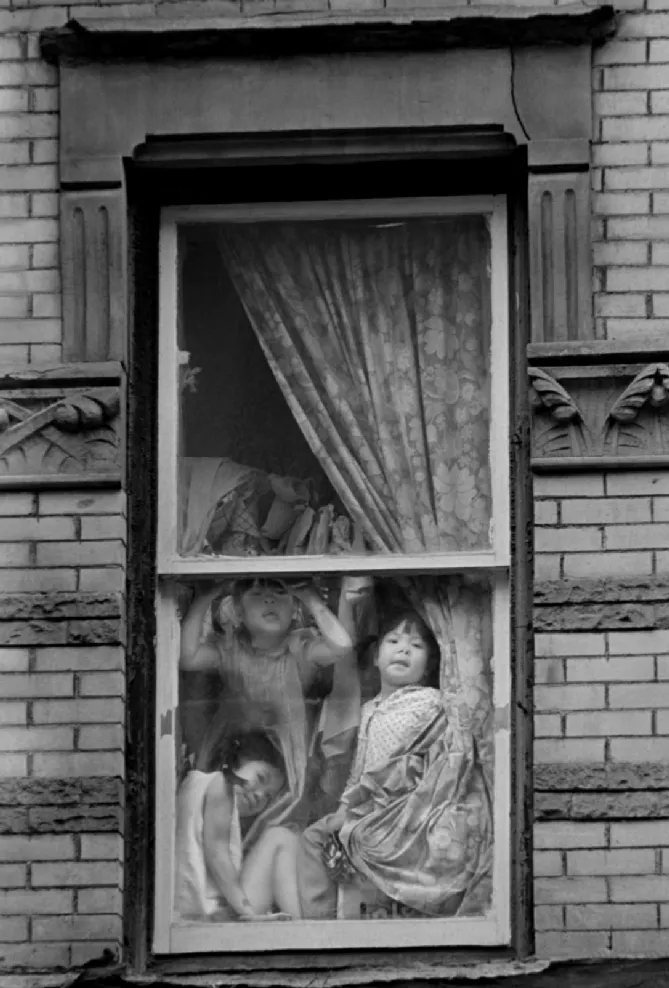
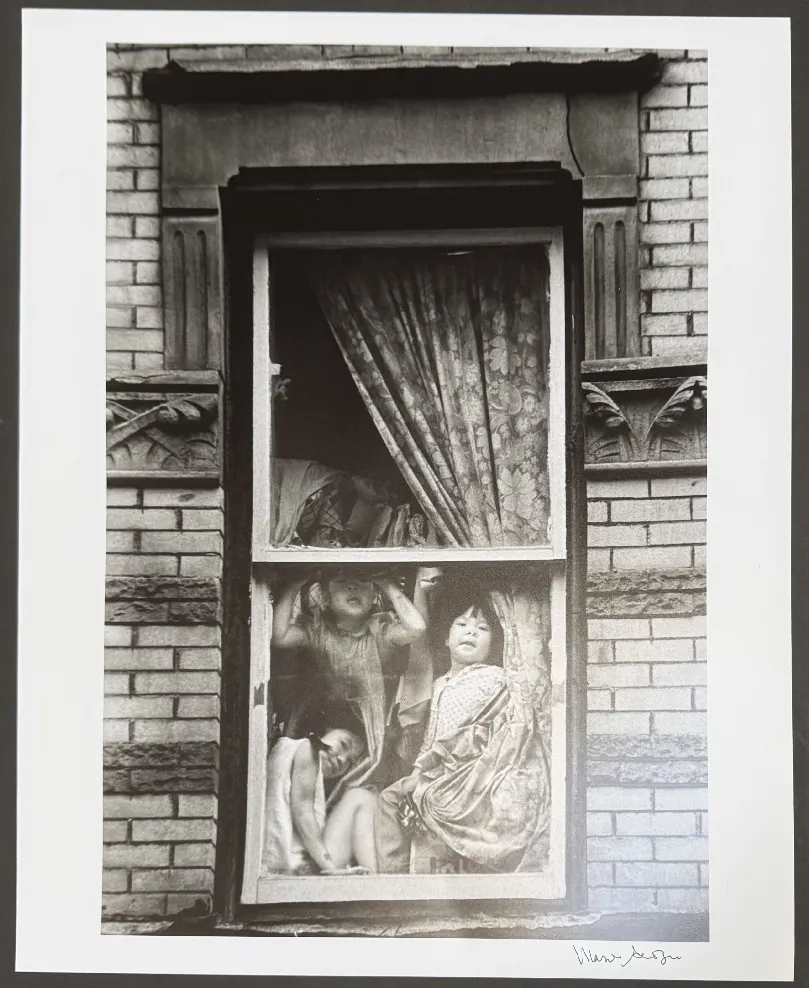
Foster street (Manhattan), 3pm October 15, 1972 by Masao Gozu is a classic example of the Japanese-American photographer’s meticulous and structured documentation of 1970s New York.
After moving to New York from Japan in 1971, Gozu began a rigorous, decade-long project photographing the city's street-level windows and the people gazing out of them. This image is a hallmark of that typological approach.
By shooting squarely and directly at the facade, Gozu uses the architectural elements (the bricks, the sill, and the window frame itself) as a physical border. This framing device highlights the threshold between the private, domestic sphere inside and the gritty, public reality of 1970s New York outside.
Notice the extreme precision of the title, noting not just the street and date, but the exact time of day (3pm). This clinical, time-stamped approach elevates the work from traditional street photography into a conceptual, almost scientific cataloging of human presence within the urban grid.
When contextualized alongside other Japanese photographers navigating 1970s New York, Gozu’s structured, typological approach stands out for its clinical objectivity, aligning more closely with Western conceptualism than the dominant Japanese aesthetics of the era. Unlike Daido Moriyama, who visited New York the same year and captured the city through a chaotic, grainy, and highly subjective are-bure-boke style to reflect psychological disorientation, Gozu used his camera to establish an anchoring, objective grid. While Moriyama documented a city in frantic motion, Gozu photographed a city in waiting. He patiently framed brick facades, allowing the architectural window sill to isolate human subjects like quiet urban dioramas. In this rigorous cataloging of humanity, Gozu shares a conceptual affinity with his peer Ken Ohara, whose 1970 project One similarly indexed the faces of New Yorkers, and with Hiroshi Sugimoto, who also utilized photography as a strict time-recording device. Yet Gozu remains unique in his use of the city's built environment as a strict geometric container. By recording the exact time of day - 3pm - in his titling convention, Gozu roots fleeting human interactions within a strict conceptual framework, elevating traditional street photography into a precise scientific catalog.
Masao Gozu, In New York (Feb. 1971-Nov. 1980), 1981; Masao Gozu, New York, Zen Photo Gallery, 2018.