SOLD
Copyright ©
Robert Adams
or applicable right holders.
Poster


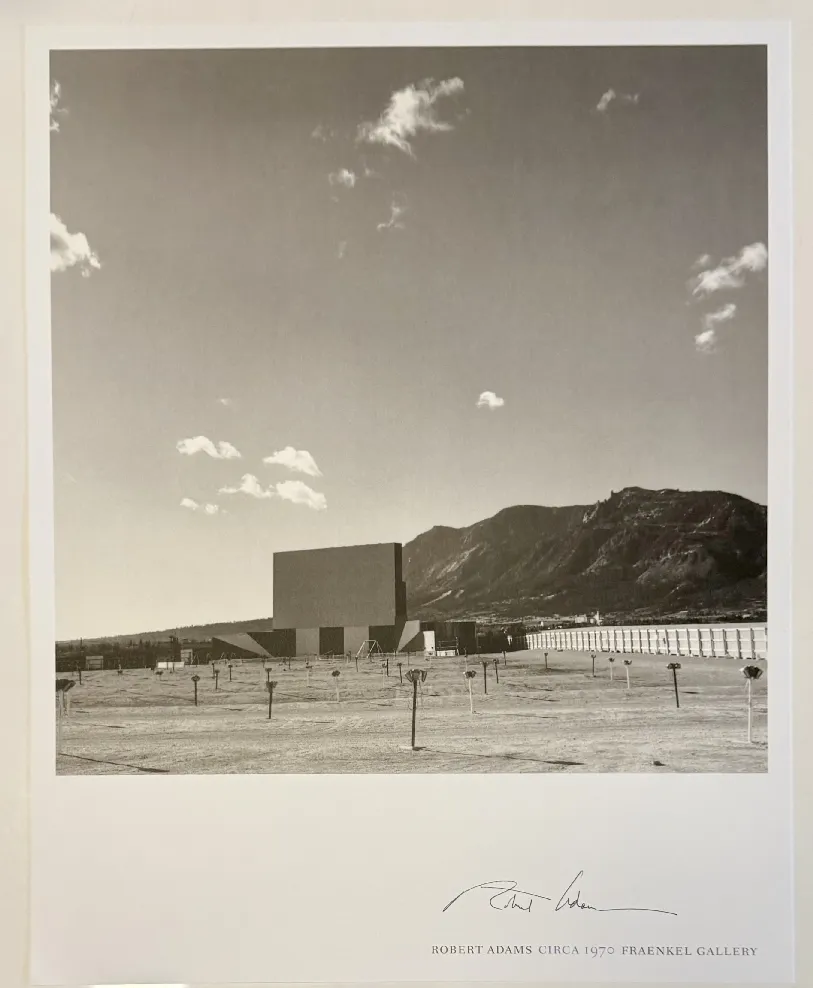
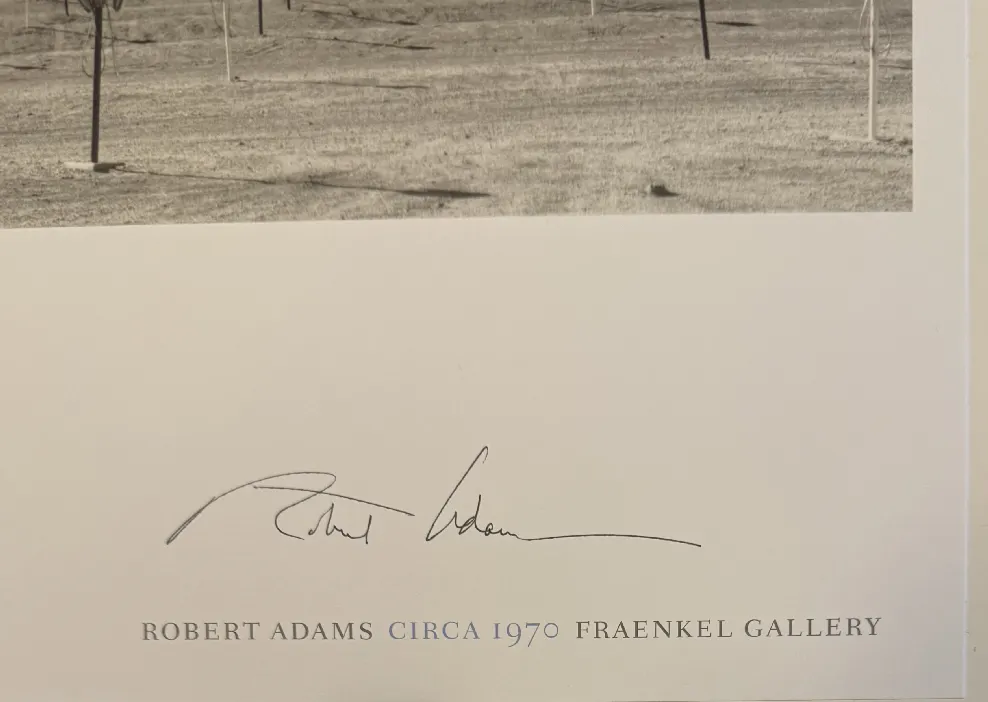
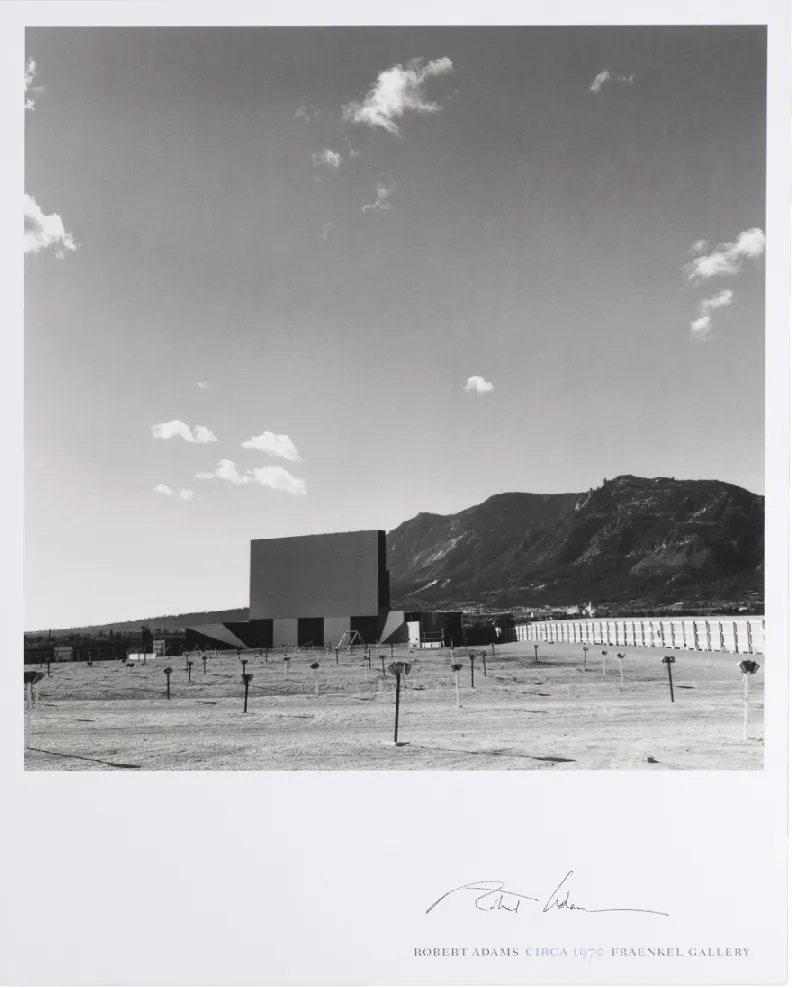
The exhibition poster for Circa 1970 at the Fraenkel Gallery highlights a pivotal era in the career of Robert Adams. During the late 1960s and early 1970s, Adams meticulously documented the rapidly changing landscape of the American West, specifically the suburbanization of the Colorado Front Range. This body of work captures an ecological and cultural loss, yet it is delivered without overt didacticism, allowing the quiet, altered reality of the frontier to speak for itself.
The image featured on this poster exemplifies Adams’s signature deadpan aesthetic and rigorous formal control. Shot in crisp black and white, the composition is dominated by an expansive, luminous western sky that dwarfs the isolated, human-made structure below. The unforgiving, brilliant sunlight carves out sharp geometries and deep shadows, emphasizing the architectural intrusion against the rugged natural horizon. This spatial tension, between the vastness of nature and the stark, imposed order of the built environment, creates a profound sense of stillness, alienation, and modern melancholy.