SOLD
Copyright ©
Trine Søndergaard
or applicable right holders.
Poster


Published p 117 of Stasis bu Cantz - 2014

Published p 117 of Stasis bu Cantz - 2014
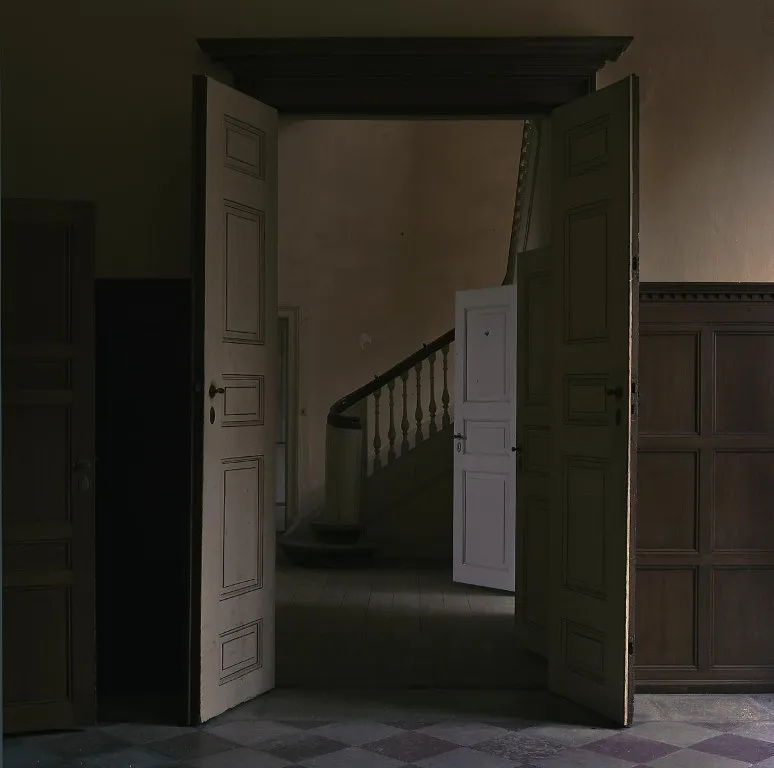
Trine Søndergaard’s Interior #2 (2007) operates as a poignant exploration of domestic space, silence, and psychological interiority. Stemming from her celebrated series investigating uninhabited spaces, the work captures empty rooms stripped of human presence, transforming architectural documentation into an inquiry on memory, absence, and temporal stillness.
Visually, the composition is defined by a muted, desaturated color palette, soft ambient light, and rigorous geometric framing. The interplay of open doorways and receding sightlines establishes a quiet spatial depth, drawing the viewer's eye through successive layers of domestic architecture while emphasizing the quiet permanence of the built environment.
Within Søndergaard’s broader oeuvre, this piece is significant for its formalist restraint and its meditation on the psychological weight of places. A theme which is very much aligned with the BSS collection's focus.
Published p 117 of Stasis bu Cantz - 2014