SOLD
Copyright ©
Sanle Sory
or applicable right holders.
Poster


Sanlé Sory, Phaidon, 2026.
Sanlé Sory, Phaidon, 2026.
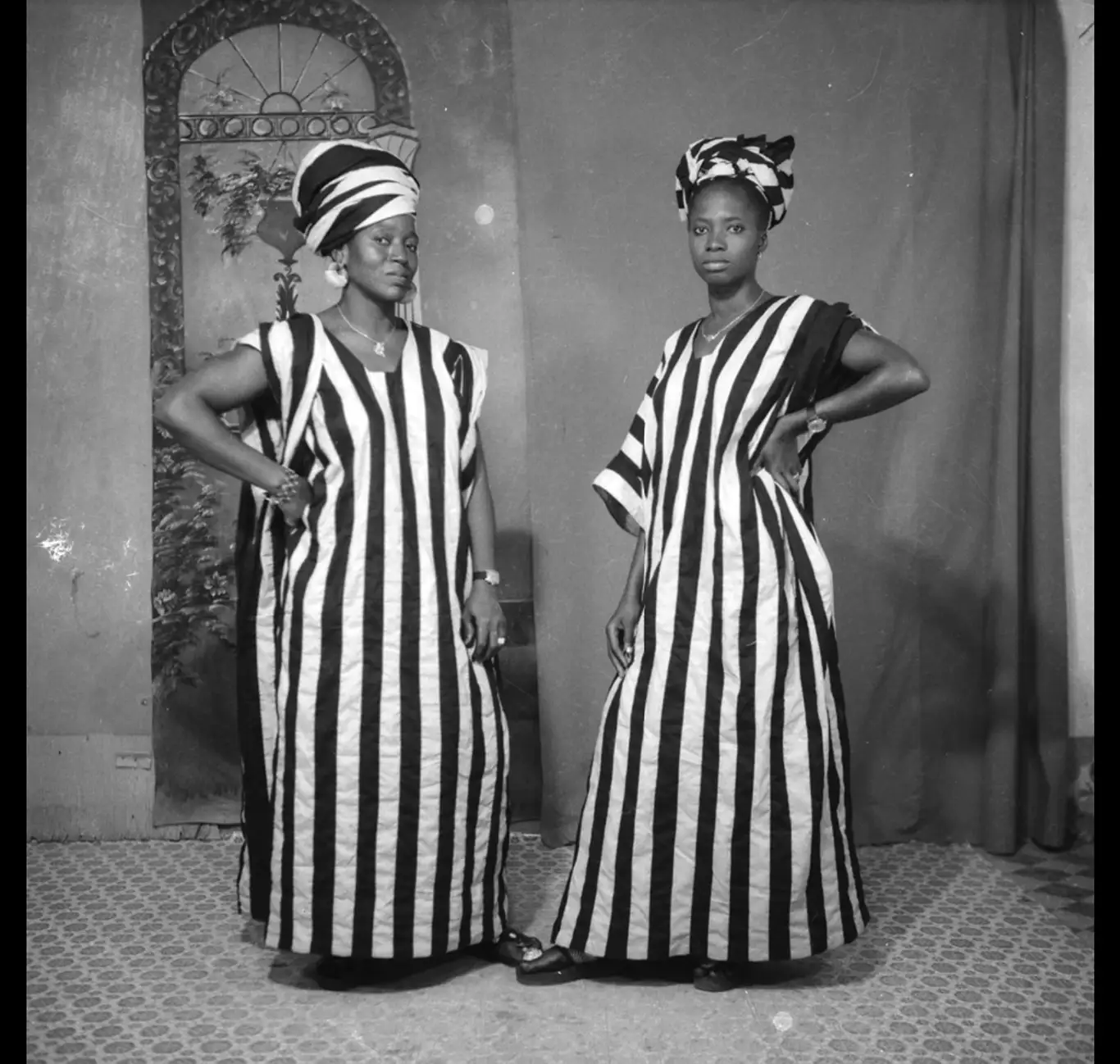
Captured in 1969, Maliennes Coquettes is a quintessential representation of the post-colonial cultural renaissance in West Africa. Shortly after Burkina Faso (then Upper Volta) gained independence, Sanlé Sory established his Volta Photo studio in the musical hub of Bobo-Dioulasso. His studio became a vital, egalitarian sanctuary for the city's youth to construct and perform their cosmopolitan identities. This image of two stylish Malian women reflects the era's pan-African optimism and the embrace of modern, urban self-fashioning, providing the subjects the agency to define their own image away from traditional colonial strictures.
Shot on Sory’s preferred Rolleiflex in a 6x6 square format, the composition relies on the minimal, utilitarian environment of his photo studio to isolate the subjects' sartorial elegance. The visual tension is built entirely through the women's confident, direct engagement with the camera and their immaculate styling. Sory’s use of high-contrast black and white film beautifully renders the bold geometric patterns of their modern attire and the intricate textures of their hair, turning a local studio portrait into a graphic, sculptural study of West African youth culture.
Sanlé Sory, Phaidon, 2026.