SOLD
Copyright ©
Christo & Jeanne-Claude
or applicable right holders.
Poster


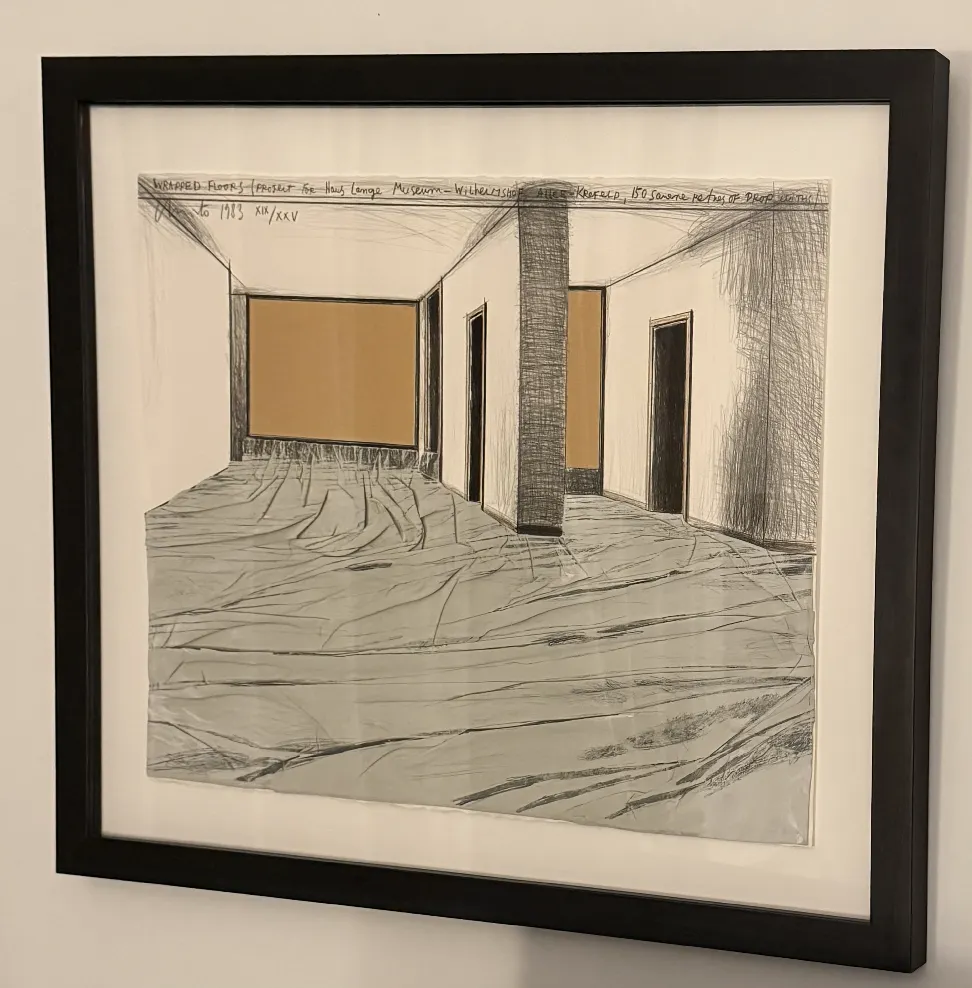
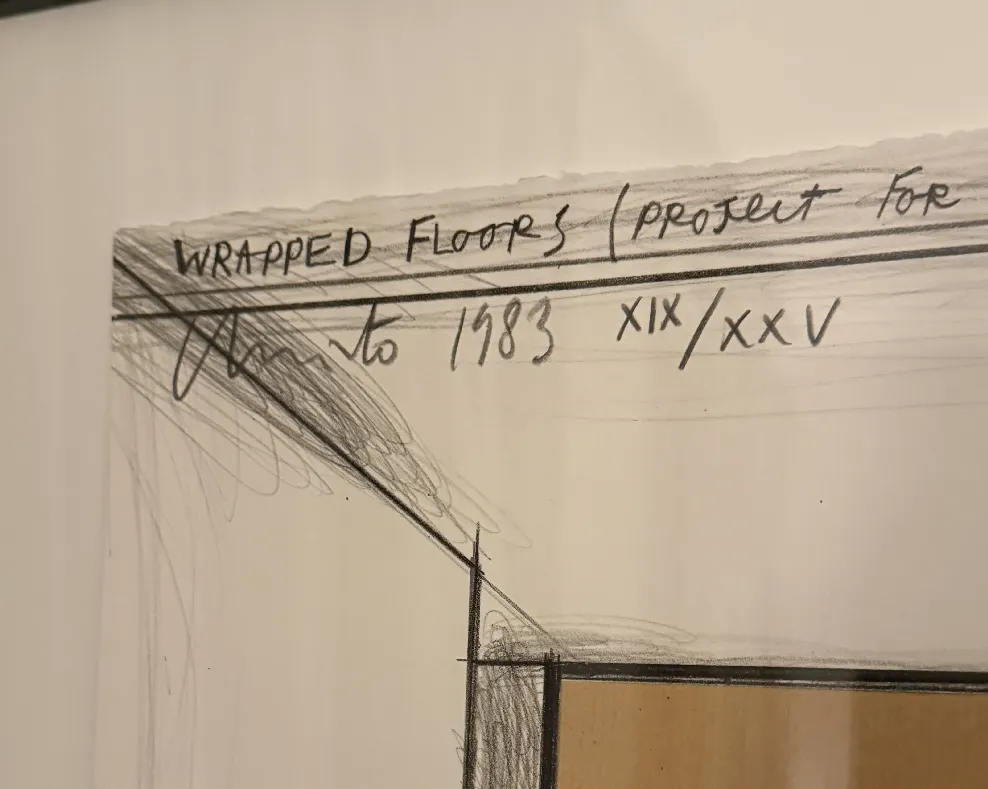
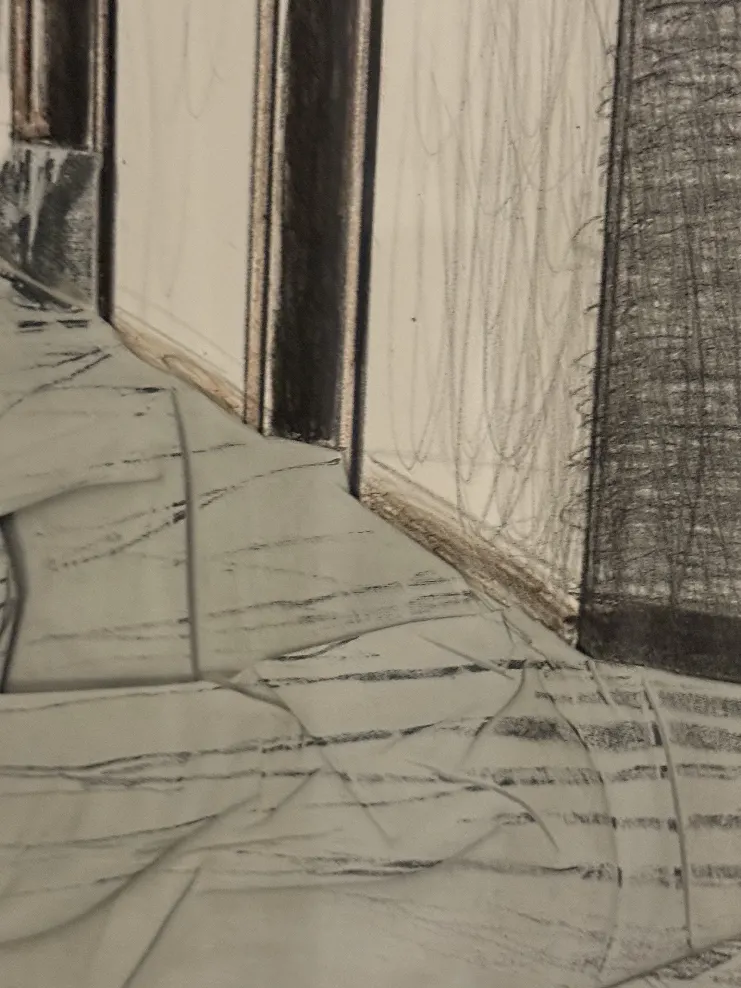
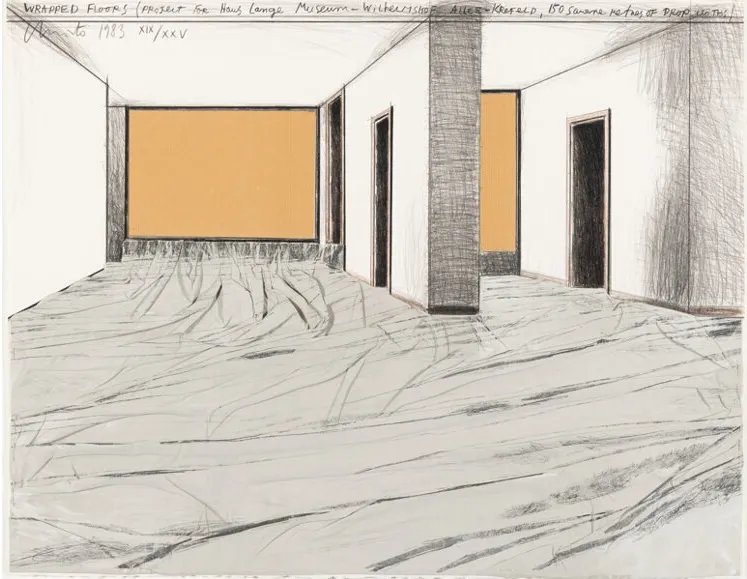
Christo and Jeanne-Claude’s Wrapped Floors operates as a critical intervention into modernist architectural history, specifically documenting their transformative installation at the Museum Haus Lange. By concealing the precise, austere interiors originally designed by Ludwig Mies van der Rohe, the artists fundamentally altered the spatial experience of the building. This project highlights their enduring conceptual practice of temporary concealment, where the act of wrapping domestic and institutional spaces paradoxically reveals the underlying architectural volumes that are typically taken for granted.
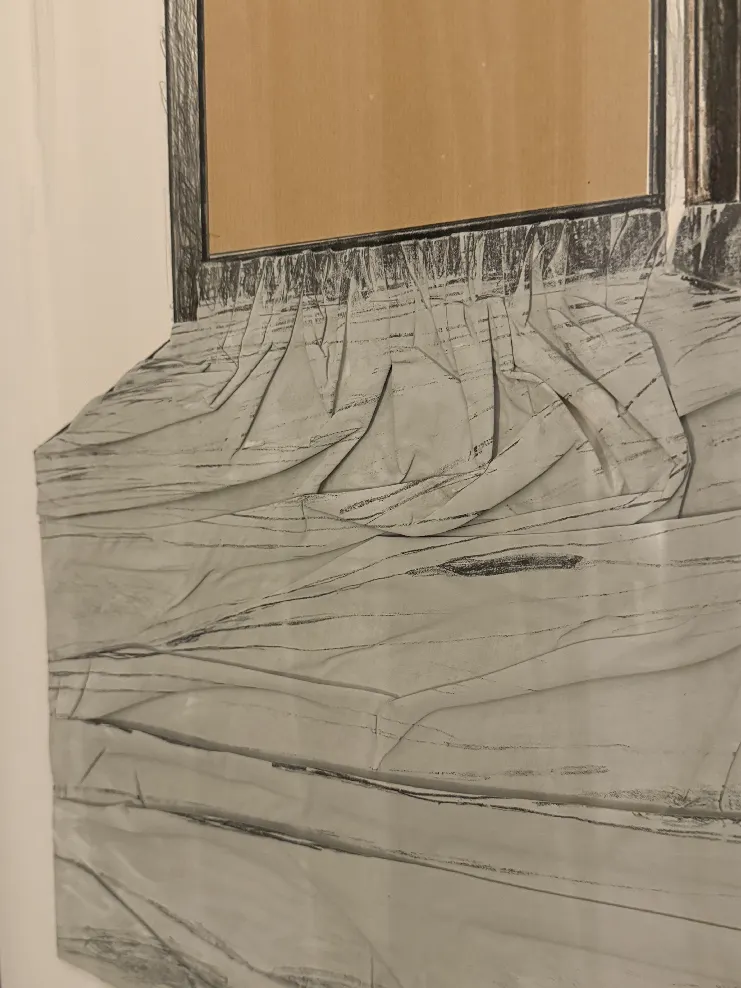
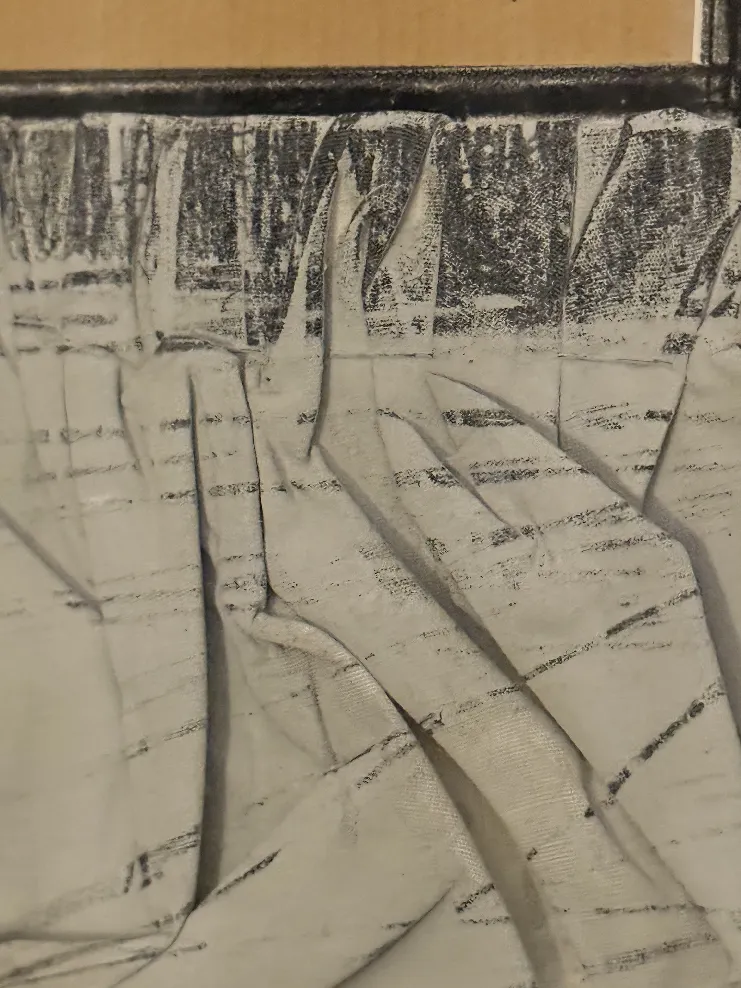
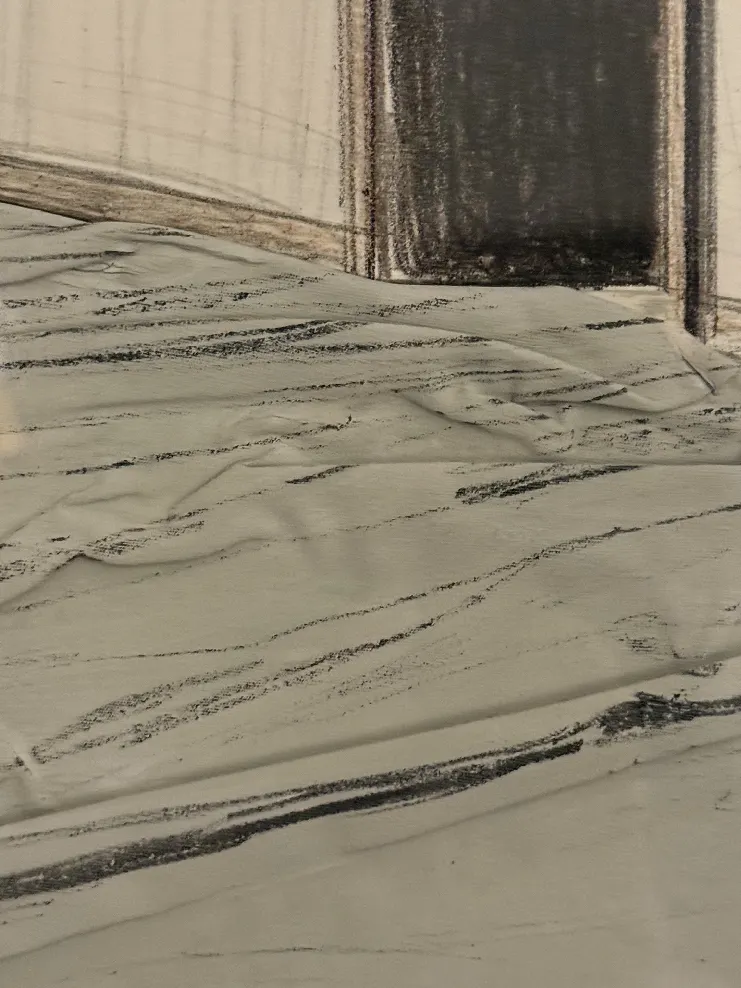
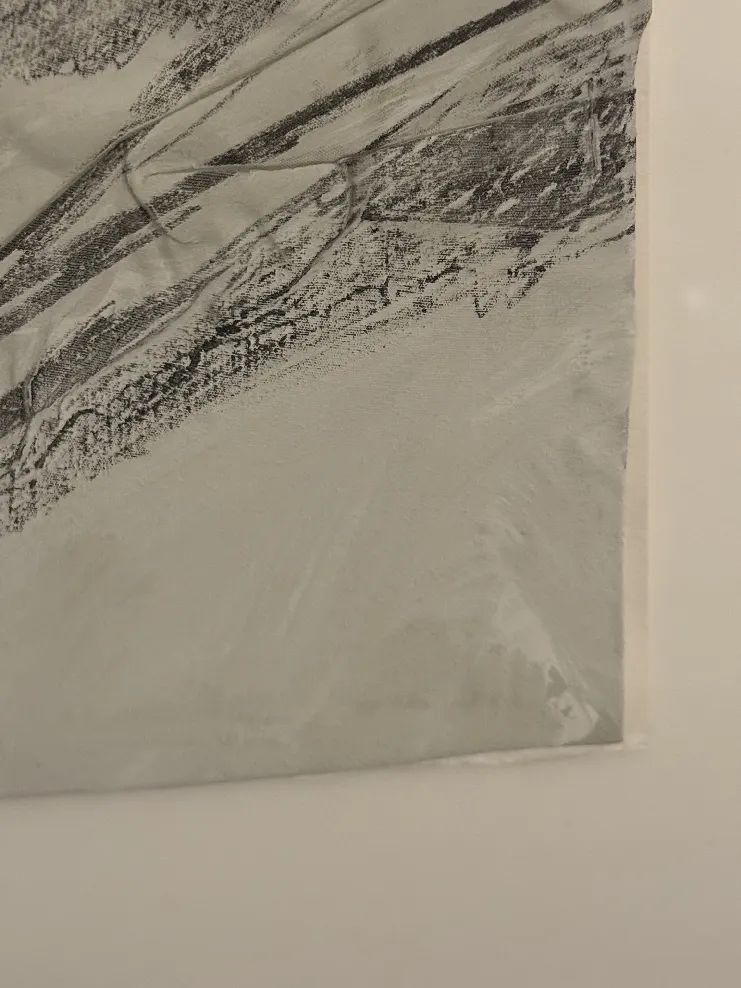
Aesthetically, this edition translates the monumental scale of the environmental installation into a dense, tactile two-dimensional space. The composition relies heavily on the physical integration of collage elements, most notably the hand-painted cloth that has been deliberately folded and wrinkled to mimic the draped floor area of the original site. Secured with staples and juxtaposed against brown wrapping paper that obscures the windows, the heavy, organic folds of the fabric create a striking textural contrast against the rigid geometric discipline of the room. This meticulous physical layering evokes a profound sense of silence and emptiness, reminiscent of Giorgio de Chirico’s stark, metaphysical landscapes.
Within the Bushwick sur Seine archive, this work exemplifies the intersection of sculptural mass and mechanical reproducibility. By incorporating genuine, hand-altered materials into the lithographic process, the print transcends traditional documentary function to become an active physical artifact in its own right. It preserves the fleeting architectural intervention through enduring printed matter, demonstrating how tactile collage can effectively capture the monumental gravity and spatial complexity of the artists' original environmental vision.