


Which art books, prints and posters are available by and about this artist? Here is a sample of items of interest to a typical collector:







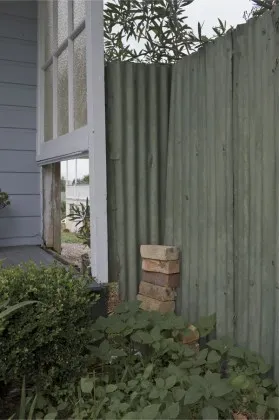
John Gossage, American b. 1946
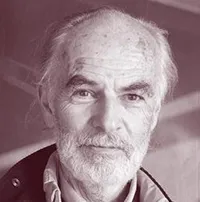
Gossage is an influential American photographer, conceptual artist, and designer widely celebrated as a master of the modern photobook. Born in Staten Island, New York, in 1946, he demonstrated an early devotion to photography, leaving formal schooling at age sixteen to seek out a highly unorthodox education. He took private instruction from legendary mentors including Lisette Model, Alexey Brodovitch, and Bruce Davidson, who deeply shaped his early artistic sensibilities and guided him toward historical masters like Eugène Atget and Walker Evans.
By the late 1960s, Gossage moved to Washington, D.C., where a grant from the Washington Gallery of Modern Art allowed him to anchor his practice and develop a distinctly subtle visual vocabulary. He established close creative dialogues with contemporary peers such as Lewis Baltz, William Eggleston, and Lee Friedlander. Through his association with Baltz, Gossage was brought into the prestigious stable of the Leo Castelli Gallery in New York during the 1970s, establishing his footprint in the contemporary art world.
Rather than pursuing straightforward documentary or high-style aesthetics, Gossage’s work focuses on the overlooked, ambiguous, and discarded margins of human geography. He regularly trains his lens on uninspiring urban edges, neglected tracts of woodland, historical scars, and themes of surveillance, memory, and political power. His landmark first monograph, The Pond, published by Aperture in 1985, is widely considered a masterpiece of late twentieth-century photography. By sequencing seemingly mundane black-and-white images of untended brush and water at the edge of a city, the book upended traditional landscape expectations and permanently influenced how educators and photographers viewed the medium's storytelling structure.
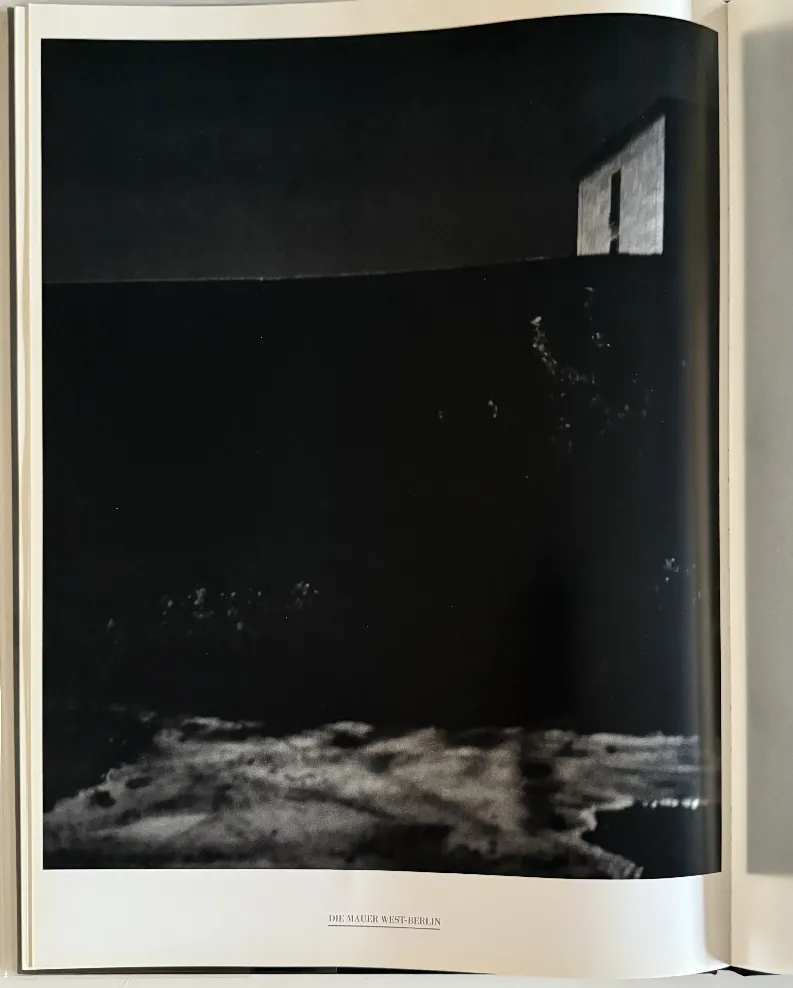
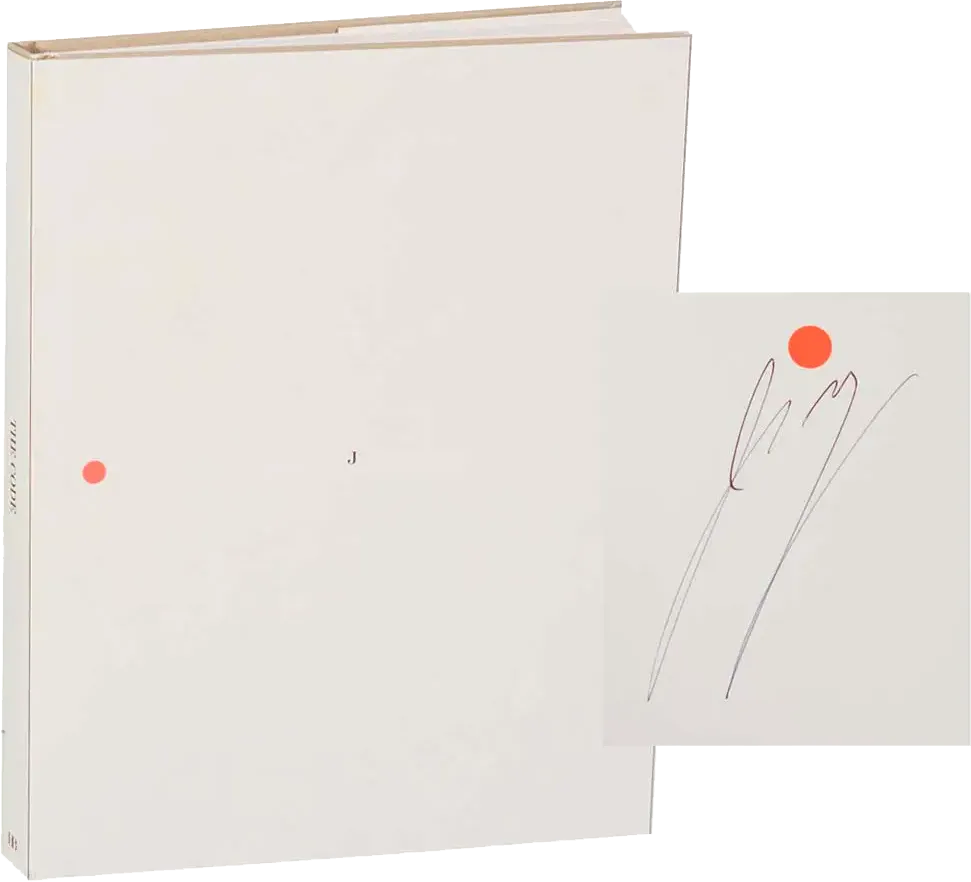
Beyond The Pond, Gossage has spent decades using the book format as his primary artistic medium, crafting complex narratives through works like Stadt des Schwarz (1987), Berlin in the Time of the Wall (2004), The Thirty-Two Inch Ruler/Map of Babylon (2010), and The Code (2012). His interest in the medium led him to found his own imprint, Loosestrife Editions, in 2002 to champion conceptually uncompromising photographic monographs. In addition to his straight photography, Gossage has continually pushed boundaries, creating multi-media "assemblages" or "distractions" that blend photographs with handmade marks and collage elements to disrupt the traditional photographic illusion.
A recipient of a Guggenheim Fellowship in 2012 and the subject of a major retrospective at the Art Institute of Chicago in 2015, Gossage’s extensive body of work is preserved in premier permanent collections worldwide. These include the Museum of Modern Art in New York, the Corcoran Gallery of Art, the National Museum of American Art in Washington, D.C., the Canadian Centre for Architecture in Montreal, and the Sprengel Museum in Hannover, cementing his status as one of the most conceptually rigorous and fiercely independent figures in American photography.


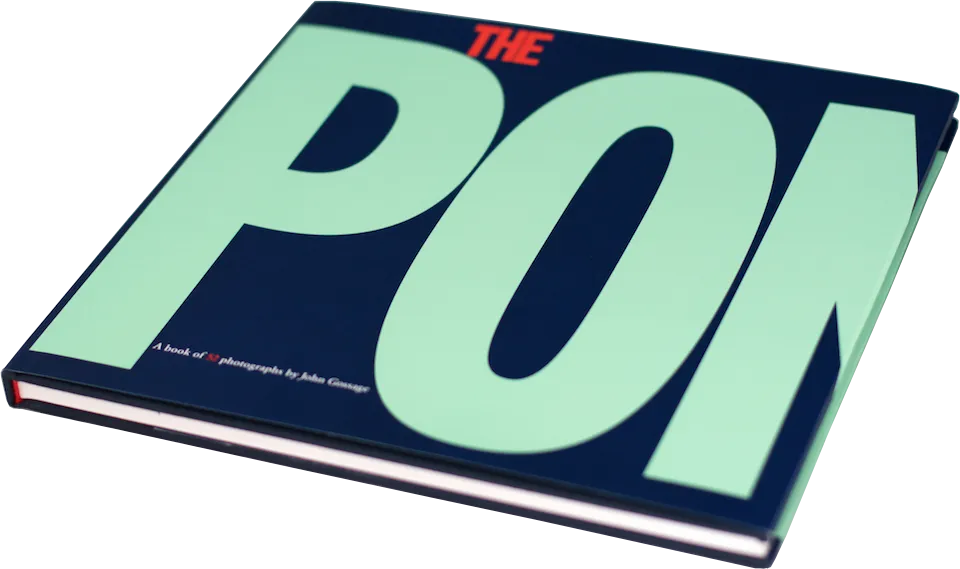
The Pond by John Gossage, originally published in 1985 by Aperture and reissued in 2010, is widely regarded as a masterpiece of modern formalist photography and one of the most influential photobooks of the late 20th century.
The title directly references Henry David Thoreau's Walden, but instead of an ideal, untouched sanctuary, Gossage explores an unkempt, semi-industrial wooded area surrounding a body of water at the fringe of a city. Rather than capturing romanticized, grand vistas in the tradition of Ansel Adams, Gossage focuses on marginal, overlooked terrain. He photographs the subtle boundaries where human civilization encroaches on nature, focusing on dirt paths, chain-link fences, discarded trash, brush, and neglected flora. Gossage describes the sequence as a "literary monologue" or narrative landscape. The images function almost like a quiet short story, tracking a walk into and around the woods without forcing a rigid or preachy message.
While closely aligned with the aesthetic of New Topographics pioneers like Lewis Baltz, Robert Adams, and Stephen Shore, Gossage's approach is often noted for having a warmer, more poetic, and deeply atmospheric intimacy. Photobook historian Gerry Badger famously noted that while all New Topographics artists made great publications, none are better than The Pond. Fellow photographer Robert Adams noted that the work is believable because it includes evidence of man's darkness of spirit, and memorable because of the intense fondness Gossage shows for the remains of the natural world.
This 2010 Aperture reissue is presented as a 108-page hardcover with a dust jacket containing 52 duotone plates. This second edition includes three additional photographs not present in the 1985 original, alongside essays by Gerry Badger and Toby Jurovics. The 2010 edition intentionally plays with the original 1985 layout by inverting the dust jacket color palette between blue and green, creating a subtle homage to collectors of the first edition. This publication remains a landmark example of how sequencing, subtle formal rigor, and intentional book design can elevate a physical object into a definitive artistic medium.