
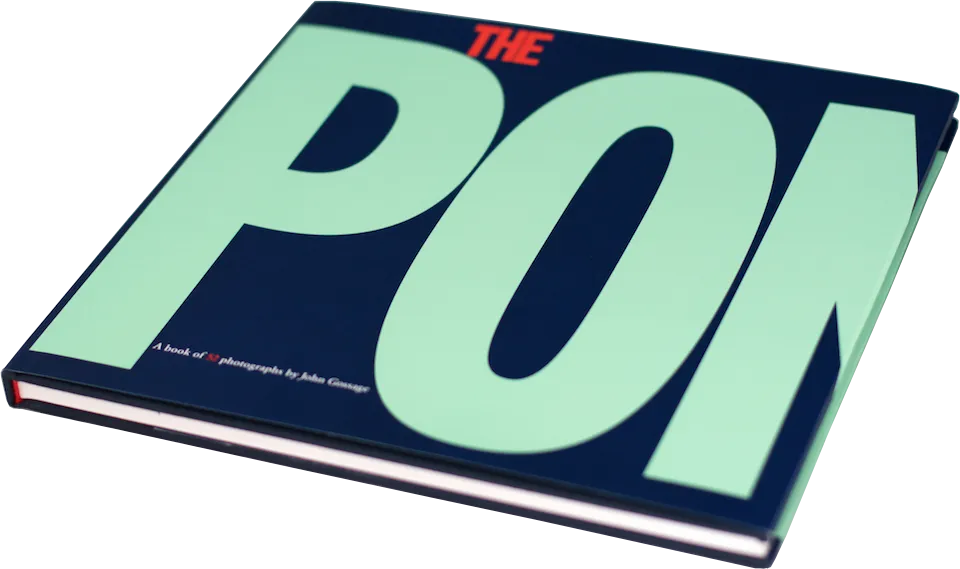


The Pond by John Gossage, originally published in 1985 by Aperture and reissued in 2010, is widely regarded as a masterpiece of modern formalist photography and one of the most influential photobooks of the late 20th century.
The title directly references Henry David Thoreau's Walden, but instead of an ideal, untouched sanctuary, Gossage explores an unkempt, semi-industrial wooded area surrounding a body of water at the fringe of a city. Rather than capturing romanticized, grand vistas in the tradition of Ansel Adams, Gossage focuses on marginal, overlooked terrain. He photographs the subtle boundaries where human civilization encroaches on nature, focusing on dirt paths, chain-link fences, discarded trash, brush, and neglected flora. Gossage describes the sequence as a "literary monologue" or narrative landscape. The images function almost like a quiet short story, tracking a walk into and around the woods without forcing a rigid or preachy message.
While closely aligned with the aesthetic of New Topographics pioneers like Lewis Baltz, Robert Adams, and Stephen Shore, Gossage's approach is often noted for having a warmer, more poetic, and deeply atmospheric intimacy. Photobook historian Gerry Badger famously noted that while all New Topographics artists made great publications, none are better than The Pond. Fellow photographer Robert Adams noted that the work is believable because it includes evidence of man's darkness of spirit, and memorable because of the intense fondness Gossage shows for the remains of the natural world.
This 2010 Aperture reissue is presented as a 108-page hardcover with a dust jacket containing 52 duotone plates. This second edition includes three additional photographs not present in the 1985 original, alongside essays by Gerry Badger and Toby Jurovics. The 2010 edition intentionally plays with the original 1985 layout by inverting the dust jacket color palette between blue and green, creating a subtle homage to collectors of the first edition. This publication remains a landmark example of how sequencing, subtle formal rigor, and intentional book design can elevate a physical object into a definitive artistic medium.

The Pond by John Gossage, originally published in 1985 by Aperture and reissued in 2010, is widely regarded as a masterpiece of modern formalist photography and one of the most influential photobooks of the late 20th century.
The title directly references Henry David Thoreau's Walden, but instead of an ideal, untouched sanctuary, Gossage explores an unkempt, semi-industrial wooded area surrounding a body of water at the fringe of a city. Rather than capturing romanticized, grand vistas in the tradition of Ansel Adams, Gossage focuses on marginal, overlooked terrain. He photographs the subtle boundaries where human civilization encroaches on nature, focusing on dirt paths, chain-link fences, discarded trash, brush, and neglected flora. Gossage describes the sequence as a "literary monologue" or narrative landscape. The images function almost like a quiet short story, tracking a walk into and around the woods without forcing a rigid or preachy message.
While closely aligned with the aesthetic of New Topographics pioneers like Lewis Baltz, Robert Adams, and Stephen Shore, Gossage's approach is often noted for having a warmer, more poetic, and deeply atmospheric intimacy. Photobook historian Gerry Badger famously noted that while all New Topographics artists made great publications, none are better than The Pond. Fellow photographer Robert Adams noted that the work is believable because it includes evidence of man's darkness of spirit, and memorable because of the intense fondness Gossage shows for the remains of the natural world.
This 2010 Aperture reissue is presented as a 108-page hardcover with a dust jacket containing 52 duotone plates. This second edition includes three additional photographs not present in the 1985 original, alongside essays by Gerry Badger and Toby Jurovics. The 2010 edition intentionally plays with the original 1985 layout by inverting the dust jacket color palette between blue and green, creating a subtle homage to collectors of the first edition. This publication remains a landmark example of how sequencing, subtle formal rigor, and intentional book design can elevate a physical object into a definitive artistic medium.